
Fujiin Folklore Myth Meaning & Symbolism
The myth of Fujin, the primal wind god, embodies the untamed force of creation and destruction, a necessary chaos that shapes the world and the soul.
The Tale of Fujiin Folklore
Listen, and feel the air grow still. Before the first word was spoken, before the islands rose from the brine, there was a breath. Not a gentle sigh, but a roaring, primordial exhalation that scoured the face of the deep. This is the breath of Fujin.
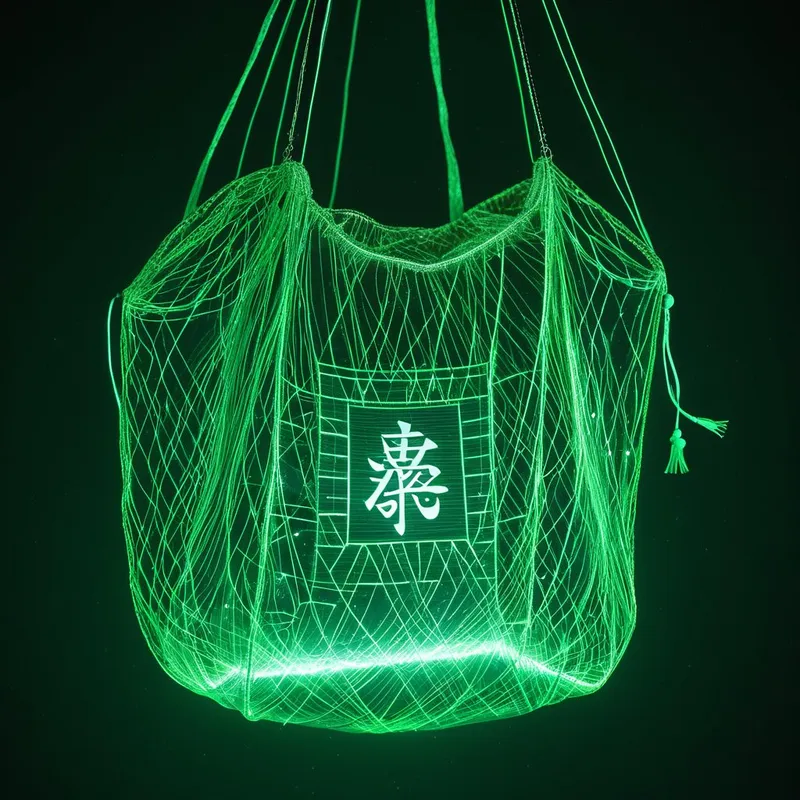
In the age when the world was soft and unformed, he arrived not with a whisper, but with a scream. He was a being of raw, untamed force, with skin the color of a storm-bruised sunset and hair like wild sea kelp tossed in a maelstrom. In his mighty arms, he clutched a vast, slung bag, its mouth yawning wide. From this bag, he unleashed not objects, but the very essence of motion itself—the wind.
He was chaos incarnate. Where he wandered, mountains were carved, not by patient water, but by his furious, scouring blasts. Seas churned into frothing madness, and the great cedars of the primordial forests groaned and bent, their forms forever shaped by his relentless passage. He was the great disrupter, the enemy of stillness. The other kami watched from their nascent realms with apprehension. Here was a force that recognized no order, no sacred silence, only the wild joy of unmaking.
Yet, within this chaos lay a strange, terrible necessity. The stagnant air grew foul; the unmoving waters bred miasma. The world, in its stillness, was dying of inertia. It was Raijin, the thunder god, whose crashing drums began to answer the wind's howl. Their duel was the world's first symphony of storm—Fujin's gales tearing at the heavens, Raijin's lightning stitching the torn fabric back together with brilliant, terrifying thread.
And then came the moment of uneasy truce, not born of friendship, but of cosmic function. The great wind, which could level a forest, also carried the life-giving rains from the distant oceans. It scattered the seeds of the pine and the cherry blossom across the newborn islands. It cleared the pestilential fogs from the valleys. Fujin, the destroyer, was also the unseen gardener, the great ventilator of the world. He did not become gentle, for that is not his nature. He became necessary. His wildness was integrated into the order of things, not tamed, but given a direction. The breath that once only knew how to scream learned, in its way, to also sing.

Cultural Origins & Context
The figure of Fujin finds his roots deep within the animistic heart of Shinto, where natural phenomena are not merely events but conscious, willful presences. He is a classic example of a kami of raw power, a personification of the wind's dual capacity for beneficence and terror. His iconography solidified through cultural exchange, notably with Buddhist art, where his likeness is often paired with Raijin as guardian figures at temple gates, symbolizing the tumultuous natural forces one must pass through to enter a sacred space.
His stories were not chronicled in a single, canonical epic but were woven into the fabric of daily life and collective memory. Fisherfolk knew him as the sudden gale that could fill sails or dash boats upon rocks. Farmers understood him in the warm breeze that promised rain and the typhoon that could wipe out a harvest. He was passed down in the warnings of elders, in festival rituals meant to appease the winds, and in art—from fierce ukiyo-e prints to the stark, powerful statues that flanked important buildings. His folklore served a vital societal function: it gave a face and a story to an uncontrollable, omnipresent force, allowing humans to engage with it through ritual, respect, and narrative, thereby transforming sheer terror into a form of relationship.
Symbolic Architecture
Fujin is the archetypal symbol of the primal, unstructured force that precedes and underlies all creation. He is not evil, but amoral—a pure expression of energy without intent, only action. His great bag is a profound symbol: it is the womb of potential, the unconscious itself, from which all psychic movement—thoughts, inspirations, emotions—first erupts into the world of form.
The wind does not ask for permission; it simply is. To deny its force is to deny the very breath of life, yet to be consumed by it is to be scattered into nothingness.
Psychologically, Fujin represents the uncontrollable aspects of our own psyche: the sudden gusts of rage, the storms of grief, the exhilarating breezes of inspiration that seem to come from nowhere. He is the shadow aspect of the tama, the spirit. He challenges our illusion of control. His integration with Raijin (the flash of conscious insight, the clarifying strike of truth) and his role in the ecosystem symbolize a crucial psychological truth: our raw, chaotic energies are not enemies to be vanquished, but vital forces that must be acknowledged, related to, and directed. The wind shapes the tree; the storm clears the air.
The Dreamer's Resonance
When the figure or essence of Fujin storms into modern dreams, it signals a profound somatic and psychological process: the eruption of long-contained primal energy. The dreamer may not see a red oni, but they will feel his presence—a dream of being in a house where all the windows and doors suddenly blow open, of trying to hold onto papers or belongings that are being torn away by an irresistible gale, or of standing on a cliff feeling both terrified and exhilarated by the force pushing against them.
Somatically, this can correlate with the awakening of <abbr title="A concept in depth psychology referring to the life force or psychic energy that propels individuation."">libido in its broadest sense—a surge of energy that feels disruptive to a stagnant life pattern. Psychologically, it is the psyche's attempt to ventilate a stifling situation, relationship, or self-concept. The chaos felt in the dream is not merely destructive; it is the initial, often frightening, movement of a necessary change. The dream is asking the dreamer: What in your life has become so still it is stagnant? What rigid structure needs to be shaken, or even broken, so that new seeds can be carried in?

Alchemical Translation
The myth of Fujin models the alchemical stage of nigredo, the blackening, the chaotic dissolution of the old, rigid ego structure. The individuation process is not a calm, linear path. It begins, often, with a storm—a Fujin-event in the soul. This could be a sudden crisis, a burst of uncontrollable emotion, or a devastating loss that scatters the carefully arranged pieces of one's identity.
The alchemy of the self requires the ferment of chaos. The wind god’s bag holds not destruction, but the prima materia—the raw, messy stuff from which the gold of consciousness is eventually distilled.
The modern individual's task is not to slay Fujin, but to do what the ancient myth prescribes: to recognize his necessity. This means turning toward the inner storm with curiosity rather than pure fear. It means asking the rage what it protects, asking the disruptive inspiration what new world it seeks to build. The triumph is in the transmutation of chaos into function. One learns to "hold the bag"—to contain and consciously direct one's primal energies rather than being possessed by them. The wild wind becomes the focused breath—of speech, of song, of the sustained effort that builds a life. In doing so, the individual integrates their own inner rebel, not as an agent of mere anarchy, but as the vital, moving spirit that prevents the soul from becoming a lifeless, still pond. They become, in part, the master of the winds that once mastered them.
Associated Symbols
Explore related symbols from the CaleaDream lexicon: