Fruit of the Spirit Myth Meaning & Symbolism
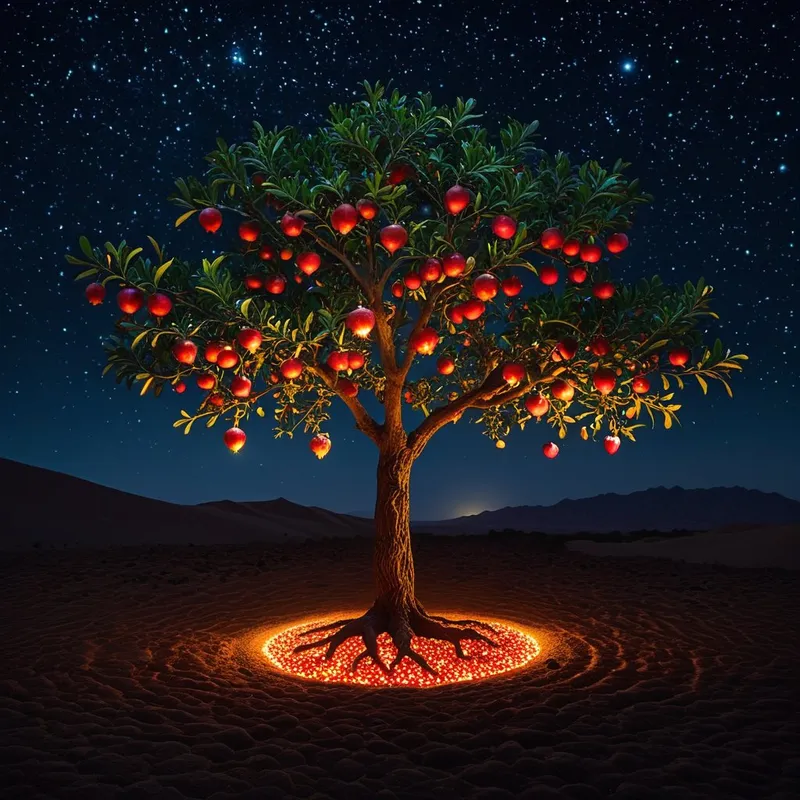
A sacred map of the soul's ripening, where the divine breath cultivates nine virtues in the human heart, transforming chaos into a living harvest of character.
The Tale of the Fruit of the Spirit
Listen. There is a story whispered not on the wind, but in the breath. It begins not with a king or a battle, but in the quiet, cracked earth of the human heart.
In the beginning was the Breath, the Ruach, moving over the formless deep. And the Breath sought a garden. Not of stone or cedar, but of flesh and spirit. It found a heart, a plot of earth tangled with thorns of fear and the hard clay of will. The Breath did not command. It knelt. It became a gentle rain upon the parched soil, a warm wind to soften the frost.
And from that tended ground, a stirring began. Not a single shoot, but nine. A silent, impossible cultivation. First, a vine of Love—not the fiery, consuming kind, but a deep, root-bound warmth that sought the good of the soil itself. Then, a cluster of Joy, like grapes that sweeten not from sun alone, but from the mystery of being alive. Between them grew the olive of Peace, its oil a balm for the heart’s own storms.
The cultivation was the conflict. For the old weeds fought back. Impatience scratched at the tender shoot of Patience. Cynicism blew a bitter wind to wither the budding flower of Kindness. The heart’s own shadow doubted the very fruit, calling it a phantom. The Gardener did not uproot the weeds by force. Instead, It watered the new growth. With every conscious turning toward compassion over rage, the root of Goodness dug deeper. With every choice to remain steadfast when the soul wished to flee, the bark of Faithfulness grew thick and strong.
The harvest was not an event, but a state of being. The fruit did not fall; it was. The heart, once a battlefield, became an orchard. The final fruit, Self-Control, was not a prison wall, but the secure fence around the garden, allowing all the others to ripen in safety. The resolution was not a fanfare, but a profound silence—the sound of a soul fully inhabiting itself, a living temple bearing a harvest not for itself, but for a hungry world.
Cultural Origins & Context
This "myth" is found within the epistolary literature of the early Jesus movement, specifically in the Letter to the Galatians. It was not a standalone fable but a powerful piece of pastoral psychology embedded in a contentious letter. The author, Paul, was writing to communities torn between different codes of law and spirit.
In this context, the catalogue of nine virtues was a radical cultural map. It countered rigid, external legalism with a vision of organic, internal transformation. It was passed down not by bards around a fire, but by teachers in house churches, read aloud to communities striving to define a new ethic. Its societal function was integrative: to provide a tangible, holistic picture of what a life animated by the divine pneuma actually looks and feels like, moving beyond abstract belief into the realm of character and communal relationship.
Symbolic Architecture
The myth’s power lies in its organic metaphor. The "fruit" is not manufactured, but grown. It symbolizes a psychological process that cannot be forced, only nurtured. Each virtue is not a solitary trait but an interconnected part of a whole being.
The fruit is not an achievement of the will, but the signature of the Self upon a life that has consented to be cultivated.
- Love, Joy, Peace form the foundational triad—the affective core. They represent the soul’s fundamental re-orientation from a state of lack and anxiety to one of connection, affirmation, and inner unity.
- Patience, Kindness, Goodness are the social triad—the virtues turned outward. They are the practical, relational expressions of the inner core, the ways the cultivated soul interacts with a frustrating and suffering world.
- Faithfulness, Gentleness, Self-Control are the structural triad—the virtues of endurance and boundary. They provide the resilience, humility, and inner authority that allow the entire psychic structure to remain intact under pressure.
Psychologically, the "Spirit" represents the guiding, integrative principle of the unconscious—the Self—working to harmonize the conscious ego with the broader psyche. The "works of the flesh" it opposes are the undisciplined, fragmented impulses of the unintegrated shadow.
The Dreamer's Resonance
When this myth stirs in the modern dreamer, it often signals a profound process of psychological integration. One does not dream of picking the fruit, but of tending the garden.
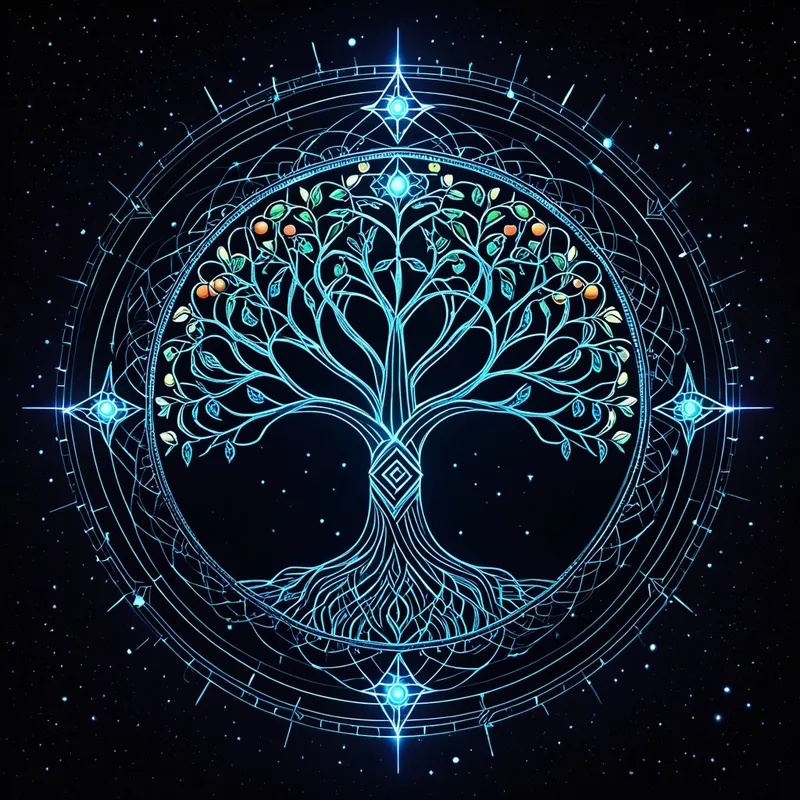
To dream of planting seeds in barren soil may reflect the initial, often frustrating, commitment to change a deep-seated pattern. Dreaming of a specific fruit glowing or rotting can pinpoint a virtue one is consciously cultivating or a shadow trait (like impatience as the rot of patience) that is demanding attention. A dream of a gentle, unseen presence watering the dream-garden resonates with the nurturing influence of the Self, often felt as a guiding intuition or synchronicity in waking life.
Somatically, this process can feel like a deep, slow unfurling—a release of chronic tension (the hard clay) or the unexpected welling up of genuine compassion (the sweet sap) where once there was only judgment. The conflict in the dream mirrors the inner resistance: the part of us that prefers the familiar desert to the vulnerable, demanding work of growth.

Alchemical Translation
The myth is a perfect blueprint for the alchemical individuation process. It models psychic transmutation from base matter (the chaotic "works of the flesh") into the philosophical gold (the ripe Fruit).
The Nigredo (the blackening) is the initial confrontation with one's own barren soil—the recognition of one's envy, strife, and factions. The Albedo (the whitening) is the cleansing rain of the Spirit, the conscious decision to submit the psyche to a process beyond ego control. The Citrinitas (the yellowing) is the slow, often hidden, growth of the virtues, the internalization of new patterns.
The harvest is the Rubedo—the reddening—where the fully integrated psyche bears its characteristic "fruit," not as a perfect state, but as its natural, radiant mode of being in the world.
For the modern individual, the struggle is not against mythical beasts, but against the autonomous complexes and cultural pressures that choke growth. The triumph is not a single victory, but the gradual realization that one's character has become more resilient, compassionate, and whole. The "Fruit of the Spirit" is the living symbol of a soul that has successfully turned its inner chaos into a cultivated, generative order. It is the ultimate alchemical goal: not to possess a stone, but to become the garden.
Associated Symbols
Explore related symbols from the CaleaDream lexicon: