Freya Myth Meaning & Symbolism
A goddess of love, war, and magic searches for her lost husband, wielding beauty and fury to claim her power in a world of gods and giants.
The Tale of Freya
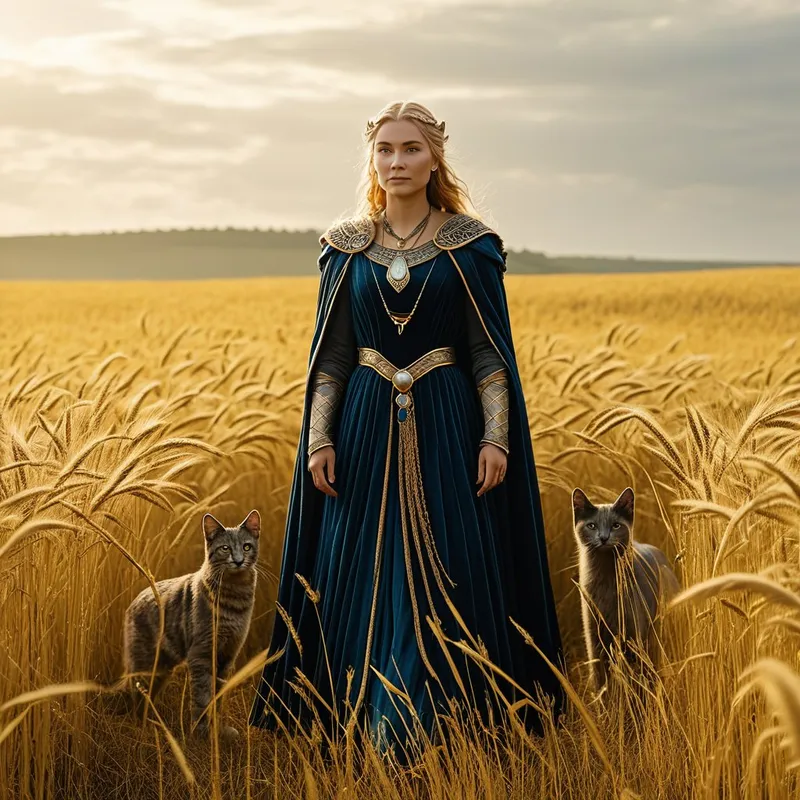
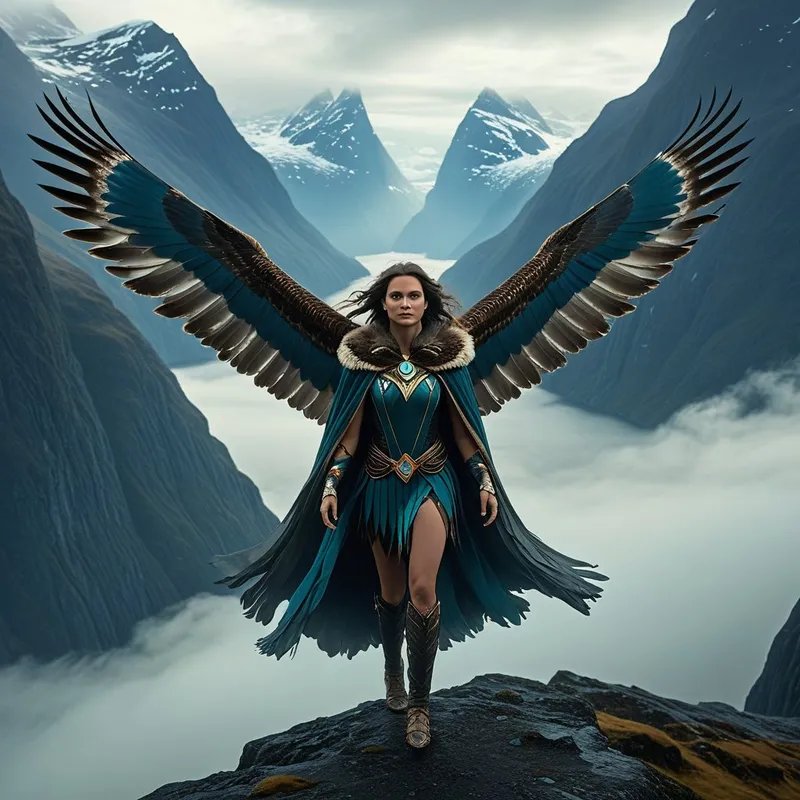
Hear now a tale from the time before time, when the winds of Asgard carried the scent of apples and iron. In the high halls of the gods, where the Yggdrasil's roots drank from deep wells, there lived Freya of the Vanir. None could look upon her without feeling the pull of the heart—the sweet ache of love and the sharp thrill of desire. Her hair was the color of summer wheat and ripe gold, and when she wept, her tears became red gold or amber. She rode in a chariot drawn by two great grey cats, their eyes like polished jet, and she wore a cloak of falcon feathers that allowed her to fly between the worlds.
Her heart belonged to Óðr, a god whose name means "the frenzied one," the ecstatic. But Óðr was a wanderer, his spirit a restless flame that could not be held. One day, he kissed Freya’s brow, his eyes already looking to distant horizons, and he was gone. The light did not fade from Asgard, but it fled from Freya’s hall, Sessrúmnir. Her golden tears fell upon the stone floors, and her longing became a physical force, a cold wind that swept through the realms.
She could not sit in silence. Donning her feather cloak, she became a falcon, slicing through the clouds over Midgard and into the shadowed, frozen reaches of Jötunheim. She searched in the courts of kings and the huts of peasants, in deep forests and on barren mountains. Her quest was not a secret. Giants, smelling her power and her desperation, sought to trap her. They offered bargains, they set magical snares, but her will was a tempered blade. She would pause only to claim what was hers by right: the souls of half the warriors slain in battle, whom she would welcome to her own field, Fólkvangr.
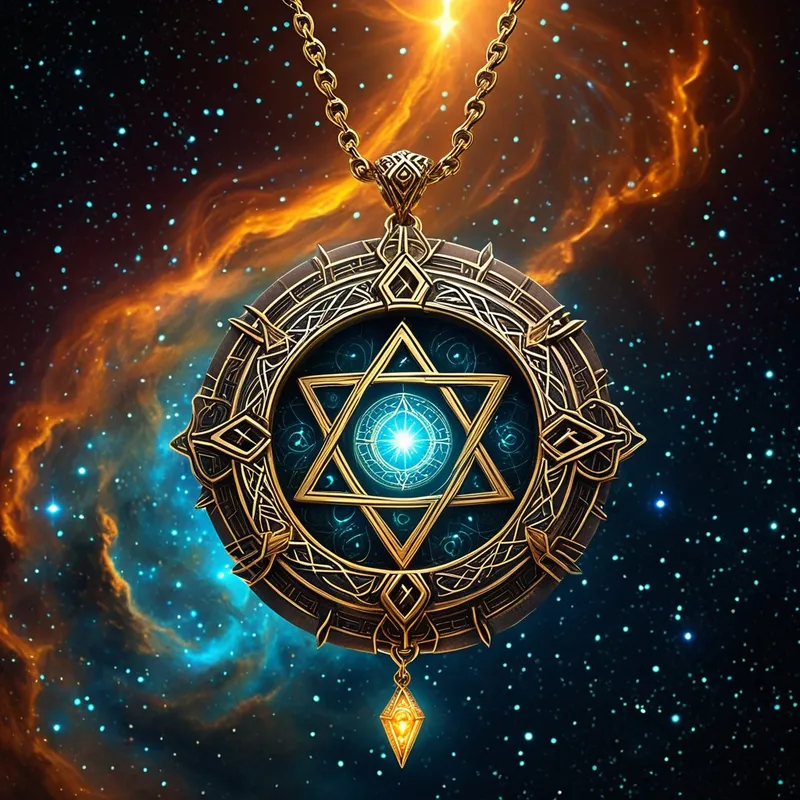
In her wandering, her desire took other forms. She came upon four dwarven craftsmen in a sunless forge, their faces lit by the glow of a masterpiece: a necklace of such craftsmanship it seemed to capture the light of stars and the fire of the earth itself—the Brísingamen. To possess it, she offered not gold, but a night of her company to each dwarf. It was a transaction of pure, unashamed desire, a claiming of beauty and power on her own terms. The necklace became part of her, a symbol of her sovereignty.
Yet even with the Brísingamen warm against her skin, the hollow place where Óðr resided remained. Her search was endless, a cycle of soaring hope and crushing return. The myth does not end with a reunion in a sunlit field. It ends with a goddess forever poised between possession and longing, her chariot ready, her cloak at hand, a sovereign of love who knows its price is an eternal, fruitful yearning.
Cultural Origins & Context
The stories of Freya come to us primarily through the Poetic Edda and the Prose Edda, texts compiled in Iceland in the 13th century but drawing on a much older, oral tradition. These were not holy scriptures, but living stories told in longhouses, around fires, in a world intimately tied to the cycles of fertility, the terror of winter, and the glory and gore of battle.
Freya was a deity of the Vanir, a tribe of gods who were, according to myth, once at war with the more familiar Aesir. Her incorporation into Asgard after a tense peace speaks to the integration of essential, life-giving forces—fertility, sensual magic (seidr), and ecstatic love—into the pantheon of sovereignty and war. She was not a minor figure; she was among the most revered. Her societal function was profound: she presided over the terrifying and beautiful mysteries of sex, birth, and death (claiming her share of the slain), and she was the master of seidr, a form of sorcery that even Odin sought to learn. She modeled a form of feminine power that was autonomous, fierce, and deeply connected to the cyclical nature of life and fate.
Symbolic Architecture
Freya is not a simple allegory for "love." She is the archetypal embodiment of libido in its fullest Jungian sense: the psychic energy of life itself, which manifests as erotic love, creative fury, deep longing, and the will to power.
To seek the lost beloved is to quest for the missing half of one's own soul, the animus that provides direction and ecstatic connection to the world.
Her two great cats symbolize the tamed, yet potent and independent, forces of instinct and sensuality that draw her chariot—she is in command of her animal nature, not ruled by it. The Brísingamen, won through a transaction of desire, represents the hard-won jewel of the integrated Self. It is not given; it is claimed, often through negotiations with the "dwarves" of our own unconscious—the cunning, earthy, shadowy aspects of psyche that craft our most precious talents and complexes.
Most critically, her eternal search for Óðr represents the core dynamic of the psyche: the conscious ego (Freya, the sovereign) in perpetual, often painful, dialogue with the transcendent function (Óðr, the ecstatic, wandering spirit). He is never fully possessed, only periodically encountered, for the moment we believe we have captured meaning or wholeness, it stagnates. The journey is the destination.
The Dreamer's Resonance
When Freya’s pattern stirs in the modern dreamer, it often manifests as dreams of potent, sometimes unsettling, desire and searching. You may dream of a breathtaking piece of jewelry you must obtain, a lost person you desperately seek through unfamiliar cities, or the ability to shapeshift into a bird to gain a new perspective.
Somatically, this can feel like a restless energy in the chest and hands—a need to reach, to claim, to move. Psychologically, you are likely in a process of recognizing a deep, perhaps neglected, longing. This is not mere wantonness; it is the soul's imperative to reunite with a vital aspect of its own power or connection that has gone "wandering." The dream may also bring anxiety, the fear of the price (like bargaining with dwarves), or the sorrow of the endless search. This is the psyche working to reconcile your conscious life with a powerful undercurrent of libidinal energy seeking expression and union.
Alchemical Translation
The alchemical process modeled by Freya’s myth is the coniunctio—the sacred marriage. But this is not a fairy-tale union. It is the arduous, internal work of uniting opposites: love and war, beauty and fury, possession and release, the human and the divine.
The first operation is not to find the beloved outside, but to don the falcon cloak—to achieve the sublimatio that allows you to survey your own inner landscape from a higher perspective.
The search for Óðr is the journey of individuation. We must first acknowledge the "lost husband"—the feeling of incompleteness, the missing ecstasy or meaning. Then, we must engage in the negotiation for the Brísingamen: facing the shadowy, "dwarven" parts of ourselves (our craftiness, our lusts, our transactional instincts) to claim the unique jewel of our authentic identity and power. This often feels transgressive, as Freya’s bargain did.
Finally, we must accept the cyclical nature of this work. Óðr returns and departs. Wholeness is not a permanent state but a recurring moment of synthesis. To be Freya is to hold sovereignty in the midst of this eternal cycle—to welcome the slain aspects of the old self to Fólkvangr, to wear your hard-won jewels, and to keep your chariot ready, knowing the search itself, in all its longing and beauty, is the essence of a life fully lived.
Associated Symbols
Explore related symbols from the CaleaDream lexicon: