Fireworks at Lunar New Year Myth Meaning & Symbolism
The story of a village using fire, noise, and red to banish the beast Nian, a ritual reborn each year as fireworks at Lunar New Year.
The Tale of Fireworks at Lunar New Year
Listen, and hear the tale that lives in the crackle of the night and the scent of sulfur on the cold air. It was a time when the world was older, and the boundaries between the human realm and the wild, primordial dark were thin as winter ice.
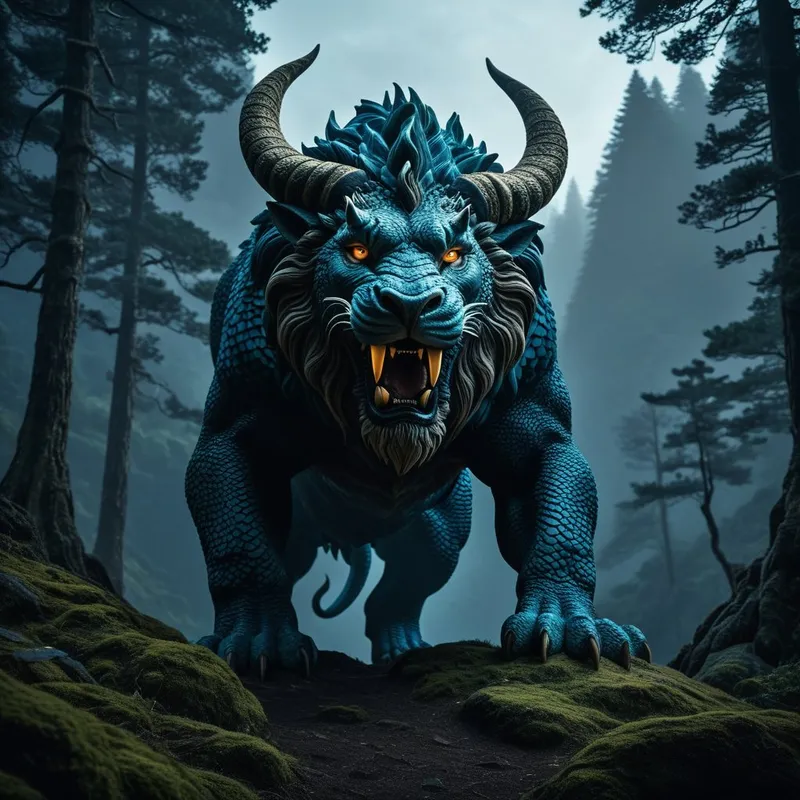
Each year, as the deepest cold settled and the old year withered, it would come. They called it Nian. No one could describe it fully, for to see it was often the last thing one did. It was said to be a composite of every fear that stalks the edge of the village: the lion’s ferocity, the bull’s strength, a hide of impossible scales. It moved with the silence of a predator, descending from the mist-shrouded mountains or rising from the black depths of the river. Its hunger was not merely for livestock, but for the very spirit of the community—for hope, for peace, for the fragile warmth of the hearth.
The people lived in a cycle of dread. As the year turned, they would gather their most precious belongings, their children clutched tight, and flee to the highest hills, watching from a distance as the shadow of Nian consumed their silent, empty homes. They would return to splintered doors and a lingering chill that took months to thaw. This was the way of things, an immutable law of the world: the beast took its due.
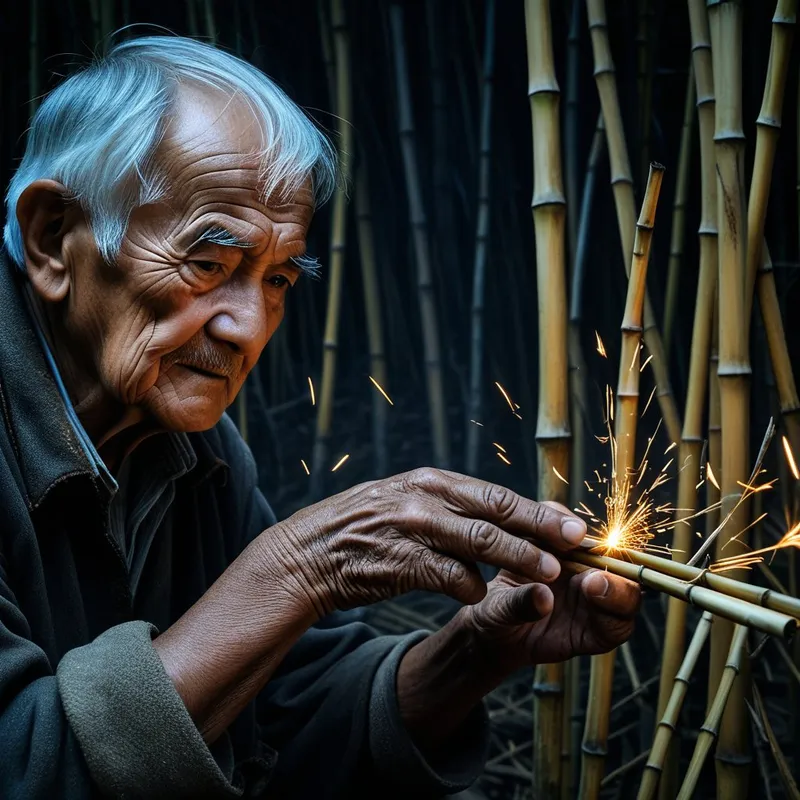
Until one year, an old man—some say a hermit, others a wandering sage—refused to flee. Perhaps he was too weary, or perhaps he saw a pattern others missed. As the villagers hurried past his hut, urging him to come, he merely nodded and stoked his fire. That night, as the dread presence of Nian seeped into the village, the old man did not hide. He hung strips of freshly dyed red cloth on his door. He piled dry bamboo upon his roaring hearth. And he waited.
When the beast, drawn by the lone sign of life, approached the hut, it paused at the crimson color, a low rumble of confusion in its throat. Then, the old man threw the bamboo onto the fire.
The reaction was not mere burning. The hollow bamboo, trapped with air and sap, exploded with a series of deafening BANGS and sharp, fiery cracks—a violence of light and sound that shattered the predatory silence. Nian, a creature of stealth and shadow, recoiled as if struck. The blinding flashes of light seared its night-accustomed eyes; the cacophonous reports assaulted its sensitive ears. With a terrified shriek that echoed through the valley, the beast turned and fled, vanishing back into the formless dark from whence it came.
At dawn, the villagers returned, expecting ruin. Instead, they found the old man sweeping his step, the air smelling of smoke and victory. He showed them the red cloth and the shattered bamboo. The secret was not in strength, but in perception. The next year, they did not flee. Together, they painted their doors red. They filled the streets with the light of lanterns. And as the dread hour approached, they lit great piles of bamboo, filling the long night with a protective wall of fire and thunder, driving Nian back once more. What was once a night of fear became a vigil of light. The ritual was born.
Cultural Origins & Context
This is not a myth confined to a single text or dynasty. It is a folk narrative, an etiological myth that blossomed from the collective imagination to explain the most vibrant customs of the Lunar New Year, or Chūn Jié. Passed down orally through generations, likely by elders to wide-eyed children on the eve of the festivities, its primary function was pedagogical and unifying. It answered the child’s question, “Why do we do this?” with a story that transformed practical action (using loud noises to ward off animals or evil spirits, a practice found globally) into a heroic, communal drama.
The myth served as the psychic container for the anxiety of the year’s turn. In agrarian societies, the end of winter was a precarious time—stores were low, the future uncertain. The story of Nian gave a name and a shape to those formless fears: scarcity, misfortune, the unknown. More importantly, it provided a clear, collective ritual to actively combat them. The myth thus functioned as a social script, binding the community together in a performative act of defiance. It turned passive dread into active celebration, ensuring each generation understood not just how to celebrate, but why it was a matter of survival.
Symbolic Architecture
At its heart, the myth is a profound allegory for the human confrontation with time and the unconscious. Nian is not just a monster; it is the embodiment of the psychic totality of the past year—all its unresolved conflicts, lingering regrets, accumulated fears, and dormant energies. It is the shadow of time itself, returning to be integrated or banished.
The beast at the gate is always the un-lived life of the year past, demanding acknowledgment.
The villagers’ initial flight represents the ego’s default position: avoidance. We seek to outrun our psychological burdens, our “old years.” The old sage embodies the emergent consciousness—the Self archetype—that chooses to face the shadow. His tools are brilliantly symbolic: red, the color of blood, life, vitality, and yang energy, repels the deathly, yin nature of the beast. Fire is pure transformative energy, consciousness itself. The exploding bamboo represents the shocking, disruptive power of insight—the “Aha!” moment that shatters old, rigid patterns of fear.
The collective ritual that follows translates individual insight into communal healing. The fireworks are a sympathetic magic: by recreating the sounds and sights that defeated Nian, the community psychically rehearses its victory over chaos, reaffirming its shared identity and resilience.
The Dreamer's Resonance
When this myth appears in modern dreams, it rarely manifests as a literal retelling. Instead, one may dream of being pursued by a vague but terrifying presence at a time of personal transition—the end of a job, a relationship, a life phase. The setting is often liminal: empty streets at night, an old childhood home, a border between landscapes.
The somatic feeling is key: a deep, ancestral dread coupled with a frantic search for a tool or a solution. The dreamer might be fumbling with matches that won’t light, or shouting but making no sound. This reflects the psyche’s struggle to mobilize its innate resources (the “fire” and “noise” of conscious action and expression) against a looming, internalized threat. To then dream of successfully creating light or sound—a light switch flooding a dark room, a shout finally heard—signals a breakthrough. The psyche is moving from a state of paralyzed identification with the shadow (Nian) towards active confrontation and integration, initiating a process of renewal.
Alchemical Translation
The myth models the complete cycle of individuation. The “old year” is the outworn personality, the constellation of habits, complexes, and self-concepts that have served their time but now hold us back. Nian is the terrifying yet necessary confrontation with this psychic material when it rises, unbidden, from the unconscious.
The alchemical fire is not for destruction, but for revelation; it shows the shadow its own form, and in that seeing, the shadow loses its power.
The individual’s journey mirrors the village’s. First, we flee (repression). Then, a part of us—the observing ego or the prompting of the Self—stops and turns around. This is the critical moment of nigredo, the dark night of the soul. The “red” we hang is the commitment to life and consciousness in the face of darkness. The “fire” we light is the focused attention of introspection. The “fireworks”—the loud, disruptive insights—are the moments of painful but liberating self-awareness that finally scatter our compulsive patterns.
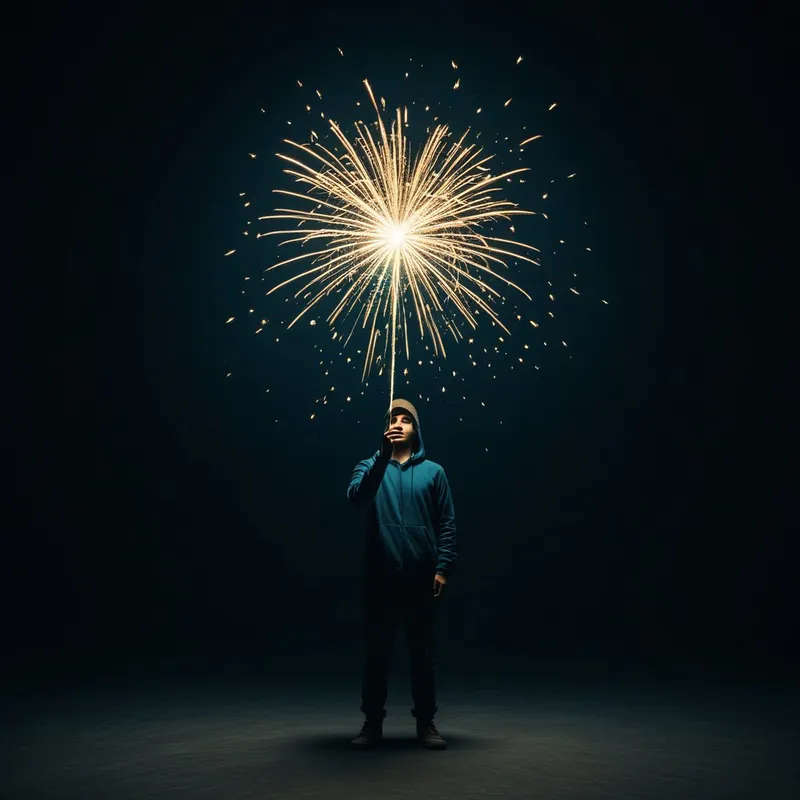
The celebration that follows, the Lunar New Year, is the albedo and rubedo—the whitening and reddening. It is the integration of the lesson into a renewed self. We clean our homes (psychic cleansing), wear new clothes (a new attitude), and share feasts (communion with others and with life). The ritual of the fireworks becomes an annual psychic reset, a conscious participation in the myth. We are not merely remembering a story; we are enacting the eternal human drama of facing time’s passage, transforming existential fear into a collective, luminous roar against the dark. In that shared, brilliant explosion, we momentarily defeat the beast, not by killing it, but by reminding ourselves—and it—that we possess the light.
Associated Symbols
Explore related symbols from the CaleaDream lexicon: