
Feng Shui Wind Chimes Myth Meaning & Symbolism
A celestial myth where the Weaver Girl's grief and the Black Tortoise's wisdom forge wind chimes to harmonize the Five Elements and guide lost souls.
The Tale of Feng Shui Wind Chimes
Listen, and hear the story whispered not in books, but on [the wind](/myths/the-wind “Myth from Various culture.”/) itself. In the time when the [Jade Emperor](/myths/jade-emperor “Myth from Chinese culture.”/)’s court still shimmered with newness, a profound disharmony plagued the mortal realm. The [Wu Xing](/myths/wu-xing “Myth from Chinese Philosophy culture.”/), [the Five Elements](/myths/the-five-elements “Myth from Chinese culture.”/), were not dancing in their eternal cycle, but clashing in silent, violent discord. Wood splintered without the nourishing touch of [Water](/myths/water “Myth from Chinese culture.”/). Fire raged uncontrolled, consuming all. Earth lay barren and unmoving. Metal rang with a harsh, lonely clang. Water flowed listlessly, with no purpose.
This discord seeped into the very Qi of [the world](/myths/the-world “Myth from Tarot culture.”/). Homes felt unsettled. Crops withered. The hearts of people grew anxious, their spirits adrift, unable to find their anchor in the chaos. Their silent pleas, carried on errant breezes, finally reached the highest heavens.
There, in her celestial pavilion woven from moonlight and cloud, sat the Zhi Nü, the Weaver Girl. She who plaited the destinies of stars and spun the [threads of fate](/myths/threads-of-fate “Myth from Greek culture.”/) heard the dissonant symphony of the suffering below. Each fractured note tugged at her own immortal heart, for she knew the pain of separation—her own love, the Cowherd, was forever across the Silver River of [the Milky Way](/myths/the-milky-way “Myth from Greek culture.”/). Her grief, a constant, quiet companion, now resonated with the world’s pain.
Moved by a compassion deeper than the heavens, she descended. Not in grand procession, but as a sigh upon the air, arriving at a sacred mountain peak where the winds of all directions converged. There, she encountered the ancient Xuan Wu, [the Black Tortoise](/myths/the-black-tortoise “Myth from Chinese culture.”/), a being of immense patience and profound earthly wisdom, who had witnessed the birth of mountains and the carving of rivers.
“Great Weaver,” his voice rumbled like stones grinding deep within [the earth](/myths/the-earth “Myth from Hindu culture.”/), “you weave the patterns of heaven, but the threads of earth are tangled. The elements do not converse; they shout.”
The Weaver Girl looked upon the world, her eyes seeing not just forms, but the flowing, tangled rivers of elemental energy. “They have forgotten their song,” she whispered. “I must give them a voice.”
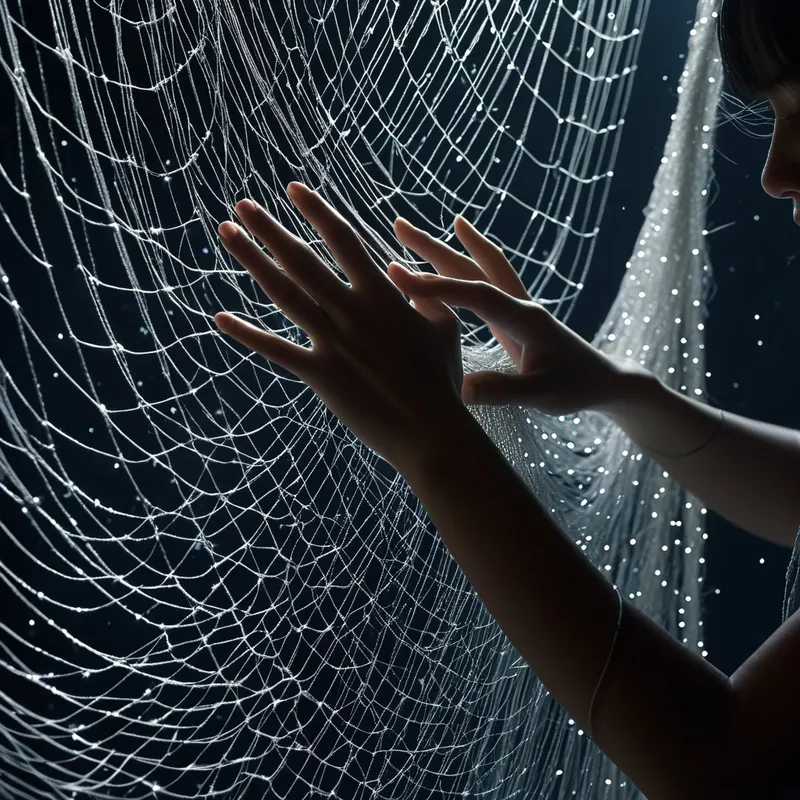
From her sash, she drew her silver shuttle—the tool with which she wove the constellations. But instead of star-threads, she began to gather the very winds themselves. She caught the gentle, growing breath of the East (Wood) and the fierce, transformative heat of the South (Fire). She lured the stable, nurturing whisper of the Center (Earth) and the clear, discerning sigh of the West (Metal). Finally, she captured the deep, flowing murmur of the North (Water).
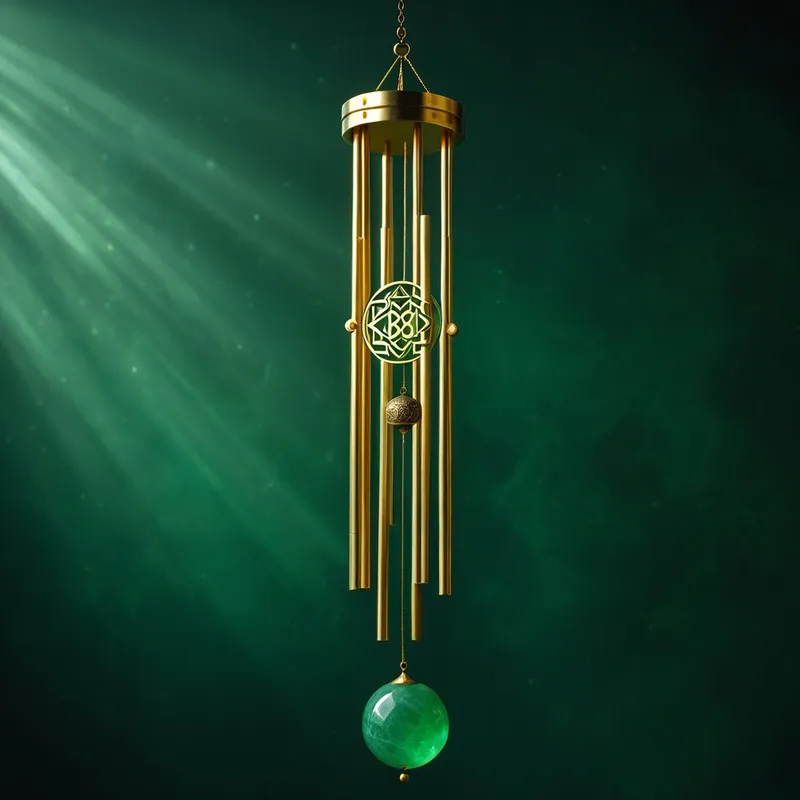
As she wove these captured breaths, a tear escaped her—a single drop of celestial sorrow for all that was lost and out of balance. The tear fell upon her weaving. Where it touched, the tangled winds crystallized into a cluster of hollow tubes, each resonating with the unique pitch of its elemental origin: a woody chime, a fiery chime, an earthy chime, a metallic chime, a watery chime.
The Black [Tortoise](/myths/tortoise “Myth from Greek culture.”/) saw her creation and breathed upon it his own essence—the spirit of endurance and protection. From his shell, a fragment transformed into a clapper, shaped like the Taijitu. He suspended it within the cluster of tubes.
The first breeze stirred. The clapper turned, gently striking the tubes. Not a cacophony, but a conversation. A melody emerged—a complex, harmonious chord that was the sound of the Wu Xing in perfect, flowing balance. The sound rippled out across the land. Where it touched, raging fires calmed to hearths, stagnant waters began to flow, splintered wood sought the soil, and hardened metal remembered it could sing. The lost Qi of homes settled. Anxious hearts found a moment of peace, guided by the gentle, audible map of harmony hanging in the air.
The Weaver Girl had not commanded the elements. She had listened to their discord, woven it with compassion, and given it back as a song. And so, the first wind chime was born—not a tool of control, but an instrument of remembrance.
Cultural Origins & Context
This myth, while not codified in a single canonical text like the [Journey to the West](/myths/journey-to-the-west “Myth from Chinese culture.”/), lives within the oral and practical traditions of [Feng Shui](/myths/feng-shui “Myth from Chinese culture.”/) and folk spirituality. It is a “myth of application,” a story embedded in the use of an everyday object. It was likely told by [Feng Shui](/myths/feng-shui “Myth from Chinese culture.”/) masters, village elders, and artisans who crafted chimes from bamboo, ceramic, or metal.
Its societal function was pedagogical and psychological. In a culture deeply attuned to living in harmony with natural and invisible forces, the myth explained why a simple cluster of sounding tubes could affect one’s environment and state of mind. It transformed the wind chime from a decorative item into a sacred technology—a focal point for the intention to cultivate harmonious Qi. The story served as a mnemonic device, teaching that balancing the [Five Elements](/myths/five-elements “Myth from Chinese culture.”/) was not an abstract concept, but a tangible practice that could be heard and felt. It democratized spiritual practice, placing a tool of celestial origin within reach of any household.
Symbolic Architecture
At its core, the myth is a profound [allegory](/symbols/allegory “Symbol: A narrative device where characters, events, or settings represent abstract ideas or moral qualities, conveying deeper meanings through symbolic storytelling.”/) for the [psyche](/myths/psyche “Myth from Greek culture.”/)’s innate [movement](/symbols/movement “Symbol: Movement symbolizes change, progress, and the dynamics of personal growth, reflecting an individual’s desire or need to transform their circumstances.”/) toward wholeness. The disharmony of the Wu Xing represents a fragmented inner state—where our creative drive ([Wood](/symbols/wood “Symbol: Wood symbolizes strength, growth, and the connection to nature and the environment.”/)) is disconnected from our [passion](/symbols/passion “Symbol: Intense emotional or physical desire, often linked to love, creativity, or purpose. Represents life force and deep engagement.”/) (Fire), our [stability](/symbols/stability “Symbol: A state of firmness, balance, and resistance to change, often represented by solid objects, foundations, or steady tools.”/) ([Earth](/symbols/earth “Symbol: The symbol of Earth often represents grounding, stability, and the physical realm, embodying a connection to nature and the innate support it provides.”/)) feels separate from our discernment ([Metal](/symbols/metal “Symbol: Metal in dreams often signifies strength, transformation, and the qualities of resilience or coldness.”/)), and our emotional flow ([Water](/symbols/water “Symbol: Water symbolizes the subconscious mind, emotions, and the flow of life, representing both cleansing and creation.”/)) is blocked.
The wind chime is the psyche’s own instrument, built to translate inner chaos into a recognizable, harmonious pattern.
The Weaver Girl represents the conscious, creative [aspect](/symbols/aspect “Symbol: A distinct feature, quality, or perspective of something, often representing a partial view of a larger whole.”/) of the [soul](/symbols/soul “Symbol: The soul represents the essence of a person, encompassing their spirit, identity, and connection to the universe.”/) that can observe internal conflict. Her celestial [grief](/symbols/grief “Symbol: A profound emotional response to loss, often manifesting as deep sorrow, yearning, and a sense of emptiness.”/) is crucial; it is not a personal flaw, but a [depth](/symbols/depth “Symbol: Represents profound layers of consciousness, hidden truths, or the unknown aspects of existence, often symbolizing introspection and existential exploration.”/) of feeling that connects her to universal suffering, granting her the [empathy](/symbols/empathy “Symbol: The capacity to understand and share the feelings of others, often manifesting as emotional resonance or intuitive connection in dreams.”/) needed to intervene. Her silver shuttle is the focused [attention](/symbols/attention “Symbol: Attention in dreams signifies focus, awareness, and the priorities in one’s life, often indicating where the dreamer’s energy is invested.”/) and [intention](/symbols/intention “Symbol: Intention represents the clarity of purpose and direction in one’s life and can symbolize motivation and commitment within a dream context.”/) of the conscious mind.
The Black [Tortoise](/symbols/tortoise “Symbol: Tortoises symbolize wisdom, longevity, and the importance of patience in achieving goals.”/) symbolizes the deep, unconscious wisdom of the [body](/symbols/body “Symbol: The body in dreams often symbolizes the dreamer’s self-identity, personal health, and the relationship they have with their physical existence.”/) and the instinctual self—the ancient, patient knowing that resides below the surface of daily thought. His contribution, the clapper shaped as the Taijitu, is the activating principle. It represents the dynamic [tension](/symbols/tension “Symbol: A state of mental or emotional strain, often manifesting physically as tightness, pressure, or unease, signaling unresolved conflict or anticipation.”/) of opposites (Yin/Yang) that is necessary to set the process of harmonization in [motion](/symbols/motion “Symbol: Represents change, progress, or the flow of life energy. Often signifies transition, personal growth, or the passage of time.”/). Without this unconscious impetus, the potential for [harmony](/symbols/harmony “Symbol: A state of balance, agreement, and pleasing combination of elements, often associated with musical consonance and visual or social unity.”/) remains silent.
The Dreamer’s Resonance
When wind chimes appear in modern dreams, they often signal a process of psychic re-tuning. The dreamer is likely in a state where internal elements are in conflict—perhaps ambition (Fire) is burning out relationships (Water), or rigid analysis (Metal) is stifling new growth (Wood).
The sound, or often the anticipation of the sound, is key. Hearing a clear, beautiful chime melody suggests the unconscious is successfully integrating disparate parts of [the self](/myths/the-self “Myth from Jungian culture.”/), offering a moment of clarity and peace. Hearing a discordant, jarring, or silent chime points to resistance in this process; the dreamer may be intellectually aware of the need for balance but is not yet allowing the deeper, unconscious wisdom (the Black Tortoise) to activate the transformation.
The wind itself in the dream is the external stimulus—life events, relationships, challenges—that strikes against the structures of the self. The dream asks: What melody is your life currently producing? Is it a harmonious conversation, or a clash of disconnected notes?

Alchemical Translation
The myth models the individuation process—the Jungian journey toward becoming a whole, integrated Self—with elegant precision. It begins with the recognition of “celestial disharmony,” the suffering that arises from a life out of balance with one’s own nature. This suffering, like the Weaver Girl’s grief, is not to be shunned but embraced as the catalyst.
The first alchemical step is observation without judgment: gathering the “winds” of our conflicting impulses, emotions, and thoughts. This is the work of consciousness. The second step is the intervention of compassionate creativity: weaving these raw materials together with the intention of healing, not domination.
The alchemical gold is not the elimination of conflict, but the creation of an inner structure that can hold conflict and transform it into music.
The final, crucial step is surrendering to the unconscious activator. We must allow the ancient, tortoise-like wisdom of the body and the deep psyche—symbolized by [the Taijitu](/myths/the-taijitu “Myth from Chinese culture.”/) clapper—to set our new inner structure into motion. This is often the hardest part, requiring faith and patience. The resulting “music” is the authentic expression of a life in flow, where every aspect of the self, even the painful or contradictory parts, finds its place and its voice in the greater symphony of the whole being.
Thus, to hang a Feng Shui wind chime is, on a soul level, to perform this myth. It is an external ritual reflecting an internal commitment: to listen to the discord within, to weave it with conscious care, and to invite the deep, ancient wisdom of the self to strike the chord that returns us to our own inherent song.
Associated Symbols
Explore related symbols from the CaleaDream lexicon: