Fauns/Satyrs Myth Meaning & Symbolism
The myth of the Celtic Faun, a half-wild guardian of the threshold, teaches the sacred necessity of untamed instinct and the wisdom of the liminal space.
The Tale of the Forest's Threshold
Listen. The wind does not just blow through the pines; it carries a whisper older than the stones. In the time when the world was a tapestry of green shadow and silver mist, when every hill had a name and every spring a spirit, there were places where the weave grew thin. Not a clearing, not a path, but a between—a place where the ordered world of hearth and field frayed into the wild song of the untamed wood.
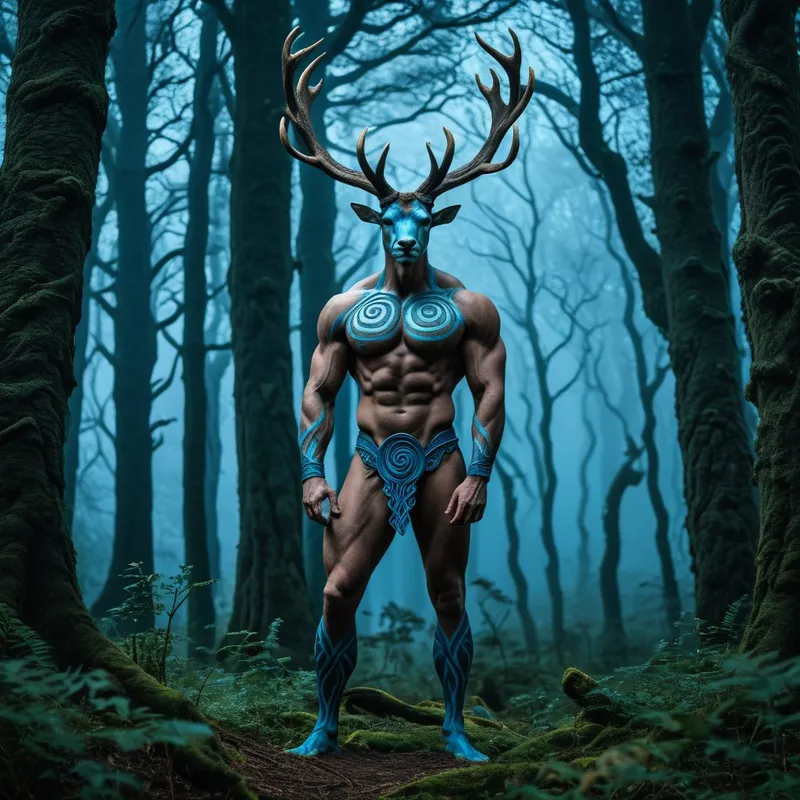
Here, at this frayed edge, he waited. He was not a man, though he stood on two legs and his eyes held a terrible knowing. He was not a beast, though the crown of a mighty stag sprang from his brow and his feet were cloven hooves that made no sound on the moss. He was the Faun of the threshold, the keeper of the veil. His skin was the colour of bark, marked with the blue spirals of forgotten stars. His breath was the scent of damp earth and crushed fern.
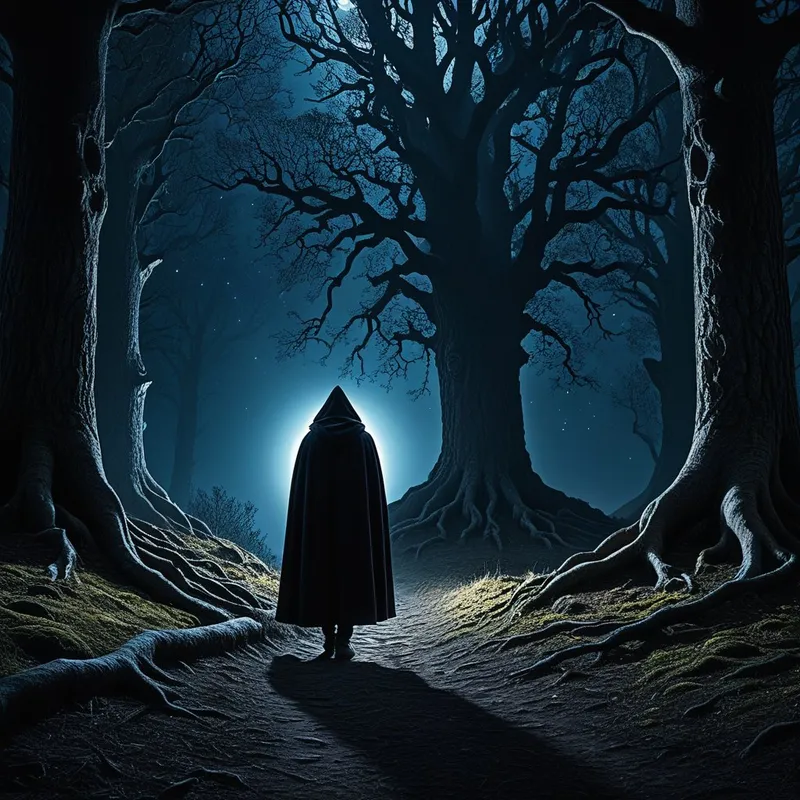
The people of the nearby dun knew of him. They left offerings of honeycomb and the first blackberries of summer at the oldest oak, where the roots formed a natural arch. They did this not for favour, but for acknowledgement—a respectful nod to the power that governed the rules of crossing. To enter the deep wood without this silent treaty was to step into a different story.
One season, when the harvest was poor and a strange silence fell over the land, a young man named Ciarán grew restless. The wisdom of the elders spoke of a sacred white hart that dwelled in the heart of the forest, whose appearance could restore balance. Driven by a mix of desperation and pride, Ciarán took his spear and, bypassing the offering oak, plunged into the wood at the thinnest hour before dawn. He sought a hero’s path.
The forest did not welcome him. Familiar landmarks vanished. The light became a green, submerged gloom. His spear felt like a dead weight, an insult to the whispering quiet. For three days and nights, he wandered in circles, haunted by the feeling of being watched, until exhaustion claimed him beneath a yew tree.
He awoke not to sunlight, but to the heat of a breath on his neck. There stood the Faun, so close Ciarán could see the moss caught in his antlers, the intelligence in his deep, animal eyes. No words were spoken, but a communication flowed—a torrent of sensation: the sharp terror of the hunted hare, the patient growth of the root, the raw, unthinking joy of the river in flood. It was the voice of the forest itself, and it was not angry. It was disappointed. It showed Ciarán his own journey as the forest saw it: not a quest, but a clumsy, noisy wounding.
The Faun then turned and walked. Compelled, Ciarán followed, leaving his spear against the yew. They walked until they came to a still, black pool, mirror-calm under the canopy. The Faun pointed a long finger. There, drinking at the far shore, was the white hart, more spirit than flesh. Ciarán felt no urge to capture or claim it. He simply knelt, his human arrogance washed away by the profound, non-human gaze of the guardian. In that moment of surrender, he understood the treaty: the wild is not a resource to be taken, but a consciousness to be met. The Faun placed a hand, rough as bark, on his shoulder—a gesture of acceptance, not of the man as master, but of the man who had finally learned to see. When Ciarán looked up again, he was alone at the edge of the village field, the taste of wild water on his lips, the forest sighing softly behind him.
Cultural Origins & Context
The figure we cautiously align with the Mediterranean Satyr or Faun in a Celtic context is less a singular deity and more a manifestation of a pervasive spiritual principle. The insular Celtic world, particularly of Ireland, Scotland, and Wales, did not have an exact, named parallel to Pan. Instead, it teemed with a class of beings known as the Aos Sí, the people of the mounds. Among these, certain entities embodied the untamed, physical vitality of nature.
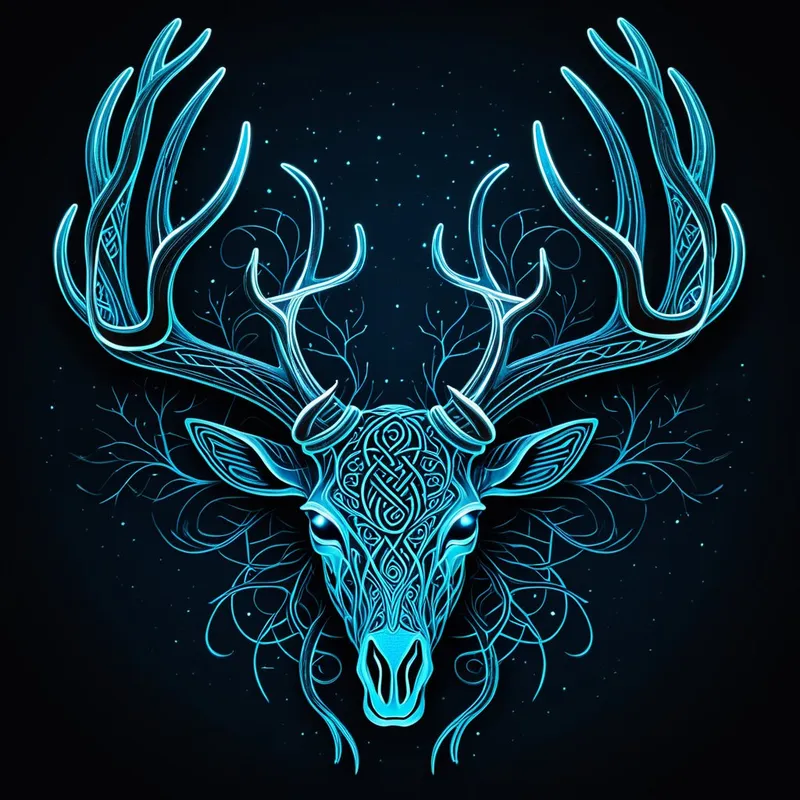
Figures like Cernunnos, the "Horned One," depicted on the Gundestrup Cauldron, or the later folkloric Kelpie and Phynnodderee, carry this hybrid, liminal energy. These stories were not formal epics but local lore, told by the fireside or by the seanchaí (the traditional Gaelic storyteller/historian). Their function was profoundly pedagogical and psychological. They mapped the psychic landscape, defining the boundaries between the tír na nóg (the world of order, the farm) and the coillte (the world of chaos, the forest). The "Faun" myth served as a cautionary and initiatory tale, teaching respect for the uncontrollable forces of nature—both in the external world and within the human psyche.
Symbolic Architecture
The Celtic Faun is the embodied symbol of the Shadow in its natural, instinctual form. He is not evil, but he is other—the part of the self that civilization seeks to prune, tame, or deny.
He represents the intelligence of the body, the wisdom of the gut, and the sacredness of raw, unmediated experience that exists before language and social contract.
His hybrid form—human intelligence fused with animal power—symbolizes the unresolved tension between our rational minds and our primal inheritance. His domain is the threshold, the literal and psychological borderland where one state of being transitions to another. He is the guardian of this crisis point. The myth teaches that to cross this border successfully—whether into a literal forest, a new phase of life, or the depths of one's own soul—one cannot barge through with the weapons of the ego (Ciarán's spear). One must first lay down those arms, acknowledge the guardian, and be willing to be transformed by the encounter. The Faun does not grant wishes; he grants perspective, forcing a confrontation with the true, wild self that lies beneath social persona.
The Dreamer's Resonance
When a modern dreamer encounters a Faun-like figure, it is often a signal from the unconscious that a threshold is near, and the ego's usual tools are inadequate. This is not the cartoonish devil of superstition, but a profound, often unsettling, embodiment of repressed instinct.
The somatic experience can be one of eerie stillness, a chilling or electrifying sensation, or a paradoxical mix of fear and deep familiarity. Psychologically, the dreamer may be facing a life transition (career change, relationship shift, creative block) where "civilized" logic has failed. The Faun appears to say: Your maps are useless here. You must navigate by a different sense. Dreaming of being chased by such a figure may indicate a refusal to acknowledge these instinctual drives, while dreaming of walking with it suggests a nascent, hard-won integration of this wild wisdom into the conscious personality.
Alchemical Translation
The journey of Ciarán is a perfect allegory for the Jungian process of individuation, specifically the confrontation with the Shadow. The first stage is the ego's heroic inflation ("I will solve this myself"), which leads inevitably to the circumambulatio—the lost, circular wandering in the dark forest of the psyche.
The crucial alchemical moment is not the finding, but the surrendering. The spear, symbol of directed will and aggression, must be left behind.
The confrontation with the Faun is the nigredo, the blackening—the humbling, terrifying encounter with the raw, unintegrated self. The Faun’s non-verbal communication is the psyche speaking in the pure language of symbol and affect, bypassing the ego's defenses. By accepting this communication without fleeing, Ciarán undergoes a solutio—a dissolution of his old, rigid identity.
Following the Faun to the pool represents guided introspection, leading to the encounter with the Self symbol (the white hart). He does not seize it; he beholds it in a state of receptive awe. This is the albedo, the whitening, the illumination that comes from shadow-work. The return to the village field is not a return to the old life, but a re-entry into the ordinary world now informed by the extraordinary. The treaty is internalized. The individual is no longer at war with their own nature but has established a respectful, conscious relationship with the inner guardian of the wild, allowing instinct and intuition to flow as allies, not as feared enemies to be suppressed or acted out unconsciously. The forest remains, but one now knows its true name.
Associated Symbols
Explore related symbols from the CaleaDream lexicon: