
Farhad and Shirin Myth Meaning & Symbolism
A sculptor's impossible love for a queen leads to a mountain carved by grief, a tale of devotion, betrayal, and the alchemy of the heart.
The Tale of Farhad and Shirin
Listen, and let the dust of ages settle upon your heart. In the time when Persia’s glory was a sun at its zenith, there lived a queen named Shirin, whose beauty was not merely of form, but of spirit—a radiance that could quiet a riotous city or make a nightingale fall silent in shame. Her name meant “sweet,” and her presence was a melody that haunted the dreams of kings and commoners alike.
And there was King Khosrow, Parviz, the mighty ruler, who desired Shirin as the ultimate jewel for his crown. His courtship was one of power and pageantry, a torrent of gifts and promises meant to sweep her into his imperial embrace.
But the Fates, those weavers of ironic design, had spun another thread. From the rugged mountains came Farhad, a master sculptor. He was a man of the earth, his hands shaped not for wielding scepters but for conversing with stone. He did not see a queen to be possessed; he saw a soul that mirrored the sublime harmony he sought in marble. Upon seeing Shirin, his heart was cleaved, not by an arrow, but by a revelation. His love was instant, absolute, and utterly hopeless.
King Khosrow, enraged by this challenge from a mere artisan, devised a cruel test. He summoned Farhad and proclaimed: “You claim a love worthy of a queen? Prove it. Carve a road through the heart of the mountain of Behistun. Channel the waters of the distant river to the plains where my palace stands. Accomish this impossible task, and perhaps you may dare to hope.”
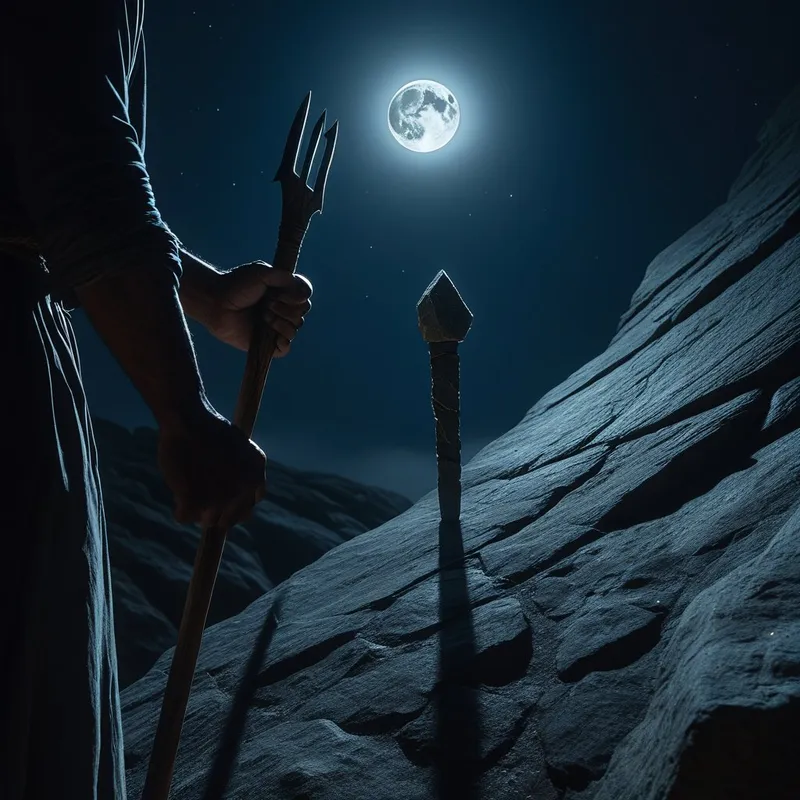
Where a king saw an insurmountable barrier, Farhad saw only the shape of his devotion. He took up his pickaxe, that simple extension of his will, and faced the mountain. Day after day, season upon season, the rhythmic clink-clink-clink of iron on rock became a heartbeat echoing through the valley. He was not merely digging; he was sculpting his soul into the landscape. He carved stairways where there were cliffs, smoothed paths where there were chasms. The mountain, in its ancient silence, began to yield, not to force, but to the relentless poetry of his labor.
Shirin, moved by a profound curiosity and a dawning awe, would ride to the foothills to witness this monumental act of love. She saw not a slave to a king’s whim, but a man in dialogue with the divine, translating passion into permanence. A silent understanding passed between them—a recognition of a purity of purpose that transcended societal chains. Her visits became his sustenance, the vision of her on her white horse the muse that fueled his Herculean labor.
Seeing the impossible nearing completion and sensing the unspoken bond, Khosrow’s jealousy curdled into malice. He sent a deceitful elder to the mountain with false tidings. The old man found Farhad, sweat and stone-dust mingling on his brow, and cried out, “Cease your toil, unfortunate one! Your love is ashes. The queen Shirin is dead!”
The world stopped. The clink-clink-clink ceased, and in that sudden silence, the universe contracted to a single point of agony. The pickaxe, the instrument of his devotion, fell from his hands. The mountain he had been mastering now witnessed his utter defeat. With a cry that was the sound of a world shattering, Farhad took that same pickaxe and brought it down upon his own head. His lifeblood watered the stones he had carved, and his great body fell upon the unfinished road. His love had moved a mountain, but could not survive the lie that broke his world.
When Shirin heard of this, she rode with the fury of a storm to the site. Finding Farhad lifeless, her own heart, which had been a kingdom unto itself, became a tomb. The legend says she kissed his brow, took the dagger from his belt, and joined him in death, choosing the eternity of shared tragedy over a lonely throne. The mountain stood as their monument, and the waters, when they finally flowed, were said to carry the salt of their tears.
Cultural Origins & Context
The story of Farhad and Shirin is a cornerstone of the Persian romantic epic tradition, most famously immortalized by the 12th-century poet Nizami Ganjavi in his masterpiece Khosrow and Shirin. While Nizami’s version is the most renowned, the tale’s roots are older, intertwining with pre-Islamic Persian lore and possibly historical figures from the Sassanian era. It was told and retold by poets, storytellers, and miniature painters, each adding layers of nuance.
Its societal function was multifaceted. On one level, it was a sublime entertainment, a tale of epic passion. On another, it served as a moral and spiritual allegory within a courtly culture. It explored the tension between earthly power (Khosrow) and spiritual, artistic devotion (Farhad), between the dictates of society and the imperatives of the individual heart. The story was a vessel for discussing the nature of true love (‘ishq), which in Sufi-influenced thought could be a path to divine realization—a love so absolute it consumes the self.
Symbolic Architecture
At its core, the myth is a profound map of the psyche in the grip of transformative love. Farhad is not just a lover; he is the archetype of the Creative Devotee. His mountain is the ultimate symbol of the impossible obstacle, the hardened reality of the world, the resistant material of one’s own fate or societal constraints.
The mountain is not an obstacle to be conquered, but the raw material of the soul’s expression. The act of carving is the act of giving form to the formless passion within.
Shirin represents the Anima, the inspiring force that activates the deepest creative and spiritual energies in a person. She is the “why” behind the impossible labor. Khosrow symbolizes the Tyrannical Ego or the worldly order that seeks to own, control, and commodify beauty and love. The false messenger is the archetypal Trickster of Despair, the voice from the outside (or within) that speaks the lie the heart is most afraid to believe.
The tragic resolution is not a failure, but a completion of a different order. Their deaths signify the transcendence of the personal into the mythical. They become eternal not as individuals, but as the united principle of Love and Devotion, inseparable from the landscape of the cultural soul.
The Dreamer's Resonance
When this myth stirs in the modern unconscious, it often manifests in dreams of monumental, solitary labor. You may dream of trying to tunnel through a vast, dark hill with a tiny tool, or of endlessly polishing a stone while waiting for someone who never arrives. Somatically, this can feel like a deep ache in the shoulders and hands—the body’s memory of burden.
Psychologically, this dream pattern signals a process of Psychic Excavation. The dreamer is engaged in the hard, often lonely work of processing a profound longing, grief, or creative endeavor. The “Shirin” in the dream may not be a person, but a calling, a lost ideal, or a part of one’s own potential that feels agonizingly out of reach. The dream asks: What mountain are you carving? And is the labor an expression of love, or a sentence of punishment? The arrival of the “false messenger” in a dream—a piece of bad news, a betrayal—often marks a crisis point where the dreamer’s current strategy of endurance risks collapse into despair or self-destruction.

Alchemical Translation
The alchemical journey mirrored in this myth is the transmutation of passive longing into active creation, and ultimately, into spiritual essence. Farhad begins with the prima materia of raw, overwhelming emotion (his love). The king’s challenge is the Nigredo, the blackening, the impossible task that forces the emotion out of the internal realm and into engagement with the hard, cold reality of the world (the mountain).
The years of carving are the Albedo, the whitening. This is the slow, purifying work of discipline, where love is tested and refined through relentless action. It is no longer a feeling, but a practice. Shirin’s visits represent moments of Soul-Connection, glimpses of the goal that nourish the spirit.
The pickaxe is the tool of conscious will. Each strike is a decision to love, to create, to persist, made again and again until it becomes the rhythm of one’s being.
The tragic end is the final, violent Rubedo. Farhad’s death is the shattering of the ego that was identified solely with the labor. His literal death symbolizes the necessary “death” of the personal, possessive aspect of the endeavor. The union of Farhad and Shirin in death is the Coniunctio, the fusion of the devoted laborer and the inspiring soul-image. They become the Philosopher’s Stone of the myth: the eternal, symbolic truth that love and devoted creativity are forces that can move mountains and outlast kingdoms, even if the individual perish in the process.
For the modern individual, the myth does not counsel tragic suicide, but the “death” of attachment to a specific, ego-driven outcome. It models the journey of pouring one’s entire being into a creative or loving act—carving your mountain—not for the reward of possession, but because the act itself becomes the ultimate expression and meaning of your life. The transformed landscape, the channeled waters, are what remain: the lasting impact on the world and the soul, carved by the pickaxe of a heart fully engaged.
Associated Symbols
Explore related symbols from the CaleaDream lexicon: