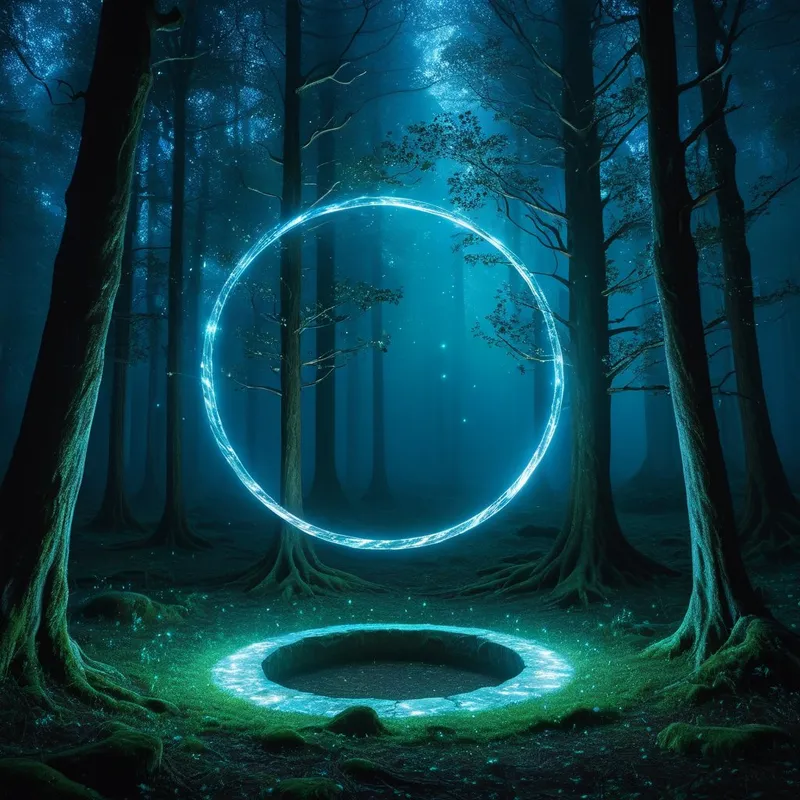
Fairy Ring Myth Meaning & Symbolism
A circle of mushrooms marking a portal to the Otherworld, where mortals dance with fairies and risk losing time, self, or gaining forbidden wisdom.
The Tale of the Fairy Ring
Listen, and let the hearth-fire grow low. I speak of a time when the world was thinner, and the veil between what is seen and unseen was but a breath of mist. In the deep, quiet heart of the old woods, where the sunlight falls in dappled pools and the air tastes of damp earth and secrets, you might find it. Not by searching, but by chance, or by a fate you did not choose.
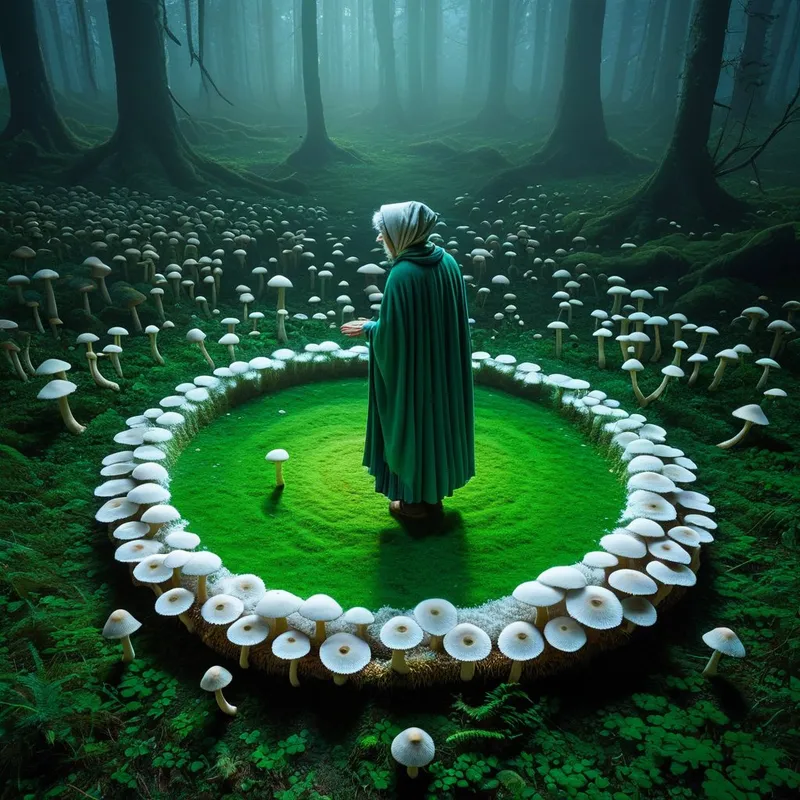
It appears overnight, a perfect circle of mushrooms, emerald green or bone-white against the dark loam. This is no accident of nature. This is a threshold. It is the dancing-floor of the Sídhe, the Good Folk, the Gentry. On nights when the moon is a sliver or full and fat, you can hear it—the faint, beguiling strain of pipes and bells, a music that bypasses the ear to pluck directly at the heart’s longing.
One such night, a young shepherd, weary from a lost lamb, followed that sound. His name is lost, as names often are in these tales. He pushed through the bracken and saw them within the ring: figures of impossible grace, glimmering like captured moonlight, dancing a pattern older than stone. The air within the circle shimmered, heavy with the scent of ozone and crushed thyme. One, a lady with hair like spun silver and eyes like deep pools, smiled at him. Her smile was an invitation, a promise of joy beyond mortal ken.
He stepped across the fungal border.
Time unspooled. He danced. He felt no weight, no age, no sorrow—only the ecstatic spiral of the dance, the dizzying whirl under stars that pulsed in time with the music. He was a note in their eternal song. When the lady finally released his hand, the music faded like a sigh. The dancers vanished, leaving only the trampled grass and the silent ring of mushrooms.
He stumbled home at dawn, his limbs aching with a strange new gravity. The thatched cottage he knew was gone. In its place stood a stranger’s house. The face of the old woman who answered the door was one he did not recognize, until she spoke his name—the name of her grandfather, who had vanished into the woods a hundred years before, leaving only a tale of fairy music. A century had passed in a single night. His world was dust. He had paid for the dance with all the time he had.
Cultural Origins & Context
The myth of the fairy ring is a global whisper, a folktale motif found from the misty highlands of Scotland and Ireland to the forests of Germany, Scandinavia, and beyond. It belongs to the vast, decentralized body of oral folklore, told not in temples by priests, but by firesides by grandmothers, by shepherds on lonely hills, and by travelers warning each other of the hidden perils and wonders of the wild places.
Its primary function was pedagogical and ecological. It served as a potent cautionary tale, teaching respect for the untamed natural world and its unseen custodians. By marking specific, anomalous natural phenomena (the sudden, circular appearance of fungi) as supernatural, it enforced a boundary. It told people: Here, the rules of your village do not apply. This place is not for you. This protected both the fragile fungal ecosystems and the people from potential danger (like eating poisonous mushrooms). The myth encoded a deep, animistic understanding of the landscape as alive, sentient, and sovereign.
Symbolic Architecture
At its core, the fairy ring is a symbol of the Self encountered at a point of radical transformation. It is a mandala etched into the earth, a perfect geometric boundary between the known world of the ego and the unknown realm of the unconscious.
The ring is not a barrier, but an interface. To cross it is to consent to a dialogue with everything you are not.
The fairies represent the autonomous, archetypal forces of the unconscious—the archetypes. They are beautiful, potent, creative, but utterly amoral by human standards. Their dance is the dynamic, swirling activity of the unconscious psyche, its patterns and complexes. The lost time is the quintessential symbol of the disorientation that occurs when the conscious mind is overwhelmed by unconscious content. One "loses time" in therapy, in deep creative work, or in profound grief—the ego’s linear narrative is suspended.
The shepherd is the naïve ego, lured by the promise of wholeness (the enchanting music) but unprepared for the cost of integration. His return to a changed world signifies the irreversible nature of true psychological transformation. Once you have seen the dance, you can never fully go back to who you were.
The Dreamer's Resonance
To dream of a fairy ring is to dream of a threshold moment in the psyche. The dreamer often stands at its edge, feeling a potent mix of terror and fascination. This is a somatic signal of the psyche preparing for a confrontation with a complex—a knot of repressed emotion, memory, or potential.
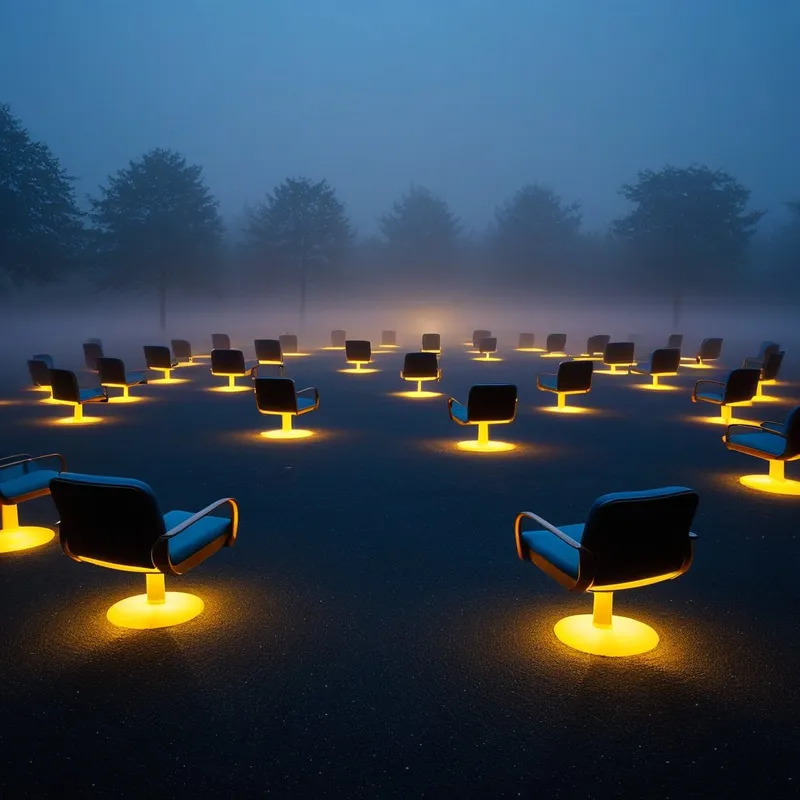
The ring in a dream may not be made of mushrooms. It could be a circle of stones, chairs, lights, or even people. Its form adapts, but its function remains: to demarcate sacred, dangerous, transformative space. If the dreamer steps inside, they may experience a whirl of chaotic imagery (the dance) or meet a captivating, otherworldly figure (the fairy queen/king). This figure often personifies the very aspect of the unconscious the dreamer is both drawn to and fears—their own buried creativity, wildness, or power.
The anxiety in such dreams is the ego’s fear of dissolution, of "losing time" or self. Yet, the allure is the call of the Self toward greater completeness. The dream is an invitation to acknowledge this inner threshold and to consider, with conscious courage, what it might mean to engage with what lies beyond the familiar circle of one’s current identity.
Alchemical Translation
The myth of the fairy ring is a stark map for the individuation process. The alchemical operation it most closely models is Solutio—dissolution. The rigid, leaden structures of the conscious personality (the shepherd’s mundane life) must be dissolved in the mercurial waters of the unconscious (the fairy dance) to be reconstituted into a more integrated form.
The treasure guarded by the fairies is not gold, but the lost parts of the soul. The price is the illusion of a separate, untouchable self.
The modern individual’s "fairy ring" is any profound encounter that breaks their temporal and psychological continuity: a spiritual awakening, a devastating loss, a creative breakthrough, or deep analysis. We are invited to the dance by a haunting melody—a depression, an obsession, a recurring dream, a sudden insight. To step across is to willingly enter a period of disorientation, where old identities and timelines crumble.
The triumph is not in avoiding the ring or stealing from the fairies without cost, but in surviving the dance with a fragment of their wisdom integrated. The one who returns, though displaced in time, carries a new perspective. They have seen the pattern from within. Their task is not to rebuild the old cottage, but to learn to live in the new, stranger world with the memory of the music still echoing in their bones, transforming their leaden confusion into the gold of hard-won meaning. The ring, then, marks not a prison, but the birthplace of a more conscious life.
Associated Symbols
Explore related symbols from the CaleaDream lexicon: