
Fairy Crafts Myth Meaning & Symbolism
A mortal steals the secret of a magical craft from the fairies, gaining sublime skill but forever living between worlds, haunted by a ghostly touch.
The Tale of Fairy Crafts
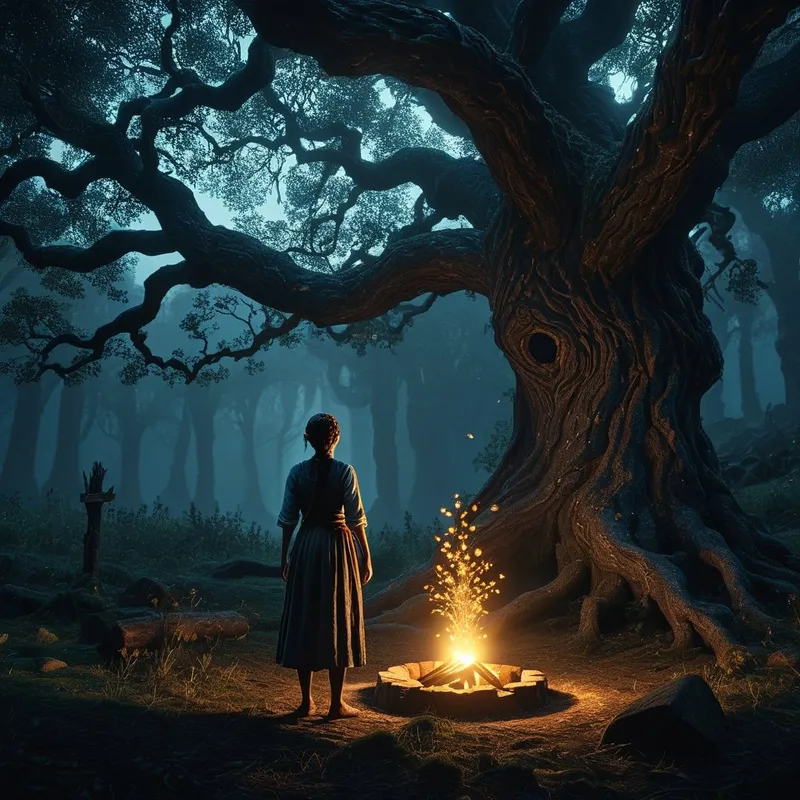
Listen, and I will tell you of a time when the world was thinner, when the green hills breathed with a life not our own. In the deep, mossy heart of the ancient woods, under hills that were hollow and crowned with rings of dark mushrooms, dwelt the Sídhe. They were the shapers of twilight, the weavers of dew, and their greatest pride was their craft. Not with crude iron and heavy hammer did they work, but with moonlight, with the song of the wind, with the essence of dreams itself. They could spin a cloak from a single sunbeam that would make the wearer invisible. They could forge a blade from frozen starlight that would never lose its edge. Their music, woven into silver, could heal a broken heart or curse a bloodline for seven generations.
And there was a mortal, a farmer or a blacksmith’s son, whose soul was restless. He had skill in his hands, but it was a blunt, earthly thing. He hungered for the sublime. Night after night, he would creep to the edge of the Fairy Ring, hidden by ferns and fear, to watch. He saw them dance, yes, but more importantly, he saw them make. He saw the Fairy Queen herself, her fingers moving like water over a loom of living willow, weaving a tapestry that showed the past and the possible future. He saw the Leprechaun cobble a shoe so light it could walk on water. He saw the sprites braiding the roots of trees into living bridges.
His desire became a fire in his bones. One Midsummer’s Eve, when the veil was gossamer-thin and the fairy host rode out on the wind, he dared the unthinkable. He did not steal a finished piece—that was a fool’s errand, doomed to turn to leaves and mud. No, he stole the secret. He memorized the exact twist of the wrist as a fairy smith quenched a blade in morning dew. He captured the precise, alien melody hummed while spinning spider-silk into gold. He absorbed the pattern, the rhythm, the silent intent behind the craft. And then he fled, his heart a wild drum in his chest, the stolen knowledge burning in his mind like a new sun.
Back in his humble workshop, he began. His hands, guided by the ghost of fairy memory, moved with uncanny grace. He wove cloth that shimmered with impossible colors. He forged metal that sang a low, sweet note when struck. He became the greatest artisan the mortal world had ever known, his creations things of wonder and awe. But the price was etched into his soul. He was forever caught between worlds. The touch of cold iron, sacred to mortals, now made him shudder. The sound of a church bell was a physical pain. And always, always, he felt the ghostly pressure of a small, beautiful hand resting atop his own as he worked—the unseen fairy master, whose secret he had taken, forever bound to him in a silent, teaching haunting. He had gained genius, but lost his place in the simple human world. He lived in the liminal space, a creator haunted by the very source of his creation.
Cultural Origins & Context
The motif of the stolen fairy craft is a deep-seated strand in the tapestry of European, particularly Celtic and Germanic, folklore. It belongs not to the grand epics of gods and heroes, but to the hearthside and hedgerow tales, told by firelight to explain both uncanny talent and profound alienation. These stories were the province of the community storyteller, the seanchaí, who served as a living bridge between the mundane and the magical.
Societally, these myths functioned on multiple levels. On one hand, they were etiological, explaining the origin of preternaturally skilled families of weavers, smiths, or musicians—the “fairy-touched” artisans whose ability seemed to border on the supernatural. On another, they served as powerful cautionary tales about the boundaries between the human and the otherworld. They codified the belief that certain knowledge and power belonged inherently to the Sídhe, and that trespassing upon it came with an existential cost. The tales reinforced social and spiritual norms: stay in your lane, respect the old powers, and understand that some gifts irrevocably change who you are. The transmission was oral, fluid, and adapted to local landscapes, but the core—the theft, the brilliance, the haunting integration—remained a constant psychological truth.
Symbolic Architecture
At its heart, this myth is not about literal theft, but about the violent, transformative acquisition of numinous inspiration. The fairy realm represents the untamed, archetypal realm of the unconscious, the collective wellspring of form and pattern. The crafts symbolize the innate, pre-existing forms of creativity—the daimon, the genius, the innate image that seeks manifestation.
The stolen craft is the moment the ego forcibly retrieves a fragment of the Self from the unconscious, translating archetypal potential into worldly skill.
The mortal protagonist embodies the aspiring ego-consciousness, dissatisfied with its ordinary capacities. His voyeurism is the necessary first stage of any creative act: observation of the mysterious, internal process. The theft itself is the critical, often traumatic, act of differentiation—wrenching a piece of the unconscious’s autonomous magic into the light of conscious understanding and technique. The sublime skill that follows represents successful integration of this content, leading to extraordinary achievement.
Yet, the haunting is the crucial, non-negotiable element. It symbolizes the permanent link back to the source. The creator can never fully own the genius; it remains partly autonomous, a “ghost” that guides, influences, and sometimes torments. The aversion to iron and church bells signifies the creator’s new, fragile state. He has become sensitized, alienated from the simple, robust, and defensive structures of ordinary consensus reality. He now lives in the borderland, forever touched by the other.
The Dreamer's Resonance
When this myth pattern stirs in the modern psyche, it often manifests in dreams of forbidden observation, stolen blueprints, or receiving tutelage from an enigmatic, non-human guide. The dreamer may find themselves in a wondrous workshop that is not their own, mastering a tool or art form with effortless, eerie proficiency.
Somatically, this can correlate with a feeling of inspired “flow” that has a slightly manic, obsessive, or ungrounded edge—a creativity that feels more like channeling than labor. Psychologically, it signals a profound shift where a deep, innate potential (the fairy craft) is being forcibly, or secretly, brought into the service of the conscious personality. The conflict in the dream often mirrors the internal tension: the exhilaration of newfound ability versus the anxiety of the haunting, the sense of being an imposter who does not fully own their gift, or the fear of alienation that comes with being “different” or “touched.”
The dream is the psyche’s way of narrating the immense, risky process of claiming one’s own unique genius, acknowledging that it will forever tie you to something greater and more mysterious than your everyday self.
Alchemical Translation
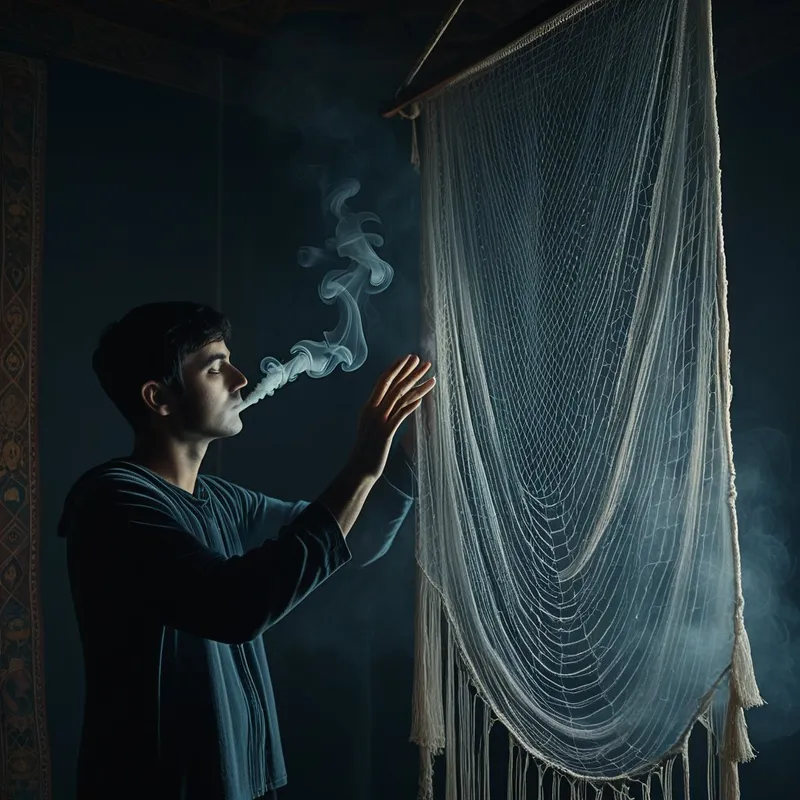
The alchemical journey modeled here is the transmutation of the base metal of latent potential into the gold of manifest genius. The process is one of individuation, but with a specific, creative focus.
The initial state is nigredo—the blackening of dissatisfaction with one’s ordinary, unrefined skills. The vigil at the fairy ring is the solutio, a dissolution into the watery, unconscious realm where patterns swim freely. The act of theft is the fierce, fiery separatio and coagulatio: violently separating the precious image from the unconscious matrix and coagulating it into a conscious, workable form (the craft). The production of sublime works is the albedo, the whitening, where the integrated content shines forth into the world.
The final, enduring stage is not the reddening of completion, but the permanent citrinitas—the yellowing, the twilight state. This is the mature understanding that true creation is a collaboration between the ego and the autonomous spirit.
The haunting is not a curse to be lifted, but the symbol of the successful, enduring connection. The modern individual undergoing this transmutation must make peace with living in the borderland. They must accept that their greatest work will always feel partly given, partly guided, and that this connection will sensitize them, making the noise of the mundane world sometimes painful. The triumph is not in becoming purely “fairy” or remaining purely “human,” but in becoming the bridge itself—the liminal creator through whom the magic of the deep world flows into the world of form, forever bearing the gentle, ghostly touch of the source. This is the ultimate craft: forging a soul capable of holding the tension between two worlds.
Associated Symbols
Explore related symbols from the CaleaDream lexicon: