Everyman Figures in Chorus Myth Meaning & Symbolism
The Chorus in Greek drama, voicing the collective fears and hopes of the people, embodies the archetypal journey of the human soul through fate and suffering.
The Tale of Everyman Figures in Chorus
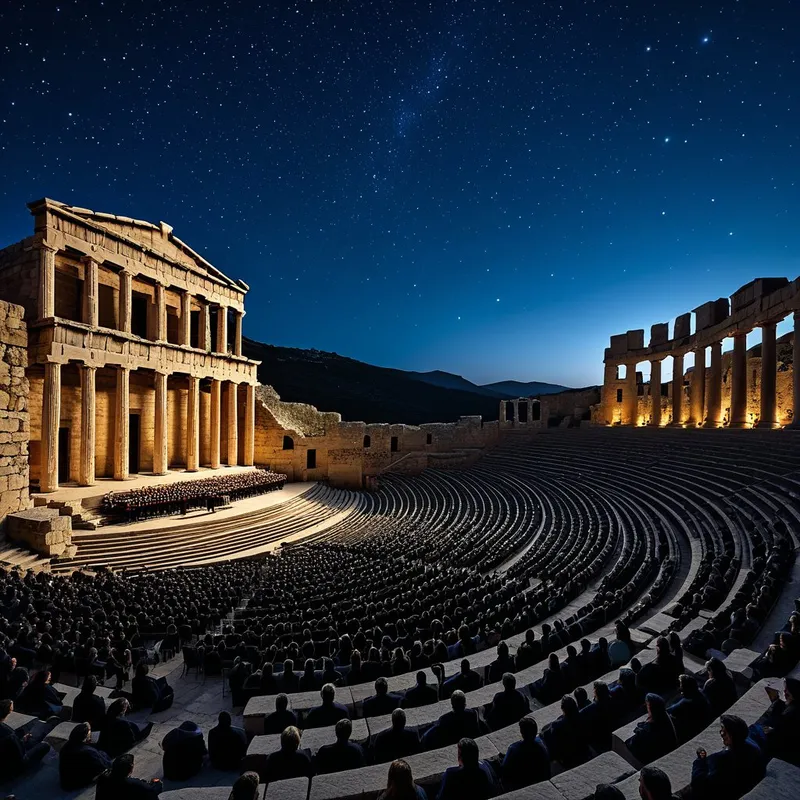
Hear now, not of a single hero with a god-forged sword, but of the many who hold the space for the hero’s flame to burn. Gather at the edge of the orchestra, the dancing ground of truth, as the sun begins its descent behind the sacred hill. The air is thick with the scent of crushed thyme and the electric anticipation of the city.
Fifteen figures emerge. They are not kings, but citizens of Thebes, of Argos, of Mycenae. Their feet, clad in simple boots, mark a slow, heavy rhythm on the earth. They wear the masks of elders, of sailors, of captive women, of Furies born from blood-dark dreams. Their voices do not speak as one man, but as the soul of the polis given breath—a deep, resonant chord of dread, warning, and lament.
Watch as the doomed king strides past, his eyes blazing with a certainty that is his prison. The Chorus turns as one body, a single organism of concern. They sing of the old laws, of the eagles torn apart by Apollo’s will, of the storm gathering on the horizon that the hero, in his isolated glory, cannot see. They feel the tremor in the earth before the palace walls crack. They give voice to the cold sweat on every brow in the audience, to the unspoken question: “What if it were me?”
When the horror behind the palace doors is revealed—the mother’s cry, the father’s final curse, the self-inflicted blindness—it is the Chorus that first receives the shock. They do not act. They absorb. They become the vessel into which the tragedy is poured, and from their unity rises a keening song that transforms raw suffering into something shaped, something witnessed, something that can be borne. They do not flee the darkness. They stand in it, and by standing together, they become the ground upon which understanding, however terrible, can finally be built. As the last light fades, their final ode hangs in the air, a question mark etched against the stars, a collective breath held for the city’s tomorrow.
Cultural Origins & Context
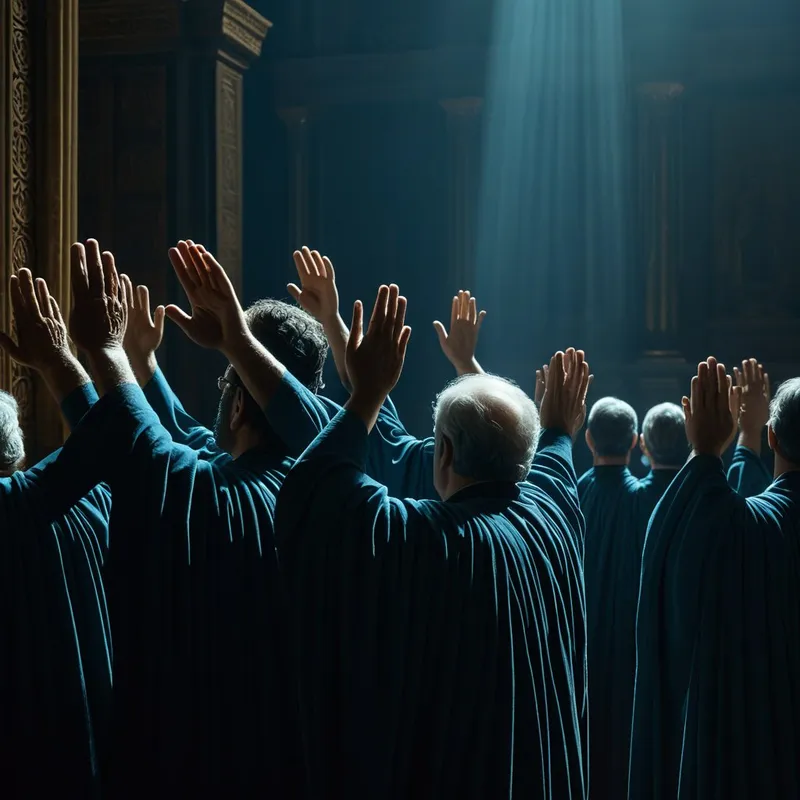
This powerful narrative device was not merely theatrical convention; it was a vital organ of the civic and religious body. Emerging from the dithyrambic hymns to Dionysus, the Chorus was the primordial link between ritual and drama. In the great City Dionysia, each chorus was funded by a wealthy citizen (the choregos), making its performance a direct act of civic piety and duty.
The Chorus represented the idealized community—the elders, the women, the sailors—whose role was to mediate between the audience and the superhuman struggles of the protagonists. They were the voice of tradition, of normative morality, and of collective memory. In a society where individual identity was deeply entwined with one’s role in the polis, the Chorus performed the essential function of processing extreme, individual emotion (the hero’s hubris, grief, or rage) and filtering it back into the shared language and wisdom of the community. They were the psychological immune system of the city, identifying the pathogen of tragic error and attempting, through song and dance, to produce the antibodies of catharsis.
Symbolic Architecture
The Chorus is the embodiment of the collective psyche, the anima mundi of the drama. They symbolize the part of our own consciousness that is not the singular “I” of the ego, but the resonant “we” of the soul’s deeper layers.
The Chorus is the threshold where the personal cry meets the universal echo. It is the human soil from which the singular, tragic tree grows, and to which its fallen fruit returns.
Psychologically, they represent the collective unconscious made manifest. They are not individuals but archetypal positions: the Voice of Warning, the Hand of Comfort, the Memory of Tradition. In the hero’s solitary march toward destiny, the Chorus symbolizes everything he has had to sever from—community, caution, shared humanity—in order to become a hero. Yet, they are also what he ultimately needs to integrate to find meaning in his suffering. They hold the tension between fate and free will, reflecting the audience’s own internal debate. Their stasis is not passivity, but the active, difficult work of witnessing—a work that transforms chaotic event into meaningful story.
The Dreamer's Resonance
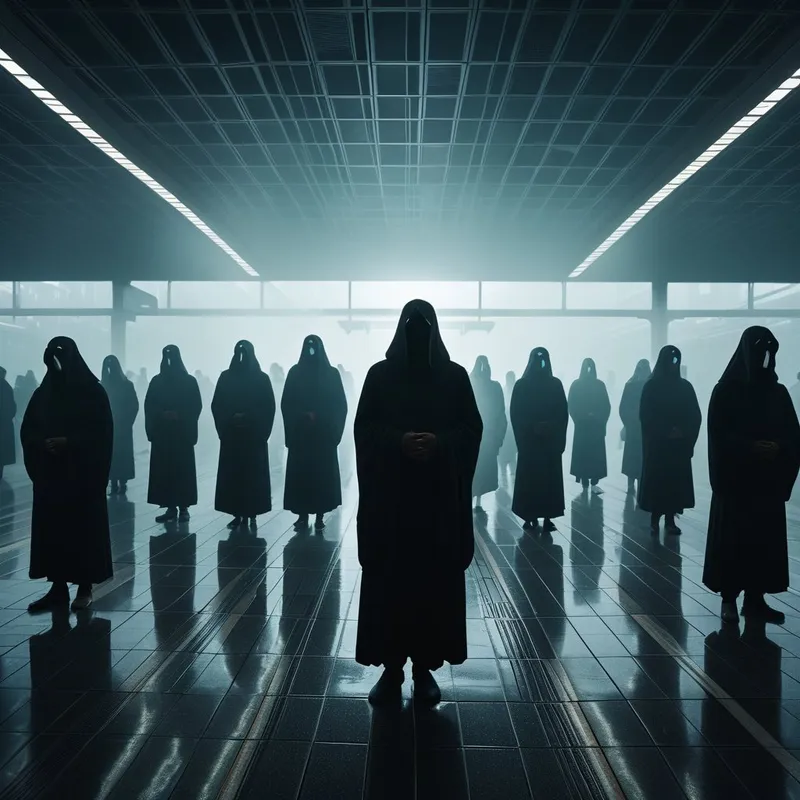
When this mythic pattern stirs in the modern dreamscape, it rarely appears as robed figures on a stage. Instead, one dreams of being part of a faceless crowd in a airport or plaza, moving with a unified, unsettling purpose. One might dream of a choir where every voice is your own, yet not your own, singing a dirge for a loss you cannot name. Or of standing at a window, watching a silent, synchronized protest whose cause is mysteriously and profoundly your own.
These dreams signal an encounter with the collective dimension of a personal struggle. The somatic feeling is often one of being carried by a mood—a collective anxiety, a shared grief, a generational hope—that feels larger than your individual life. You are processing not just your own story, but the story of your family system, your culture, your epoch. The dream-Chorus indicates that the psyche is attempting to contextualize a personal trauma or triumph within a larger human framework. It is the soul’s way of saying, “You are not alone in this feeling; it is a human thing.” The work here is to differentiate your own voice from the chorus, while also honoring the truth it carries for the collective.
Alchemical Translation
The alchemical journey modeled by the Chorus is not the opus of the solitary hero, but the opus of the integrated self. The hero’s journey is one of separation, conquest, and ascension. The Chorus’s journey is one of inclusion, absorption, and grounding.
The modern individual, often fractured and isolated, performs the role of the tragic hero daily, identifying solely with the ego’s ambitions and despairs. The process of individuation, however, requires us to also become the Chorus for our own inner drama. This is the alchemical translation: to step back from identifying solely with the protagonist (our ego) and to cultivate the inner witness—that collective, observing, feeling capacity that can hold our experiences without being destroyed by them.
To integrate the Chorus is to find the sacred space within where you can sing the lament for your own wounds, without becoming the lament itself. It is the transformation of raw experience into soulful wisdom.
First, we must listen to the inner chorus—the many internal voices of fear, tradition, caution, and hope that we often ignore in our headlong pursuit. Then, we must give them a structured voice, a stasimon or choral ode, through journaling, art, or dialogue. Finally, we must allow this collective inner voice to reframe our suffering, not to absolve us of responsibility, but to connect our personal pain to the universal human condition. In doing so, we perform our own katharsis. We are no longer just the one who suffers; we are also the community that holds, witnesses, and ultimately understands. We become both the actor on the stage of our life and the wise, grounded chorus in the orchestra, turning our solitary fate into a shared, human story.
Associated Symbols
Explore related symbols from the CaleaDream lexicon: