The Alchemy of Release: Dreaming of Catharsis
The Somatic Echo
It begins not as a thought, but as a pressure. A tectonic ache in the chest, a held breath you forgot you were keeping. The jaw is a locked vault, the shoulders a bridge carrying a weight they were never meant to hold. This is the somatic archive—the body’s meticulous record of every swallowed word, every stifled sob, every rage folded neatly and stored in the marrow. In waking life, we manage this archive. We curate it. But in the dreamspace, the filing system fails. The pressure seeks a fissure. It manifests as a visceral trembling in the limbs, a heat behind the eyes, a feeling of being impossibly full, a vessel at its breaking point. This is the prelude. The body, in its ancient wisdom, is preparing for a storm it knows the mind has long postponed.
The Dreamer's Log
The dreamer stands in a stark, white-tiled bathroom. They are gripping the edges of a sink, head bowed. When they look up into the mirror, their reflection opens its mouth, and instead of a scream, a torrent of thick, black oil mixed with shattered keys and rusted nails pours out, silently filling the basin to overflowing.
This is not a nightmare of attack, but of expulsion. The alchemy here is one of forced purification; the psyche, recognizing a toxic accumulation, creates a symbolic orifice to void the undigested metallic shards of old contracts, locked doors, and corrosive resentments.

The False Lead
Catharsis is not chaos. It is not the random misfortune of a “bad dream” or a simple venting of daily stress. To mistake it for mere psychological flatulence is to miss its sacred function. The violence of a cathartic dream is surgical, not anarchic. It targets a specific, encapsulated poison—a grief walled off in childhood, a betrayal metabolized as shame, a passion that calcified into bitterness. This dream is not your psyche falling apart. It is your psyche performing a controlled demolition on a structure that can no longer stand, because its foundations are built on a fault line of unfelt feeling.
Psychological Architecture
To understand this dream is to witness the Shadow not as a monster in the basement, but as a pressurized system. We are not singular selves, but internal families—exiles holding pain, managers maintaining calm, firefighters dousing sparks. Catharsis occurs when the managerial system is offline, in sleep, and an exiled part, burdened beyond capacity, breaches containment. It storms the gates of consciousness not to harm, but to be seen, to discharge its unbearable voltage.
This is the core of the individuation process: you cannot integrate what you cannot first acknowledge. The dream provides a stage for this acknowledgment in its rawest, most symbolic form. The weeping, the raging, the destroying within the dream is the psyche’s attempt to feel the unfelt on your behalf, so that you, the waking ego, do not have to be obliterated by its full force. It is a mercy. It is the self sacrificing its own temporary peace to burn out a infection. The shadow work here is to, upon waking, not recoil from the emotional residue, but to approach it with curiosity. To ask the trembling in your hands: What, finally, are you trying to let go of?
Mythic Resonance
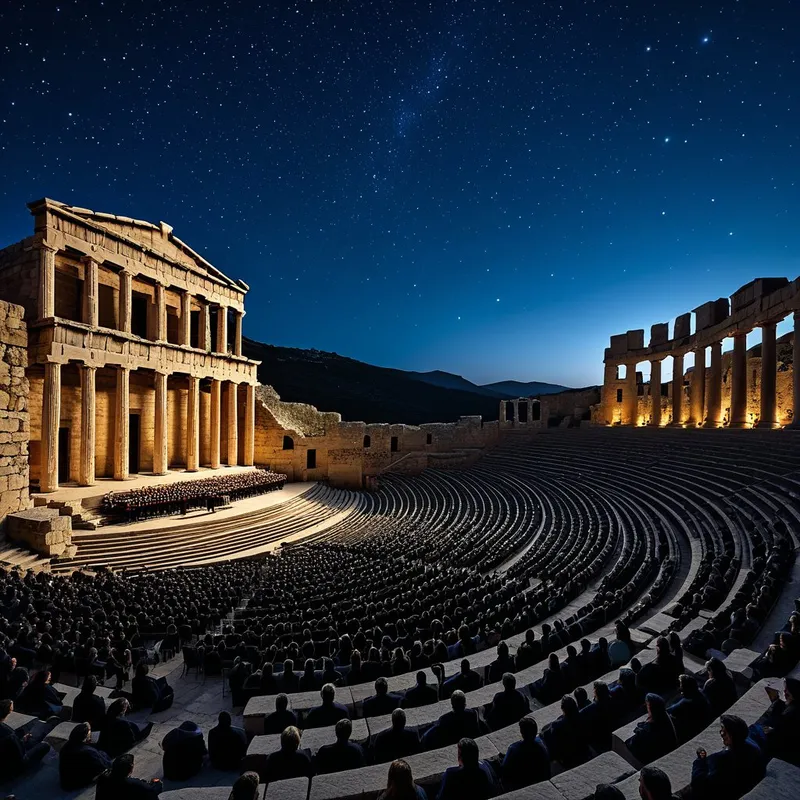
We see this in the story of the Phoenix, but often sanitize its meaning. The emphasis is on the glorious rebirth, not the essential, terrifying immolation. The bird does not decide to be reborn. It is consumed—by fire, by the heat of its own accumulated life. The cathartic dream is that fire. It is the necessary inferno that reduces a complex, tired form to essential ash, from which something new can coalesce. Similarly, in the Greek tragedies, catharsis was the audience’s release of pity and terror through the hero’s downfall. The dream makes you both the playwright and the audience, the hero and the chorus, orchestrating a private tragedy whose purpose is not despair, but the profound relief that follows when the final, awful truth is witnessed at last.
Symbolic Nodes
- Torrents & Floods: Water breaking boundaries (tears, vomit, oceans) as released emotion.
- Vomiting/Purging: Expelling something internal that is toxic, undigested.
- Screaming (Silent or Piercing): A voice, long suppressed, finding its outlet.
- Hair or Teeth Falling Out: A visceral loss of control, shedding of old strength or identity.
- Violent Storms or Earthquakes: Internal upheaval manifest as cosmic-scale environmental shift.
- Breaking Containers (Vases, Dams, Eggs): The failure of structures meant to hold pressure.
- Bleeding Old, Black Blood: Releasing ancient, stagnant wounds.
Archetypal Resonance
The energy of catharsis is most powerfully channeled through The Rebel Archetype. Not its Shadow aspect of wanton destruction, but the Rebel in its pure, revolutionary form: the force that dismantles the tyrannical, internal regime. The somatic echo of pressure is the Rebel gathering its strength against the inner Ruler’s oppressive laws—“Do not feel this,” “Do not remember that.” The cathartic explosion is the Rebel storming the palace, not to reign in its place, but to shatter the throne itself. Its alchemical potential lies in its purpose: it destroys only to liberate. It clears the rubble of a false self so the true sovereign—the integrated Self—can eventually build upon ground that is finally, authentically clear.
The Alchemical Process
The alchemy of catharsis is Solve et Coagula—Dissolve and Coagulate—in its most intense phase. The Solve is not gentle dissolution, but violent disintegration. The heat and pressure are supplied by the sheer mass of the repressed material itself. It is the psychological equivalent of a star collapsing under its own gravity. The grief, the rage, the shame reaches a critical density and ignites.
This is the terror: the feeling of coming apart. But the alchemical secret is that this is the process. The old, rigid form must be reduced to its elemental state—to tears, to tremors, to primal sound. Only from this raw, honest chaos can a new Coagula begin. The sovereignty earned is not control over emotions, but a fearless relationship with them. It is the knowledge that you have survived your own deepest truth, and in that survival, you are no longer a hostage to what you fear feeling. The psyche has performed its own radical surgery, and you wake, raw and real, on the other side.

The Integration Protocol
Question 1: If the emotion released in the dream had a texture, a weight, and a color, what would they be? Do not name the emotion (grief, anger). Describe its physical substance.
Question 2: What internal rule or old agreement did this cathartic act violate? (e.g., “I must always be pleasant,” “Strong people don’t cry,” “This memory is locked away forever”).
Question 3: What feels quieter, emptier, or more tenderly open in the aftermath of this dream, even amidst the disturbance?
Action 1 (Somatic Anchoring): For 90 seconds after waking, do nothing but feel the physical aftermath in your body. Place a hand where the sensation is strongest (chest, gut, throat). Breathe into that space without trying to change anything. You are bearing witness, not fixing.
Action 2 (Unstructured Expression): Take a large piece of paper and two contrasting markers (e.g., black and red). Let your hand move without intention. Let it scribble, slash, drip, or draw crude shapes that correlate to the dream’s energy. The goal is not art, but transference—moving the somatic echo from your nervous system onto an external surface.
Action 3 (Ritual of Release): Find a small, natural body of water—a stream, the sea, even a puddle after rain. Speak a single sentence that honors what was released (e.g., “I acknowledge the old pain.”). Then, pick up a stone, imbue it with the memory of the release (not the pain itself), and drop it into the water. Turn and walk away without looking back.
Final Validation
The path of catharsis is not chosen; it is endured. It is the psyche’s brutal, loving insistence that you cannot carry a corpse forever. To have this dream is to be chosen for a difficult grace. It means a part of you, buried and suffering, trusted the totality of you enough to stage its own resurrection through rupture. The trembling you feel is not weakness, but the reverberation of a foundational shift. Honor the rupture. For in the cleared space where the old wall stood, the first, true light of a dawn you thought you’d forgotten can now begin to fall.