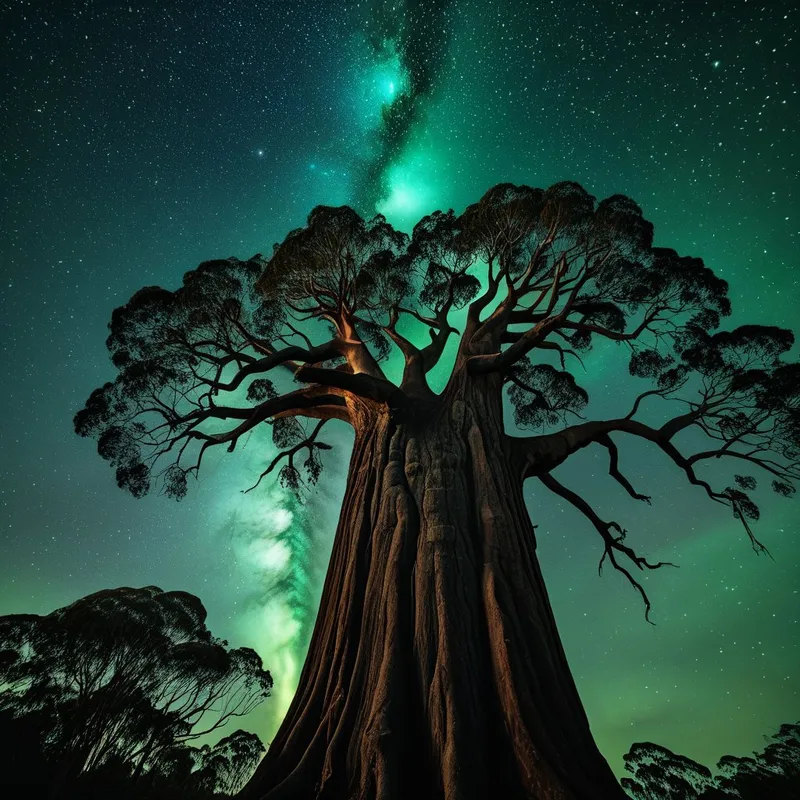
Eucalyptus in Dreamtime Myth Meaning & Symbolism
A Dreamtime story of ancestral beings whose sacrifice creates the first eucalyptus, gifting humanity with medicine, shelter, and a living connection to the land.
The Tale of Eucalyptus in Dreamtime
Before the rivers knew their paths, before the sun had learned its daily arc, the world was soft and unformed, a canvas of shadow and potential. This was the Alcheringa, the Dreaming culture."). In this time of becoming, the Ancestral Beings walked. Among them were the Wandjina, who painted the clouds with their breath, and the great Rainbow Serpents, who carved the valleys with their mighty coils.
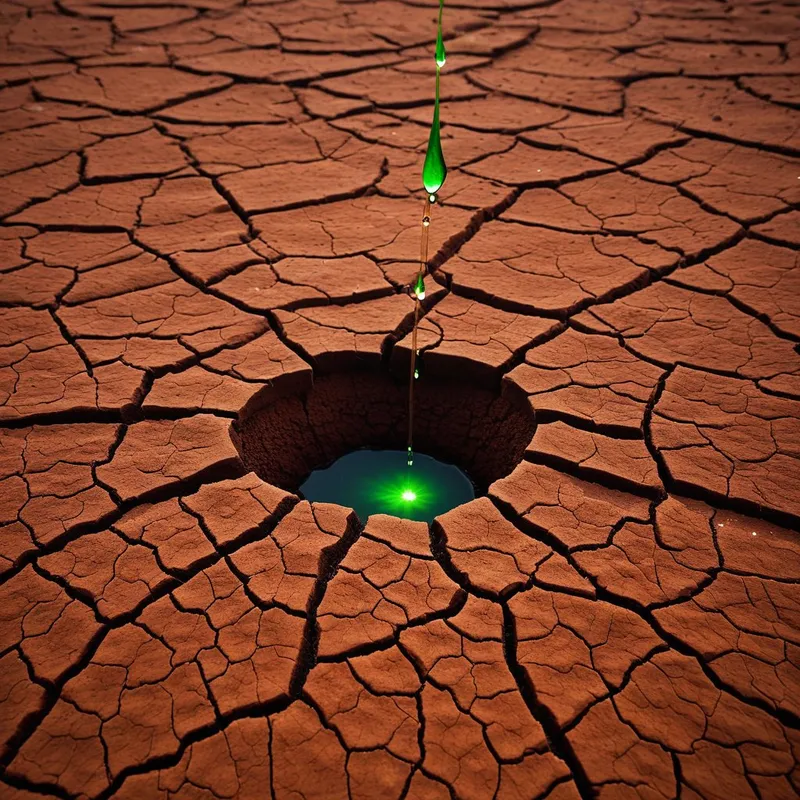
But there was a silence on the land. A deep, aching thirst. The earth was dry, its spirit parched. The first people, newly formed from the clay and starlight, huddled in the scant shade, their bodies fevered, their spirits low. They knew not the secret of water, nor the solace of cool, fragrant shade.
Witnessing this suffering from the star-paths above was an Ancestral Being of profound compassion. Some say it was a Wandjina whose heart was the color of the morning sky; others whisper it was a spirit-kin to the Rainbow Serpent, but one who walked on two legs and carried the sorrow of the world in its eyes. This being saw the cracked earth and heard the weak cries of the people, and a great resolve settled within its eternal form.
It descended to the barren plain, the red dust swirling around its feet. The people looked up, hope a fragile flame in their eyes. The being did not speak with words that shake the air, but with a language older than sound. It pressed its hands against the searing ground. It breathed out not air, but a cool, silver mist that tasted of distant rain. And then, in a act of ultimate giving, it drew from its own essence—a shimmering, luminous substance that was both life-blood and spirit-song.
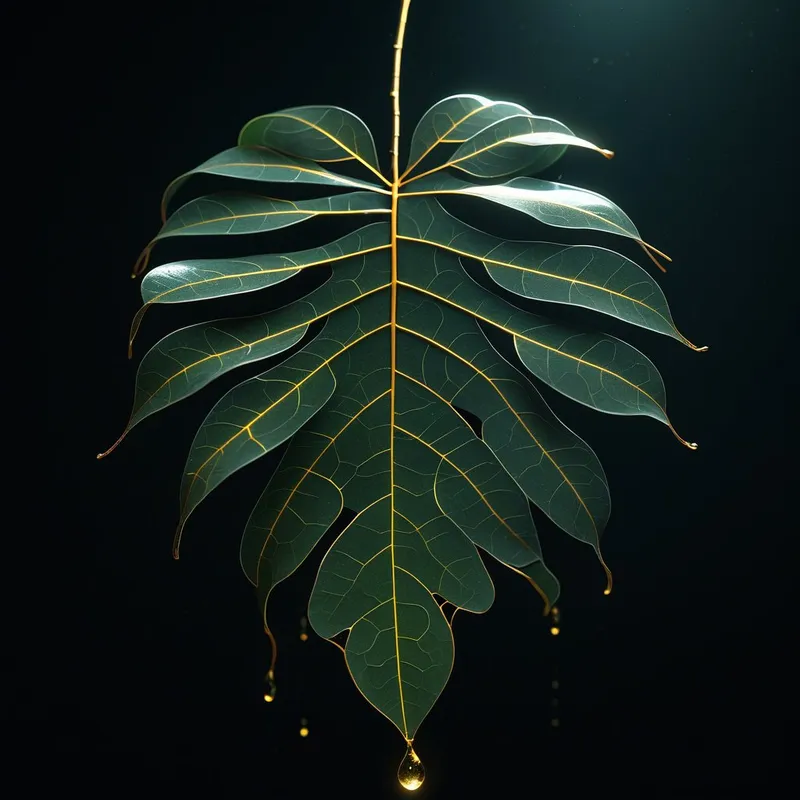
With a cry that was not of pain, but of purposeful release, the being let this essence fall upon the earth. Where each droplet landed, the ground shuddered. From the very spot where its life-force mingled with the dust, a miraculous form began to rise. Not a beast, not a stone, but a slender, resilient trunk, pushing upward with silent determination. Bark, patterned like the skin of the Ancestors, wrapped around it. Leaves, long and slender as fingers, unfurled—a vibrant, silvery green that caught the light and seemed to hold the very sky within them. A sharp, clean, healing scent filled the air for the first time, cutting through the dust and despair.
The being itself grew still. Its form softened, its boundaries blurring. It did not die, but became. Its body merged with the rising trunk, its arms stretching into the first strong branches, its spirit sighing through the whispering leaves. It had transformed its singular, celestial life into a new, enduring form of life for all.
The people, in awe, approached. They found that crushing the leaves released the cleansing scent, which soothed their fevers. They discovered that the tree drew hidden water from deep within the earth, and they learned to find it. The tree gave them shelter, medicine, and a living testament that the land itself was born from sacred sacrifice. The first Eucalyptus stood, a testament written in bark and leaf, a covenant between the Dreaming and the waking world.
Cultural Origins & Context
This story, in its countless local variations, belongs to the complex tapestry of Aboriginal Australian spiritual epistemology. It is not a singular, fixed text, but a living narrative held within the Dreaming of numerous language groups across the continent, particularly among those for whom the eucalyptus is a central ecological and cultural keystone. The myth was—and is—passed down through oral tradition: sung in ceremonies, recounted by Elders during initiation, and mapped onto the landscape itself. To know the story of the eucalyptus is to know the specific country where its ancestral being performed its act of creation; the tree is both a biological entity and a sacred site, a chapter in the land's own biography.
Its societal function is multifaceted. It is a etiological narrative, explaining the origin of a vital resource. More profoundly, it is a foundational lesson in ethics and relationality. It teaches the principle of reciprocal care: as the Ancestral Being cared for the people, so must the people care for the land and its living stories. It encodes practical knowledge (the tree’s medicinal and utilitarian properties) within a sacred framework, ensuring that respect governs use. The myth establishes the eucalyptus not as a commodity, but as a kin, a permanent, breathing reminder of the time when the world was sung into being.
Symbolic Architecture
At its heart, this myth is a profound allegory of creation through self-donation. The eucalyptus tree emerges not from a command, but from a compassionate act of dissolution and regeneration. It symbolizes the archetypal moment where potential becomes manifest through sacrifice.
The true caregiver does not give from surplus, but from essence. The myth presents the ultimate archetype of nourishment: becoming the source itself.
Psychologically, the Ancestral Being represents the Self—the total, integrated psyche—acting from a place of wholeness to address a profound need within the human condition (the "parched earth" of the soul). Its transformation into the tree symbolizes the process by which inner, psychic potential is made real and available to consciousness. The tree is the symbol made flesh, or rather, made flora. Its components are rich with meaning: the resilient trunk is enduring strength and identity; the ever-renewing leaves are healing, cleansing thought and spirit; the hidden water it taps is the deep, unconscious wellspring of life. The scent is the pervasive, intangible presence of the sacred in the mundane.
The Dreamer's Resonance
When this mythic pattern stirs in the modern dreamer, it often signals a profound somatic and psychological process of seeking nourishment from a deep, perhaps forgotten, source. To dream of a majestic, singular eucalyptus in a barren landscape is to confront a felt sense of spiritual or emotional drought. The tree in the dream is not just a plant; it is an image of the psyche's own innate healing capacity, its pharmakon, appearing in response to an inner "fever."
The dream may evoke specific somatic sensations: the crisp, clearing scent cutting through mental fog, the feeling of cool shade on parched skin, or the sound of leaves whispering with a voice that feels ancient and personal. This is the unconscious presenting its own medicine. The dream invites the dreamer to approach, to interact—to perhaps crush a leaf and breathe in its aroma, or to lean against the sturdy trunk. This engagement symbolizes the beginning of drawing sustenance from one's own inner depths, from the ancestral wisdom of the psyche itself, to address a contemporary ailment of the soul.
Alchemical Translation
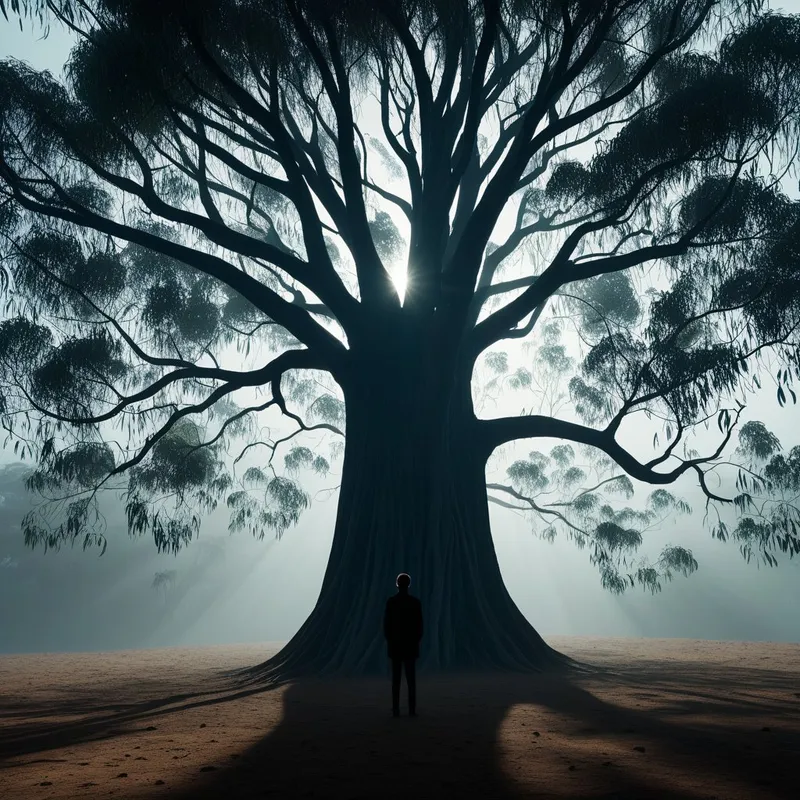
The alchemical journey mirrored in this myth is the opus of psychic transmutation, where a latent, spiritual substance (the prima materia of the Ancestral Being's essence) is sacrificed to create the Philosopher's Stone—here, the living, healing tree. For the modern individual navigating individuation, the myth models a critical transition: from being a passive sufferer in a barren landscape to recognizing and integrating the inner caregiver who can transform the landscape itself.
Individuation requires that we become both the sacrificing deity and the grateful human, the source and the recipient, in an eternal cycle within the self.
The "parched earth" is the neglected or one-sided conscious attitude. The "descent" of the Ancestral Being is the courageous movement of the ego into dialogue with the Self. The "sacrifice" is the painful but necessary dissolution of old, rigid identifications—the celestial form must die to its previous state to give birth to something new and enduring. The resulting eucalyptus is the nascent symbol of the individual's unique life-purpose and healing capability, now rooted in reality. It represents a psychic structure that provides enduring shelter (a stable sense of Self), medicine (the ability to self-regulate and heal), and a living connection to the timeless, nourishing waters of the unconscious (the Dreaming). To complete the alchemy, one must not only receive the tree's gifts but learn to tend it, recognizing that the caregiver archetype, once integrated, becomes a permanent, life-sustaining presence within one's own psychic ecology.
Associated Symbols
Explore related symbols from the CaleaDream lexicon: