Erra and Ishum Myth Meaning & Symbolism
A Babylonian epic where the plague god Erra, inflamed by rage, is guided by the wise Ishum to channel his destructive power into a necessary, purifying fire.
The Tale of Erra and Ishum
Hear now the tale of the days when the world grew old and weary, when the very bricks of the great city Babylon sighed with dust. The gods had grown distant, their thrones untended. In the shadowed chamber of his heart, Erra stirred. He was the god of the searing wind that carries fever, of the arrow that finds no noble foe but only the innocent crowd, of the chaos that boils up when order sleeps. His limbs, mighty as bronze pillars, ached with inaction. "My weapons rust!" he roared to his own fierce heart. "My name is forgotten. The people no longer tremble. They go about their petty lives as if the universe were stable."
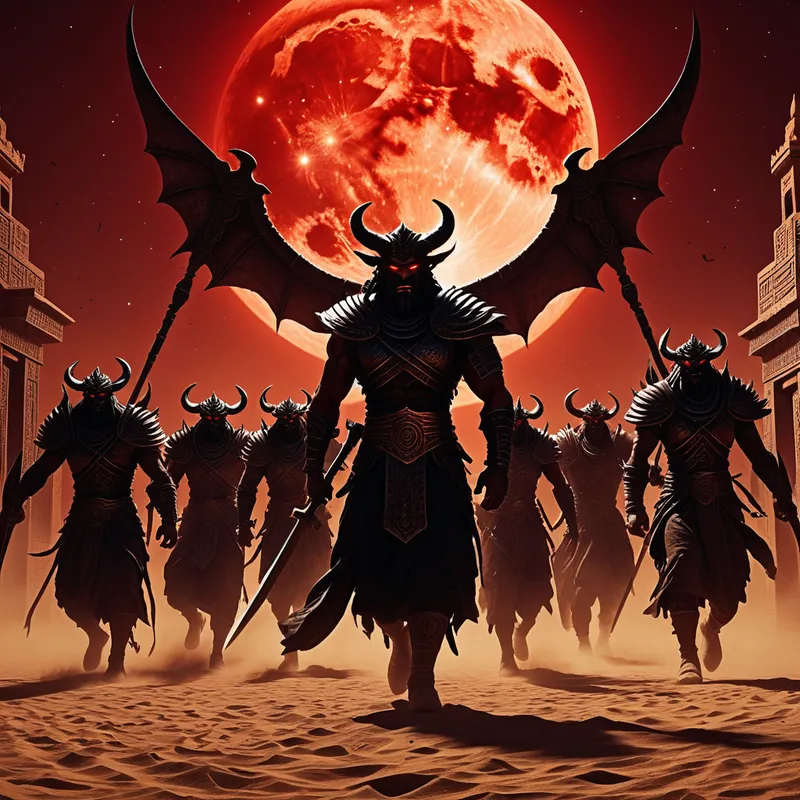
His seven fierce warriors, the Sebitti, fanned the flames of his discontent. "Lord," they whispered, voices like grinding stones, "the world is soft and ripe. Let us remind it of terror. Let us remind it of you."
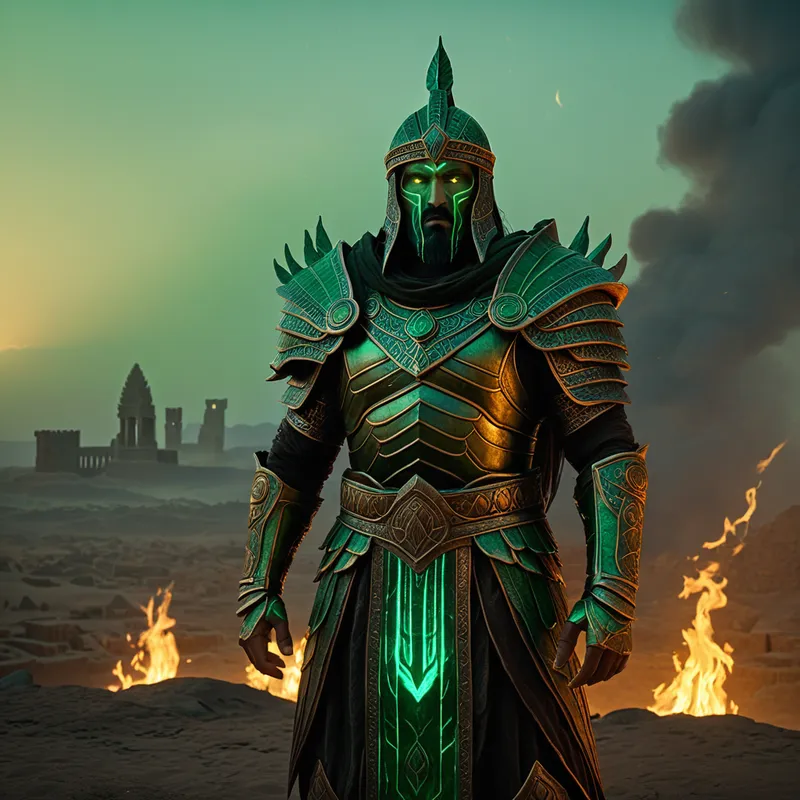
But there was one who stood between Erra and the abyss of his own rage: Ishum, "The Upright One." Where Erra was the wildfire, Ishum was the sacred lamp. Where Erra heard only the clamor for war, Ishum heard the deeper rhythm, the necessity behind the madness. He approached his lord not with defiance, but with a counselor's calm. "Your strength is supreme, Erra," Ishum said, his form flickering with a steady, contained light. "But unleash it without purpose, and you will be a storm that destroys the granary and leaves only famine. Even destruction must have a shape, a reason."
Erra’s rage was a tempest. He would not be soothed. "I will shake the heavens! I will make the gods flee their dwellings!" he declared. And so, with the Sebitti as his vanguard, Erra descended. He did not walk; the land sickened where he trod. The canals choked with reeds of despair. The oxen fell in the fields, their sides heaving with a plague that was not of earth. The great gates of Babylon groaned on their hinges as the Sebitti passed through, and a silence fell—not of peace, but of breath held in terror.
The other gods, fearing the contagion of his madness, did flee. Marduk himself, the great ruler, abandoned his majestic robes and his throne, leaving the cosmic order untended. This was Erra’s triumph and his trap. He sat upon the vacant throne, lord of a kingdom of screams and silence. He looked upon the desolation he had wrought—the empty temples, the untilled fields, the children who did not cry because their mothers had no breath left to comfort them. And in that absolute victory, a hollow wind began to whistle through his bronze soul.
It was Ishum who found him there, amidst the ruins of his own making. The wise fire did not accuse. He simply bore witness. "See," Ishum’s voice was the crackle of a hearth in a cold house. "The throne is yours. The fear is absolute. What grows here now?"
Erra, the devastator, felt a new and terrible thing: shame. The purposelessness of his rage lay bare before him. Ishum, seeing the shift, spoke the words that would become the myth’s turning. "Your power is real, Erra. But let it be a surgeon’s blade, not a butcher’s cleaver. This world had grown corrupt, stagnant. It needed to be broken so it could remember how to be whole. Your chaos was the fire, but let it now be the forge."
And so, guided by Ishum’s unwavering flame, Erra’s purpose transformed. His remaining fury was directed not at the people, but at the remnants of the disorder he had created. He became the necessary scourge, clearing the rot so new life could, in time, push through the ash. He promised a future of peace, but a peace earned through the terrible lesson of his wrath. The gods returned. The people, those who remained, began the slow work of rebuilding, their prayers now containing a new name alongside their fears: a prayer of respect for the terrible, necessary fire that had passed.
Cultural Origins & Context
The epic of Erra and Ishum is not a myth of primordial beginnings, but a sophisticated, literary masterpiece from the heart of the first millennium BCE Babylonian world. It is a text deeply concerned with the fragility of civilization. Composed likely during a period of political instability, foreign threats, and internal decay, the poem served as both a theological explanation and a social warning. It was not merely folk tale, but a serious work, copied and studied by scribes in the Edubba.
Its societal function was multifaceted. On one level, it explained very real sufferings—plague, invasion, social collapse—as the manifestation of divine anger, specifically the anger of Erra. To placate him was a matter of survival. On another, more profound level, it was a meditation on kingship and the moral responsibility of power. The myth asks: what happens when the guardian forces of order (Marduk) become negligent, and the latent forces of destruction (Erra) are unleashed? It served as a caution to rulers and citizens alike: civilization is not a given; it is a conscious, continuous act of maintenance against the ever-present pull of chaos.
Symbolic Architecture
At its core, this myth maps the psyche’s relationship with its own destructive potential. Erra is not an external devil, but an archetypal force within the collective and individual soul. He represents the raw, untamed Shadow—the reservoir of rage, aggression, and the will to dismantle that which has become stagnant, false, or oppressive.
Erra is the psychic plague that arises when life becomes inauthentic, when the persona is worn too long without renewal.
Ishum is the critical symbol of conscious awareness and ethical direction. He is not the opposite of Erra, but his necessary counterpart. He is the individuating ego-function that can relate to the shadow without being consumed by it. Ishum is the fire of insight, the "inner counselor" who understands that destruction itself can be a sacred, if terrifying, aspect of creation. The empty throne of Marduk symbolizes a failed psychic hierarchy—a dominant consciousness or ruling principle that has abdicated its duty, leaving the system vulnerable to takeover by its own repressed contents.
The Dreamer's Resonance
When this myth stirs in the modern dreamer, it often heralds a profound internal uprising. To dream of uncontrollable plague, of cities crumbling from within, or of a terrifying yet compelling warrior figure, is to feel the Erra-force mobilizing in the psyche. This is not a nightmare to be dismissed, but a somatic signal of a necessary, if violent, recalibration.
The dreamer may be experiencing a life phase that feels dead, a career or relationship that has lost its soul, a pattern of behavior that is stable but stifling. Erra’s appearance is the psyche’s declaration that this state is no longer tolerable. The emotional experience is often one of intense, free-floating rage, deep anxiety, or a feeling of being "infected" by discontent. The body may respond with fevers, inflammation, or a general sense of being under attack. This is the Sebitti marching through the dreamer’s personal Babylon. The critical question the dream poses is: where is your Ishum? Where is that inner, observing intelligence that can witness the chaos without panic and begin to ask, "What, in my life, has become so stagnant that it requires this level of threat to change?"
Alchemical Translation
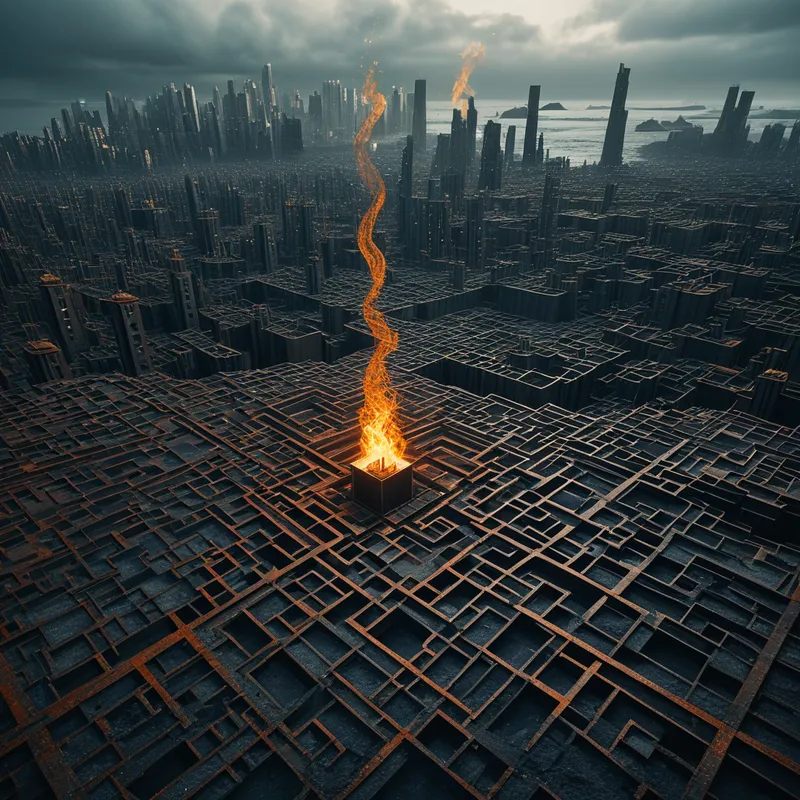
The alchemical journey modeled by Erra and Ishum is the Nigredo, the descent into the black sun of the shadow. It is the most dangerous, yet essential, phase of psychic transmutation. The conscious personality (Marduk) must, in a sense, "abandon its throne"—it must relinquish its rigid control and allow the chaotic, transformative material from the unconscious to erupt.
The triumph is not in avoiding the destruction, but in surviving it with consciousness intact, thereby gaining sovereignty over a greater portion of one's own soul.
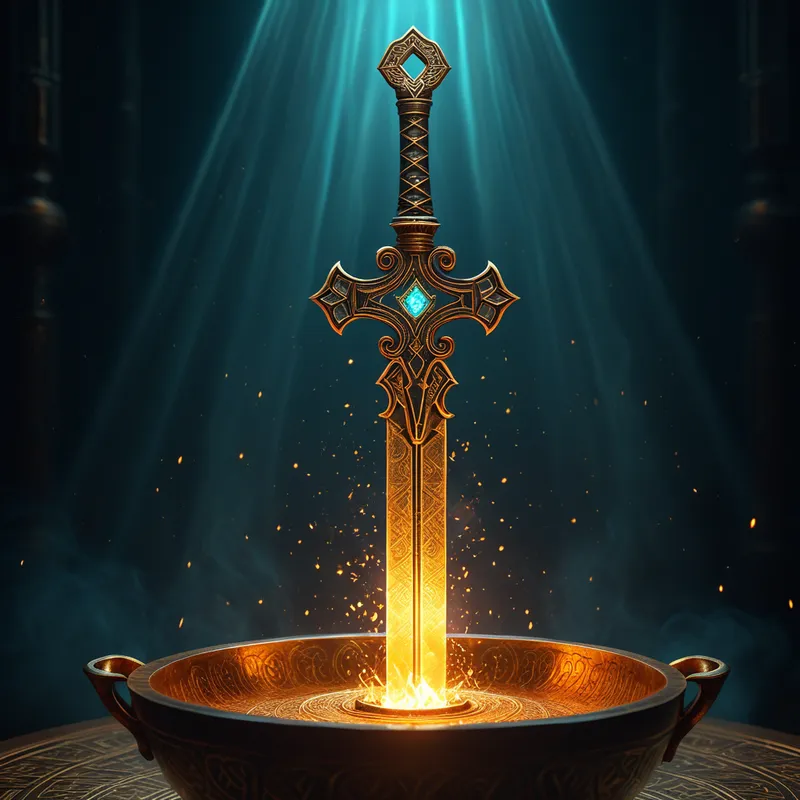
Erra represents the prima materia, the base, chaotic matter of the soul that holds the seed of gold within its darkness. Ishum is the alchemist’s steady fire and guiding intellect. The process is not about eliminating Erra—that would be spiritual bypass, leaving the gold buried forever. It is about doing what Ishum does: standing firm in the midst of the conflagration, relating to the destructive force, and slowly, patiently, guiding its immense energy toward a purposeful end. The rebuilt city at the myth’s conclusion is the Albedo, the new, more conscious structure of the self, forged in the fires of its own necessary chaos. The individual who undergoes this process no longer fears their own capacity for rage or ending; they respect it as a sacred, inner Erra, forever counseled by their own inner Ishum, the flame of conscious purpose.
Associated Symbols
Explore related symbols from the CaleaDream lexicon:
- Fire — The dual symbol of Erra’s destructive plague and Ishum’s guiding wisdom, representing the transformative power that can both annihilate and purify.
- Chaos — The primordial state Erra embodies and unleashes, necessary for breaking down rigid, outworn structures of the self and society.
- Order — The principle abandoned by Marduk and sought anew after the purge, representing the psychic hierarchy that must be rebuilt on more authentic grounds.
- Shadow — The psychological equivalent of Erra, the repository of repressed rage, destructiveness, and the aspects of the self deemed unacceptable.
- Hero — Ishum in his role as the courageous counselor who confronts ultimate chaos not with force, but with steadfast consciousness and ethical purpose.
- Plague — The manifestation of Erra’s power, symbolizing a psychological or spiritual sickness that spreads when life becomes inauthentic and stagnant.
- Throne — The seat of Marduk’s authority, its vacancy symbolizing the collapse of a ruling conscious attitude, creating a vacuum for the shadow to fill.
- Warrior — The aspect of Erra and his Sebitti, representing the aggressive, combative energy required to dismantle entrenched psychic structures.
- Temple — The sacred space within the city (the Self) that is desecrated and must be reconsecrated after the period of destruction and insight.
- Light — The nature of Ishum, representing consciousness, insight, and the guiding principle that can navigate and give meaning to darkness.
- Rebirth — The ultimate promise following Erra’s rampage, indicating the new growth and renewed identity that can only emerge from the ashes of the old.
- Rage — The core fuel of Erra, symbolizing the immense psychic energy bound up in the shadow, which must be acknowledged and redirected for transformation.