Elder Tree Myth Meaning & Symbolism
A sacred tree, a betrayed goddess, and a king's fatal hubris reveal the deep bond between sovereignty, the land, and the feminine mysteries.
The Tale of Elder Tree
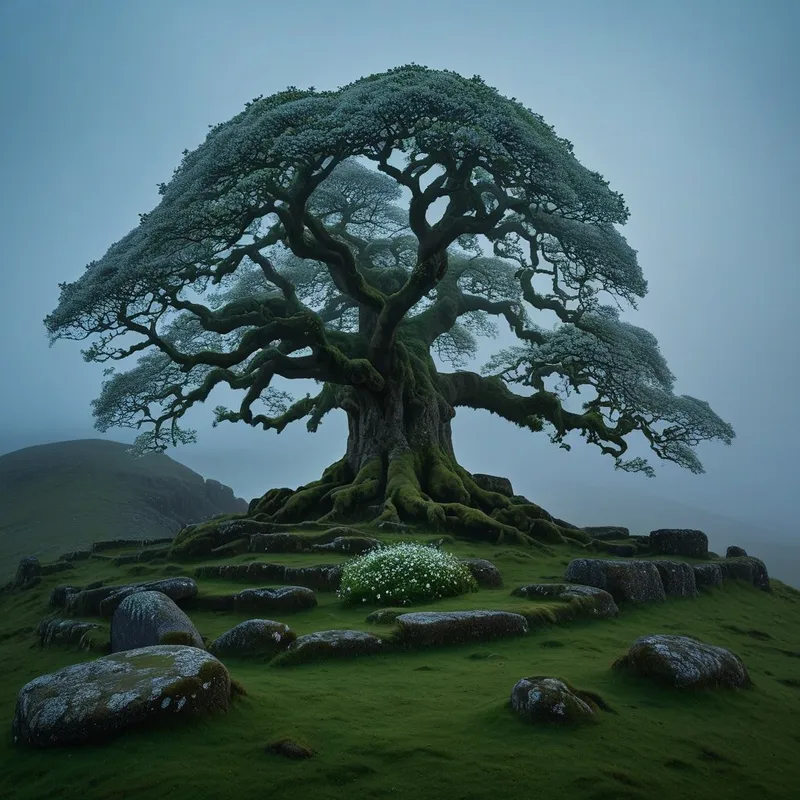
Listen. The wind does not just move through the branches; it speaks with the voice of the mound. On the green hill of Tara, where the stone of destiny cries out beneath a true king, there grew a tree unlike any other. This was not oak, ash, or thorn, though they are holy. This was the Elder, and she was the Ban-Sídhe of that place, her form both wood and woman, her life the life of the land itself. Her blossoms were clouds of summer stars, her berries the blood of autumn dusk. To her, the kings would come, not to demand, but to listen. For her breath was the law, and her roots held the contract of sovereignty.
But a king arose whose ears were stopped with pride. Eochaid they called him, and he saw not a sacred guardian, but a stubborn weed upon his perfect lawn of power. "This gnarled thing blocks the view from my new hall," he declared, his voice a clash of bronze. His druids grew pale, their warnings dying on lips that trembled. "The tree is the hall, the hill, the kingdom," they whispered. But he heard only the challenge.
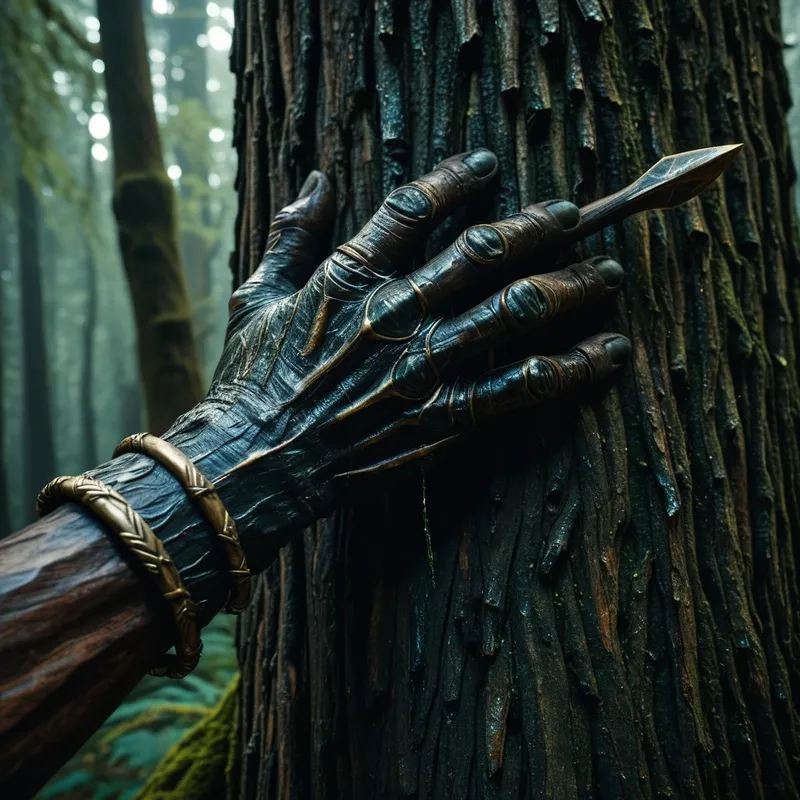
On a day when the sun hid behind a veil of shame, Eochaid took up his great spear, its point hungry for earth. He approached the Elder. A sigh moved through her leaves, a sound of profound sorrow. He struck. The first blow jarred his arm, and a scent like crushed flower and fresh wound filled the air—sweet and bitter, the perfume of violated sanctuary. Sap, dark as a bruise, wept from the gash. He struck again, and a moan seemed to rise from the very soil, a vibration through the soles of every man present.
With the third, shattering blow, the heartwood split. And from the cleft, not sap alone, but a torrent of dark water gushed forth, a spring from a heartbroken vein. It flowed down the sacred hill, and as it flowed, the figure of a woman, formed of mist and bark and sorrow, coalesced before the king. Her eyes were deep pools in ancient wood. She did not scream curses. She spoke a truth, simple and absolute as a stone.
"You have severed the limb that held your crown. The water that now drowns your feet is the life of the land, withdrawing from your touch. My body was your throne. Now, it shall be your bier."
The spring did not cease. It rose, a silent, inexorable tide. It filled Eochaid's proud ditch, flooded his new hall, and pulled the very earth from beneath his feet. The king, who sought to clear a view, was swallowed by the vision he refused to see. The hill drank him down. And where he fell, the Elder's roots, tender and fierce, cradled his bones—not in forgiveness, but in a final, binding embrace. The next spring, from that same spot, a thicket of young elders burst forth, their blossoms whiter, their scent more piercing, guarding the mound with a vigilance born of betrayal.
Cultural Origins & Context
The reverence for the Elder tree is woven deep into the fabric of Insular Celtic, particularly Irish and Welsh, tradition. Unlike the more commonly cited sacred trees of the Celtic ogham alphabet, like the Oak or Hazel, the Elder (Straif) occupied a more complex, liminal space. It was rarely used for noble purposes like building or shields; its soft, pithy wood was considered unfit. This very "unfitness" marked its sacredness. It was the tree of the Sídhe, a gateway plant.
Stories of the Elder as a embodied goddess or guardian spirit, like the one told above, are folkloric echoes of a much older stratum of belief. They were likely told not in the courts, but at the hearthside and the field edge, passed down by bean feasa and local storytellers. The myth served a critical societal function: it encoded an ecological and spiritual law. Sovereignty (Flaitheas) was not a human right but a sacred contract with the land itself, mediated through its natural representatives. To harm the guardian tree was to annul the contract, resulting in catastrophe. The myth was a narrative bulwark against tyrannical excess, a reminder that the king's power flowed from the land, not over it.
Symbolic Architecture
At its core, the Elder Tree myth is a profound drama about the relationship between the conscious, ruling principle and the unconscious, nourishing ground of being. The King (Eochaid) represents the archetypal ruling consciousness—ordered, linear, and arrogantly rational. He sees the world as a thing to be arranged for his benefit. The Elder Tree Goddess embodies the Anima Mundi, the World Soul, and specifically the Sovereignty Goddess. She is the psyche itself in its organic, wild, and deeply interconnected state.
The wound inflicted upon the sacred tree is never just upon wood, but upon the covenant between awareness and source.
The act of cutting is the ultimate symbol of dissociation—the ego severing itself from its nourishing roots in the instinctual and spiritual unconscious. The gushing water is the symbolic key. Water is the classic symbol of the unconscious, of life, emotion, and the flow of psychic energy. By wounding the tree, the king unleashes a flood from the very depths he sought to ignore. His "drowning" is not a punishment, but an inevitable psychic consequence: a consciousness that utterly denies and attacks its foundation will be overwhelmed by it. The final image—of his bones cradled by new growth—speaks to a grim, necessary alchemy. The inflated ego must die and be composted by the very forces it despised to allow for a new, more integrated order (the thicket) to emerge.
The Dreamer's Resonance
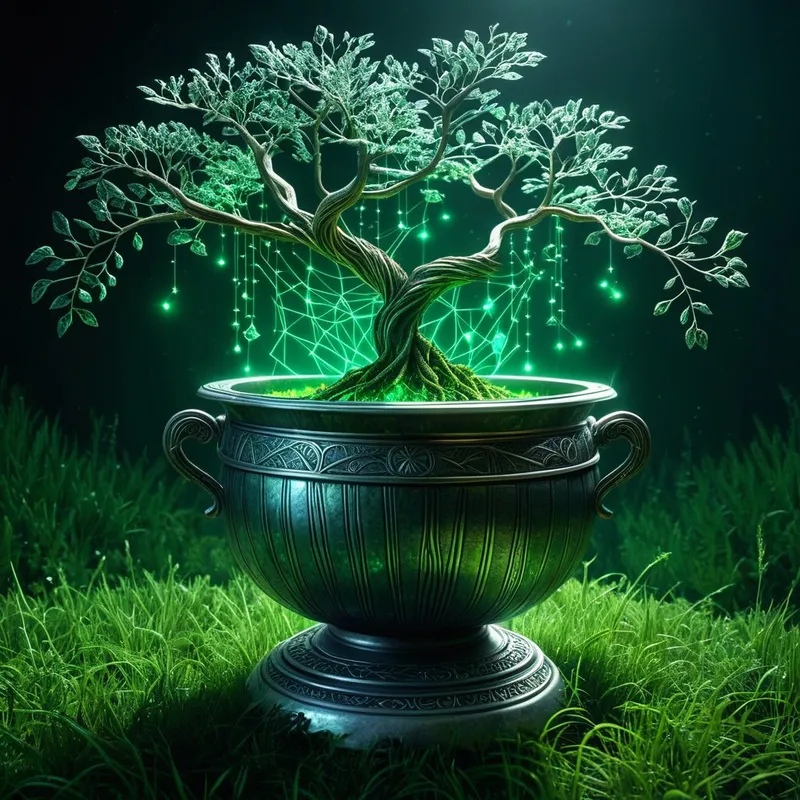
When this myth pattern stirs in the modern dreamer, it often signals a critical juncture in one's relationship to the inner "land"—the foundational aspects of self, such as the body, intuition, creativity, or deep emotional needs. Dreaming of cutting down a beloved or ancient tree, especially one that feels sentient or protective, mirrors Eochaid's hubris. It is the psyche sounding an alarm against a conscious attitude that is, through overwork, neglect, rationalization, or outright repression, wounding the soul's root system.
Somatically, this may manifest as a sudden "flooding"—anxiety attacks, overwhelming fatigue, or mysterious illnesses that defy logical diagnosis. These are the "dark waters" breaking through the dam. The dream may present a nurturing figure (a grandmother, a guide) turning away or transforming into something menacing, representing the withdrawal of the inner feminine's supportive energy. To dream of this myth is to be shown that one's current mode of operation is unsustainable and that the unconscious is preparing to enforce a correction, a necessary dissolution of an outdated ruling attitude to restore the flow of life.
Alchemical Translation
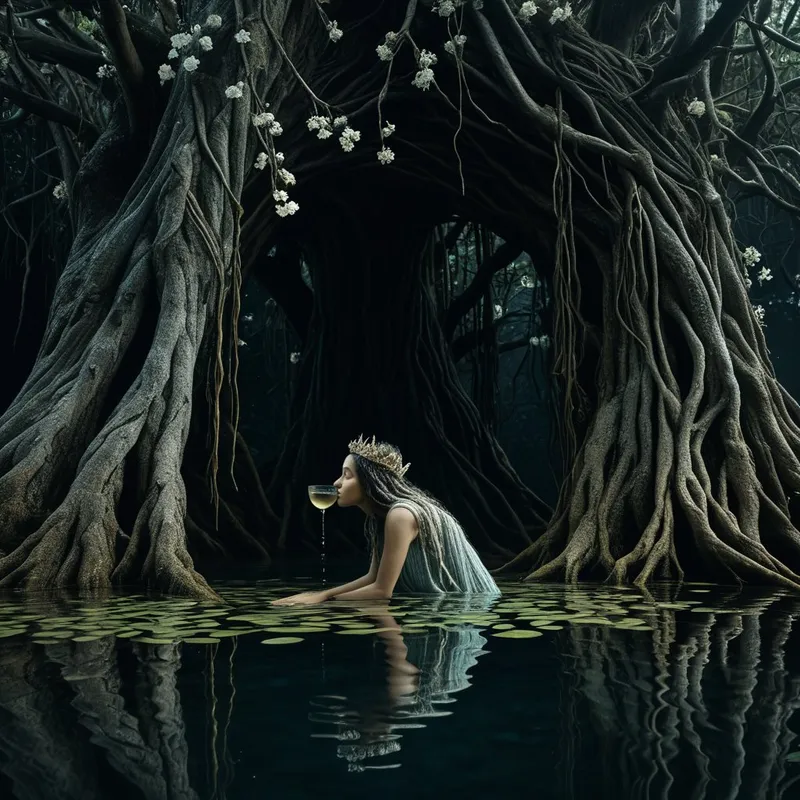
The individuation process modeled here is the transmutation of tyranny into stewardship. Eochaid's fatal error was perceiving the sacred tree as an "other," an object separate from himself to be dominated. The alchemical work is to recognize that the tree is the self—the deeper, ecological self.
Individuation begins not with building a taller tower of consciousness, but with kneeling at the roots of the inner elder and learning its language.
The first stage is Nigredo, the blackening: the realization of one's own "kingly" hubris—where in our lives have we been Eochaid, imposing our will while ignoring the subtle feedback of soul and body? This is the dark sap, the bitter scent of crisis. The second, Albedo, the whitening, is the cleansing flood of emotion and truth—allowing the repressed waters of the unconscious to surface and wash away the rigid structures of the false self. It is a surrender, often experienced as a breakdown or profound depression.
The final stage, Rubedo, the reddening, is symbolized by the new, vibrant thicket. It is the emergence of a new psychic structure where consciousness no longer rules over the unconscious but enters into a conscious partnership with it. The king is dead; the steward is born. The modern individual integrates this myth by cultivating a practice of "listening to the mound"—through dream work, body awareness, creative expression, and a respectful engagement with the natural world. One learns to seek counsel from the inner Elder before making life-altering decisions, understanding that true sovereignty is not control, but a graceful, reverent, and responsive dialogue with the profound intelligence of the soul's own sacred land.
Associated Symbols
Explore related symbols from the CaleaDream lexicon: