Egungun Myth Meaning & Symbolism
The myth of Egungun tells of the sacred return of ancestral spirits, cloaked in mystery, to bless, judge, and maintain the cosmic balance between worlds.
The Tale of Egungun
Listen. The air in the village is not still. It hums with a tension that is not fear, but anticipation—a held breath held by a thousand lungs. The sun beats down on the red earth, but a different heat is gathering at the edge of the sacred grove. The drums have fallen silent. The children have been hushed. All eyes are turned toward the path where the world of the living thins, and the world of the Àjẹ́yí begins.
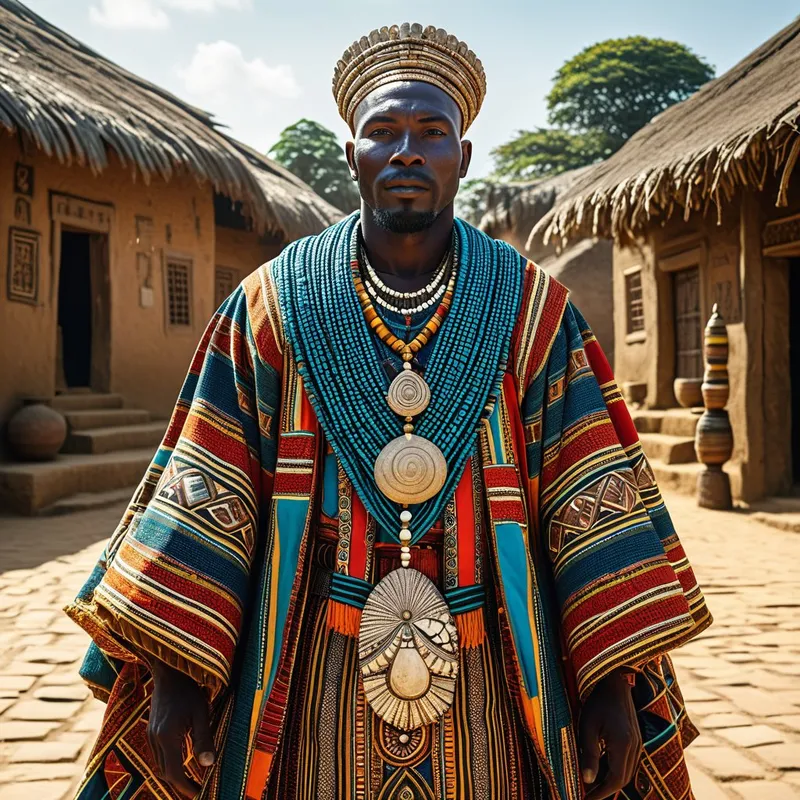
Then, a sound. Not a footstep, but a rustle, like the whispering of dry leaves in a forest of memory. From the shadows, It emerges. Not a man, not a beast, but a Being of countless layers. It is the Egungun. Its body is a mountain of cloth—indigo, crimson, saffron, white—a tapestry of every life ever lived in the lineage. Shells and beads clatter like distant voices; carved symbols sway, telling stories without words. Where a face should be, there is only a void, a profound absence that sees everything.
It moves into the square, and its movement is the movement of time itself: slow, inevitable, swaying like a great tree rooted in the past. The air grows thick with the scent of dust and ozone. The people prostrate themselves, their foreheads pressing into the warm earth. They do not look upon the face of the ancestor, for to do so is to invite madness or death. They feel its gaze—a weight that measures not their wealth, but their character; not their words, but their deeds.
The Egungun does not speak with a human tongue. It speaks through its dance. A sudden, violent spin is a rebuke, a warning of discord sown in secret. A gentle, rocking motion is a blessing, a shower of invisible prosperity for a righteous household. It may pause before a man who has broken an oath, and the very stillness of its myriad cloths becomes an accusation more terrible than any shout. It may shower a woman who has honored the traditions with a cascade of seeds from its sleeves, a promise of fertility and continuity.
Sometimes, it is not one, but a procession—a river of ancestral power flowing through the streets, each figure a different aspect of the past: the warrior, the mother, the judge, the trickster. They cleanse the community. They restore balance. They remind the living that they are a bridge between what was and what will be. The spectacle reaches its peak in a whirl of color and sound, a tangible manifestation of the covenant between the realms. And then, as suddenly as it appeared, the Egungun turns and sways back toward the grove. The cloths recede into the shadows. The presence lifts. The village exhales, forever altered, forever reminded that they are not alone. The ancestors have walked among them. Justice has been rendered. The circle remains unbroken.
Cultural Origins & Context
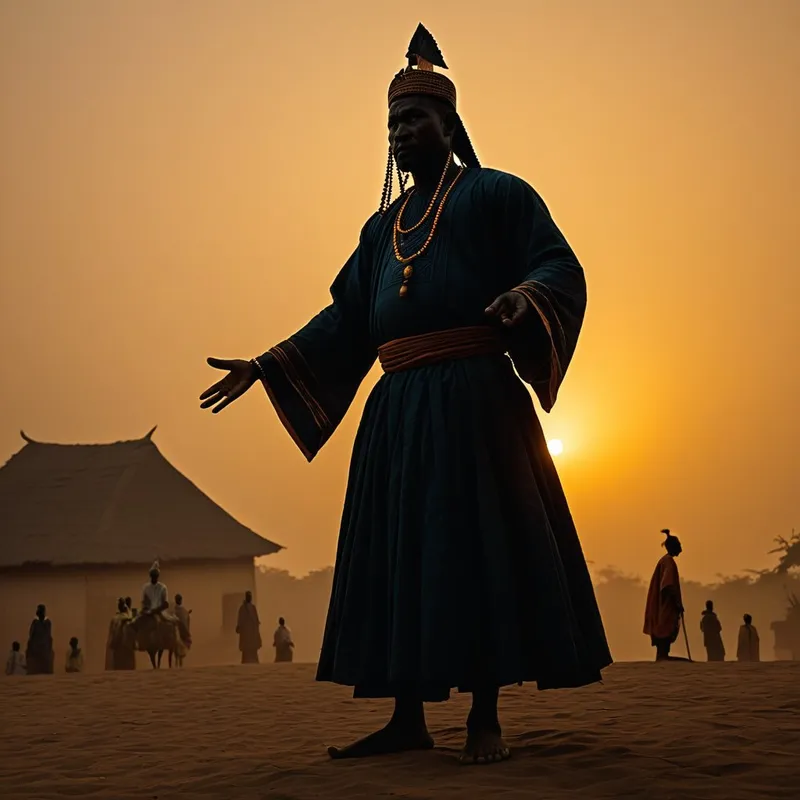
The myth and practice of Egungun are rooted deeply in the spiritual systems of the Yoruba people of West Africa, primarily in what is now Nigeria and Benin. This profound tradition of ancestral veneration survived the unspeakable rupture of the Transatlantic Slave Trade, taking root in the soils of the Caribbean and the Americas—in Cuba as part of Santería or Regla de Ocha, in Brazil within Candomblé, and in various forms across other Diasporic communities.
It was never merely a "story" to be told, but a lived, communal reality. The knowledge was passed down not through books, but through secret societies, often all-male (like the Egbe Egungun), who were the custodians of the rites, the costumes, and the profound responsibility of channeling the ancestors. The societal function was multifaceted: it was judiciary, enforcing social and moral law; it was psychological, providing a mechanism for grief and continuity; it was cosmological, reaffirming that death is not an end but a transition to another state of being with ongoing agency in the world of the living. The Egungun ceremony was, and is, the community's immune system and its memory, embodied and in motion.
Symbolic Architecture
At its core, the Egungun myth symbolizes the irreducible and authoritative presence of the past within the present. The ancestor is not a passive memory but an active, intervening force.
The living are the leaves and branches, visible to the sun. The ancestors are the roots, unseen but essential, drawing nourishment from the deep earth of time and channeling it upward.
The elaborate, concealing costume is its primary symbol. It represents the ineffable mystery of the afterlife and the collective, impersonal nature of ancestral power. The individual identity is subsumed into the archetype of "the Forebear." The void where the face should be is a powerful symbol of the ultimate Otherness of the spirit world; it is a mirror that reflects not our faces, but our actions and their consequences back at us.
Psychologically, the Egungun represents the objective psyche, the voice of the Self that transcends the petty concerns of the ego. It is the internalized lawgiver, the moral conscience, and the repository of inherited wisdom and trauma—what Jung might call the ancestral layer of the collective unconscious. Its dance of judgment and blessing reflects the psyche's own constant process of self-regulation and evaluation.
The Dreamer's Resonance
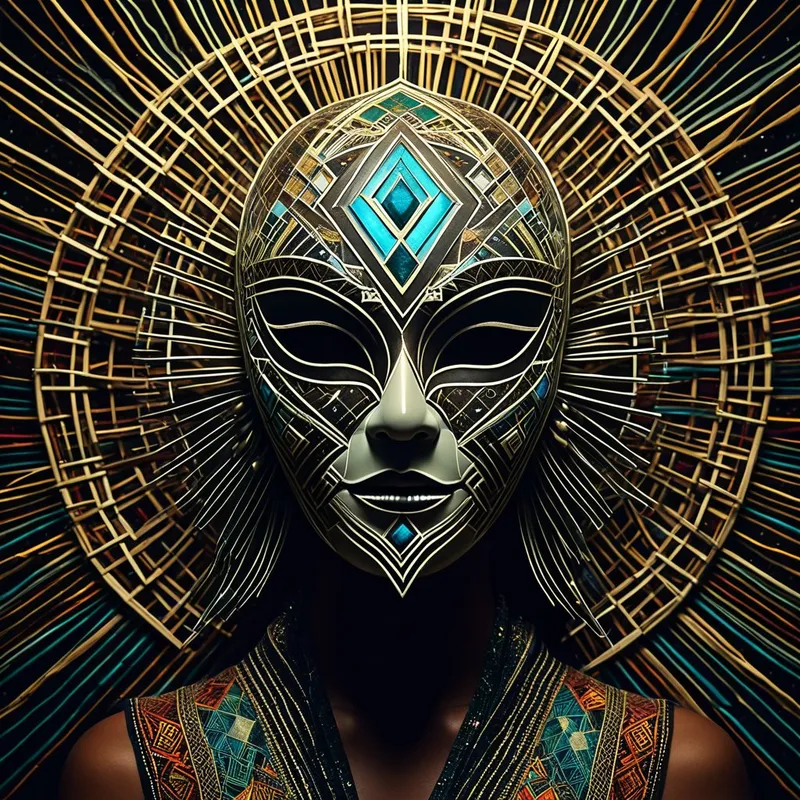
When the pattern of the Egungun manifests in modern dreams, the dreamer is likely encountering a profound process of ancestral reckoning or confrontation with the inner "tribunal." To dream of a shrouded, faceless figure of immense presence is to stand before the aspects of one's own psyche that carry the weight of lineage.
Somatically, this might be experienced as a feeling of being weighed down, scrutinized, or held accountable. The dreamer may feel an urge to bow or hide their face, reflecting an ego confronting a truth larger than itself. Alternatively, dreaming of being within the costume could signal an identification with this ancestral authority, perhaps a need to assert wisdom or judgment, or a struggle with carrying family expectations. The swirling, layered cloths often symbolize the complex, tangled, and multi-hued narratives of one's family history and inherited patterns. The dream is an invitation to respectfully engage with what has been passed down—to acknowledge its power, discern its blessings from its curses, and ultimately, to establish a conscious relationship with this deep inner stratum.
Alchemical Translation
The alchemical process modeled by the Egungun myth is the transmutation of the personal psyche through a conscious engagement with the transpersonal and the ancestral. The modern journey of individuation is not done in a vacuum; we are born into a psychic lineage.
The first stage is Confrontation. The Egungun appears unannounced. Similarly, the contents of the ancestral unconscious often erupt into our lives through repetitive patterns, inexplicable fears, or inherited burdens. We must, like the villagers, learn to "prostrate"—to humble the ego and acknowledge this powerful, often frightening, authority within.
The second stage is Discernment. The Egungun's dance is a language. We must learn to interpret the ancestral message. Is it a blessing (an inherited strength, a talent, a resilient spirit) or a judgment (a destructive habit, a unprocessed trauma, a limiting belief)? This requires deep introspection and often, the help of one's own "secret society"—therapists, guides, or a conscious community.
The goal is not to wear the ancestral costume, but to learn its language; not to become the ancestor, but to converse with them, thereby freeing one's own life from unconscious repetition.
The final stage is Integration and Responsibility. The Egungun leaves, but the village is changed. The successful internal alchemy means we take the justified judgments and the authentic blessings into our being. We honor the ancestors not by blind obedience, but by living more consciously, breaking harmful cycles, and channeling their strength into our own unique creation. We become, in a sense, the responsible custodians of the lineage for the future, transforming ancestral lead into the gold of a liberated, authentic self. The circle remains unbroken, but now, we are a conscious link within it.
Associated Symbols
Explore related symbols from the CaleaDream lexicon: