Egúngún Myth Meaning & Symbolism
A myth of the returning dead, cloaked in sacred fabric, who bring ancestral wisdom, justice, and the vital link between the living and the spirit world.
The Tale of Egúngún
Listen. The air in the village is not still. It hums with a tension that is older than the oldest baobab tree. It is the time when the sun hangs heavy, and the boundary between earth and sky grows thin as a spider’s silk. The drums begin—not the drums of celebration, but a deep, polyrhythmic language that speaks to the soil, to the roots, to the bones buried beneath.
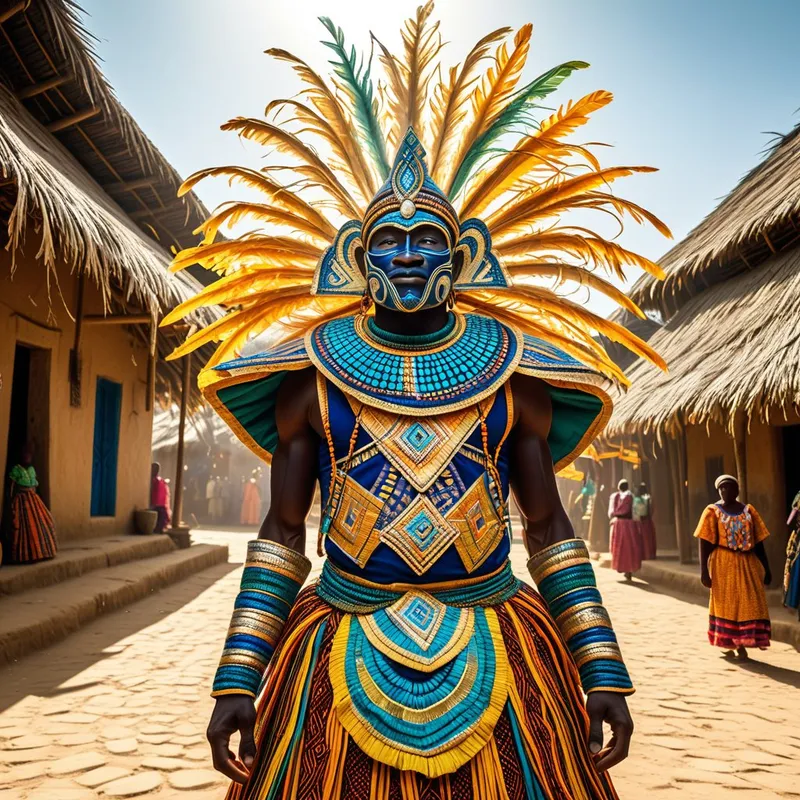
From the sacred grove, from the house of secrets, it emerges. It is not a man, though a man may be within. It is a storm of color and sound, a mountain of moving fabric. This is the Egúngún. Layers upon layers of costly cloth, velvet, damask, and raffia sway and rustle, concealing all human form. Wooden masks, painted and fierce, peer out from the folds, but they are not faces—they are portals.
The children shrink back, not in fear, but in awe. The elders nod, their eyes wet with memory. The Egúngún moves with a gait that is both ponderous and weightless, a dance of the earth and the wind. It sweeps through the square, its wrappings swirling, and where it points a gloved hand, blessings are given. Where it turns its masked gaze, misdeeds are laid bare. It speaks, but its voice is not human; it is a chorus of whispers, a grating rasp that seems to come from the cloth itself, pronouncing proverbs, settling disputes, reminding all of the law of the ancestors.
This is no mere performance. This is a return. The beloved dead, the wise elders, the founders of the lineage—they have answered the call. They have crossed the river that divides the worlds, wearing garments of power woven from memory and respect. For a time, they walk again among the living, not as ghosts, but as a palpable, commanding force of continuity. They dance until the dust rises to meet the twilight, and then, as the final drum salute echoes, they retreat. Back to the grove, back to the unseen. The boundary thickens. The village exhales, forever altered, forever connected. The ancestors were here. They spoke. They were honored. And they will return.
Cultural Origins & Context
The myth and practice of Egúngún are rooted deeply in the spiritual world of the Yoruba people and their diaspora. It is not a single story with a fixed plot but a living, dynamic complex of belief, ritual, and social order centered on the veneration of ancestors (Àjẹ́). The knowledge is custodial, passed down through male lineage societies and priestly orders who guard the secrets of the costumes, the rituals of invocation, and the sacred spaces.
Its societal function is multifaceted. On one level, it is a powerful mechanism of social control and justice; the Egúngún, as an impartial ancestral authority, can reprimand, fine, or bless, reinforcing communal norms. On another, it is a profound religious rite that reaffirms the cosmic order—Àṣẹ—by actively maintaining the link between the living community (Ilé Ayé) and the realm of the ancestors (Ọ̀run). The masquerade itself is the myth made visible, a tangible demonstration that death is not an end but a transition to another state of being that remains actively interested in the welfare of the lineage.
Symbolic Architecture
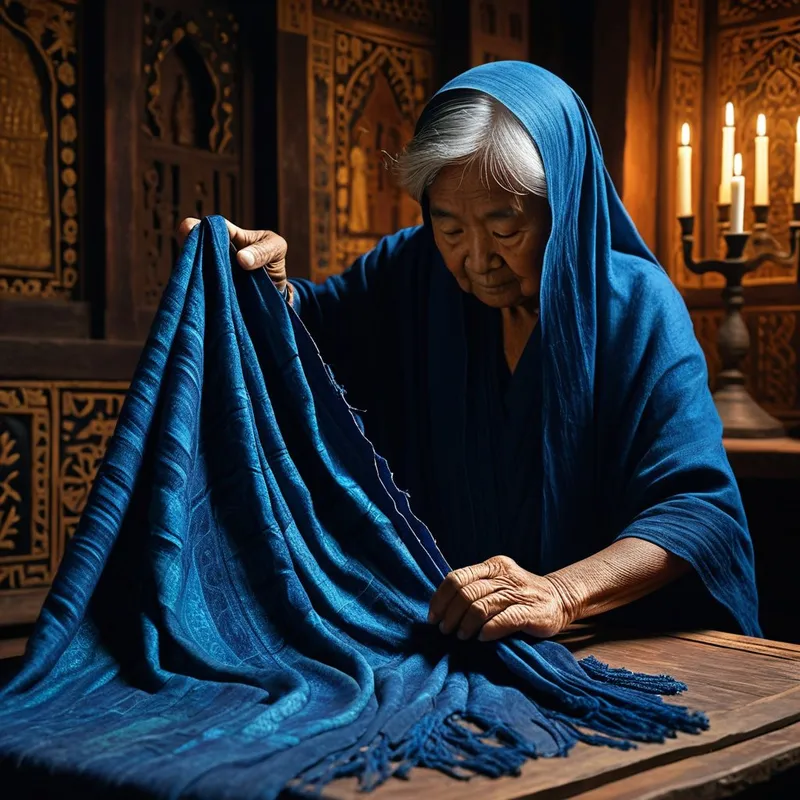
The Egúngún is perhaps one of the most potent symbols of the mediated return. The complete concealment of the human performer is not a disguise, but a transformation. The layers of fabric represent the layers of time, generations, and individual lives that constitute the ancestral collective.
The mask does not hide the face; it reveals the lineage. The cloth does not conceal the man; it manifests the community of the dead.
Psychologically, the Egúngún represents the totality of the past that shapes the present. It is the inherited trauma, the unspoken family wisdom, the genetic memory, and the cultural superego all rolled into one awe-inspiring, sometimes terrifying, form. It is the part of our psyche that is not us individually, but us collectively—the voices of all who came before, whose choices, triumphs, and sufferings built the ground we walk on. The dance of the Egúngún is the dance of history itself, sometimes graceful, sometimes corrective, always powerful.
The Dreamer's Resonance
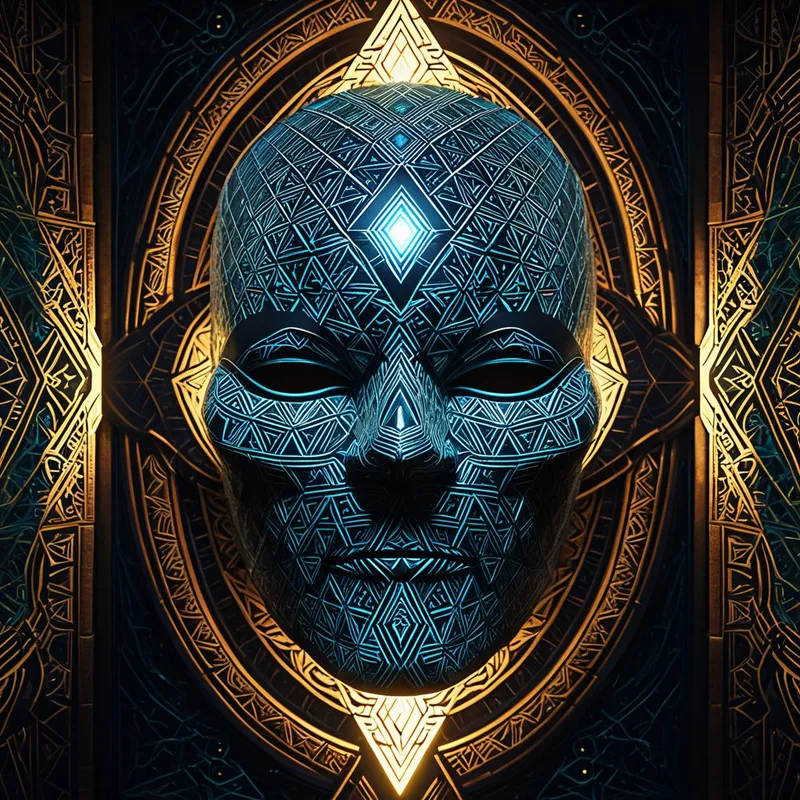
To dream of an Egúngún is to encounter the psyche’s own ancestral council. In the modern dreamscape, this may not appear as a traditional masquerade. One might dream of a figure made entirely of old photographs, of a parent or grandparent whose face keeps changing, or of a room in one’s house that is filled with heirlooms that begin to move and speak.
Somatically, this dream often accompanies a feeling of being weighed down or guided by a force larger than oneself—a pressure in the chest, a sense of being watched or followed by a benevolent yet stern presence. Psychologically, it signals a process where deeply buried familial patterns, loyalties, or secrets are pressing for recognition and integration. The dream-Egúngún asks the dreamer: What from your past are you obligated to honor? What must you face to be free? It is the psyche’s ritual to reconnect with its own foundations, often emerging during life transitions, identity crises, or when one is grappling with the weight of family legacy.
Alchemical Translation
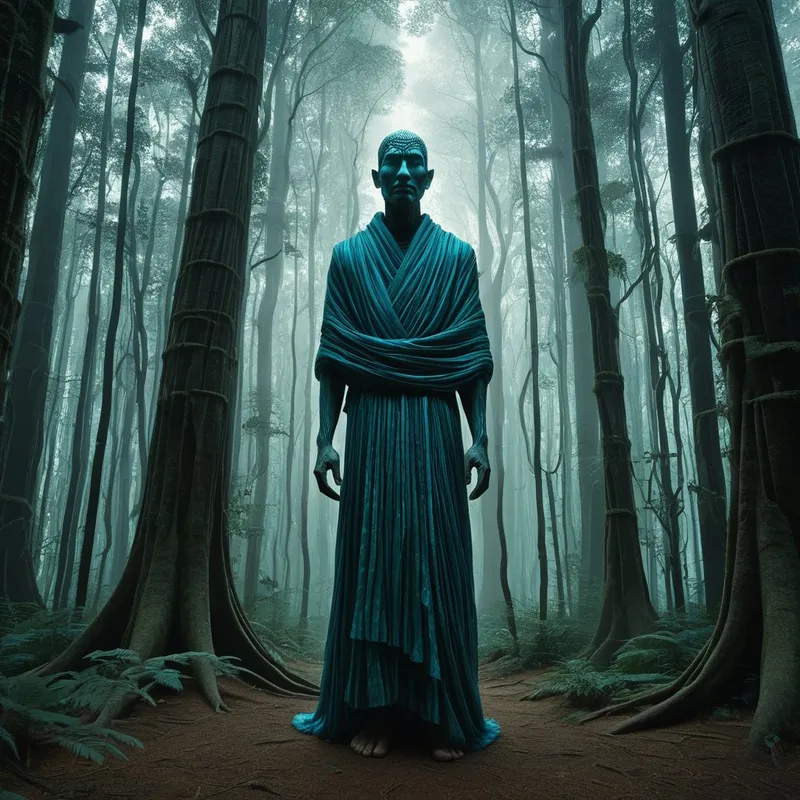
The individuation process, the journey toward psychic wholeness, requires a conscious relationship with what Jung called the personal and collective unconscious—our inner ancestors. The Egúngún myth provides a precise model for this alchemical work.
First, there is the Calling Forth. This is the conscious decision to engage in therapy, shadow work, or deep reflection, inviting the hidden aspects of our personal and familial past to emerge. We drum on the psyche’s skin to summon what is buried.
Then, the Manifestation in Form. The ancestral content does not appear as abstract thought, but as potent, often overwhelming, emotion, pattern, or complex—the layered "costume" of our neuroses and gifts. We must learn to see the sacred in this manifestation, not just the disturbance.
The work is not to unmask the spirit, but to learn the language of its dance—to understand the message in its movement, its corrections, and its blessings.
Finally, the Ritual Engagement and Return. We do not "defeat" these ancestral patterns; we learn their laws, pay our respects (acknowledge their reality and impact), receive their wisdom, and consciously integrate it. We allow them to alter us, to settle disputes within our inner community, and then we respectfully let them return to their place in the psyche’s structure. They become a supported part of our inner pantheon, not a haunting ghost. The ego is not the dancer inside the costume, but the entire village that witnesses, interacts with, and is transformed by the sacred visitation. In this way, we achieve not a rupture from our past, but a sacred, living bridge to it, forging an identity that is truly our own yet respectfully built upon all that has come before.
Associated Symbols
Explore related symbols from the CaleaDream lexicon: