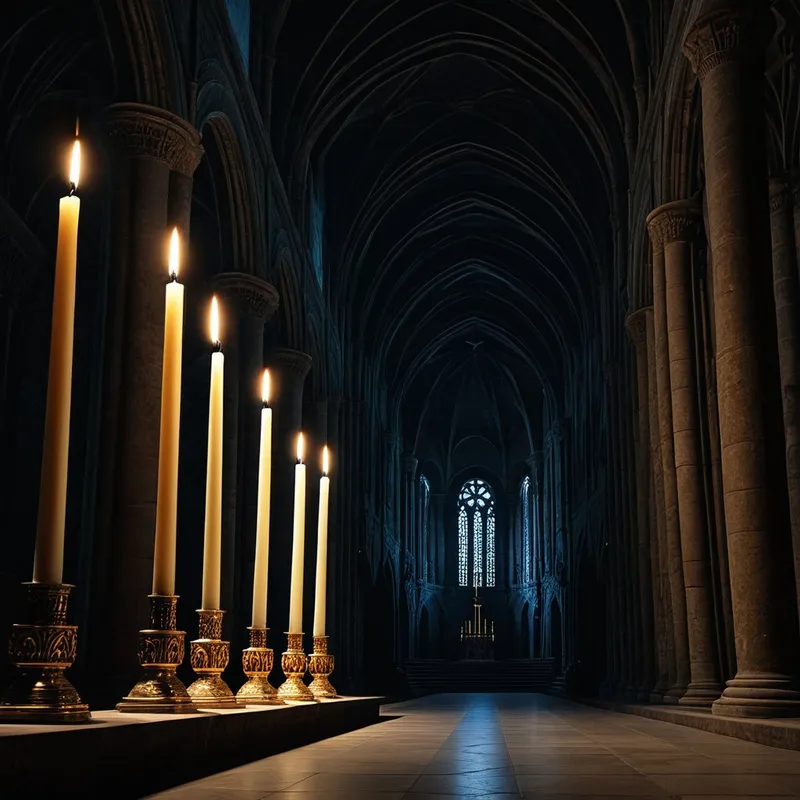
Easter Vigil Myth Meaning & Symbolism
A sacred night watch from darkness to dawn, where the mythic hero descends into death to shatter its chains and return, transforming the cosmos.
The Tale of the Easter Vigil
Listen. The world holds its breath.
The great sun has been extinguished, swallowed by the Good Friday abyss. The temple veil is torn from top to bottom, and the earth itself has quaked. Now, a deeper silence falls—the heavy, waiting silence of the Great Sabbath. It is a day outside of days, a crack in time where creation groans, unfinished, remembering the formless void before the first "Let there be light."
The people gather as night thickens. They are not in a brightly lit hall, but in the outer darkness, beyond the church doors. The air is cold, expectant. There is no light. None. They stand in the absolute blackness of the tomb, in the belly of the whale, in the psychic reality of a world without its heart.
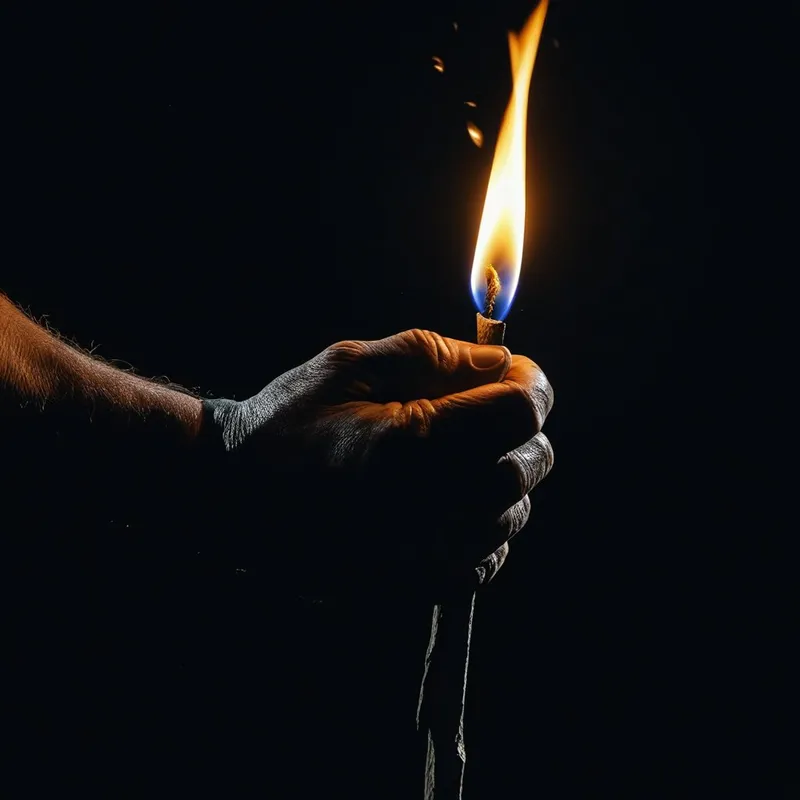
Then, a sound breaks the silence: the strike of flint on steel. A shower of sparks, a struggle against the dark, and finally—a catch. A new fire is kindled. This is no ordinary flame. It is the Paschal Fire, born from stone in the depth of night. From this primal spark, the great Candle of the World is lit. The deacon raises it high, a solitary sun in a universe of shadow, and sings into the void: "Lumen Christi—the Light of Christ!*"
And the people, their voices trembling with a hope older than despair, respond: "Deo gratias—Thanks be to God!*"
Three times this procession moves through the nave, a slow conquest of darkness. Each proclamation is louder, more defiant, as hundreds of individual candles are lit from the one source. The tomb of the church becomes a galaxy of flickering stars.
Then begins the great telling—the Exsultet. It is not a lecture, but an incantation. The deacon sings of this "truly blessed night," which "alone deserved to know the time and hour when Christ rose from the underworld." This is the night that scattered the gloom of sin, the night that shattered the chains of death. The candle itself is addressed as a living being, a "pillar of fire" that "glows to the honor of God."
The stories of salvation are recounted in the growing light: the Spirit hovering over the primordial waters, Abraham's knife stayed by a voice from heaven, the chosen people walking through the parted Red Sea on dry ground. Each story is a thread in a single, grand tapestry of deliverance.
Then, the bells, silent since Thursday, ring out in a sudden, shocking thunder. The Gloria erupts. The veil is lifted. And the proclamation echoes off stones that now seem to vibrate with life: "He is risen!" The night of watching culminates in a dawn that has penetrated the very heart of death. The vigil ends not at midnight, but in the first light of Sunday, with water blessed and lives renewed. The long watch is over. The dawn, impossible and undeniable, has come.
Cultural Origins & Context
The Easter Vigil, or the Paschal Vigil, is the ancient, foundational liturgy of Christianity, with roots reaching back to the faith's earliest Jewish and Greco-Roman milieu. It was originally a true all-night watch (vigilia), beginning after nightfall on Saturday and concluding at dawn on Sunday, mirroring the biblical narrative of the women visiting the tomb "very early on the first day of the week."
In the first centuries, this was the only time of year when new members were initiated into the community through Baptism. The Vigil was thus the dramatic, sensory-rich portal into the Christian mystery. Its function was societal and cosmological: it ritually re-enacted the passage from death to life, from slavery to freedom, from chaos to cosmos, binding the individual's transformation to the mythic story of Christ and, through the Old Testament readings, to the entire salvation history of humanity. It was told not from a book, but through immersive, participatory drama—fire, water, story, song, and shared meal. It was the community's way of remembering forward, of aligning their collective psyche with the archetype of radical hope.
Symbolic Architecture
The Vigil is a masterclass in symbolic logic, mapping the journey of the soul through its darkest night.
The new fire is not found; it is struck into being from the hard flint of absolute despair. Creation begins anew not in comfort, but in collision.
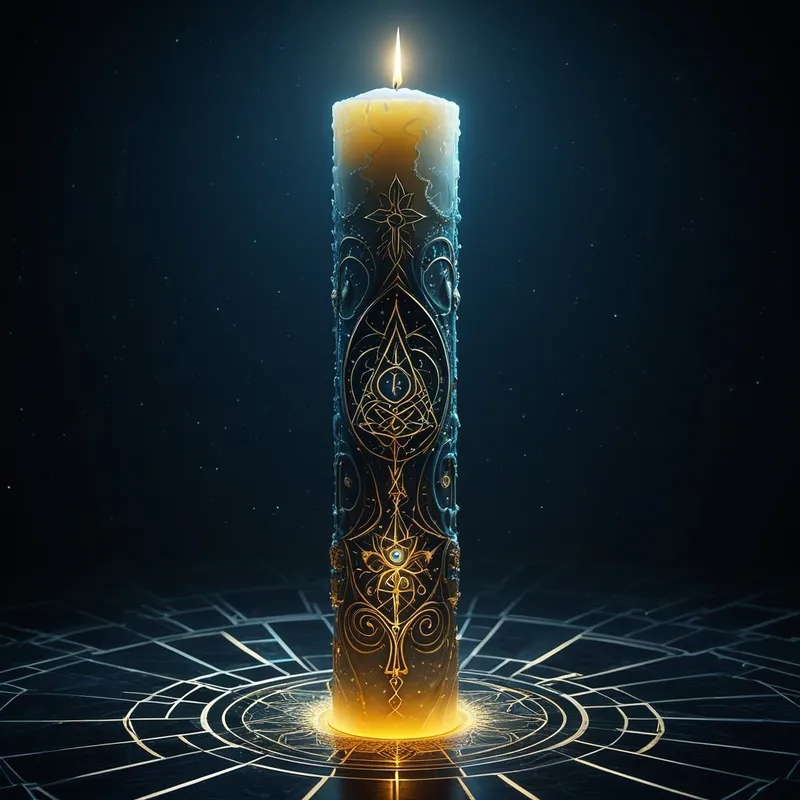
The Great Candle is the axis mundi of the ritual—the World Tree, the Pillar of Fire, the risen Christ, and the individuated Self all in one. Its five grains of incense, pressed into the wax in the form of a cross, represent the wounds of existence made sacred. Its light is non-competitive; it gives itself away to countless other candles without being diminished, symbolizing the nature of true consciousness or grace.
The movement from outer darkness into a lit church is the journey from the unconscious into consciousness, from identification with the ego's death (despair, meaninglessness) to connection with the transpersonal Self. The readings are the psyche gathering its own mythic history, understanding its personal trials as part of a universal pattern of descent and return.
The Resurrection announced in this liturgy is not merely the resuscitation of a body, but the irruption of a new order of reality into the old. It is the psychic truth that the core of being is indestructible.
The Dreamer's Resonance
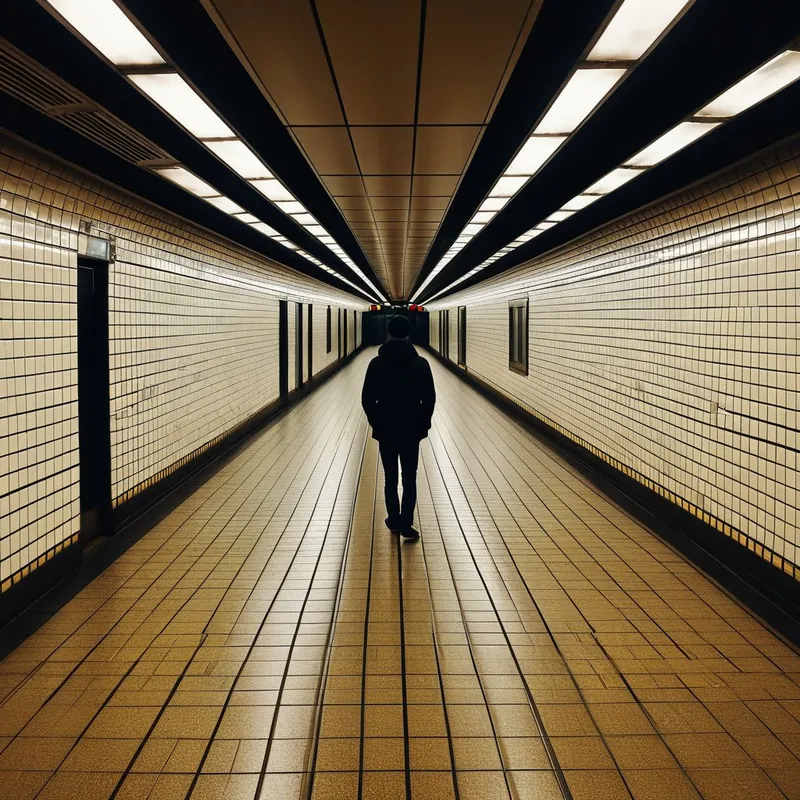
When this mythic pattern stirs in the modern dreamer, it seldom appears in religious garb. Instead, one dreams of being trapped in a vast, dark, underground space—a basement, a cave, a subway tunnel. The atmosphere is of profound isolation and stalled time. There is often a deep, somatic anxiety, a feeling of being buried alive in one's own life, career, or depression.
The turning point is the appearance of a single, small, often anomalous light: a crack under a door where there should be none, a match that spontaneously ignites, a distant lantern carried by an unknown figure. This light feels significant and directed. The dream ego's task is not to create the light, but to acknowledge it, to move toward it, or to allow others to light their own from it. The subsequent feeling upon waking is not always joy, but often profound relief, a visceral loosening of a constriction in the chest. The dream signals that the psyche has endured the necessary nadir of a dark night of the soul and has now, autonomously, initiated the first, fragile movement toward reintegration and meaning-rebirth.
Alchemical Translation
Psychologically, the Easter Vigil is a precise ritual of individuation. It models the alchemical nigredo, the dissolution of all one's former certainties and identities (the extinguished lights, the silent bells). This is not an error, but a necessary stage—the confrontation with the shadow and the reality of personal mortality.
The kindling of the new fire is the albedo, the first glimpse of the Self after the ego's breakdown. It represents the emergence of a new, guiding principle from the core of one's being, often following a period of intense friction and "striking."
The vigil itself—the act of staying awake in the darkness—is the crucial work of consciousness. It is the refusal to numb out or spiritually bypass the descent.
Lighting one's candle from the Paschal flame is the act of connecting one's personal journey to the transpersonal, archetypal pattern. It means understanding one's suffering and hope as part of the human condition, not a unique pathology. The final proclamation and the dawn symbolize the rubedo—the full integration, where what was once experienced as death (failure, loss, ending) is now seen as the necessary precursor to a more authentic, resilient, and compassionate life. The Vigil teaches that rebirth is not an avoidance of death, but its ultimate transmutation. The stone that was rejected—the darkness, the doubt, the tomb—becomes the cornerstone of the new morning.
Associated Symbols
Explore related symbols from the CaleaDream lexicon: