Dwarven craftsmen Myth Meaning & Symbolism
A myth of master artisans born from primordial earth, forging divine treasures through immense skill, cunning, and a sacred, subterranean fire.
The Tale of Dwarven craftsmen
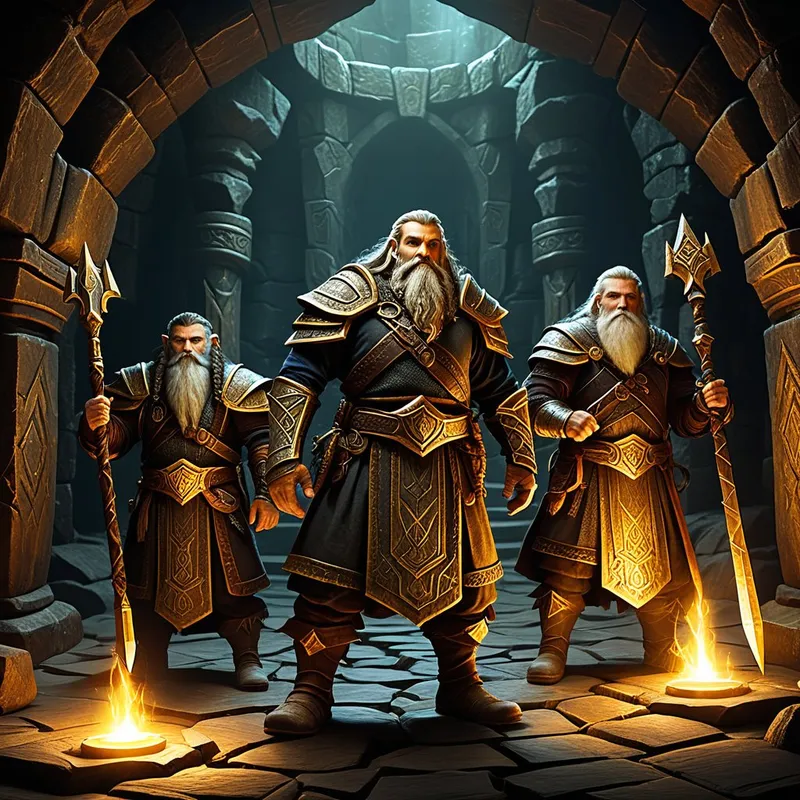
Listen, and hear the tale not of gods or giants, but of those who work the bone of the world. In the time before memory, when Ginnungagap still echoed, the earth itself quickened. From the flesh of the primeval giant Ymir, like maggots in rich soil, they were born: the Dvergr. They were not born of light, but of stone and deep iron; not of air, but of the pressing, silent dark.
They claimed the roots of mountains, the veins of the world. Their forges were lit not by sun, but by the inner fire of the earth, a glow that stained the cavern walls the color of dying embers and molten gold. The air there tasted of metal and ozone, and the only music was the relentless, rhythmic song of hammer on anvil—a heartbeat from the world’s core.
It was in this realm of shadow and craft that the gods of Ásgarðr came seeking. For the gods had splendor and power, but they lacked the thingness of mastery. Óðinn, the All-Father, required a spear that would never miss its mark. Þórr needed a hammer to defend the realms. Freyr desired a ship that could fold into a pouch and a boar that shone like the sun.
And so the challenge was set, a wager of lives and pride. The sons of Ivaldi worked first, their hands a blur in the forge-light. From their crucible came Gungnir, its point singing with destiny, and Skíðblaðnir, a vessel with a mind for fair wind. But the greatest of their works was Sif's hair, spun gold so fine it grew from her scalp as if born there, catching the light of every star.
Yet another smith, Brokkr, and his brother (some call him Eitri, others Sindri) heard of this and scoffed. They vowed to craft greater treasures still. The wager was sealed with Loki’s own head as the prize.
In their forge, the air grew thick with magic and heat. Eitri placed a pig’s skin in the hearth and commanded Brokkr to work the bellows without cease, no matter what he saw or heard. As the bellows roared, the forge became a crucible of creation. A fly—Loki in disguise—bit Brokkr’s hand fiercely, but he did not flinch. From the fire came Gullinbursti, a living boar of gold whose bristles lit the darkest underworld.
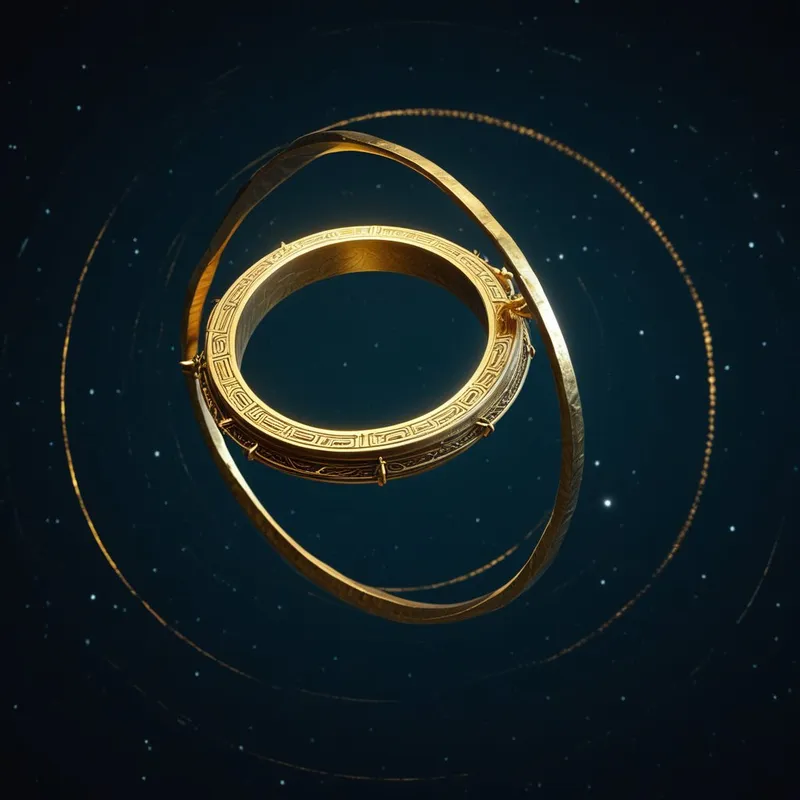
Next, Eitri threw gold into the flame. The fly came again, biting Brokkr’s neck until blood flowed, but the bellows roared on. From the fire he drew Draupnir, a ring of multiplying gold, a circle of endless becoming.
Finally, Eitri set iron in the hearth. “Now, brother,” he said, his voice grave, “do not stop. Our greatest work is here.” The fly, desperate, landed between Brokkr’s eyes and bit his eyelid. Blood blinded him. For one terrible moment, the rhythm faltered. Just once. Then the bellows roared anew.
Eitri drew from the fire a hammer of immense power, its head short in the haft—a flaw born of that single faltering stroke. This was Mjölnir, the crusher, the thunder-maker, the protector of gods and humans alike.
The gods judged. Gungnir was peerless. Gullinbursti was a marvel. Draupnir was a wonder. But Mjölnir, even flawed, was the greatest treasure of all, for it would defend the order of the world. The dwarves had won. Their craft, born of darkness and unwavering focus, had shaped the very tools of cosmic fate.
Cultural Origins & Context
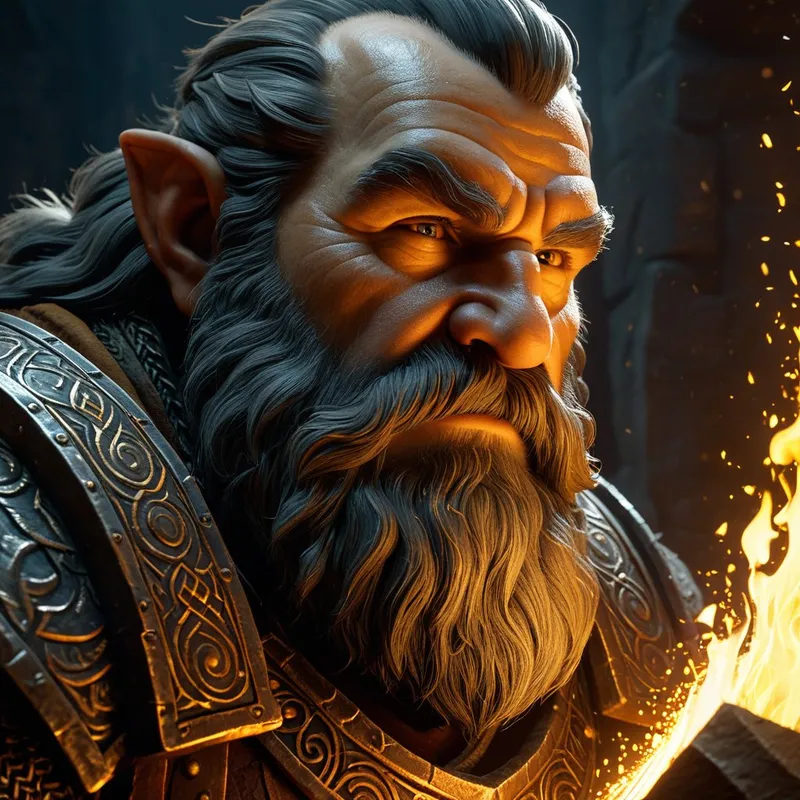
These tales of the Dvergr are not mere fancy. They are the cultural memory of a people intimately acquainted with the earth’s yield and its perils. In the unforgiving landscapes of the Norse world, survival depended on skill with stone, wood, and, most crucially, metal. The smith was a figure of awe and mystery, one who could transform raw, brutish ore into a sharp ploughshare, a sturdy nail, or a deadly sword. This transformative power bordered on the supernatural.
The myths were preserved primarily in the Poetic Edda and the later Prose Edda of Snorri Sturluson. They were likely told in halls during long winters, serving multiple functions. They explained the origins of the gods’ iconic possessions, yes, but they also reinforced a core societal value: craft. The dwarves embody the ideal of the master artisan—their skill (íþróttir) is their identity and their power. They are not noble warriors but indispensable creators, a reminder that civilization is built not only on courage but on meticulous, often unseen, labor.
Symbolic Architecture
The dwarven forge is not merely a workshop; it is a psychic chamber. Born from the primal body of Ymir, the dwarves represent the creative potential that lies within the raw, unconscious substance of the self—the unformed “matter” of our being. They are the personification of the focused, disciplined, often shadowed aspect of the psyche that can shape chaos into form.
The anvil is the resistant world; the hammer is the focused will; the forge-fire is the transformative passion that must be endured.
Their subterranean realm symbolizes the unconscious mind, where prototypes are formed away from the light of conscious scrutiny. The treasures they create—Gungnir (unerring purpose), Mjölnir (focused power), Draupnir (regenerative potential)—are not just objects, but psychic functions. They are the specialized capacities forged in the depths of experience to be wielded by the conscious “gods” of our personality.
The flaw in Mjölnir’s haft is profoundly symbolic. It is the inevitable imperfection in any act of creation, the mark of the struggle, the distraction (Loki’s bite), the moment of human weakness. Yet, this flaw does not negate the hammer’s power; it is integral to its story and its function. Perfection is a fantasy of the gods; the crafted object, like the individuated self, bears the honorable scars of its making.
The Dreamer's Resonance
When this myth stirs in the modern dreamer, it often manifests as dreams of intricate making or profound discovery in dark, enclosed spaces. One might dream of a basement workshop forgotten for years, now found to contain a complex, half-finished machine of beautiful design. Or of molding a substance—clay, light, molten glass—with intense concentration in a cave or a room deep within a house.
Somatically, this can correlate with a felt sense of pressure, of a creative “gestation” that is physically demanding, often located in the gut or the hands. Psychologically, it signals a process of fabrication at the deepest level. The psyche is laboring, often outside of conscious awareness, to forge a new capacity, integrate a complex feeling, or shape a raw talent into a usable skill. The dream is an affirmation: the work is underway in the dark. The discomfort, the sense of being “underground” or under pressure, is not pathology, but the necessary condition of this sacred crafting.
Alchemical Translation
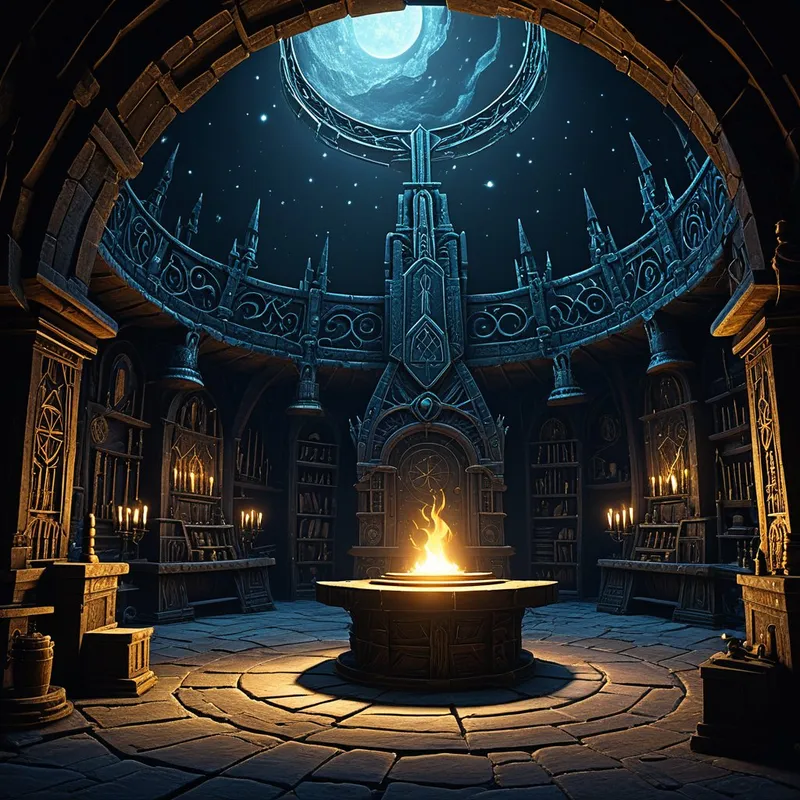
The dwarven myth is a perfect map of the alchemical opus, the process of psychic individuation. The prima materia—the chaotic, base substance—is the unrefined self, our latent potentials and unresolved complexes (the “maggots in Ymir’s flesh”). The forge is the vas hermeticum, the sealed vessel of the therapeutic or introspective process, where heat and pressure are applied.
The goal of the work is not to escape the dark, but to learn its metallurgy, to become a smith of one's own soul.
The brothers at the bellows represent the crucial, often tense, collaboration between different parts of the psyche: the conscious will (Brokkr, laboring under distraction) and the intuitive, guiding wisdom of the deep self (Eitri, who knows the recipe). Loki’s bites are the inevitable neuroses, doubts, and old wounds that arise to sabotage the work. The act of continuing despite the bite—the blood in the eye—is the moment of transcendence.
The final treasures are the lapis philosophorum, the philosophical gold of the integrated personality. Gungnir is the directed, unwavering intent of a unified will. Mjölnir is the capacity for decisive action and the setting of boundaries. Draupnir is the symbol of the now-fertile Self, which generates new insights and potentials continuously. We do not become the dwarf; we learn to honor the dwarf within—the master artisan who works in the dark, turning the lead of our struggles into the gold of authentic being.
Associated Symbols
Explore related symbols from the CaleaDream lexicon: