Dreamtime Stories Myth Meaning & Symbolism
The Dreamtime is the eternal moment of creation when ancestral beings shaped the world, singing law, land, and life into existence.
The Tale of Dreamtime Stories
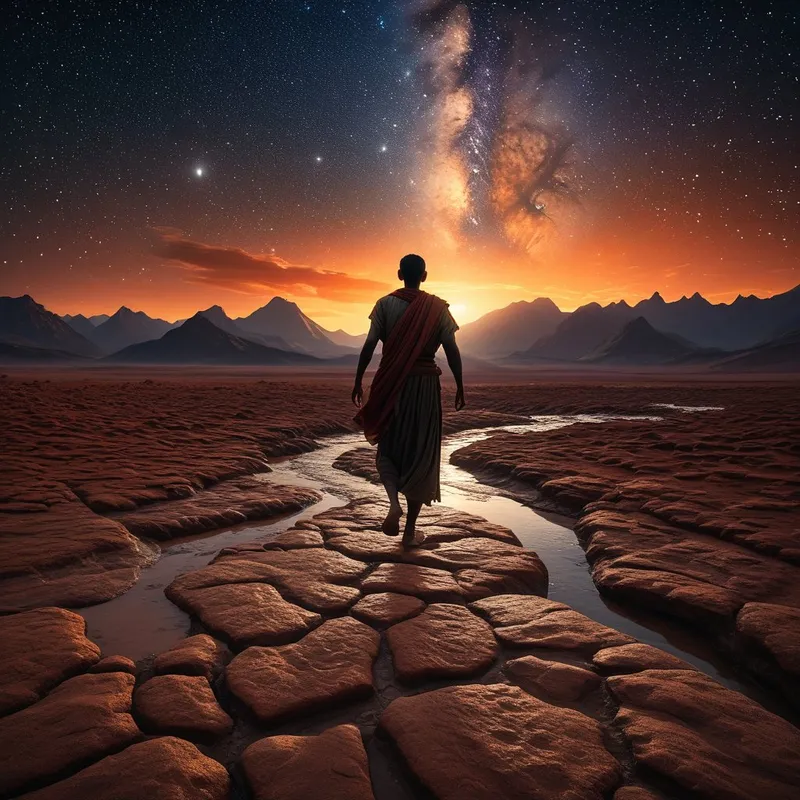
Before the world was as you know it, there was only a vast, flat, and featureless plain, sleeping beneath a dark, starless sky. This was the time of the Alcheringa, the Dreaming culture."). It was not a past event, but a continuous, vibrating layer of reality, a state of pure potential.
Then, from beneath the earth and within the sky, the Ancestral Beings awoke. They were not gods as distant rulers, but embodiments of life itself—the Rainbow Serpent, the Emu, the Kangaroo, the Witchetty Grub, the Honey Ant. Some were giants, shimmering with the power of their essence. They began to move.
Their journeys were the first events. Where the Rainbow Serpent slid, her massive body carved out the beds of the great rivers and waterholes. Where she rested, her coils formed mountains. When she rose into the sky, she left the arc of her colors as a covenant. The Kangaroo Man leapt in a great, bounding dance, and the land rose and fell with his rhythm, creating hills and valleys. The Emu Woman ran, and her frantic footsteps scattered stones that became the first ranges.
But they did not just shape the land; they sang it. With every step, every action, they sang. Their songs were not mere melody but the very vibrational code of existence. They sang the names of the places, the law for the creatures who would live there, the patterns of the seasons. They sang the connection between the waterhole and the cloud, between the ant and the acacia. This song was the Songline, a living map of meaning and memory woven into the earth itself.
Their work was not without struggle or story. There were battles for territory, great loves and losses, tricks and transformations. The Ancestral Beings hunted, celebrated, fought, and mourned. In one place, a great confrontation between two beings left the land scarred with a canyon. In another, a act of profound generosity caused a desert to bloom with wildflowers for the first time. Each event was imprinted.
Finally, their creative work complete, the Ancestral Beings did not die. They "went in." Some sank back into the landforms they had created—the Rainbow Serpent into her deepest waterhole, the rocky outcrop becoming the eternal body of the Kangaroo Man. Others ascended into the sky, becoming the stars of the Emu in the Sky. They entered a state of repose, but their power and presence remained, sleeping within the landscape and the law they had sung. The world was now awake, charged with their essence, a testament written in stone, river, and star. The Dreaming was not over; it had simply become the world, and the world had become the Dreaming.
Cultural Origins & Context
The Dreamtime stories are the foundational bedrock of the world's oldest continuous living culture, spanning over 65,000 years on the Australian continent. They are not "myths" in the sense of fictional tales from a dead past, but a living, breathing cosmology—a sacred, practical, and legal system. This knowledge is not owned by all, but is held in trust by specific custodians, whose responsibility is tied directly to their Totem and their stretch of Songline.
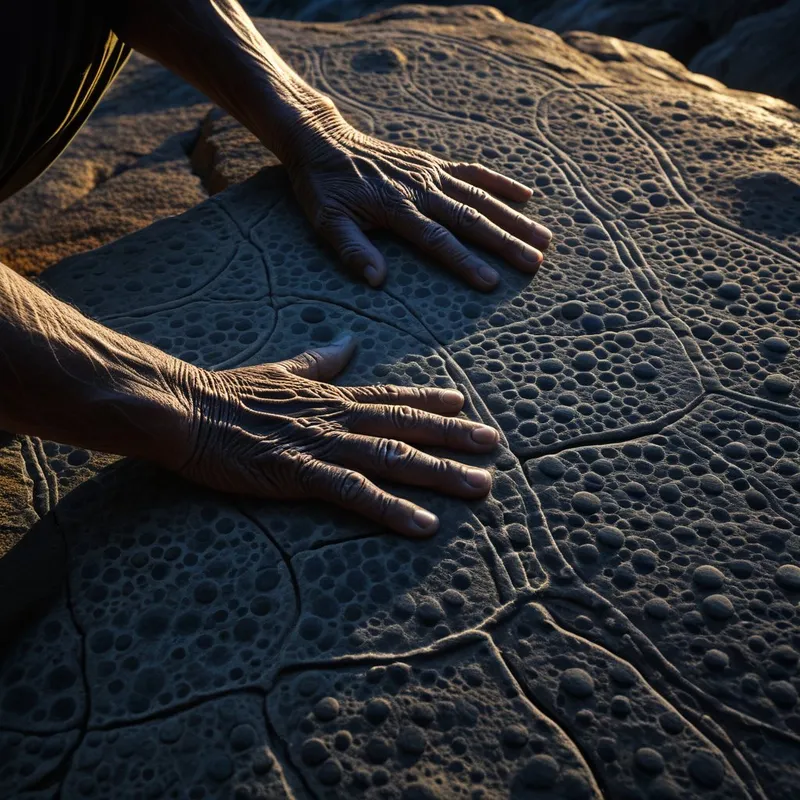
Transmission is oral, ceremonial, and incremental. Stories are not told in full to the uninitiated. They are passed down through generations via song cycles, elaborate ceremonial dances, ground paintings, and rock art. The elder, the knowledge-keeper, imparts the story as a sacred trust, often alongside the practical knowledge it encodes—the location of water, the behavior of animals, the properties of plants. The story is the title deed to country, the moral law, and the survival manual, all sung into one. Its societal function is total: it binds the individual to family, clan, country, and the cosmos, creating an unbreakable web of reciprocal obligation and identity.
Symbolic Architecture
At its core, the Dreaming presents a radical model of reality where psyche and world are not separate. The landscape is a mandala of the cosmic mind, and every feature is a thought, a memory, an action of the Ancestral consciousness.
The world is not a place you live in; it is a story you are a syllable of.
The Ancestral Beings symbolize the archetypal forces of nature and the human psyche in their raw, formative state. The Rainbow Serpent is the primal, creative, and sometimes terrifying energy of the unconscious—the source of life and transformation. The journeys represent the process of differentiation, where potential takes form. The "going in" signifies not an end, but a movement from active creation to immanent presence. The beings are not external creators; they become the world, implying that the sacred is not transcendent above but immanent within all things. The Songline is the ultimate symbol of meaningful connection—a psychic network that links every point to every other point in a coherent, intelligible pattern. To lose the song is to become spiritually and physically lost.
The Dreamer's Resonance
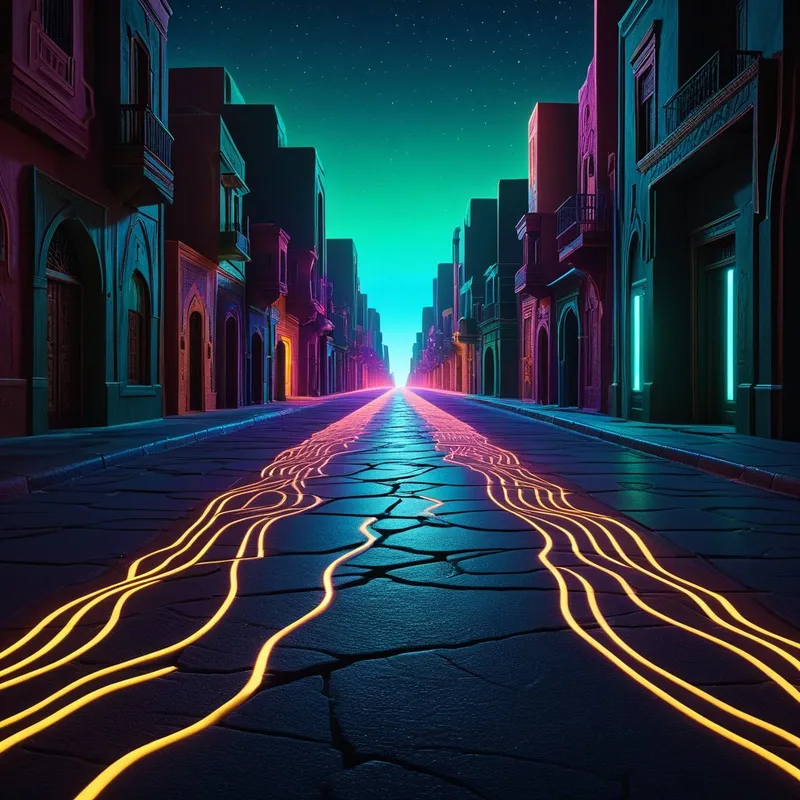
When the pattern of the Dreaming manifests in modern dreams, it often speaks to a profound process of re-membering—of putting the fragmented self back into relationship with a greater whole. Dreaming of following a glowing path or pattern across a strange yet familiar landscape may reflect the psyche's attempt to rediscover its own Songline, its intrinsic blueprint of meaning.
Dreams of ancient, powerful animals that speak or transform point to an encounter with an archetypal totem—an aspect of the instinctual or ancestral self demanding recognition. A dream where cityscapes revert to wilderness, or where the dreamer feels the land itself pulsing with life, signals a somatic reconnection to the "country" of one's own body and instinct, often after a period of disassociation or purely intellectual living. The psychological process is one of deep re-orientation, where the ego is being called to acknowledge it lives within a much older, wiser, and patterned psyche, and must learn its place and its song within that larger order.
Alchemical Translation
For the modern individual navigating a fragmented world, the Dreamtime myth models the alchemical process of individuation as a journey of inscription and resonance. Our personal "Dreaming" is the primal, creative potential of our unconscious. The "Ancestral Beings" are our own core complexes and archetypes—the inner Creator, the Nurturer, the Warrior, the Trickster. The alchemical work is to allow these forces to "journey" through our conscious lives.
Individuation is not about becoming a different self, but about becoming fully the self you always were, singing your particular note in the universal songline.
We must let these inner beings shape our internal landscape—carving out rivers of emotion, raising mountains of resolve, leaving the marks of our experiences. The conflict and love between them become our personal mythology. The crucial stage is the "going in," the alchemical mortificatio and sublimatio. This is the process of taking the raw events of our lives—our triumphs and wounds—and not just forgetting them or being defined by them, but transmuting them into enduring features of our character. A trauma becomes not just a memory, but a sacred site within us, a waterhole of compassion. A talent becomes not just a skill, but a mountain range that defines our horizon.
Finally, we learn to "sing our country." This is the integration where we consciously recognize the Songline connecting our inner features, understanding how our childhood "river" feeds our adult "forest." We become the custodian of our own inner Dreaming, responsible for its care and for singing its law into our daily actions. In doing so, we achieve what the myth proclaims: we realize that our true self is not a isolated ego, but the entire, sacred, sung-into-being landscape of our soul, eternally part of the living Dreamtime.
Associated Symbols
Explore related symbols from the CaleaDream lexicon: