Dobrynya Nikitich and the Dragon Myth Meaning & Symbolism
A hero's sacred duty compels him to confront a serpentine tyrant, freeing captives and restoring cosmic order through courage and cunning.
The Tale of Dobrynya Nikitich and the Dragon
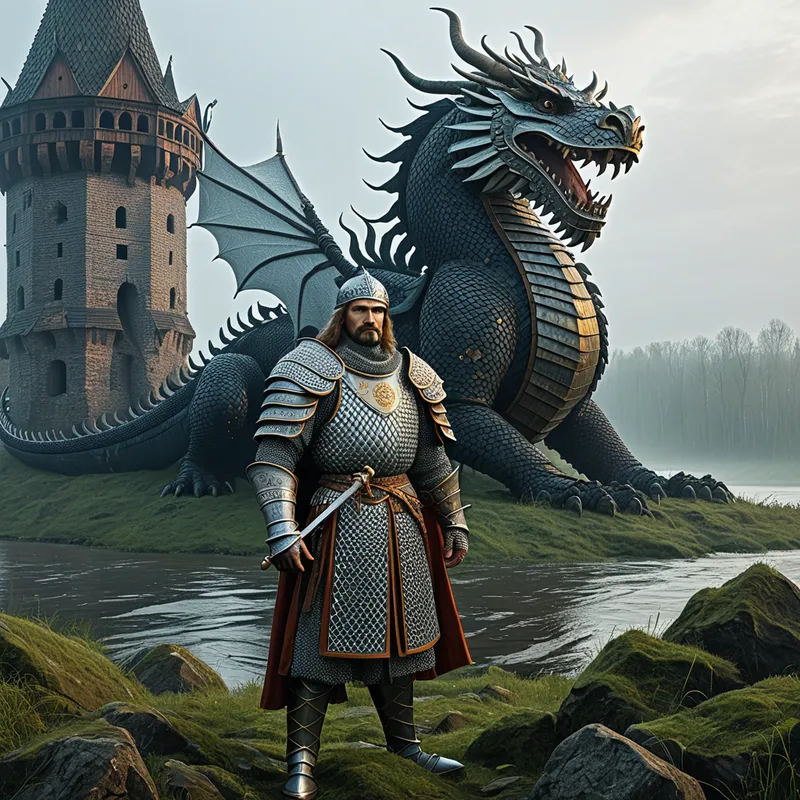
Hear now a tale from the deep time of the land, when the rivers ran thick with memory and the forests whispered with old gods. It begins not with a roar, but with a mother’s sigh. In the fair city of Kiev, under the wise and mighty rule of Prince Vladimir the Fair Sun, lived a bogatyr named Dobrynya Nikitich. His strength was that of the bear, his heart as true as forged steel, but his wisdom flowed from his mother, a woman who knew the old ways. As he prepared to bathe in the wide, whispering Pochayna River, she clutched his arm, her voice a thread of cold dread. “Do not stir the waters, my son. Do not shed blood in the sacred flow. For the river is the threshold, and thresholds are guarded.”
But the heat of the day was upon him, and the call of the cool water was strong. As Dobrynya swam, his horse neighed a warning that echoed like a funeral bell. Then, the river boiled. From the depths, where the sun’s light dies, rose the Zmey Gorynych. Its scales were black as a starless night, its three heads weaving on necks of coiled muscle, each maw dripping a different poison: one of flame, one of frost, one of despair. The air curdled with the stench of sulphur and forgotten graves.
For three days and three nights, the earth shook with their battle. Dobrynya’s sword sparked against scale, his strength failing against the dragon’s primordial might. As he knelt, exhausted, the voice of his mother returned to him, not as memory, but as a command on the wind: “Strike the earth, son! Draw strength from the Mat Syra Zemlya!” He plunged his fist into the soil, and a surge of vitality, raw and ancient, flooded his veins. Rising, he fought not as a man, but as an instrument of the land itself. He severed one head, then another. The third head, the cunning one, begged for mercy, swearing oaths to the dark and light alike. “I will take no more captives! I will trouble the people no more!”
A lesser man might have struck. Dobrynya, bound by the codes of honor and the deceptive sheen of the dragon’s promise, showed mercy. It was a mistake written in fire. No sooner had the wounded serpent slithered back into its watery abyss than it flew straight to the city, snatching Zabava, the beloved niece of Prince Vladimir, carrying her off to its lair deep in the Sorochinsk Mountains.
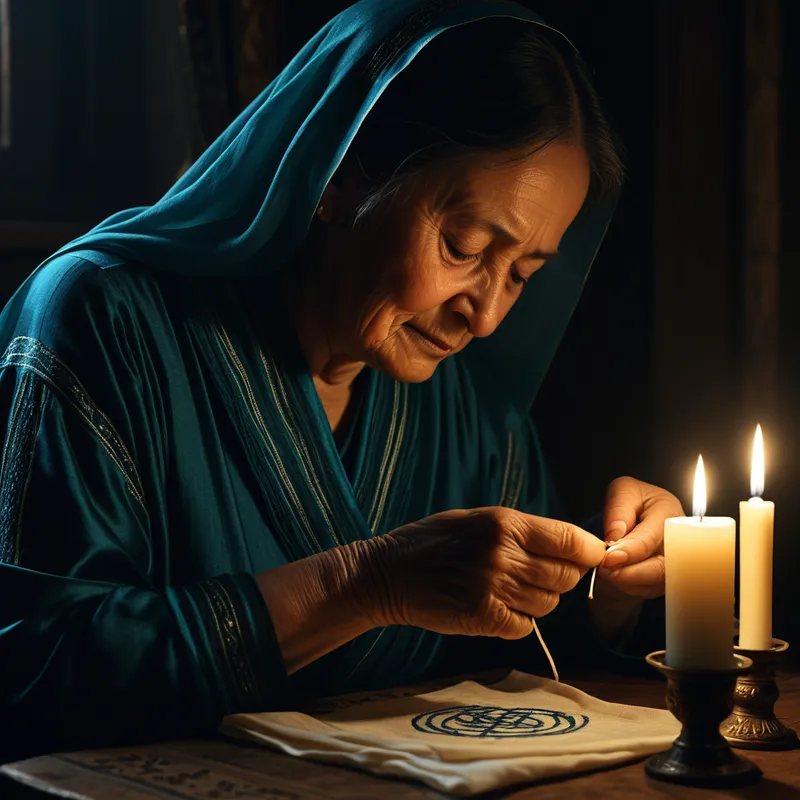
The Prince’s grief was a storm. His command to Dobrynya was absolute: redeem your mercy, or live forever in shame. Armed now with a magical silken whip—a final gift from his weeping mother, each thread woven with a protective spell—Dobrynya journeyed to the dragon’s domain. The lair was a cavern of bones and sighs, the very air thick with stolen lives. This time, there was no parley. The dragon, healed and hungrier, attacked with the fury of betrayed chaos. But Dobrynya was no longer just a warrior; he was an act of sacred duty. The silken whip cracked, not to wound flesh, but to bind spirit, to ensnare the monster’s chaotic will. With a final, earth-cleaving blow, he struck the last head from its body. The black blood spilled, sizzling like acid, and for leagues around, no grass would grow—a permanent scar of the struggle. From the dark depths of the cave, he led forth not only Zabava, but a river of other captives, their eyes blinking against a sun they thought they’d never see again. The hero returned not to cheers, but to a profound, hard-won silence. Order, purchased with sacrifice, was restored.
Cultural Origins & Context
This epic belongs to the tradition of the byliny, narrative songs that were the living history and moral compass of the Rus' people. Passed down by skilled singers from generation to generation, these tales were not mere entertainment but a vital technology for preserving identity, values, and cosmic law. Dobrynya, one of the three great bogatyrs alongside Ilya Muromets and Alyosha Popovich, represents a specific archetype: the courtly, diplomatic, and devout knight, often associated with historical figures from the time of Prince Vladimir's Christianization of Kievan Rus'.
The myth sits at a crossroads of epochs. The dragon, Zmey, is a pre-Christian chthonic force, a genius loci of rivers and mountains who demands tribute. Dobrynya, while employing magic from the old world (his mother’s wisdom, the earth’s strength), ultimately acts as an agent of a new, centralized order—the Christian princely state that seeks to tame the wild, chaotic forces of the pagan landscape. The story thus encodes the massive cultural and psychological shift of a people moving from a worldview governed by local spirits and sacrifices to one of monotheistic doctrine and royal authority. The dragon’s kidnapping of maidens can be read as a metaphor for the old ways “capturing” the vitality and future (the maiden) of the community, a threat that must be conclusively dealt with by the new heroic ideal.
Symbolic Architecture
At its heart, this is a myth about the confrontation with the untamed, acquisitive aspect of the psyche—the Shadow in its most monstrous and collective form. The Zmey Gorynych is not a mere animal; it is a complex. It dwells in the river (the unconscious), hoards treasure and people (psychic energy and potential held captive), and breathes destructive elements (consuming emotions like rage, fear, and despair).
The dragon is the inertia of the unexamined life, the compulsive force that swallows our future selves to feed a stagnant past.
Dobrynya’s initial failure—showing mercy born of naivete—is psychologically crucial. It illustrates that the Shadow cannot be bargained with on its own terms. Its oaths are lies, for it is a force of appetite, not honor. The true victory requires a second, more prepared descent, armed with the silken whip of conscious discipline (a gift from the Mother) and a connection to the sustaining earth. His victory is not annihilation, but the freeing of what was captive. The freed maidens represent liberated aspects of the soul: creativity, joy, and connection, previously devoured by the dragon of internalized oppression or trauma.

The Dreamer's Resonance
When this myth stirs in modern dreams, the dreamer is often at a point of compelled duty, facing a monstrous, seemingly insurmountable complex that blocks their path. The dream dragon might appear as a suffocating job, a toxic relationship pattern, a chronic illness, or a looming depression—any force that feels ancient, multi-headed (manifesting in many areas of life), and hoarding one’s vitality.
Somatically, this can feel like a weight in the chest, a constriction in the throat, or a cold dread in the pit of the stomach—the feeling of being “eaten” by one’s circumstances. The dream may replay the cycle of failed “bargains” (the first battle): attempts to placate the problem that only empower it. The appearance of a helpful maternal figure or a unique tool in the dream signals that the psyche is marshaling deeper resources for the necessary, definitive confrontation. It is the soul’s announcement that the time for compromise is over; a core aspect of the self must be reclaimed.
Alchemical Translation
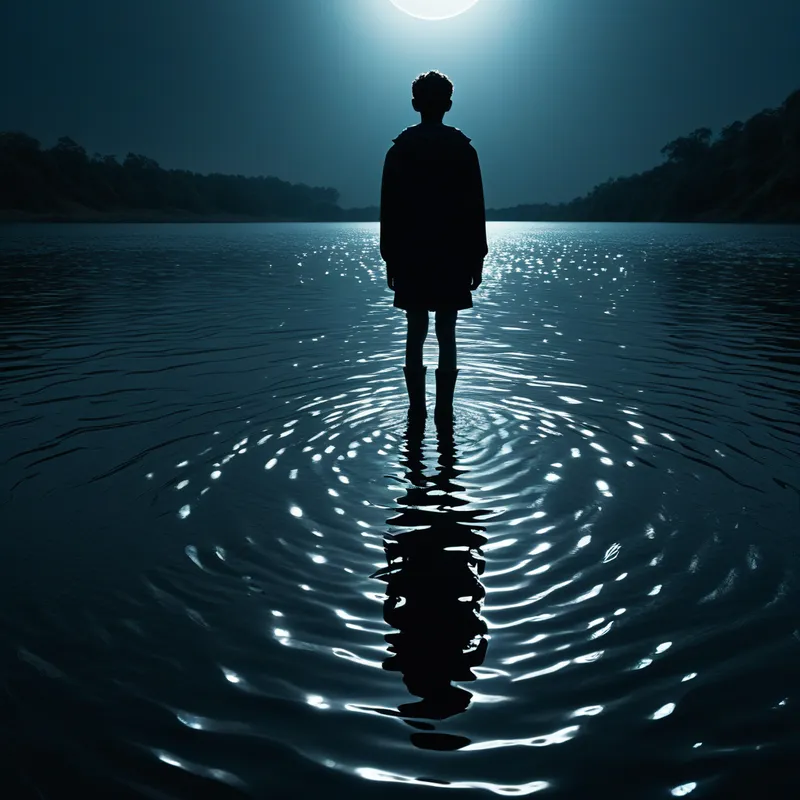
The myth models the alchemical opus of individuation. The initial state is one of nigredo: the black, chaotic waters of the Pochayna River where the dragon lurks, representing the undifferentiated, swampy unconscious.
The hero’s journey is always a circuit: one must descend into the chaos to retrieve the gold that chaos holds captive.
Dobrynya’s first, failed battle is the necessary separatio—the recognition of the Shadow as distinct from the ego. His shame and the Prince’s command represent the moral imperative, the conjunctio of conscious will and superego demand, that forces the deeper work. The journey to the dragon’s cave is the mortificatio, a death of the old attitude that believed the complex could be managed. The final battle, using the earth’s strength and the silken whip, is the solutio and coagulatio: dissolving the complex’s power through conscious insight (the whip) and reforming liberated energy into a new, more potent self-structure.
The scorched earth where the dragon’s blood falls is critical. It signifies that such a victory is not clean or without cost. A part of the psychic landscape is forever altered, scarred by the struggle. This is the integrated shadow—not eliminated, but neutralized, its territory marked and known. The return with the captives is the rubedo, the reddening: the infusion of the conscious personality with the vibrant, life-giving potentials that were once trapped in darkness. The hero becomes a vessel not just of strength, but of wholeness.
Associated Symbols
Explore related symbols from the CaleaDream lexicon:
- Dragon — The primary symbol of the untamed, hoarding, and destructive aspect of the unconscious that must be confronted to free captive psychic energy.
- Water — Represents the threshold of the unconscious, the fluid and dangerous realm where the shadow first emerges and where the hero is most vulnerable.
- Mother — Embodies instinctual wisdom and protective magic, providing the crucial tool (the silken whip) that enables the final integration of the shadow.
- Hero — The archetypal force of the ego that accepts the sacred duty to confront chaos, undergoing transformation to restore order to the inner and outer worlds.
- Cave — The deep, interior lair of the dragon, symbolizing the hidden recesses of the psyche where our most fundamental complexes and trapped potentials reside.
- Blood — The dragon's poisonous blood that scars the earth, representing the lasting, transformative, and often difficult cost of integrating a powerful shadow complex.
- Horse — The hero's loyal companion and instinctual guide, whose warning neigh signifies the body's somatic intelligence sensing danger before the conscious mind.
- River — The specific liminal space, the Pochayna, acting as a boundary between the ordinary world and the mythic realm, where the initial confrontation is triggered.
- Mountain — The Sorochinsk Mountains housing the dragon's lair, representing the lofty, daunting, and isolated nature of the psychic challenge that must be ascended.
- Journey — The essential movement from the known (Kiev) into the unknown (dragon's domain), mapping the internal process of leaving comfort to engage in profound inner work.
- Sacrifice — The hero's willingness to risk his life and endure shame, embodying the necessary surrender of the old self to achieve a higher integration.
- Shadow — The psychological core of the dragon, representing all the disowned, feared, and repressed parts of the self that collectively form a monstrous, autonomous complex.