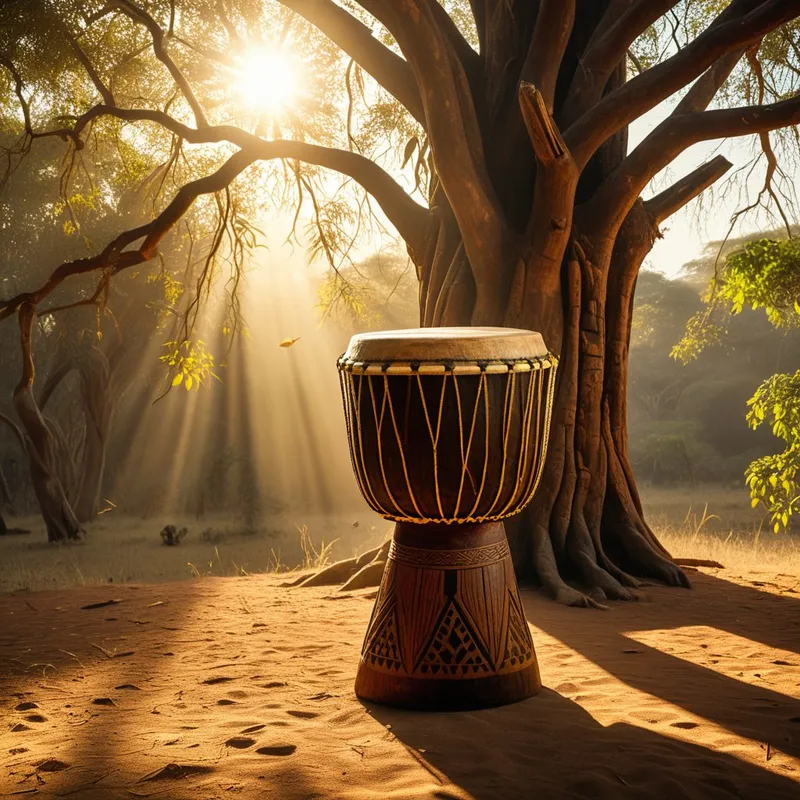
Djembe traditions Myth Meaning & Symbolism
A sacred drum is born from a pact between a hunter, a tree, and the spirit of rhythm, becoming the voice of the community and the heartbeat of the earth.
The Tale of Djembe traditions
Listen. Before [the drum](/myths/the-drum “Myth from West African / Diasporic culture.”/), there was silence. Not the quiet of peace, but the silence of separation. The people walked the red earth, they spoke, they laughed, they wept. But their voices did not reach [the sky](/myths/the-sky “Myth from Persian culture.”/). Their sorrows did not pierce the ground to comfort the ancestors. Their joys evaporated like morning mist, leaving no echo for the children unborn. They were islands in a sea of air.
Then came [the hunter](/myths/the-hunter “Myth from African culture.”/), Kélétigui. His ears were not for the rustle of prey alone, but for the whisper of [the world](/myths/the-world “Myth from Tarot culture.”/). He heard the conversation of [the wind](/myths/the-wind “Myth from Various culture.”/) through the baobab’s branches—a dry, rattling gossip. He heard the percussion of rain on broad leaves—a frantic, scattered dance. He heard the deep, slow heartbeat of [the earth](/myths/the-earth “Myth from Hindu culture.”/) itself, a throb felt through the soles of his feet. But these sounds were chaotic, languages without a grammar. The community had no tongue to speak them back.
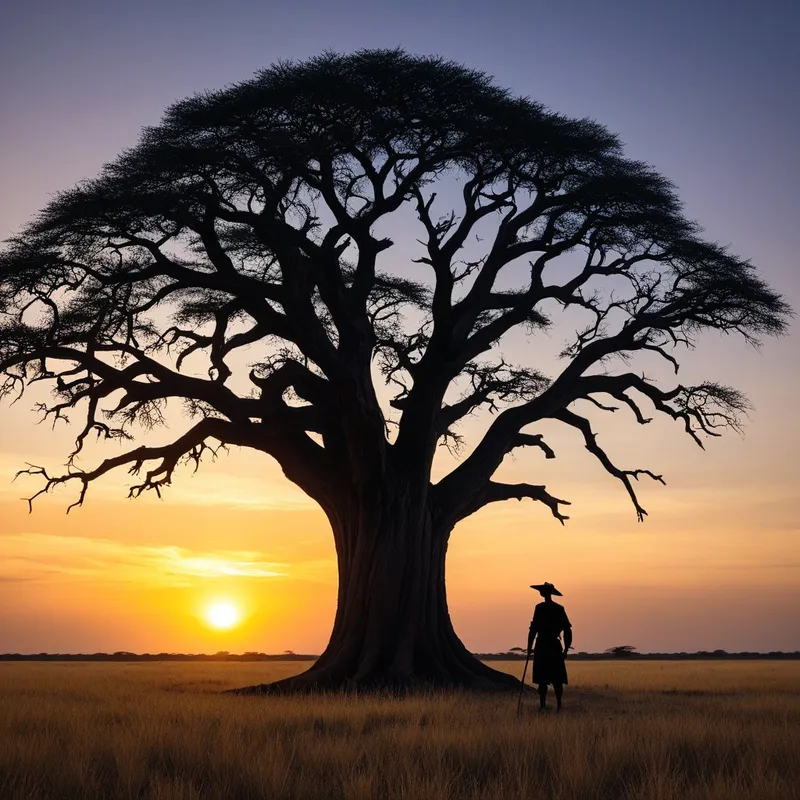
Driven by a longing he could not name, Kélétigui journeyed beyond the village fires, deep into the realm where the forest thins and the spirit world breathes close. There, he found the Lenge tree. It stood alone, a pillar of wisdom, its roots drinking from deep springs, its crown brushing the belly of the clouds. It was not merely a tree; it was an elder. Kélétigui did not raise his axe. He placed his palm upon the bark and spoke of the silence.
The tree, in the voice of rustling leaves, replied. It spoke of its own life: of standing witness, of holding stories in its rings, of yearning to move but being rooted. “I have the body,” whispered the Lenge, “but I have no voice. You have the voice, but you lack the body. Together, we might make a sound that bridges all worlds.”
The pact was made. With reverence, Kélétigui harvested the wood, not taking a life, but inviting a transformation. From the trunk, he carved a vessel—wide at its mouth to catch the voices of the people, narrow at its base to channel them into the earth. For the skin, he sought the Daman, the fleet-footed guardian of the boundary between the wild and the tame. After a chase that was a dance and a plea, the Daman offered its hide, understanding that its speed and alertness would now become the sensitivity of the drum’s head.
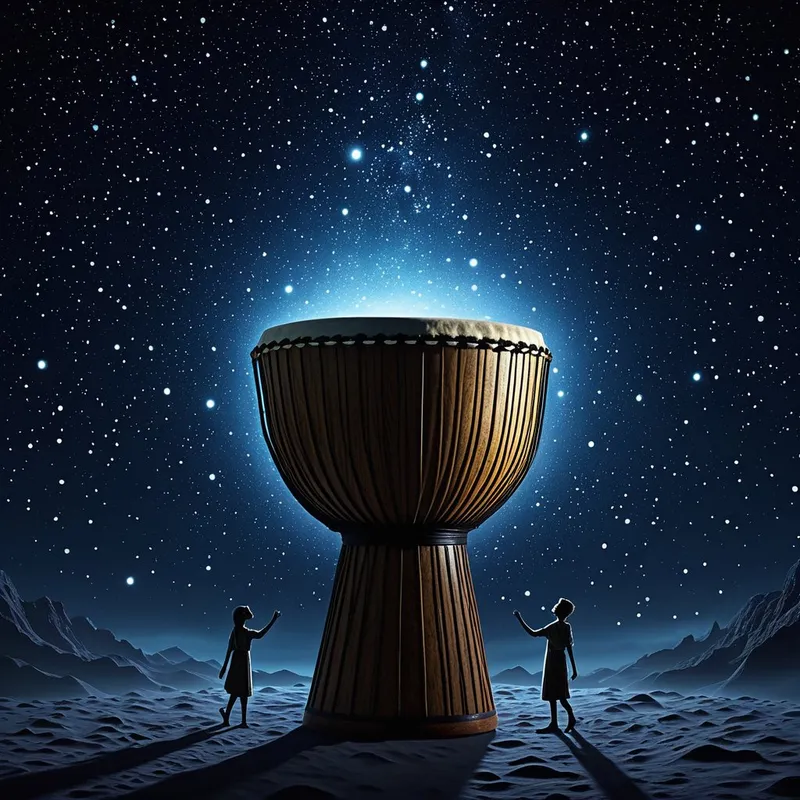
Under the first full moon after the carving, the elements were summoned. The body of the tree, the skin of the antelope, the sinew of the hunter’s resolve. As Kélétigui touched the skin, a spark leapt from [the star](/myths/the-star “Myth from Tarot culture.”/)-filled sky, and the first sound was born. It was not a note, but a universe. A deep, resonant dun that shook the chest and called to the ancestors below. A sharp, cracking gun that sliced the air and spoke to the present. A slapping, singing pa that danced with possibility and called to the future.
The silence was shattered forever. The drum, the [Djembe](/myths/djembe “Myth from West African culture.”/), spoke, and in its speaking, it listened. It became the community’s one mouth and thousand ears. The myth was born not in a single moment, but in the first circle that formed around its sound, when isolation ended, and the collective heartbeat began.
Cultural Origins & Context
This foundational narrative is woven into the fabric of the Mande peoples, from whom the Djembe tradition is widely believed to have originated, possibly as early as the 12th century with the Sundiata Keita era. It is not a myth confined to a single sacred text, but a living story carried by the Numu, the blacksmiths who were the original carvers of the drum.
The tale was never merely told; it was performed. It was encoded in the rhythms themselves—the ancient patterns known as Dununba, Sangban, and Kensedeni. Each strike of the hand was a syllable of the story. The societal function was profound: the Djembe was the telegraph, the newspaper, the courtroom, and [the temple](/myths/the-temple “Myth from Jewish culture.”/). It announced births, deaths, and wars. It called people to work, to council, and to celebration. It was the auditory spine of the community, a technology of cohesion that transformed individual pulses into a synchronized social body.
Symbolic Architecture
At its core, the myth is a [blueprint](/symbols/blueprint “Symbol: A blueprint represents the foundational plan or design for something, often symbolizing potential, structure, and the mapping of one’s inner self or future.”/) for the creation of a [vessel](/symbols/vessel “Symbol: A container or structure that holds, transports, or protects something essential, representing the self, emotions, or life journey.”/) of meaning. The [Djembe](/symbols/djembe “Symbol: The djembe symbolizes rhythm, community strength, and the deep connection of music to cultural identity.”/) is not an [instrument](/symbols/instrument “Symbol: An instrument symbolizes creativity, communication, and the means by which one expresses oneself or influences the world.”/); it is a [psychopomp](/myths/psychopomp “Myth from Greek culture.”/), a [conductor](/symbols/conductor “Symbol: A conductor represents guidance, leadership, and the orchestration of life’s various elements toward harmony.”/) between realms.
- The [Tree](/symbols/tree “Symbol: In dreams, the tree often symbolizes growth, stability, and the interconnectedness of life.”/) (Lenge): Symbolizes the [Axis](/symbols/axis “Symbol: A central line or principle around which things revolve, representing stability, orientation, and the fundamental structure of reality or consciousness.”/) Mundi, the world pillar connecting [heaven](/symbols/heaven “Symbol: A symbolic journey toward ultimate fulfillment, spiritual transcendence, or connection with the divine, often representing life’s highest aspirations.”/), [earth](/symbols/earth “Symbol: The symbol of Earth often represents grounding, stability, and the physical realm, embodying a connection to nature and the innate support it provides.”/), and the [underworld](/symbols/underworld “Symbol: A symbolic journey into the unconscious, representing exploration of hidden aspects of self, transformation, or confronting repressed material.”/). It represents [structure](/symbols/structure “Symbol: Structure in dreams often symbolizes stability, organization, and the framework of one’s life, reflecting how one perceives their environment and personal life.”/), tradition, and the enduring wisdom of [nature](/symbols/nature “Symbol: Nature symbolizes growth, connectivity, and the primal forces of existence.”/). Psychologically, it is the [spine](/symbols/spine “Symbol: The spine symbolizes strength, support, and the foundational structure of one’s life and identity.”/) of the individual—the core Self that stands firm amidst the [chaos](/symbols/chaos “Symbol: In Arts & Music, chaos represents raw creative potential, uncontrolled expression, and the breakdown of order to forge new artistic forms.”/) of [life](/symbols/life “Symbol: The symbol of ‘Life’ represents a journey of growth, interconnectedness, and existential meaning, encompassing both the joys and challenges that define human experience.”/).
- The Hunter (Kélétigui): Represents conscious [intention](/symbols/intention “Symbol: Intention represents the clarity of purpose and direction in one’s life and can symbolize motivation and commitment within a dream context.”/) and the seeking ego. He is the [aspect](/symbols/aspect “Symbol: A distinct feature, quality, or perspective of something, often representing a partial view of a larger whole.”/) of the [psyche](/myths/psyche “Myth from Greek culture.”/) that feels the incompleteness (the silence) and actively ventures into the unknown (the unconscious, the wild) to seek wholeness.
- The Antelope (Daman): Symbolizes alertness, agility, and the raw, instinctual life force. It is the nervous [system](/symbols/system “Symbol: A system represents structure, organization, and interrelated components functioning together, often reflecting personal or social order.”/), sensitivity, and the [skin](/symbols/skin “Symbol: Skin symbolizes the boundary between the self and the world, representing identity, protection, and vulnerability.”/) that registers the touch of the world. Its sacrifice is the taming and dedication of primal [energy](/symbols/energy “Symbol: Energy symbolizes vitality, motivation, and the drive that fuels actions and ambitions.”/) to a higher, communal [purpose](/symbols/purpose “Symbol: Purpose signifies direction, meaning, and intention in life, often reflecting personal ambitions and core values.”/).
The drum is born where the rooted wisdom of the Tree meets the seeking intention of the Hunter and is animated by the vital sensitivity of the Antelope. It is the embodied synthesis of spirit, mind, and body.
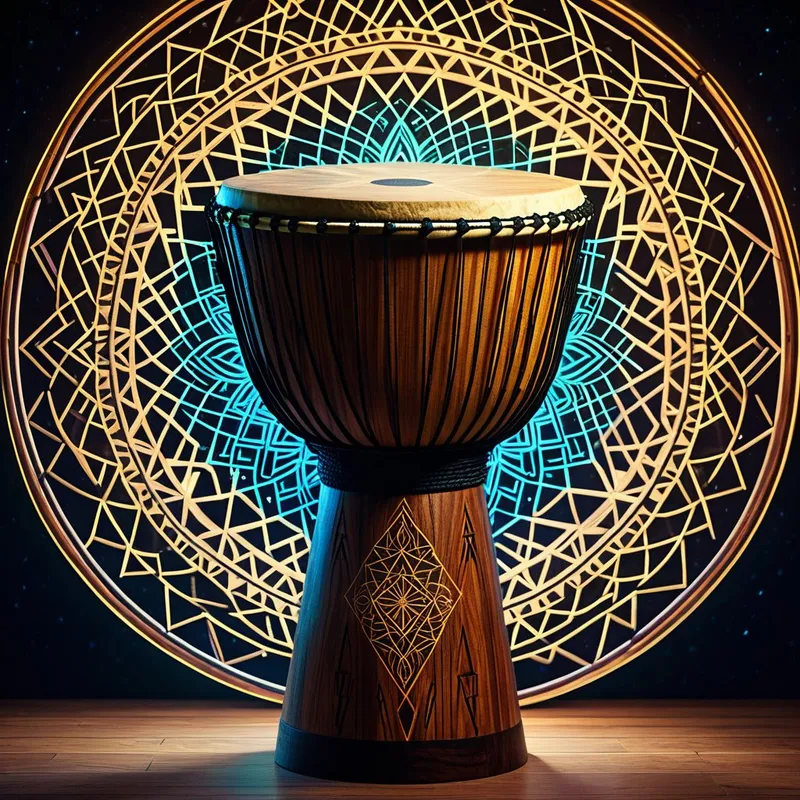
The resulting drum is a perfect [symbol](/symbols/symbol “Symbol: A symbol can represent an idea, concept, or belief, serving as a powerful tool for communication and understanding.”/) of the [mandala](/symbols/mandala “Symbol: A sacred geometric circle representing wholeness, the cosmos, and the journey toward spiritual integration.”/)—a centered, integrated whole. Its [goblet](/symbols/goblet “Symbol: A ceremonial drinking vessel symbolizing spiritual nourishment, celebration, and the container of life’s essence or emotions.”/) shape is a [chalice](/symbols/chalice “Symbol: The chalice symbolizes the receptacle of spiritual transformation and the act of communion, often representing purity, wholeness, and the nurturing aspects of virtue.”/), a [receptacle](/symbols/receptacle “Symbol: A container that holds, receives, or stores something, often symbolizing the capacity to accept, contain, or process experiences, emotions, or resources.”/). The three core sounds (dun, gun, pa) mirror a triadic worldview: [ancestor](/symbols/ancestor “Symbol: Represents lineage, heritage, and the collective wisdom or unresolved issues passed down through generations.”/)/past, [community](/symbols/community “Symbol: Community in dreams symbolizes connection, support, and the need for belonging.”/)/present, potential/future.
The Dreamer’s Resonance
When this myth stirs in the modern dreamer, it often manifests as a profound somatic and auditory longing. One might dream of:
- Hearing a distant, compelling drumbeat they feel compelled to find, representing the call of the authentic Self from beneath the noise of daily life.
- Trying to speak or shout but producing no sound, a direct echo of the pre-djembe “silence of separation,” indicating feelings of inexpressibility or isolation.
- Carving or shaping wood with great purpose, symbolizing the active, often difficult, process of shaping one’s identity and values (the Tree) into a functional vessel.
- A circle of people where the dreamer cannot find the rhythm, reflecting anxiety about belonging and the fear of being out of sync with one’s community or inner truth.
These dreams signal a psychological process of seeking communication—not just with others, but between the fragmented parts of the dreamer’s own psyche. The somatic pull towards the sound is the soul’s intelligence recognizing the pattern of integration.
Alchemical Translation
The alchemical journey modeled here is the transmutation of isolated elements (wood, skin, man) into a sacred, resonant vessel (the community-in-drum). For the modern individual navigating individuation, the myth maps a clear process:
- Acknowledging the Silence ([The Nigredo](/myths/the-nigredo “Myth from Alchemical culture.”/)): This is the dark night, the feeling that one’s life, though perhaps full of activity, lacks resonant meaning. Like Kélétigui, one must courageously admit this inner disconnect.
- The Pact (The Confrontation): One must journey inward (into the forest) to parley with the deep, rooted aspects of [the Self](/myths/the-self “Myth from Jungian culture.”/) (the Tree/ancestral patterns) and the swift, instinctual energies (the Antelope/primal drives). This is not a battle, but a negotiation for partnership.
- The Shaping (The Albedo): The raw material of one’s inherited traits and innate instincts is consciously, carefully carved into a vessel fit for purpose. This is the hard work of therapy, reflection, and discipline—hollowing out [the ego](/myths/the-ego “Myth from Jungian culture.”/) to create a space that can hold more than itself.
- The First Sound ([The Rubedo](/myths/the-rubedo “Myth from Alchemical culture.”/)): The moment of integration, when the newly fashioned Self is “played” by life’s circumstances. The resulting “sound” is one’s unique voice, authentic expression, and capacity for relationship. It is the gold.
Individuation is not about becoming a soloist, but about becoming a drum—a stable, resonant vessel that exists to be played upon by life and, in turn, creates the rhythm that allows others to find their dance.
The ultimate [triumph](/myths/triumph “Myth from Roman culture.”/) is not the hunter’s glory, but the circle that forms. The healed, individuated psyche, like the Djembe, becomes a center around which connection becomes possible. It turns the monologue of the ego into the polyrhythm of the soul in dialogue with the world. The myth teaches that our deepest purpose is to become an instrument of connection, transforming our solitary beat into the music of the whole.
Associated Symbols
Explore related symbols from the CaleaDream lexicon: