Djembe of the Mandé Myth Meaning & Symbolism
A myth of a sacred drum born from a cosmic pact, channeling the voice of the earth and sky to heal a fractured kingdom.
The Tale of Djembe of the Mandé
Listen. There was a time when the world was out of tune.
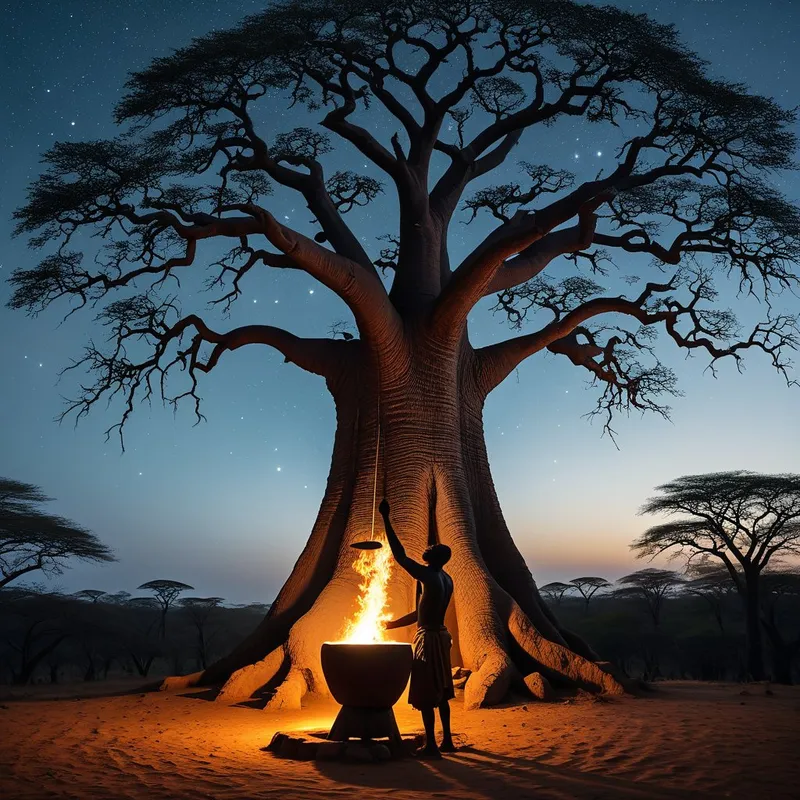
In the heart of the Mandé, the people had forgotten how to speak to the sky. Their words fell like stones. Their laughter had no echo. The great Ségu tree stood silent, its roots clutching a dry earth, its branches aching for a conversation with the clouds that passed, mute, overhead. The kingdom was a body with a stilled heart. The ancestors in the world-beneath-the-world stirred restlessly, their voices too faint to cross the threshold.
The king, a man heavy with the silence of his people, called upon the one who speaks with fire and earth: the Numu. “Master of the hidden veins of metal, hearer of the stone’s dream,” the king implored, “forge us a voice. Find the sound that can marry earth to sky once more.”
The Numu, his eyes reflecting the depths of his forge, did not go to his anvil. He went into the forest. For three days and three nights, he walked without eating, drinking only dew, listening. He heard the sigh of the wind through the Ségu’s leaves—a dry whisper. He heard the scuttle of creatures—a scattered chatter. He pressed his ear to the great tree’s trunk and heard only the slow, deep groan of ancient patience. It was not enough.
On the fourth morning, as the first light touched the highest branch, a spirit appeared. Some say it was Jinn of the tree; others, the very soul of rhythm given form. It spoke not with a mouth, but by causing the Numu’s own heart to beat in a new, complex pattern. Thump-Ta-Ta-Thump. Thump-Ta-Ta-Thump.
“Take of my body,” the spirit-voice pulsed. “But you must give in return. Take the wood for the chamber, the skin for the head. But the voice itself… the voice must be a sacrifice. It must be a pact.”
The Numu understood. With sacred tools, he carved a bowl from the living wood of the Ségu. From the forest, he took the hide of a powerful goat, an animal of the high places. But for the voice, he went to the riverbank and gathered the purest black clay. He formed it into slender cords. As he worked, he sang the genealogy of the kings, the names of the rivers, the secret names of the stars.
Then, he built a fire of seven woods. He placed the clay cords in the flames, and as they baked hard, his song baked into them. These were not mere ropes. They were solidified prayer, hardened melody. He stretched the goatskin over the wooden bowl and bound it fast with the cords of fired song.
He lifted the creation. His hands, calloused from a lifetime of shaping iron, trembled. He touched the head.
DUN.
The sound did not just travel through the air. It traveled through the ground. It shot up the roots of every tree. In the village, people stumbled, feeling it in their soles. The king felt it in his throne.
DUN-DJE-DUN-DJE-BE.
The rhythm unfolded, a living thing. It was the thunder of the sky finally answering the earth. It was the running of the antelope and the fall of the rain. It was the laughter of children and the wisdom of the old. It was the first cry and the last sigh. The people gathered, and their feet began to move. Their hands began to clap. Their mouths opened, and song, true song, erupted for the first time in years. The silence was broken. The world was in tune once more. They named the voice Djembe.
Cultural Origins & Context
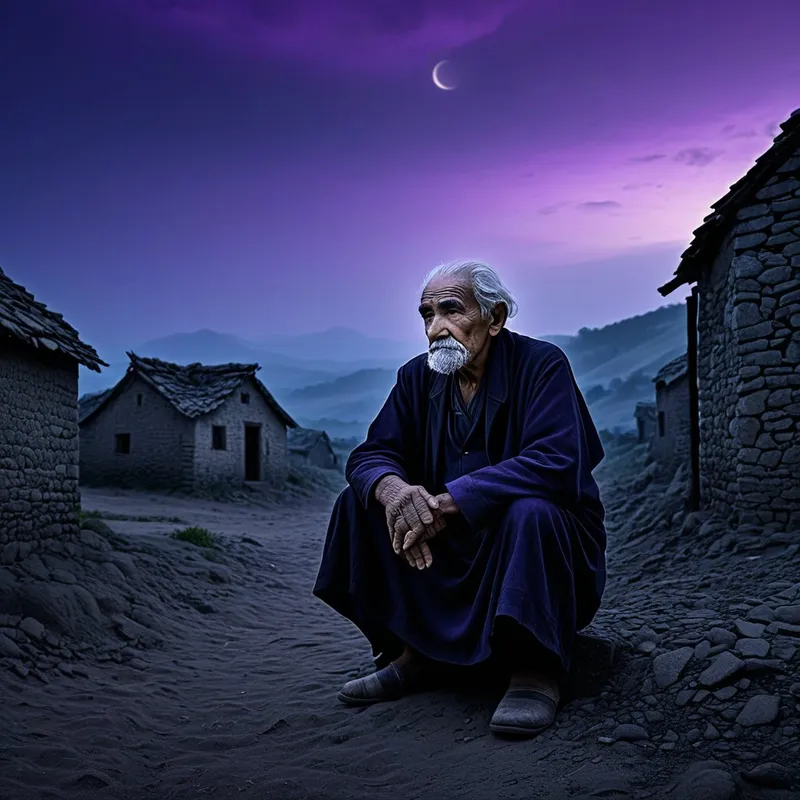
This foundational myth originates from the Mande peoples, specifically the Numu caste, who are the hereditary craftsmen and musicians. The story is not merely an etiological tale explaining the drum’s origin; it is a sacred charter that encodes social order, spiritual ecology, and artistic license. It was traditionally passed down within Numu families, often during initiations or in the context of preparing for a significant ritual or performance.
The myth served multiple societal functions. Firstly, it sanctified the Numu’s role as mediators between the human, natural, and spiritual worlds. Their ability to create the djembe was not just craftsmanship but a divine mandate. Secondly, it established the djembe as more than an instrument; it was a living entity, a vessel of Nyama, the potent spiritual energy that animates the universe. To play it was to channel and direct this force, making the drummer a pivotal figure in healing, community cohesion, and communication with the ancestors. The myth thus wove music inextricably into the fabric of spiritual and social life, ensuring its practice was always approached with reverence and understanding of its profound responsibility.
Symbolic Architecture
At its core, the myth of the Djembe is a blueprint for the creation of a cosmic connector—a technology of the soul. Each element is a profound symbol.
The Numu represents the conscious, shaping intellect guided by intuition. He is the archetypal liminal figure, who does not impose a solution from his forge but receives it through patient, receptive listening to the non-human world. His journey is one of emptying the ego to become a vessel for a greater intelligence.
The drum is not built from parts, but born from relationship: the sacrifice of the tree, the offering of the animal, and the prayer of the human become one resonant body.
The Ségu baobab is the axis mundi, the stable, enduring world-pillar. Its wood provides the chamber, the container—symbolic of tradition, the ancestral body, and the collective unconscious. The goatskin, from an agile, sure-footed creature of the heights, represents the membrane of consciousness, the sensitive interface that is struck by experience. The black clay cords are the critical alchemy. They symbolize the transformation of ephemeral, personal expression (the Numu’s song) into a permanent, structural element. The voice is not added; it is woven into the very tension that gives the drum its life.
Psychologically, the “fractured kingdom” is the psyche in a state of dissociation, where inner parts no longer communicate. The ego (the king) knows something is wrong but cannot fix it. The healing comes not from the center of power, but from the periphery—from the deep, instinctual, crafting function (the Numu) that engages with the spirit of the wild (the forest Jinn) to create a new organ of perception and expression: the rhythmic, unifying voice of the Self.
The Dreamer’s Resonance
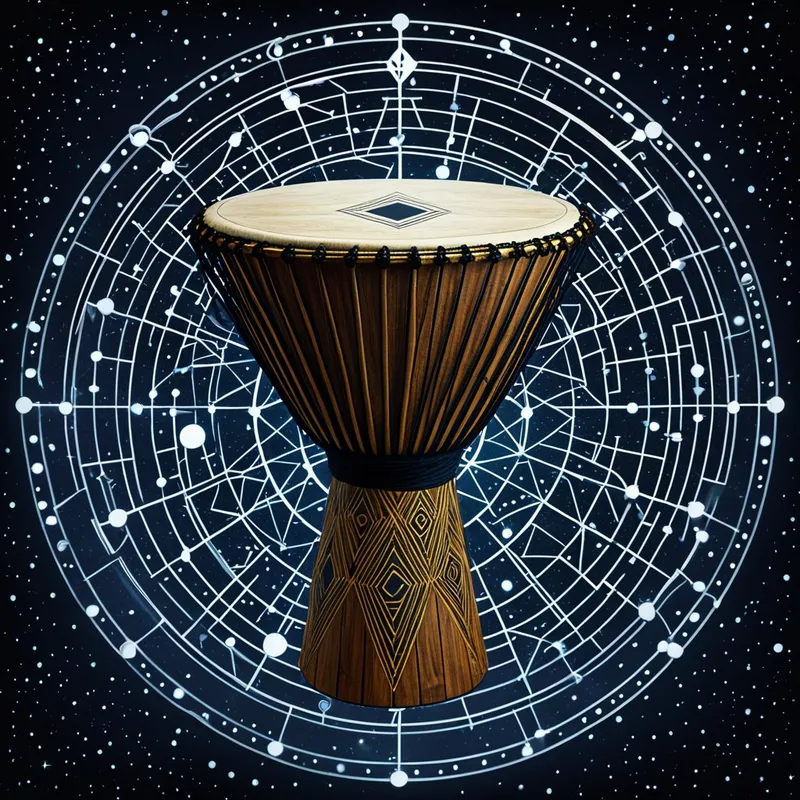
When this myth stirs in the modern unconscious, it often manifests in dreams of searching for a lost voice or a forgotten rhythm. One might dream of a silent, beautiful instrument they cannot play, of a heartbeat that sounds oddly external, or of trying to shout in a crowd but producing no sound. Somatic sensations accompanying such dreams can include a tightness in the chest or throat, a restless tapping of fingers or feet, or a profound, grounding sense of vibration upon waking.
These dreams signal a process where the psyche is attempting to re-establish a vital connection that has been severed. The “fractured kingdom” is a personal inner state—perhaps a disconnect between head and heart, between professional identity and authentic desire, or between the individual and their cultural or ancestral roots. The dream is presenting the necessity of the “Numu’s journey”: a conscious retreat from habitual doing into deep, receptive listening. It calls for engaging with the “spirit of the forest”—one’s own instinctual and intuitive nature—to discover the unique pattern, the Thump-Ta-Ta-Thump, that is the authentic rhythm of one’s soul. The dream urges the creation of an internal “djembe,” a psychic structure that can hold tension and translate inner chaos into coherent, expressive form.

Alchemical Translation
The myth models the complete arc of psychic transmutation, or individuation. It begins with the recognitio: the conscious acknowledgment of dissonance and silence (the king’s lament). This forces the ego to relinquish control and appeal to a deeper, more specialized function—the creative, mediating Numu within.
The Numu’s phase is the nigredo, the dark night of the soul. He fasts, wanders, and listens in the forest of the unconscious. This is the dissolution of old structures and the patient gathering of raw, symbolic material. The encounter with the Jinn is the critical moment of coniunctio, the sacred marriage. The human craftsman and the spirit of nature agree on a pact: raw material will be exchanged for conscious sacrifice and artistry.
The alchemy occurs in the fire where song becomes clay. The ephemeral must be made enduring, the personal prayer must become structural integrity.
The forging of the clay cords is the albedo, the whitening. Here, the intangible—emotion, memory, yearning—is subjected to the fire of focused attention and intentionality. It is “fired” into a durable part of the new Self. Finally, the assembly and first strike is the rubedo, the reddening or birth of the philosophical stone. The new psychic organ—the integrated voice—comes online. It doesn’t just express; it connects. It vibrates the personal psyche (the earth) and links it to the transpersonal (the sky), creating a resonant field that reorganizes the entire “kingdom” of the personality.
For the modern individual, the “Djembe of the Mandé” is not about learning to play a drum. It is about undertaking the sacred labor of crafting one’s unique instrument of being. It is the process of listening for your essential rhythm, sacrificing your fleeting complaints to forge them into lasting strengths, and finally, having the courage to let your hands fall upon that taut membrane of your life to produce a sound that is, at once, wholly your own and part of the universal song.
Associated Symbols
Explore related symbols from the CaleaDream lexicon: