Dionysus's Maenads Myth Meaning & Symbolism
A tale of divine ecstasy and primal rage, where women, possessed by the god Dionysus, abandon civilization for the wild, transformative power of the mountain.
The Tale of Dionysus’s Maenads
Hear now a story not of the sun-drenched agora, but of the shadowed mountain. It begins with a god born twice—[Dionysus](/myths/dionysus “Myth from Global/Universal culture.”/), son of Zeus and the mortal Semele. He is [the stranger](/myths/the-stranger “Myth from Biblical culture.”/), the latecomer to Olympus, whose gift is not order but frenzy, not clarity but the deep, red mystery of the vine.
He walked [the world](/myths/the-world “Myth from Tarot culture.”/), this long-haired, effeminate youth, and his presence was a summons. It came first as a whisper in the blood, a restless thrum beneath the skin of the women. In Thebes, where his own cousin, King Pentheus, ruled with a skeptic’s iron, the call grew irresistible. It was a sound behind the loom’s click-clack, a scent on [the wind](/myths/the-wind “Myth from Various culture.”/) that smelled of crushed ivy and damp earth. They heard it—the daughters of the city, mothers, wives, sisters. Their hands, skilled at weaving and kneading, grew still. Their eyes, accustomed to [the hearth](/myths/the-hearth “Myth from Norse culture.”/)’s dim circle, turned towards the wild Cithaeron.
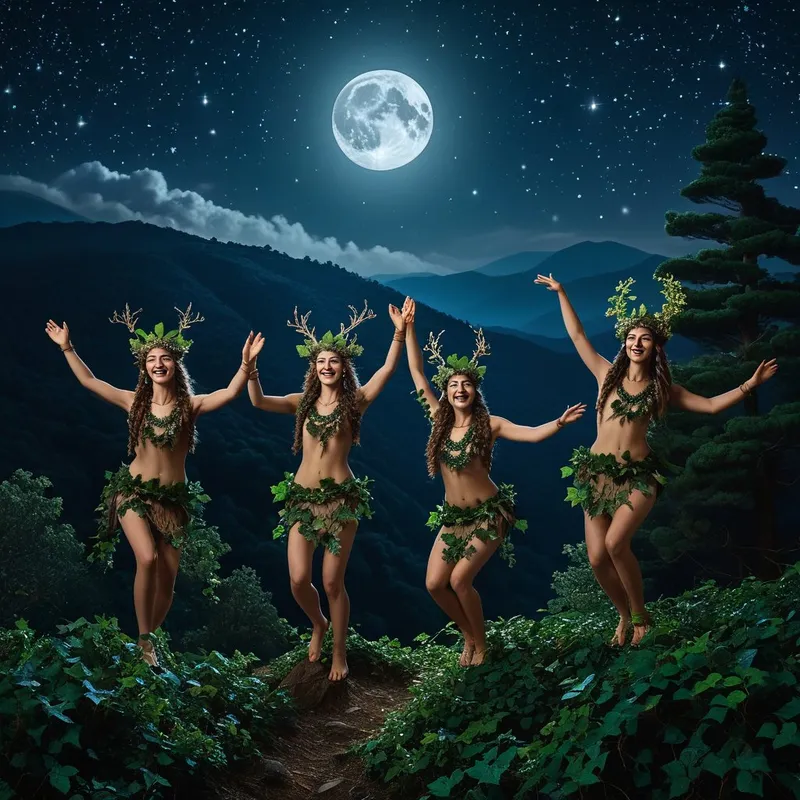
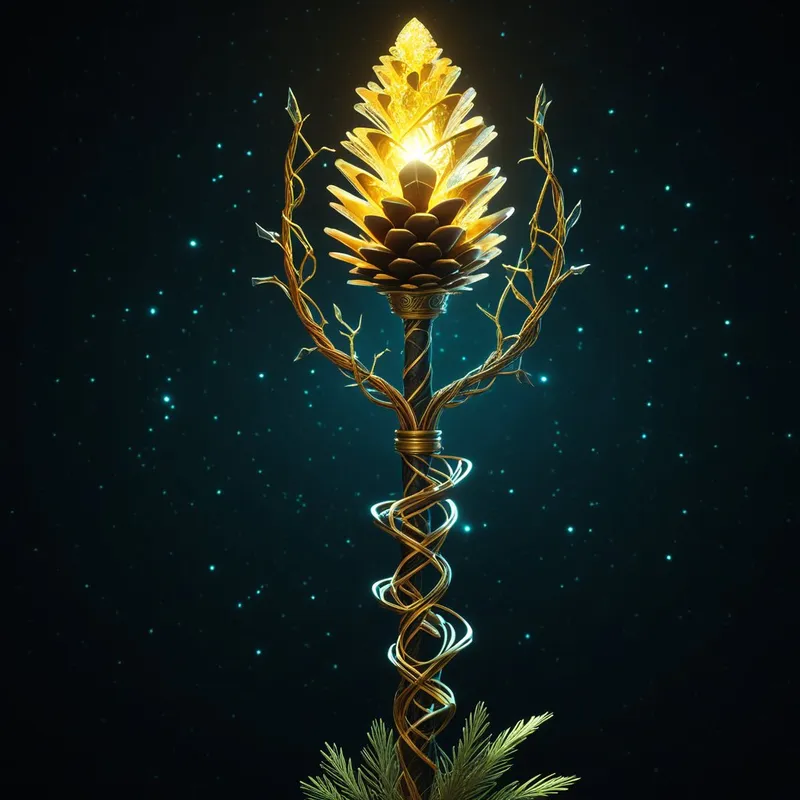
One by one, then in a flowing stream, they abandoned their homes. They cast off their peploi, the symbols of civilized order, and clothed themselves in the spotted skins of fawns. They wreathed their hair with snaking ivy and smilax. In their hands, they took up the thyrsus—a fennel stalk crowned with a pine cone, a weapon that was also a fertile wand. To the steady, disapproving beat of the city’s heart, they answered with a new rhythm: the frantic, driving pulse of the tympanum, the sharp cry of the flute.
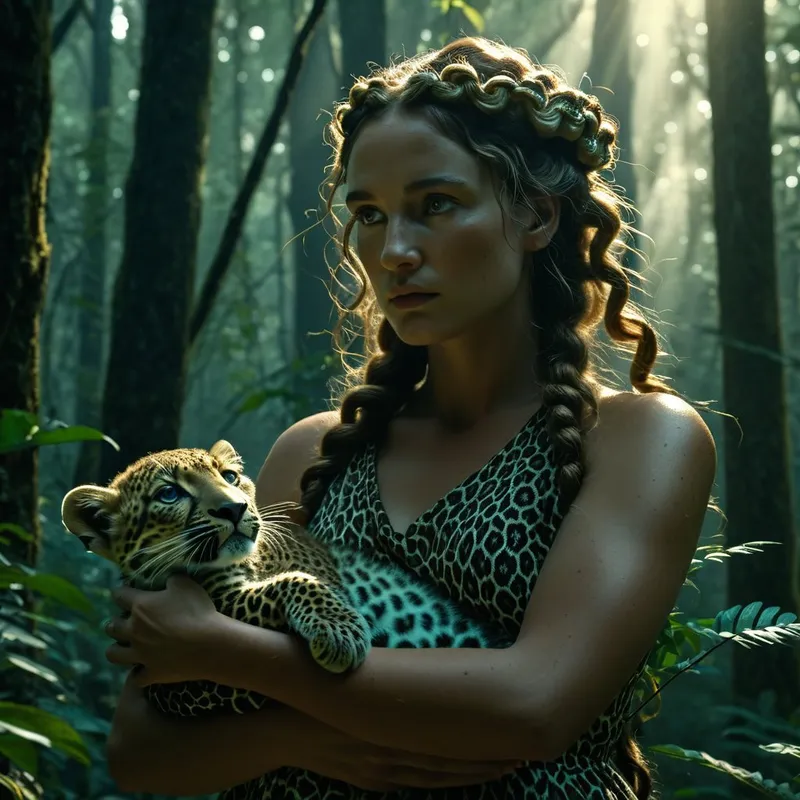
On the mountain, under the naked moon, they were no longer Theban women. They were [Maenads](/myths/maenads “Myth from Greek culture.”/). The god was among them, a palpable force in the rushing wind and the shared, heated breath. His spirit entered them, a divine possession that dissolved the boundaries of [the self](/myths/the-self “Myth from Jungian culture.”/). They danced until their feet bled, sang until their throats were raw. They became one with the wild things; snakes coiled harmlessly around their limbs, and wolf cubs suckled at their breasts. With their bare hands, they performed the sparagmos, rending goats and fawns asunder, and partook of the omophagia, consuming the raw, bloody meat to ingest the god’s raw, living power.
But the city’s scorn followed them. Pentheus, the king of reason and walls, had spies. He heard tales of this obscene revelry and swore to drag his mother, Agave, and her sisters back in chains. Disguised as a curious initiate, he was lured by Dionysus himself to a high pine tree to watch the sacred rites. From his perch, he was seen.
A cry went up from [the Maenads](/myths/the-maenads “Myth from Greek culture.”/)—not a human shout, but the hunting call of a beast. Their eyes, glazed with god-madness, saw not their king and son, but a monstrous mountain lion threatening the sacred band. In a collective surge of divine fury, they uprooted the tree. They fell upon him, a whirlwind of frenzied strength. Agave, leading the charge, seized her own child. In the grip of the god, her hands did not recognize the flesh they tore. The sparagmos was performed upon the ruler of civilization. The final, tragic resolution came not with a thunderbolt, but with a mother cradling her son’s severed head, believing it the prize of a glorious hunt, as the god’s ecstatic mist slowly cleared from her mind.
Cultural Origins & Context
This myth, primarily preserved in Euripides’s devastating play [The Bacchae](/myths/the-bacchae “Myth from Greek culture.”/), was not mere entertainment. It was a foundational narrative that spoke to deep, ambivalent currents within Greek society. The cult of Dionysus was a sanctioned, yet deeply subversive, part of civic religion. His festivals, like the City Dionysia, provided the structured container—the theater—where these chaotic forces could be safely witnessed and processed.
The storytellers were the tragedians, but the myth echoed in the rites of actual women’s cults. These were often secretive, held outside the city walls. The myth of the Maenads served a dual societal function: it was both a warning and a pressure valve. As a warning, it illustrated the catastrophic consequences of denying the divine, irrational aspects of life that Pentheus embodied. As a pressure valve, it acknowledged a sacred space—temporary and geographically removed—where the strictures of patriarchal, polis life could be ritually dissolved. It gave a divine mandate for experiences that civilization necessarily repressed: unchecked ecstasy, raw emotional expression, and a direct, unmediated connection to the natural, animal self.
Symbolic Architecture
At its core, the myth is a profound map of the [psyche](/myths/psyche “Myth from Greek culture.”/), depicting the violent [collision](/symbols/collision “Symbol: A sudden, forceful impact between objects or forces, often representing conflict, unexpected change, or the meeting of opposing elements in life.”/) between the structured ego (Pentheus/Thebes) and the overwhelming, transformative power of the unconscious (Dionysus/the [Mountain](/symbols/mountain “Symbol: Mountains often symbolize challenges, aspirations, and the journey toward self-discovery and enlightenment.”/)).
Dionysus represents the undifferentiated [life](/symbols/life “Symbol: The symbol of ‘Life’ represents a journey of growth, interconnectedness, and existential meaning, encompassing both the joys and challenges that define human experience.”/) force itself—the libido or psychic [energy](/symbols/energy “Symbol: Energy symbolizes vitality, motivation, and the drive that fuels actions and ambitions.”/) that demands [expression](/symbols/expression “Symbol: Expression represents the act of conveying thoughts, emotions, and individuality, emphasizing personal communication and creativity.”/), in creativity, in [ecstasy](/symbols/ecstasy “Symbol: A state of overwhelming joy, rapture, or intense emotional/spiritual transcendence, often involving a loss of self-awareness.”/), and in destruction. He is the [archetype](/symbols/archetype “Symbol: A universal, primordial pattern or prototype in the collective unconscious that shapes human experience, behavior, and creative expression.”/) of the [puer aeternus](/symbols/puer-aeternus “Symbol: The eternal youth archetype representing perpetual adolescence, divine child energy, and resistance to mature adulthood.”/) who disrupts the stagnant order of the [senex](/symbols/senex “Symbol: The wise old man archetype representing spiritual authority, ancestral wisdom, and the integration of life experience into transcendent knowledge.”/).
The Maenads symbolize the contents of the personal and [collective unconscious](/symbols/collective-unconscious “Symbol: The Collective Unconscious refers to the part of the unconscious mind shared among beings of the same species, embodying universal experiences and archetypes.”/), particularly those aspects deemed “wild” or “unruly” by the conscious mind—[intuition](/symbols/intuition “Symbol: The immediate, non-rational understanding of truth or insight, often described as a ‘gut feeling’ or inner knowing that bypasses conscious reasoning.”/), [emotion](/symbols/emotion “Symbol: Emotion symbolizes our inner feelings and responses to experiences, often guiding our actions and choices.”/), instinct, and the [body](/symbols/body “Symbol: The body in dreams often symbolizes the dreamer’s self-identity, personal health, and the relationship they have with their physical existence.”/)’s primal wisdom. Their [abandonment](/symbols/abandonment “Symbol: A dream symbol representing feelings of being left behind, isolated, or emotionally deserted, often tied to primal fears of separation and loss of support.”/) of the loom for the thyrsus marks the shift from crafted, cultural [identity](/symbols/identity “Symbol: Identity represents the sense of self, encompassing personal beliefs, cultural background, and social roles.”/) to raw, natural being.
The mountain is the psyche itself, where the civilized persona is stripped away, and one meets the naked, often terrifying, reality of one’s own nature.
Pentheus is the archetypal rigid ego, identified solely with rationality, control, and the visible structures of society. His voyeurism—his desire to watch the mysteries without surrendering to them—is [the ego](/myths/the-ego “Myth from Jungian culture.”/)’s fatal attempt to control and intellectualize the unconscious. His dismemberment is the symbolic, and sometimes necessary, shattering of an outmoded, inflated conscious [attitude](/symbols/attitude “Symbol: Attitude symbolizes one’s mental state, perception, and posture towards life, influencing emotions and actions significantly.”/) that refuses to acknowledge a greater power.
The Dreamer’s Resonance
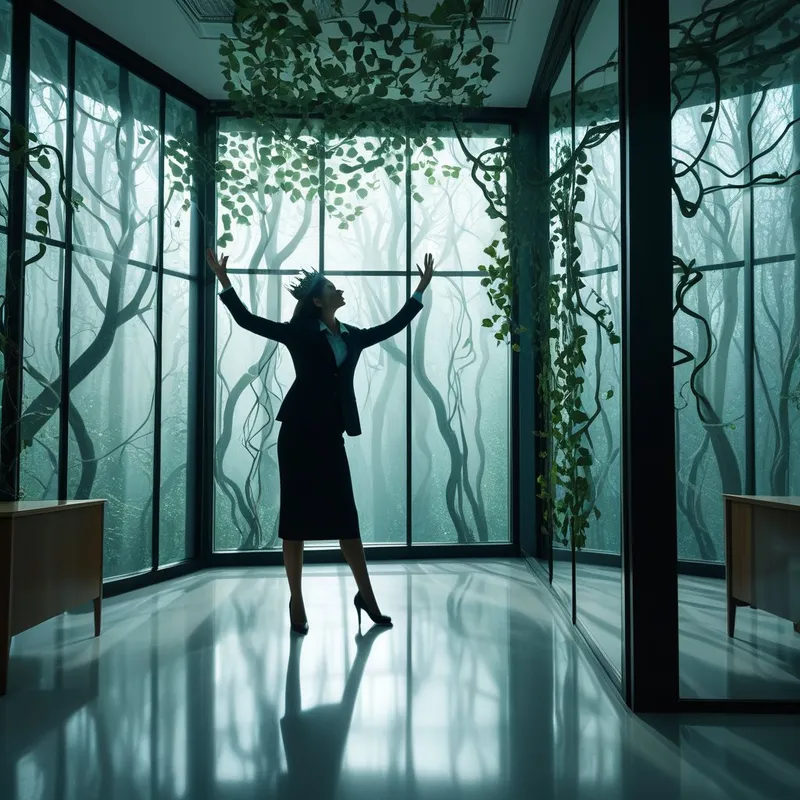
When this mythic pattern stirs in modern dreams, it signals a profound somatic and psychological process: the uprising of the repressed instinctual and emotional life. One may dream of being chased by a wild mob, of tearing down office buildings with bare hands, of finding oneself naked and unashamed in a public place, or of a frenzied, ecstatic dance that breaks all rules of decorum.
Somatically, this can correlate with feelings of restless energy, a pressure in the chest or limbs, insomnia, or sudden, overwhelming emotions that seem to “possess” one. Psychologically, the dreamer is likely experiencing a deep conflict between a long-held, perhaps overly rigid, identity (the “Pentheus” complex of duty, career, or a controlled [persona](/myths/persona “Myth from Greek culture.”/)) and a burgeoning, undeniable call from within (the “Dionysian” call to passion, creativity, or authentic feeling). The dream is the psyche’s attempt to initiate a necessary sparagmos—a tearing apart of an old self-structure that has become a prison.
Alchemical Translation
The alchemical process modeled here is the [nigredo](/myths/nigredo “Myth from Alchemical culture.”/)—the blackening, the dissolution, the descent into chaos that is the prerequisite for any true transformation. For the modern individual, the path of individuation is not one of building a perfect, fortified ego-citadel. It is, in part, a Maenad’s path.
The first step is hearing the call and having the courage to leave the familiar “city” of one’s conditioned self. This is the rebellion against inner tyranny. The journey to the “mountain” is the deliberate turning inward, into the wilds of the unconscious, often facilitated by therapy, creative practice, or deep introspection.
The ecstatic dance of the Maenads is the terrifying, liberating act of surrendering conscious control and allowing the deeper Self to move through one.
The sparagmos is the alchemical solve—the breaking down of complexes, rigid beliefs, and identifications (“I am only a mother,” “I am only a professional,” “I must always be in control”). This stage feels like madness, loss, and disintegration. The omophagia is the coagula—the reintegration. It is the conscious assimilation of this raw, instinctual energy. One does not return to the city as the same person. Like Agave, one returns bearing the terrible, enlightening knowledge of what one is truly capable of—both in creative ecstasy and in destructive rage. The [triumph](/myths/triumph “Myth from Roman culture.”/) is not in avoiding the mountain, but in surviving its rites. The individuated individual learns to carry the thyrsus within [the agora](/myths/the-agora “Myth from Greek culture.”/), to hold the wild god’s wisdom within the structures of daily life, achieving a wholeness that honors both the civilized mind and the untamed soul.
Associated Symbols
Explore related symbols from the CaleaDream lexicon: