Dionysian Mysteries Myth Meaning & Symbolism
The secret rites of Dionysus, where ecstatic dance, divine madness, and raw nature shatter the ego, revealing the soul's wild, immortal core.
The Tale of Dionysian Mysteries
Hear now a tale not carved in temple stone, but whispered in the rustling leaves of the mountain pine, drummed upon the taut skin of the tympanon, and cried out beneath the cold, watching eye of the moon. It begins not in the sun-drenched agora, but in the shadowed heart of the wild, where the boundary between self and other, human and beast, sanity and divine madness, dissolves like mist.
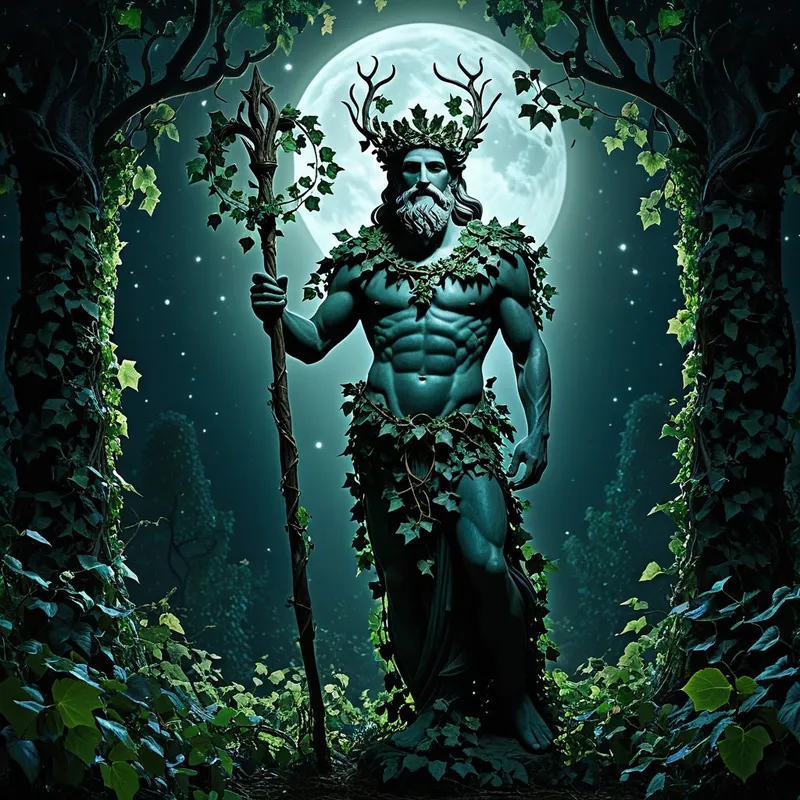
He comes from beyond the sea, from the burning east, or perhaps he is born from the very earth itself. He is Dionysus, the Stranger-God. His hair is dark as wine, crowned with the relentless green of ivy and the ripe promise of the vine. In his hand, he carries not a sword, but the thyrsus, a wand that can bring forth springs of wine or milk from the barren rock. His eyes hold a laughter that is also a storm.
He walks into the ordered world of men, into the city-states that pride themselves on reason and measure. And he calls. He does not command; he invites. His call is a low thrum in the blood, a pull in the belly, a forgotten memory of running barefoot on dew-damp earth. It is the women who hear it first—the mothers, wives, and daughters, bound by loom and law. They leave their homes, their spindles clattering to the floor. They exchange their finely woven peploi for the skins of fawns, their combs for wreaths of oak and bryony. They become the Maenads, the "raving ones."
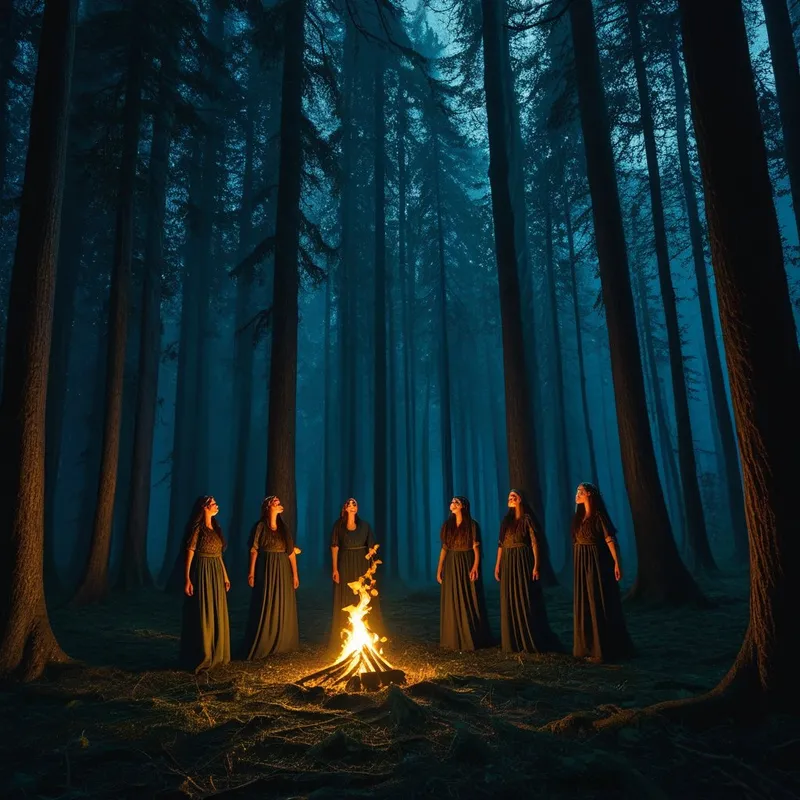
By night, they flee to the mountains, to the trackless forests of Cithaeron or Parnassus. Torches flicker, painting moving shadows on the ancient trunks. The air grows thick with the smell of crushed pine needles, damp soil, and the sweet, intoxicating scent of wine poured upon the earth as an offering. The drums begin—a heartbeat faster than their own. The shrill cry of the aulos pierces the night, a serpent of sound coiling around their spines.
They dance. Not the measured steps of the city, but a whirling, leaping, head-tossing abandon. They are no longer Thebe's daughters; they are vessels for the god. In their ecstasy—ekstasis, the "standing outside" of oneself—they gain terrible strength. They can tear bulls limb from limb with their bare hands. They can cause milk and honey to spring from the ground. They become one with the raging river, the prowling panther, the growing vine. This is the enthousiasmos, the "god within."
But the mystery holds a darker heart. The king who denies the god, who tries to chain this wildness with logic and law, is met not with debate, but with unraveling. In the most sacred, secret part of the rite, whispered only in the inner sanctum of the mystery cults, the initiate encounters the raw truth: life springs from death. The god himself is torn apart—the sparagmos—only to be reborn. The vine is pruned brutally to bear sweet fruit. The ego must be shattered for the soul to know its true, unbounded nature. The dance leads through madness to a silence more profound than any word, to a rebirth not of the body, but of the very spirit. The initiate emerges not with a secret fact, but with a transformed experience: they have touched the wild, eternal, and indestructible life that pulses beneath the veneer of civilization.
Cultural Origins & Context
The Dionysian Mysteries were not a single, unified religion but a pervasive current in the ancient Greek spiritual landscape, existing alongside and often in tension with the state-sanctioned worship of the Olympian gods. Their roots are profoundly archaic, reaching back to pre-Hellenic fertility cults and ecstatic practices of Thrace and Phrygia. Dionysus was always the "foreign" god, the latecomer to Olympus, whose worship carried the scent of the earth and the outsider.
These mysteries were primarily cultic and initiatory. Unlike public festivals, they promised personal salvation and a blessed afterlife. The most famous were the Eleusinian Mysteries, where Dionysus (often as Iacchus) played a part, and the Orphic Mysteries, which centered on the myth of Dionysus-Zagreus being dismembered by the Titans. The rites were passed down orally; to reveal them was punishable by death. This secrecy means our knowledge is fragmentary, pieced together from vase paintings, the critiques of philosophers, and the passionate, fearful descriptions in plays like Euripides' The Bacchae.
Societally, they functioned as a vital pressure valve and a profound challenge. For women, denied public voice and agency, the mysteries offered a sanctioned, temporary liberation from social constraints and a direct, visceral connection to divine power. For all initiates, they provided a container for experiencing the chaotic, irrational, and transformative aspects of existence that the polished rationality of Apollo and the civic order deliberately suppressed. The theatre of Athens, a direct outgrowth of Dionysian worship, became the civilized arena where this collective confrontation with madness, identity, and fate could be safely—yet powerfully—staged.
Symbolic Architecture
At its core, the Dionysian mythos is an elaborate symbolic system mapping the relationship between the conscious ego and the unconscious, instinctual life force it seeks to control and often denies.
Dionysus Himself is the archetype of the unstoppable life force, the libido or psychic energy in its raw, unadapted form. He is the "twice-born" (from Semele and from Zeus's thigh), symbolizing the psyche's capacity for regeneration after catastrophic dissolution. He is not evil, but amoral—he embodies creativity and generative joy as readily as destructive frenzy.
The Maenads represent aspects of the psyche—particularly the repressed emotional, intuitive, and instinctual layers (often gendered feminine in patriarchal frameworks)—that break free from the tyranny of the rational, controlling "king" (the rigid ego). Their sparagmos of animals mirrors the necessary deconstruction of hardened, instinctual complexes.
Wine is the quintessential symbol of this psychic process. It dissolves boundaries (sobriety, the ego's defenses), brings hidden contents to the surface (intoxication, emotion), and can lead to either inspired revelation or degrading chaos.
The Dionysian mystery is the ego’s harrowing discovery that it is not the master in its own house, but a temporary steward of a far older, wilder, and more divine inheritance.
The Mountain Wilderness is the psychological landscape of the unconscious—untamed, non-linear, and beyond the city walls of conscious identity. The journey there is a descent into the inner depths.
The Dreamer's Resonance
When the pattern of the Dionysian Mysteries stirs in modern dreams, it signals a profound somatic and psychological uprising. The conscious personality is undergoing a crisis of containment.
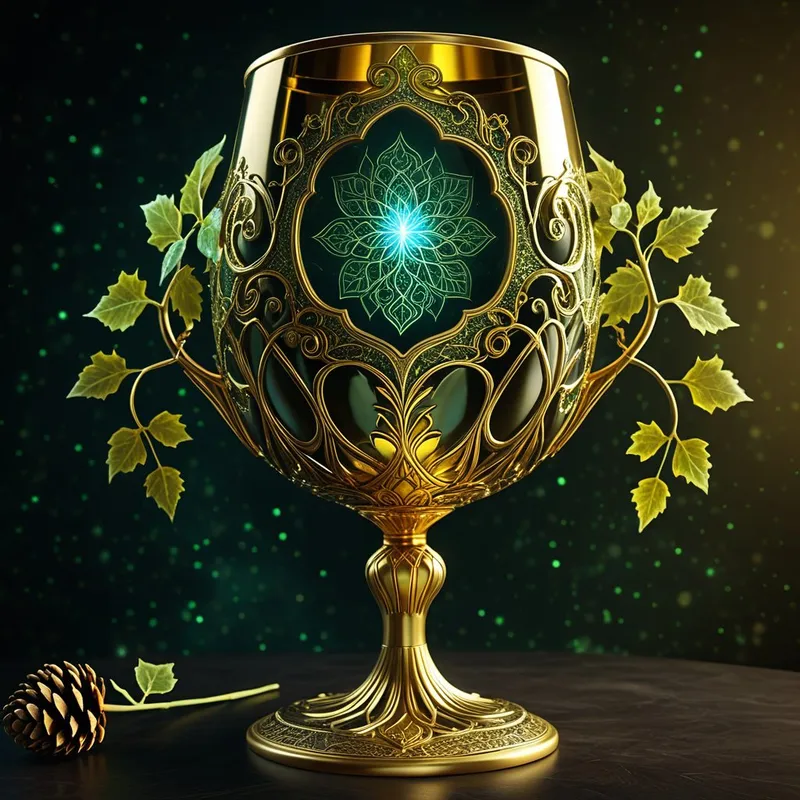
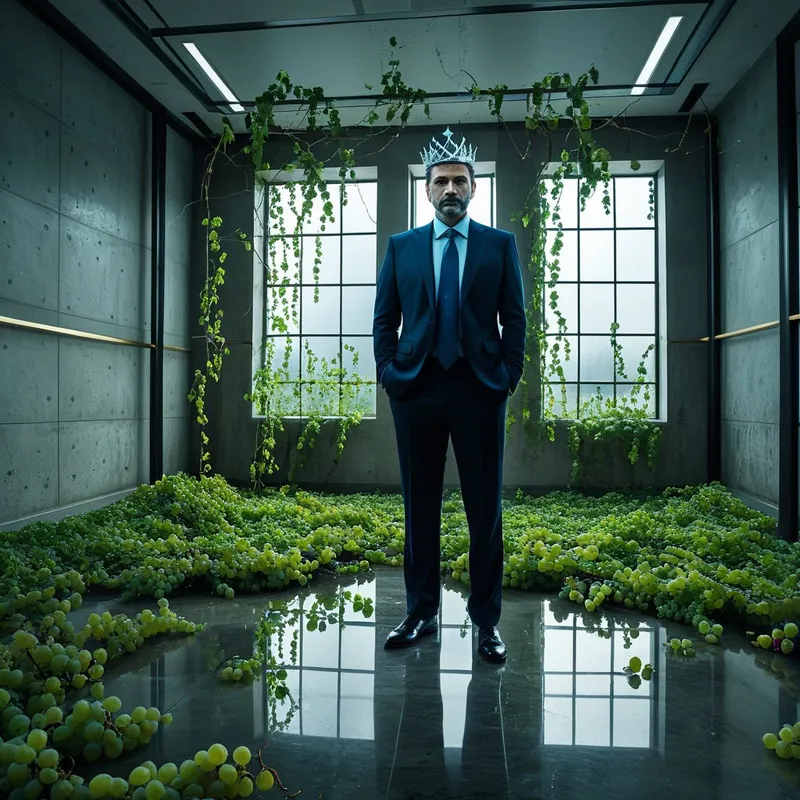
The dreamer may find themselves in an office or home that is suddenly overgrown with uncontrollable vegetation (the invading vine). They may be at a formal event where they have an irresistible, shameful urge to scream, disrobe, or dance wildly (the call of the Maenad). They may dream of their reflection showing a wild, animalistic, or crowned face (the emerging Dionysian Self). Other potent symbols include being chased by a joyful yet terrifying crowd, discovering a hidden, torch-lit room or forest within a familiar building, or holding a vessel that spills an endless, transformative liquid.
Somatically, this dream pattern often correlates with feelings of being "stuck," rigid, or overly controlled in waking life, accompanied by bursts of unexplained emotion, creative blockage, or a sense of inauthenticity. The psyche is initiating its own enthousiasmos; the instinctual self is demanding recognition and integration, threatening to dismantle the overly structured persona. The dream is the nocturnal mountain, the safe(ish) space where this ecstatic, terrifying dissolution can begin to be experienced.
Alchemical Translation
The alchemical journey of individuation finds a powerful template in the Dionysian path. It models the process of psychic transmutation where the base metal of a rigid, identified ego is dissolved in the aqua vitae of the unconscious to be reconstituted as a more authentic, whole Self.
The first stage, nigredo (blackening), is the "madness." It is the initiate's crisis as the god arrives—the breakdown of old structures, the eruption of repressed emotions, the feeling of being torn apart (the sparagmos). This is not a mistake, but the necessary beginning. The conscious mind must surrender its illusion of total control.
The albedo (whitening) is the ecstatic dance on the mountain. It is the purification that comes from fully experiencing, not resisting, the inner chaos. In the mystery rites, this was the cathartic release of the orgia (ritual work). Psychologically, it is the acceptance of shadow material, the free flow of energy no longer dammed up by repression.
The thyrsus is the transformed spine of the initiate: the raw reed of instinct now crowned with the fertile pinecone of spiritual realization, a unity of earth and spirit.
Finally, the rubedo (reddening) is the rebirth. It is the discovery of the puer aeternus (eternal child) and senex (wise old man) united in Dionysus, the god who is both youthful reveler and chthonic lord of the life-death cycle. The initiate does not return to the city as the same person who left. They carry the secretum—not a dogma, but the lived knowledge of their own resilient, divine core that can endure all fragmentations. They achieve a paradoxical state: capable of civic order yet intimately acquainted with the inner wilderness, able to contain multitudes. Their consciousness is no longer a walled city, but a thriving ecosystem where the cultivated and the wild coexist in sacred, creative tension.
Associated Symbols
Explore related symbols from the CaleaDream lexicon: