Crystal Palace of Mnemosyne Myth Meaning & Symbolism
A soul journeys to the crystalline heart of memory, seeking its true name and history from the Titaness of remembrance, Mnemosyne.
The Tale of the Crystal Palace of Mnemosyne
Listen, and I will tell you of a journey not across seas or mountains, but through the silent, trackless realms within. It is a tale of a soul who had forgotten its own name.
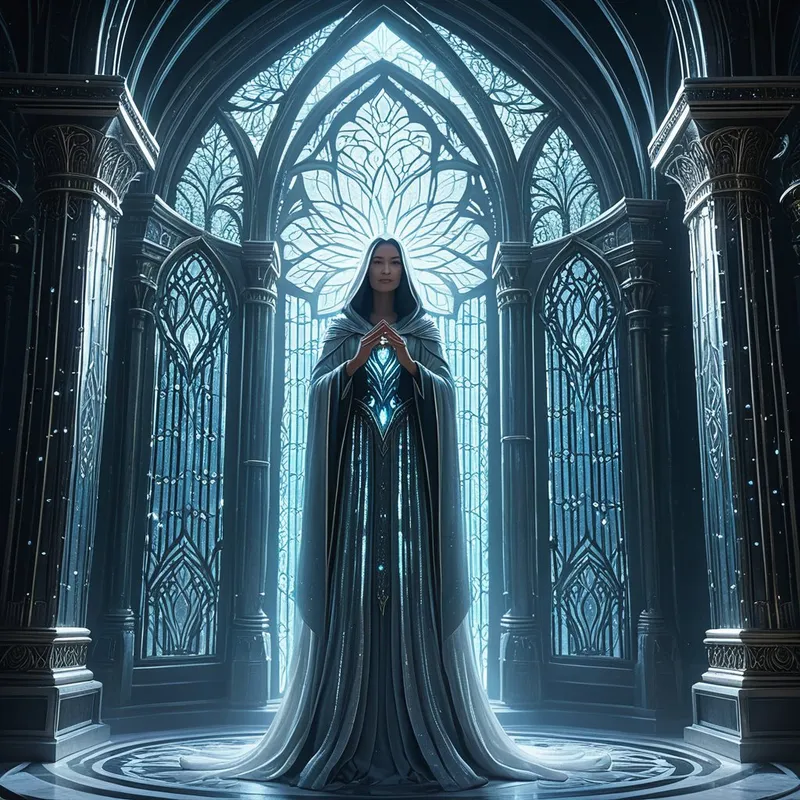
In the time before the Olympians claimed their thrones, in the deep, quiet places of the cosmos where time itself grows thin, there lies a realm untouched by the sun or moon. It is the domain of Mnemosyne. Here, no river of forgetfulness flows. Instead, there stands her palace—not built of stone or marble, but of pure, living crystal. It does not reflect the light; it is the light, a luminous architecture born of remembrance itself. Its spires are solidified echoes, its halls are corridors of preserved moments, and at its heart beats the silent record of all that ever was, is, or could be.
To this place came a seeker, a soul adrift. They had drunk, perhaps too deeply, from the waters of Lethe, and the tapestry of their own life had frayed into meaningless threads. They knew a hollow where a history should be, a silence where a story once sang. Driven by a yearning sharper than hunger, they turned from the world of the living and descended. They passed the Charon with a whispered plea, not for oblivion, but for memory. They navigated the grey fields of Asphodel, not seeking rest, but passage.
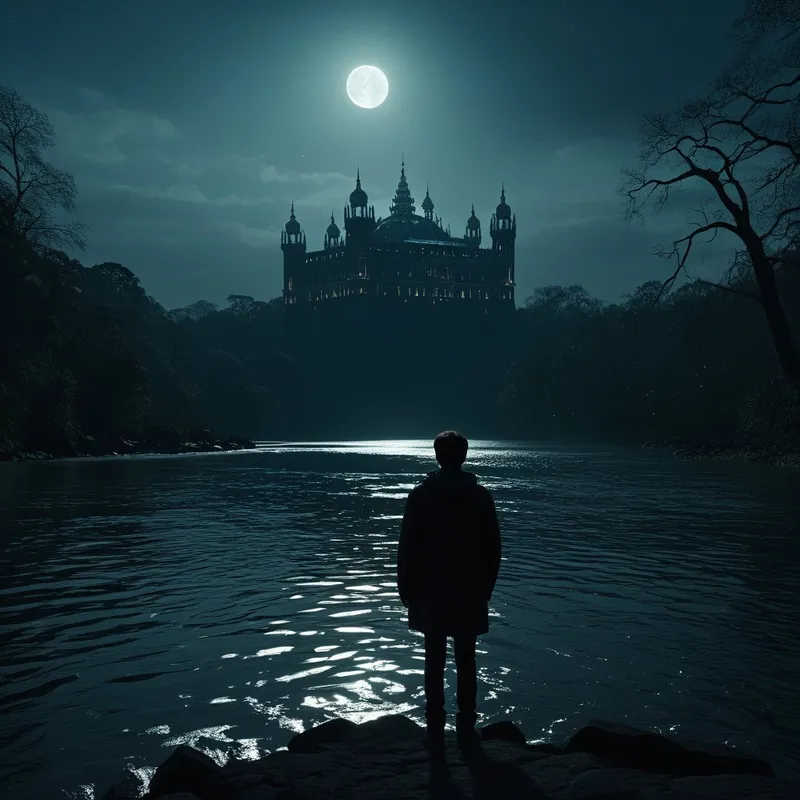
Their guide was not a god, but their own persistent ache. It led them to a shore where a different, darker river flowed—the Cocytus. Its waters did not promise forgetfulness, but the torment of all that is lost and mourned. And there, across that chasm of sorrow, it glimmered: the Crystal Palace, a constellation grounded in the void, its light a cool, inviting clarity against the oppressive dark.
The crossing was the first ordeal. There was no boat. The seeker had to build a bridge from the very substance of their longing, each step a confrontation with a specific, piercing regret or a ghost of a lost joy. To reach the palace, they had to remember how to remember. At last, feet raw and spirit weary, they stood before the gates, which were not gates at all, but a seamless surface of crystal that parted like mist at the touch of a truthful intention.
Within, the air was still and charged. It tasted of old parchment and morning dew. The seeker walked through galleries where scenes from lives not their own played out in silent tableaus—heroic deeds, quiet sacrifices, profound loves. These were the memories of the world, held in trust. Deeper they went, until they stood in the central chamber. There, upon a throne of amethyst, sat Mnemosyne. Her eyes were not eyes, but pools of deep time; to look into them was to see the endless chain of cause and effect, the unbroken lineage of moments.
She spoke, and her voice was the sound of a million leaves rustling, of streams over stones, of a mother’s first lullaby. “You have come far, child of forgetting. What do you seek in my house of remembering?”
The seeker fell to their knees, not in worship, but in exhaustion. “My name,” they whispered, the sound swallowed by the immense quiet. “I have lost my name, and the story that belongs to it. I am a shadow without a source.”
Mnemosyne regarded them. “The name you seek is not a word to be given. It is a pattern to be recognized. Look.”
She gestured, and the crystal walls around them shifted. Instead of distant histories, they began to show his history. Not as a linear tale, but as a constellation of moments: a childhood kindness, a moment of cowardice, a burst of creativity, a wound inflicted, a wound received, a laugh shared under a specific starset. The painful and the joyous shone with equal intensity, all held in the crystal’s impartial light. The seeker wept, for here was their wholeness—not a flawless biography, but a complete one. They saw not just what they had done, but why. They saw the chains of consequence, the love that motivated the failure, the fear that underpinned the bravery.
In that seeing, in that acceptance of the full spectrum of their being—the noble and the shameful, the brilliant and the dull—the seeker’s hollow core filled. They did not speak a new name. They became it. The crystal of the palace resonated with a soft chime, acknowledging the reintegration. The seeker turned, and the path back was no longer a bridge over lamentation, but a road paved with their own, now-remembered, lived experience. They returned to the world not as a new person, but as a complete one, carrying the crystal clarity of Mnemosyne’s gift within their chest.
Cultural Origins & Context
The myth of Mnemosyne’s Palace exists in the liminal spaces of Greek tradition. While no single, continuous narrative survives in texts like Hesiod’s Theogony, the powerful imagery is assembled from fragments of cult practice, philosophical speculation, and esoteric tradition. Mnemosyne, as a Titan, represents a fundamental, pre-Olympian world-order. Memory, for the Greeks, was not mere recollection; it was the faculty of the mind (nous) and the source of all art, reason, and identity.
This myth was likely central to the practices of the Eleusinian and Orphic mystery cults. Initiates were taught to seek out Mnemosyne in the afterlife, to drink from her spring instead of Lethe’s river, thus preserving their identity and achieving a blessed state. The “Crystal Palace” is a poetic elaboration of this concept—a visualized, architectural representation of the soul’s desired destination. It served a profound societal function: it framed death not as an erasure, but as a potential journey toward self-recollection and eternal significance, offering a powerful counter-narrative to the bleak, shadowy existence of the common psyche in Hades.
Symbolic Architecture
The Crystal Palace is the ultimate symbol of the Self as a structured, luminous totality. Its architecture is not random; every facet, corridor, and chamber represents the organized, interconnected nature of true memory, which is distinct from the chaotic flood of mere mental associations.
The Palace does not hide the shadows in its basement; it transmutes them into facets of its own brilliant structure.
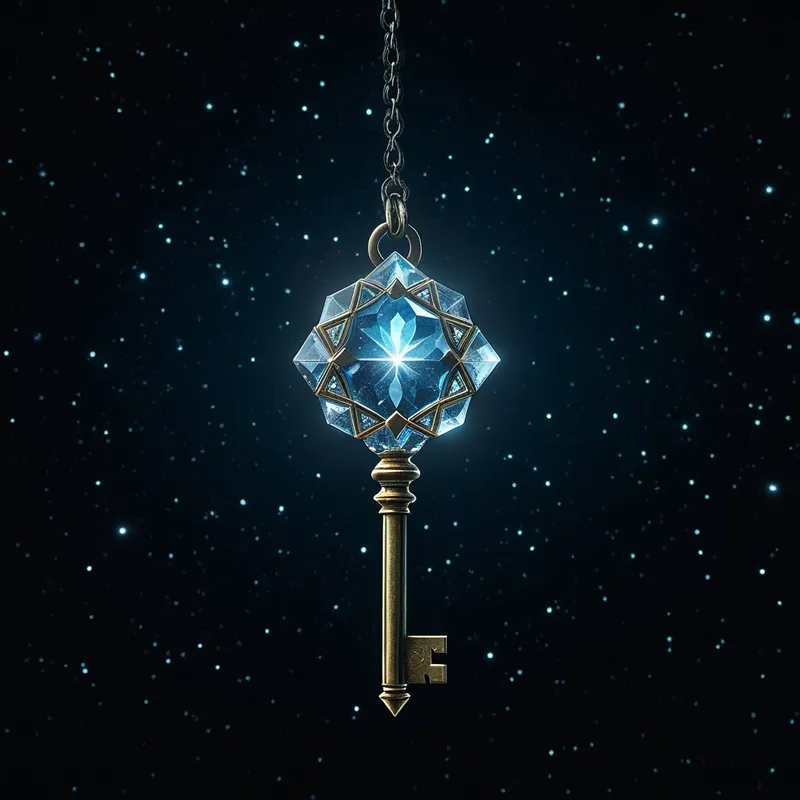
The Crystal itself is the key symbol. It is transparent, allowing for clear seeing (insight). It is formed under immense pressure (suffering, experience). It refracts light, breaking a single source into a spectrum (analysis, understanding multiple perspectives). It is durable, preserving information across eons. The seeker’s journey to the palace is the ego’s arduous trek toward the Self. The dark river of Cocytus represents the necessary confrontation with grief, regret, and shadow material—the “woe” we must consciously cross and feel to reach clarity. Mnemosyne herself is the archetypal presence of Deep Memory, the objective, non-judgmental witness within the psyche that holds the complete record without distortion or sentimental editing.
The Dreamer's Resonance
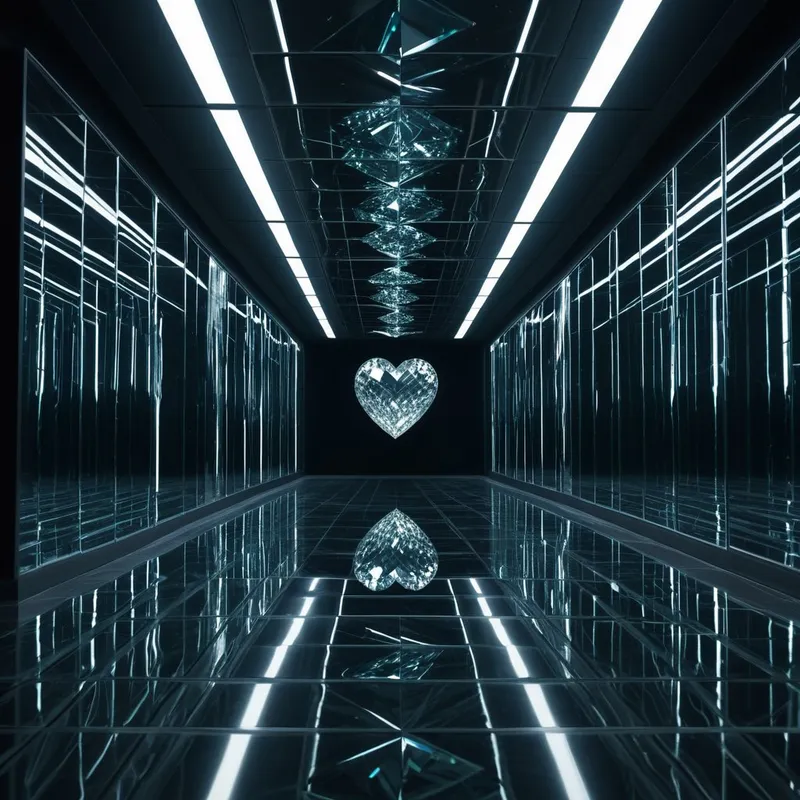
When this myth stirs in the modern dreamer, it often manifests as dreams of labyrinthine libraries, infinite archives, hallways of mirrors, or searching for a specific room or object in a vast, unfamiliar building. The somatic experience is one of profound searching, mixed with awe and anxiety. Psychologically, this indicates a process of psychic recollection.
The individual is not merely remembering facts. They are engaged in the much deeper work of re-membering—putting the dis-membered parts of their psyche back together. This often occurs during life transitions (midlife, post-trauma, spiritual awakening) when the old ego-structure feels insufficient and the call to deeper integrity emerges. The dreamer is, like the mythic seeker, building a bridge over their own river of lamentation, gathering the scattered fragments of their identity—the abandoned talents, the repressed wounds, the unlived lives—to present them at the threshold of a new, more conscious wholeness.
Alchemical Translation
The myth of the Crystal Palace is a perfect map for the alchemical process of individuation. The journey begins in the nigredo: the blackness of forgetting, the depression and confusion of a life lived without authentic self-knowledge (“I have lost my name”). The descent is the necessary solutio—a dissolution of the rigid, forgetful ego in the waters of the unconscious.
The crucible for the soul’s transformation is not fire, but the patient, crystalline structure of truthful remembrance.
Crossing Cocytus is the mortificatio, the confrontation with and “death” of the ego’s resistance to its own shadow. Entering the palace is the albedo, the washing clean in the moon-cool light of Mnemosyne, where all things are seen clearly. The viewing of one’s own life-constellation is the coniunctio oppositorum—the sacred marriage of opposites within the psyche, where virtue and flaw are understood as part of a single, coherent pattern.
The final resonance of the crystal is the rubedo, the reddening, the achievement of the “philosopher’s stone.” Here, the stone is the integrated Self, symbolized by the now-internalized Palace. The seeker returns to the world not with a list of memories, but with a crystalline structure of consciousness. They can now refract the light of experience with wisdom, hold the pressure of life with resilience, and contain the full spectrum of their being without shattering. The myth teaches that wholeness is not found in adding only light, but in consciously structuring all that we are—every memory, every fragment—into a luminous, enduring architecture of the soul.
Associated Symbols
Explore related symbols from the CaleaDream lexicon: