
Coyaba the Jamaican Afterlife Myth Meaning & Symbolism
A myth of a paradisiacal afterlife where souls find rest, born from West African memory and shaped by the trauma and hope of the Middle Passage.
The Tale of Coyaba the Jamaican Afterlife
Listen, child. Listen past the wind in the cane, past the cry of the night bird. Listen to the story carried on the salt wind from across the great, grieving water.
There is a place that is not on any map drawn by the hand of man. It lies beyond the last ridge of the Blue Mountains, beyond the veil where the world turns soft and memory becomes substance. They call it Coyaba. It is not a heaven of harps and clouds, no. It is an echo of a home the soul remembers but the mind has forgotten.
To get there, the spirit must walk. After the body is laid in the Earth, the true journey begins. The road is long and often dark. It winds through a shadowy Forest where whispers cling to the leaves—whispers of what was lost, of names forgotten, of the salt taste of tears. The spirit must cross a wide, slow River. There is no boat. The crossing is a test of weight. Only those whose hearts are not anchored by malice or unspent rage can find the shallows, their feet sinking not into mud, but into light.
And then, if the spirit is true, the path begins to climb. The air grows sweet, smelling of ripe mango, of rain on warm soil. The light changes, from the silver of the moon to the gold of a perpetual, gentle afternoon. And there it is, spread out in a valley cradled by benevolent, mist-wreathed hills: Coyaba.
Here, there is no back-breaking labor. The yams grow fat and willing from the ground. The streams run clear and cool. The ancestors are there, whole and strong, their faces no longer lined with sorrow but shining with a deep, quiet joy. They tend their gardens, they laugh with a sound like rustling bamboo, they dance on feet that never grow tired. It is a land of peace, of restoration. It is the great sigh after a long, hard day. It is the soul finally slipping into its own true skin, finding the home that was promised before the world broke.
Cultural Origins & Context
The myth of Coyaba is a profound act of spiritual cartography, drawn by a people forcibly removed from their geographical and cultural homelands. Its roots are firmly planted in West African cosmologies, particularly Akan and Ashanti beliefs from present-day Ghana, of an ancestral spirit world called Asamando. This was not an abstract heaven, but a mirrored, vibrant continuation of community life.
Transported across the Ocean in the hold of slave ships—a journey known as the Maafa—these beliefs did not die. They were folded into memory, fermented in the harsh reality of the Jamaican plantation. Coyaba emerged as a necessary consolation and a potent form of resistance. It was a psychic territory the enslaver could not touch, a future reward that invalidated the dehumanizing present.
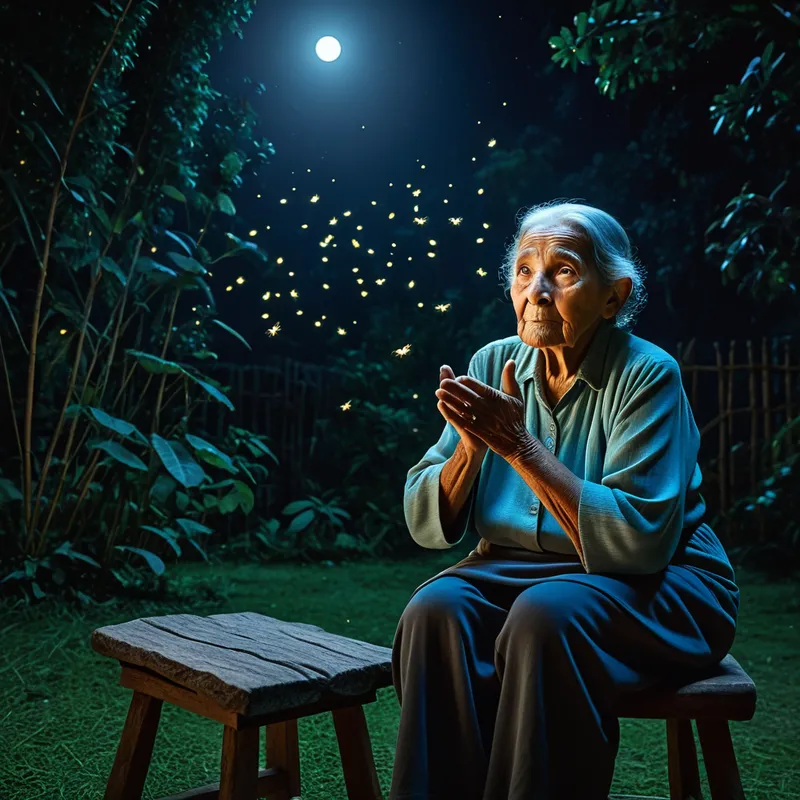
The tale was kept alive in the Oral tradition, shared in the Yard after sundown, or during quiet moments of communal labor. The storyteller, often an elder, became a Griot of the diaspora, using the story to teach endurance, ethical conduct (for a heavy heart cannot cross the river), and the unbreakable connection to the ancestral line. Coyaba functioned as a cultural Root, a promise that the trauma of displacement was not the final word on their Destiny.
Symbolic Architecture
At its core, Coyaba is not merely a destination; it is the symbolic resolution of a profound rupture. It represents the psyche’s imperative to heal the wound of exile and find wholeness.
The journey to Coyaba is the soul’s pilgrimage back to its own intactness, a mapping of the interior landscape necessary to become an ancestor to oneself.
The arduous path through the shadowy Forest symbolizes the necessary confrontation with the Shadow—the grief, rage, and shame born of historical trauma. The River crossing is an alchemical wash; it demands the shedding of the psychological burdens that would prevent entry into a state of peace. Coyaba itself is the archetype of the Self—a lush, fertile, and harmonious inner realm that exists once the fragments have been gathered and the storms have been weathered. It is the psychological Temple reconstructed after devastation.
The Dreamer's Resonance
When motifs of Coyaba surface in modern dreams, they rarely appear as literal tropical valleys. Instead, they manifest as profound somatic and emotional experiences of homecoming after a struggle. One might dream of finally arriving at a serene, familiar house after a long, confusing journey through urban labyrinths. One might dream of being cleansed in a gentle, warm Rain that washes away a sticky, dark substance. One might dream of being greeted and embraced by benevolent, anonymous figures who feel deeply known.
These dreams signal a psychological process of integration and release. The dreaming psyche is navigating its own Forest of unresolved emotion or identity confusion. The feeling of arrival, of peace, of being "seen" and welcomed, marks a moment of deep self-acceptance. It is the ego touching the periphery of the inner Coyaba, experiencing a taste of the soul’s own capacity for restoration beyond the wounds of personal history—be it grief, shame, or a sense of existential displacement.

Alchemical Translation
The myth of Coyaba provides a powerful model for the individuation process—the psychic transmutation of leaden suffering into golden wholeness. The modern individual’s "Middle Passage" may be any profound trauma, loss, or identity crisis that creates a feeling of exile from one’s self.
The alchemy begins not with a flight from darkness, but with the courageous walk through it. One must consent to the Journey, to feel the chill of the shadow-Forest and the weight of the waters that must be crossed.
The first stage is Acknowledgment (entering the forest): facing the full reality of one’s pain, history, and fractured parts without spiritual bypass. The second is Purification (crossing the river): the difficult, often tearful work of letting go of identities forged in reaction to pain—the victim, the rageful one, the eternally wounded. This is the shedding of the "heavy heart." The final stage is Integration (arriving in Coyaba): not an escape, but a return. It is the cultivation of an inner landscape where all parts of the self can coexist in peace. The Mother and Father within are reconciled. The individual becomes the ancestor of their own renewed life, tending the garden of their soul with a patience and care they may never have received. In this way, Coyaba is translated from a post-mortem destination into a living, psychological achievement—a state of being where one is finally, fully at home within oneself.
Associated Symbols
Explore related symbols from the CaleaDream lexicon:
- Journey — The core narrative structure of the myth, representing the soul's obligatory passage through trials to reach a state of wholeness and rest.
- River — The critical threshold of purification; one must cross its waters, shedding the weight of malice and unresolved pain to enter the peaceful afterlife.
- Forest — The shadowy, unknown realm the spirit must traverse, symbolizing the confrontation with grief, lost memory, and the collective unconscious.
- Ocean — The vast, traumatic separation of the Middle Passage, the literal and symbolic water that created the diaspora and the longing for a homeland.
- Homecoming — The ultimate theme and destination of Coyaba, representing the soul's return to a state of belonging, peace, and ancestral connection.
- Healing — The primary function of Coyaba as a realm and a concept; it is where wounds of the spirit are finally soothed and integrity is restored.
- Ancestor — The welcoming presence in Coyaba, representing the continuity of the spirit, cultural memory, and the healed state one aspires to join.
- Earth — The fertile, nurturing ground of Coyaba's gardens, contrasting with the grave; it symbolizes sustenance, growth, and a positive, grounded afterlife.
- Destiny — The soul's ordained end point beyond mortal suffering, a promise that guides ethical living and endurance through hardship.
- Root — The deep, enduring connection to African origins that sustains the myth, anchoring a displaced people in a spiritual and cultural lineage.