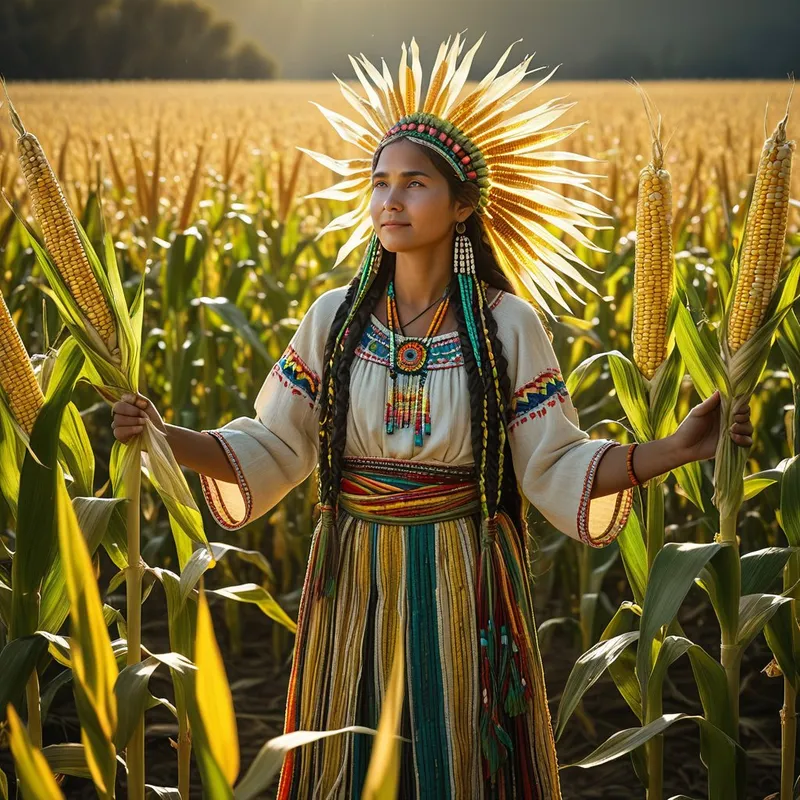
Corn Maiden Myth Meaning & Symbolism
A sacred being gives her body to feed a starving people, transforming into the first corn and establishing a covenant of life, death, and renewal.
The Tale of Corn Maiden
In the time before time, when the world was young and the people were few, a great hunger fell upon the land. The rains ceased their dance upon the red earth. The streams, once laughing, became silent, dusty scars. The game fled to hidden places, and the people’s stores of food dwindled to nothing but memory. Despair, a cold wind, whispered through the pueblos. The elders prayed, their voices cracking like the parched ground. The children grew thin and quiet.
In one such village lived a young woman of extraordinary spirit. She was known for her kindness, her quiet strength, and her deep, abiding love for her people. Where others saw only dust, she saw potential. Where others heard only silence, she listened for the heartbeat of the world. As the hunger tightened its grip, a profound knowing settled within her—a calling from the earth itself.
One evening, as the sun bled into the western mesas, she gathered her family. “Do not weep for me,” she said, her voice steady as stone. “I have walked with the spirits of the land. They have shown me the way. To end this hunger, I must give myself to it. I must go into the earth, so that you may live from it.”
Her family’s cries were a storm of grief, but her resolve was the mountain that weathers all storms. She instructed them. “Take me to the center of our poorest field. Dig a deep home for me in the earth. Wash me, dress me in fine robes, and lay me down as if for sleep. Then, you must cover me. You must not look back. For four days, you must fast and pray. On the fourth day, return.”
With hearts heavy as river stones, they did as she asked. They prepared her, their tears mingling with the soil. They laid her in the embrace of the dry earth, covering her body completely. The act felt like a burial, a final, terrible goodbye. For four long days and nights, the village kept a sacred vigil, their stomachs empty but their spirits focused on the place where she lay.
On the dawn of the fourth day, a strange green light seemed to glow from the field. The people approached, their breath held. Where they had laid her body, the earth was no longer barren. A tender, green shoot had pierced the soil. As they watched, awestruck, it grew before their very eyes, stretching toward the sun. More shoots followed, until the entire plot was a sea of vibrant green stalks.
And then, from the sides of these stalks, forms began to swell. Not fruits they knew, but strange, wrapped bundles. The husks dried and peeled back, revealing rows upon rows of plump, golden kernels. The air filled with a sweet, dusty fragrance they had never known. It was her body, transformed. It was her flesh, given as food. It was life, returned a hundredfold from a single act of ultimate love. The Corn Maiden had kept her promise. The first corn had been born from sacred sacrifice, and the people were saved.

Cultural Origins & Context
The myth of the Corn Maiden is a foundational narrative among many Pueblo peoples of the Southwest, including the Hopi, Zuni, and other Puebloan nations. It is not a singular, fixed story but a living tradition with variations that echo across different villages and clans. Traditionally, it was and is passed down orally, often by elders and spiritual leaders during winter ceremonies or at key moments in the agricultural cycle. Its telling was not mere entertainment; it was a ritual act of remembrance, a way to impart the most sacred laws of existence.
The myth served a crucial societal function: it encoded the entire ethical and practical framework of agriculture. It explained the origin of corn, the staple of life, and established the proper relationship between humans and the plant world. It taught that food is not a commodity but a sacred gift, born from a conscious, willing sacrifice. This understanding fostered profound gratitude, meticulous agricultural practices, and complex ceremonial cycles of planting, growth, and harvest designed to honor that original covenant. The story was the spiritual blueprint for a way of life built on reciprocity with the earth.
Symbolic Architecture
At its heart, the Corn Maiden is the archetype of the Nourishing Mother in her most literal and profound form. She represents the principle that life feeds on life, that sustenance requires a transfer of essence. She is the embodiment of the earth’s generative power, but with a crucial narrative twist: her sacrifice is conscious and willing.
The deepest nourishment is always a form of sacred exchange, never a simple taking.
The act of burial is not an end, but a planting. Her body is the seed. This transforms death from a finality into a threshold, a necessary phase in a cycle of regeneration. The four days of waiting mirror the phases of the moon or the cardinal directions, a period of gestation in the dark, fertile womb of the unconscious earth. The corn that emerges is her resurrected body—not restored to its previous form, but transmuted into a new, abundant, and sustainable one. The myth elegantly symbolizes the core truth of ecology: decay feeds growth, and endings are woven into the fabric of beginnings.
Psychologically, the Corn Maiden represents the part of the self—or of a community—that is willing to be metabolized for a greater purpose. She symbolizes the ego’s submission to a transpersonal process. Her journey is one of radical descent: from the human community into the solitary darkness of the earth, where a miraculous alchemy occurs.
The Dreamer's Resonance
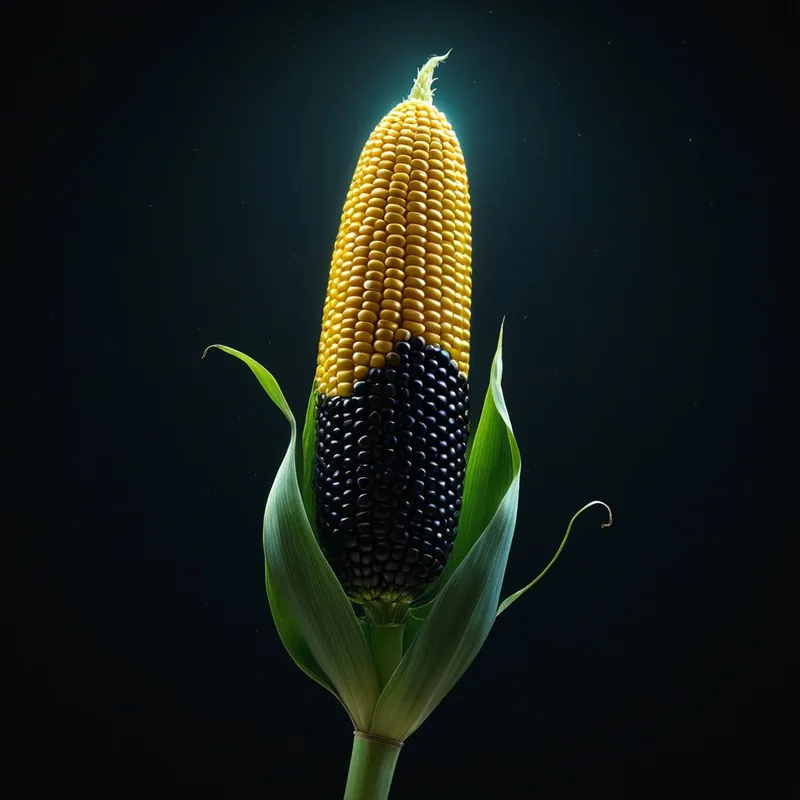
When this myth stirs in the modern dreamer, it often signals a profound somatic and psychological process of nourishment or its lack. To dream of a barren field where something must be buried speaks to a feeling of inner famine—a creative, emotional, or spiritual drought. The dreamer may be in a season of depletion, giving too much without receiving, or feeling cut off from their own source of vitality.
Dreaming of the burial itself can feel unsettling, even funereal. It may correlate with a conscious life situation requiring a major sacrifice: letting go of a familiar identity, a secure position, or a cherished plan for the sake of a deeper, unknown future. The somatic sensation is often one of weight, of being pressed into the ground, of a necessary surrender.
The appearance of the green shoot in the dream is the first somatic signal of hope—a literal rising of new life from the place of surrender. It marks the turning point where the psyche begins to translate sacrifice into generative potential. For the dreamer, this can manifest as the first, fragile inkling of a new idea, a healing emotion, or a restored connection after a period of darkness. The dream is the psyche’s way of enacting the ancient covenant: if you trust the process of descent and dissolution, a new form of nourishment will arise.
Alchemical Translation
The individuation process, the journey toward psychic wholeness, is mirrored perfectly in the Corn Maiden’s transformation. For the modern individual, the “great hunger” is often a crisis of meaning, a feeling that one’s current mode of being no longer sustains the soul. The conscious ego—represented by the maiden’s willing, speaking self—must recognize that to move forward, something must be given over to the earth of the unconscious.
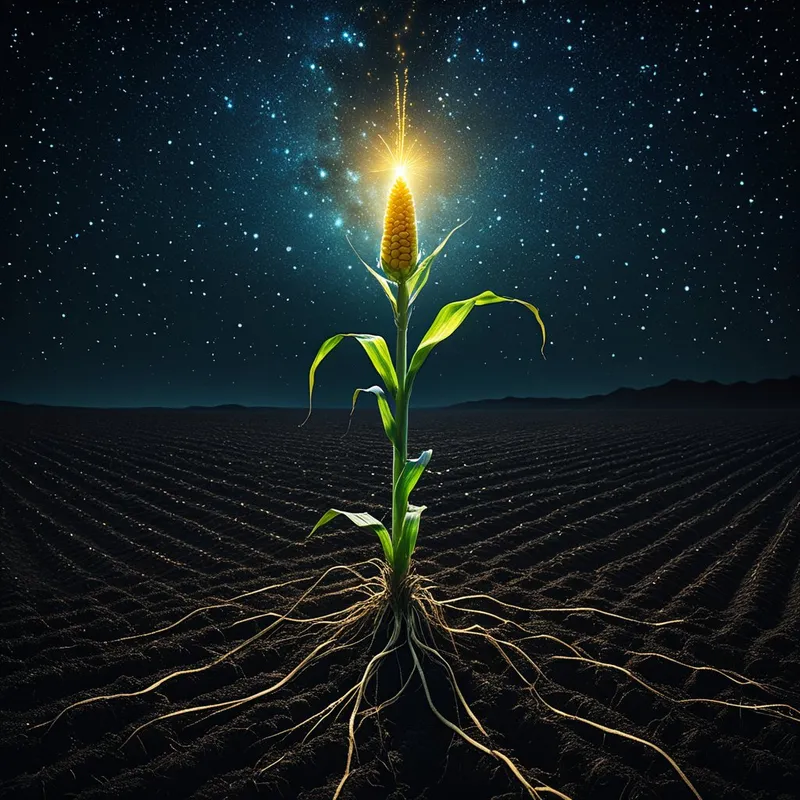
The alchemical operation here is nigredo, the blackening, the descent into the dark. This is the burial phase: the voluntary end of a former identity, the acceptance of a period of confusion, depression, or felt stagnation. It is the “fasting and prayer”—the active, patient waiting while the unconscious does its work of transmutation.
The seed does not debate its dissolution; it obeys the logic of the dark.
The emergence of the corn is the albedo, the whitening, and rubedo, the reddening. It is the birth of a new, nourishing structure from the dissolved elements of the old. For the individual, this is the development of a new capacity, a sustainable source of inner nourishment that feeds not just oneself but one’s community. The “corn” is the realized talent, the healed complex, the compassionate insight that grows from the compost of surrendered suffering.
The myth ultimately teaches that our deepest gifts to the world and to ourselves are born not from what we achieve, but from what we are willing to sacrifice and transform. We are both the maiden and the people, the sacrificer and the nourished, tasked with the eternal cycle of going into the dark earth of our own experience so that we may yield a harvest of golden, life-sustaining meaning.
Associated Symbols
Explore related symbols from the CaleaDream lexicon: