Comal Myth Meaning & Symbolism
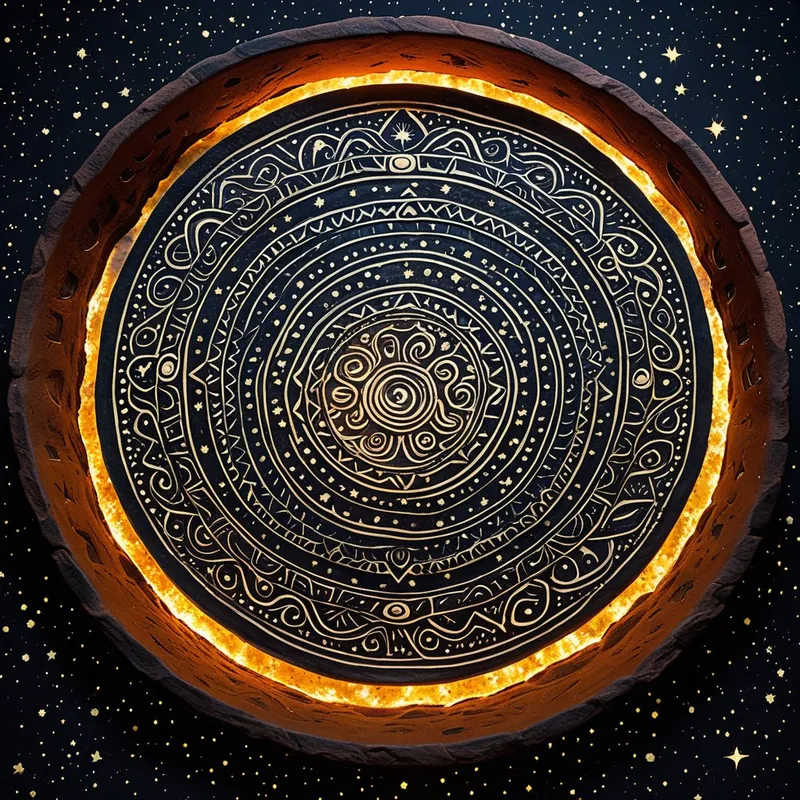
The myth of the sacred griddle, Comal, who endures the fire to transform the raw into the nourishing, embodying the soul's necessary crucible.
The Tale of Comal
Listen. Before the world knew its name, before the first smoke curled towards the sun, there was the raw and the hungry. The people had masa, the gift of the gods, but it was cold, dense, and unyielding. It held life, but not the kind that could sustain a spirit. They placed it on stones, but the life within remained locked away.
Then, from the heart of the earth where the fire spirits sleep and the clay remembers the shape of hands, she was formed. Not born, but coaxed. They called her Comal. She was round as the moon, flat as a still lake, and forged in the kiln’s first breath. She was silent, patient, and utterly still.
They brought her to the fire. Not a gentle flame, but the heart of the cooking hearth, the relentless, consuming orange eye of Xiuhtecuhtli. They laid her upon it. The fire licked and bit, searing her smooth surface. She did not cry out. She absorbed. She held the fury, letting it seep into her very being until she glowed with a terrible, necessary heat.
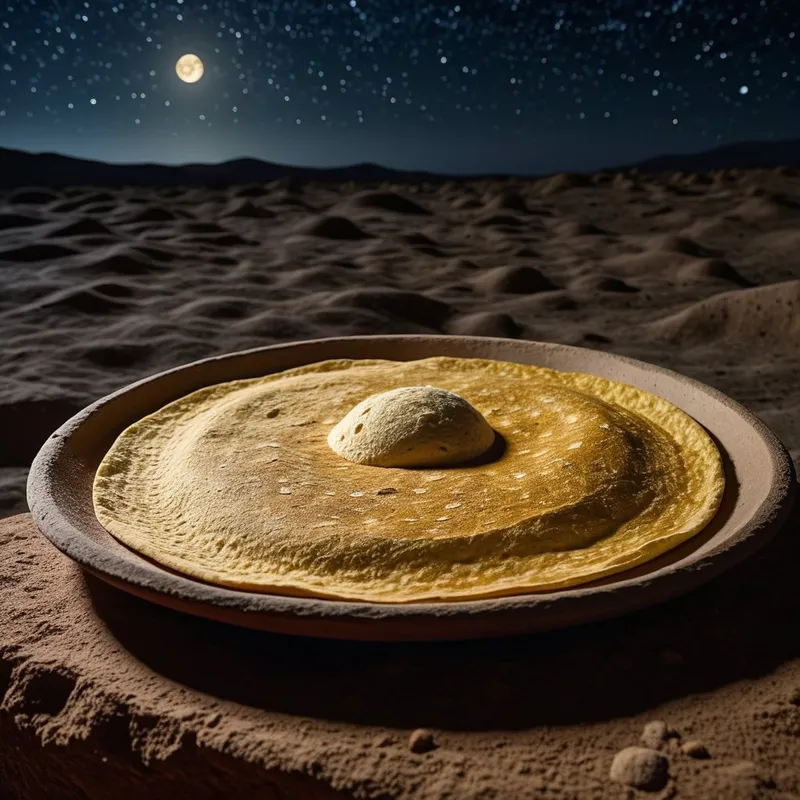
Then came the test. The priestess, her hands dusted with maize, placed the first ball of pale masa upon Comal’s burning brow. A hiss, a protest of steam. Comal did not flinch. She pressed her heat into the dough, not to destroy it, but to awaken it. She held it in that crucible, searing its underside, until the raw paste blistered, puffed, and transformed. It became pliable. It became fragrant. It became tortilla.
From her, the first true nourishment flowed. She was the bridge between the raw gift of the gods and the cooked sustenance of humanity. Every day, she returned to the fire. Every day, she endured the searing embrace so that others might be transformed. Her surface became blackened, cracked with the memory of countless meals, a map of her sacrifice. She never ate of what she created. Her purpose was the transformation itself, the silent, scorching grace that turns potential into life.
Cultural Origins & Context
The myth of Comal is not a singular epic poem but a foundational narrative embedded in the daily ritual of Mesoamerican life, from the Olmec hearths to the great Tenochtitlan. It was passed down not by bards in halls, but by grandmothers and mothers teaching daughters at the metate and the hearth. The story was in the doing, in the feel of the clay, the sight of the transforming dough, and the shared understanding of the tool’s sacred role.
Comal functioned as a core societal metaphor. In a cosmology where the act of cooking was a divine alchemy—mirroring the sun’s cooking of the earth to bring forth crops—the griddle was a pivotal altar. It represented the necessary, often harsh, intermediary between the human and the divine, the raw natural world and the cultivated social one. Its circular shape echoed the cosmos, its central position over the fire mirrored the world’s axis. To use Comal was to participate in a myth, to re-enact the primordial transformation that made communal life and civilization possible.
Symbolic Architecture
Comal is the archetype of the Crucible. She is not the fire (the active, consuming force) nor the dough (the innocent, untransformed material). She is the vessel that contains the process, the enduring surface that makes the transformation possible and directed.
The soul’s growth is not a gentle warming but a searing contact with what is most real. The vessel that holds this process must be forged in patience and tempered by sacrifice.
Psychologically, Comal represents the Ego in its highest, most sacrificial function: not as the king, but as the servant of transformation. It is that part of the psyche that must consent to bear the heat of confrontation, the fire of repressed emotions, painful memories, or difficult truths. It agrees to be the ground upon which the raw, unintegrated parts of the self (the cold masa of potential) are cooked into something usable, nourishing, and capable of sustaining the whole person. The cracks in her surface symbolize the inevitable wounds and wisdom gained through this enduring role.

The Dreamer's Resonance
When the pattern of Comal arises in modern dreams, it often signals a profound somatic and psychological process of integration. One might dream of a heated stone, a hot plate, a frying pan, or any flat, heated surface upon which something is being pressed and changed.
The somatic sensation is often one of bearing heat—anxiety, pressure, or a burning urgency that feels centered in the chest or gut. Psychologically, this indicates the dreamer is in the midst of a necessary but painful "cooking" process. Perhaps a raw talent is being tested by real-world pressure. A half-formed idea is being scrutinized. A naive emotion is being tempered by complex reality. The dream asks: Can you endure this heat? Can you be the steady ground for your own transformation, even as it blisters and reshapes you? The presence of something transforming on this surface is a positive sign of alchemy at work, however uncomfortable.

Alchemical Translation
The myth of Comal provides a starkly beautiful model for the Jungian process of individuation. Individuation is not about avoiding the fire of the unconscious or the demands of life; it is about becoming the vessel strong enough to contain it.
The goal is not to escape the fire, but to become the Comal—to be transformed by the heat you bear, until your very substance becomes the agent of transformation for others.
First, we must be forged (the initial trials that shape our character). Then, we must willingly return to the fire daily (the conscious engagement with shadow, anima/animus, and the Self). Our conscious ego is not the hero who slays the dragon; it is the griddle that holds the conflict, allowing the dragon’s fiery breath and the hero’s cold steel to interact upon its surface. Through this enduring, we transmute the raw, unconscious contents (complexes, impulses, potentials) into "food"—conscious insight, creative works, and nourishing relationships that sustain our life journey. The "cracks" we collect are not failures, but the patina of a life lived authentically in the transformative fire. We become, in essence, a sacred tool in the kitchen of the soul, where the ultimate meal is the wholeness of the Self.
Associated Symbols
Explore related symbols from the CaleaDream lexicon: