Cliffs of Moher Myth Meaning & Symbolism
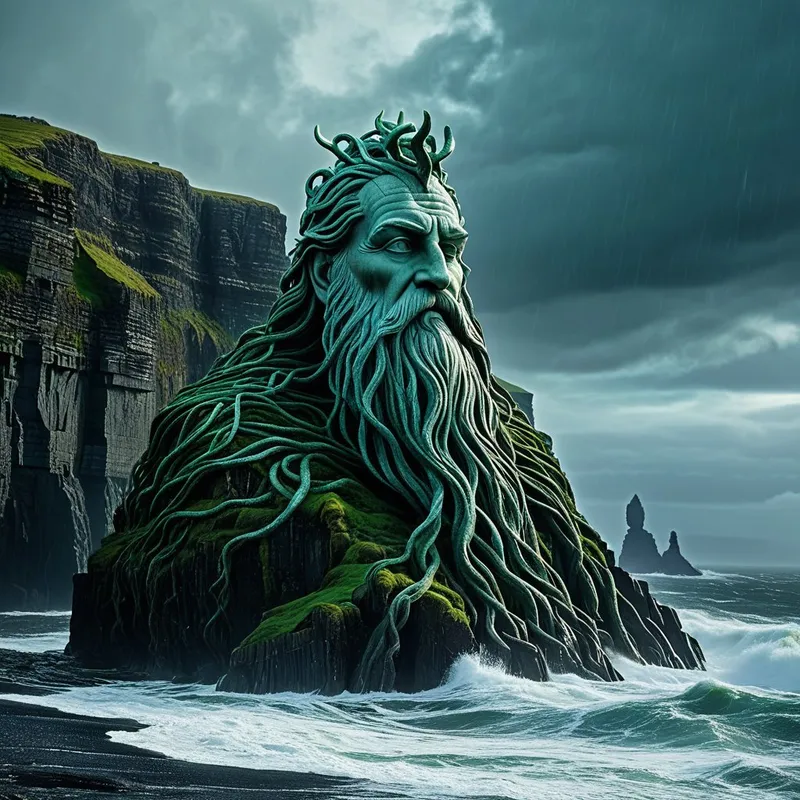
A grieving sea god carves the Irish coast with his sorrow, creating the Cliffs of Moher as an eternal boundary between his realm and the land of his lost love.
The Tale of Cliffs of Moher
Listen. The wind that screams over the edge of the world is not just wind. It is the last breath of a god, a sigh so vast it shaped the stone itself.
In the time before time, when the world was soft and the gods walked with the weight of mountains, Manannán mac Lir ruled the grey-green Atlantic. His domain was the shifting, singing deep, a realm of mystery and perpetual change. But his heart, that turbulent and fathomless thing, was captured by a creature of the fixed land. Her name was Ériu, and she was the spirit of the island itself—steady, fertile, and rooted. Their love was a impossible melody, the song of the wave meeting the shore, a constant caress that wore away all resistance.
For a season of centuries, they met in the liminal space where salt spray kissed meadow grass. Manannán would rise from the foam, and Ériu would come down from the hills, and the border between their worlds would dissolve in their embrace. The land flourished with their joy; the seas were calm with his contentment.
But the Dán does not suffer such a blending forever. The Otherworld, the realm of the Tuatha Dé Danann, demanded clarity. A sea god could not belong to the land; a land goddess could not live beneath the waves. Their union threatened the very architecture of reality. Whispers became edicts. The pressure of the deep and the pull of the bedrock began to tear at them.
Ériu, bound by her nature to the soil, could no longer journey to the shore. Manannán, in a fury of grief that churned the ocean into a frenzy, would storm the coast, his waves clawing at the cliffs, seeking a path to her. Each assault was met with the immutable silence of the stone. His love, once a caress, became a battering ram. His sorrow, once a mist, became a hurricane.
The final night came with a silence more terrible than any storm. Manannán did not rage. He gathered all his love, all his loss, all his divine, tempestuous power, and with a gesture that drew the water back from the very bones of the continent, he carved. He did not seek to conquer the land, but to define it. He sculpted the coastline with the precision of infinite anguish, creating a sheer, majestic wall of stone—a monument to what could be seen but never touched. The Cliffs of Moher were not built; they were revealed by the withdrawal of a god’s hope. He made the boundary so absolute, so breathtakingly vast, that it would stand forever as the ultimate statement of their separation. He gave his love a form, and that form was a precipice.
Now, he watches from the mist, and she waits in the green inland. The cliffs are their eternal meeting place—a monument not to union, but to the beauty and terror of the space between.
Cultural Origins & Context
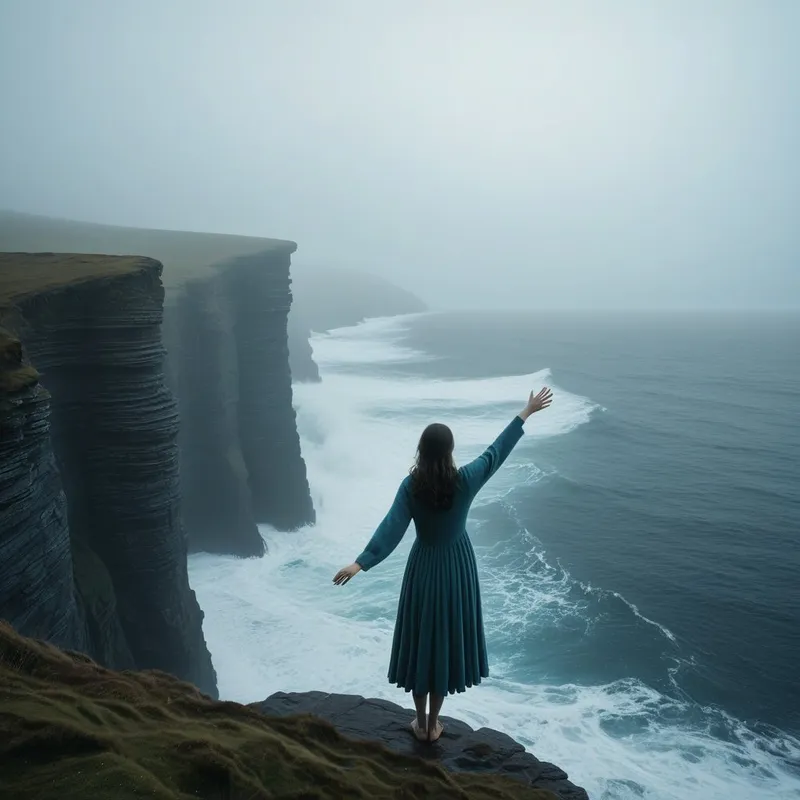
This tale is not found in a single, codified text like the Lebor Gabála Érenn, but is woven from the broader tapestry of Gaelic cosmological thought and seanchas. It is a dindshenchas myth, a story born from the land itself to explain its most awe-inspiring features. The Cliffs, known in Irish as Aillte an Mhothair, have always been a liminal zone, a place where the known world of tribe and territory drops away into the Tír fo Thuinn ("Land Under the Wave").
Bards and fili would use such stories to articulate the Celtic understanding of sovereignty and place. Ériu is not just a woman; she is the soul of Ireland, and her relationship with a force of chaos like the sea defines the nation's character—resilient, battered by storms, yet enduring. The myth served a societal function, teaching about the necessary and sacred nature of boundaries, the respect for elemental powers beyond human control, and the poetic truth that profound beauty is often born of profound loss. It was a story told not to entertain, but to orient the listener within a cosmos alive with personified, often conflicting, forces.
Symbolic Architecture
At its core, the myth is a supreme allegory for the psyche's necessary structures. The Cliffs represent the individuation process, specifically the creation of a conscious boundary.
The self cannot be whole without first defining where it ends and the other begins. The cliff is not a prison wall, but the shore of the soul.
Manannán mac Lir symbolizes the unconscious—deep, emotional, powerful, creative, and potentially overwhelming. He is the realm of dreams, instincts, and boundless potential. Ériu represents the conscious ego and identity—structured, grounded, and concerned with form and stability. Their initial union is the innocent, paradisiacal state where the ego is undifferentiated from the unconscious, a state of creative fertility but also latent chaos.
The conflict imposed by the Dán is the call to consciousness itself. The psyche must differentiate to exist. The carving of the cliffs is the often-painful process of building an ego. It is not a rejection of the unconscious, but a defining of the relationship with it. The cliff edge is the threshold where consciousness (the land) meets the unconscious (the sea). It is the place of insight, creativity, and danger—where one can gain perspective but also risk being engulfed.
The Dreamer's Resonance
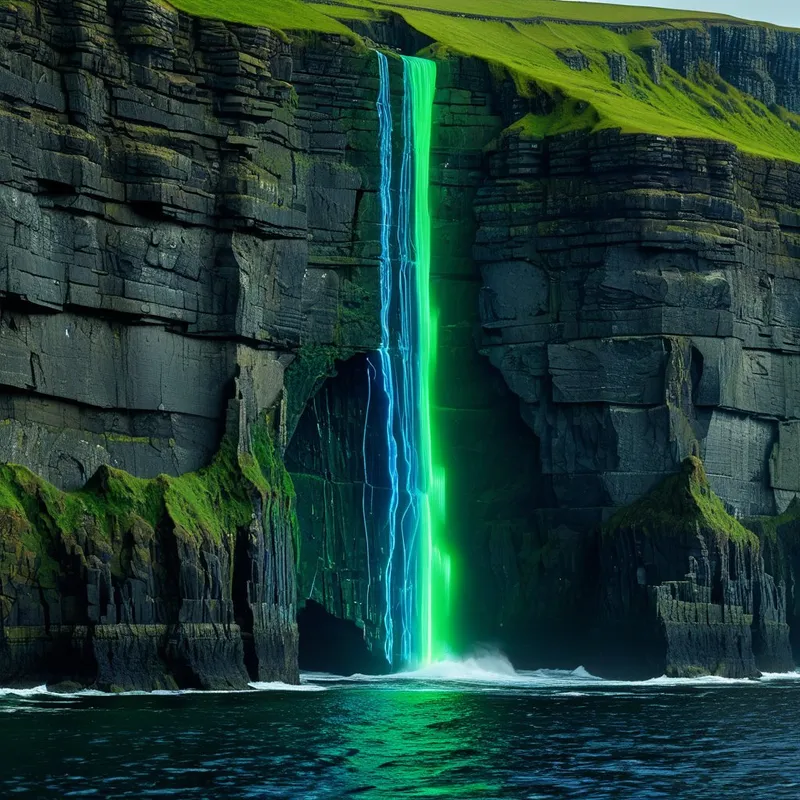
When this mythic pattern stirs in the modern dreamer, it often manifests as dreams of dramatic coastlines, terrifying edges, or being pursued by (or yearning for) a vast, elemental force like the ocean. The somatic experience is one of vertigo—a literal feeling of standing at a precipice within oneself.
Psychologically, this signals a critical phase of boundary-work. The dreamer may be grappling with a relationship where identities have become enmeshed, or struggling to contain overwhelming emotions (the raging sea). The dream of the cliff asks: Where is my edge? What part of my emotional world feels so vast it threatens to erode my sense of self? The figure of Ériu on the cliff may appear as the dreamer’s own self, finally standing firm after a period of being inundated by the needs, emotions, or chaos of others. It is a dream of consolidation, of saying "this far, and no further," not from a place of rejection, but from a necessity of self-preservation and definition.
Alchemical Translation
The alchemical journey mirrored here is the opus contra naturam—the work against nature, which in psychological terms is the work against undifferentiated, instinctual nature. The initial state (Manannán and Ériu united) is the massa confusa, the primal, chaotic mixture.
The transmutation occurs not in the union, but in the sacred separation. The lead of chaotic longing is made into the gold of conscious longing across a defined space.
The "carving" is the separatio and coagulatio alchemical stages. Painful emotions (grief, rage, longing) are not dissolved, but used as the tool—the divine chisel—to sculpt a lasting structure for the psyche. The modern individual undergoing this process is learning to hold their ground (Ériu) while fully acknowledging the depth and power of their inner world (Manannán). They are not trying to calm the sea, which is impossible and unnatural, but to build a stable vantage point from which to witness its majesty and fury without being swept away.
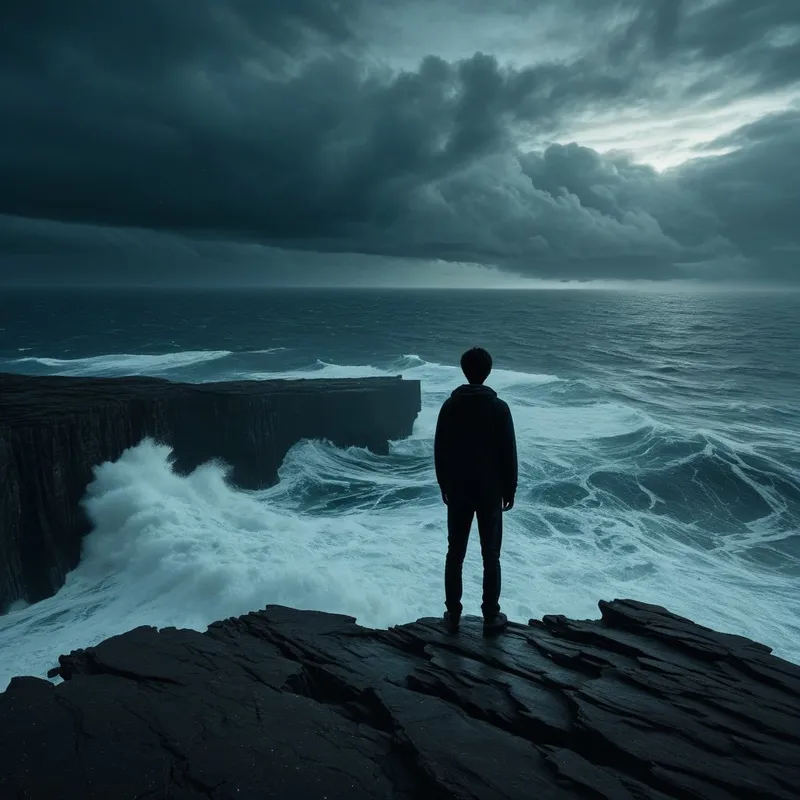
The triumph is not a reunion, but a relationship redefined. The individuated self stands on the cliff of consciousness, able to look out into the tumultuous, creative, terrifying depths of the unconscious with awe and respect, engaged in a perpetual, creative dialogue across a boundary that makes both sides more truly themselves. The Cliffs of Moher, in the end, are a symbol of the soul's architecture—forged in loss, defining a self, and opening onto the infinite.
Associated Symbols
Explore related symbols from the CaleaDream lexicon: