Christmas Eve candlelight service Myth Meaning & Symbolism
A communal ritual in deepest winter, where a single flame is shared in silence, becoming a sea of light against the encroaching dark.
The Tale of Christmas Eve candlelight service
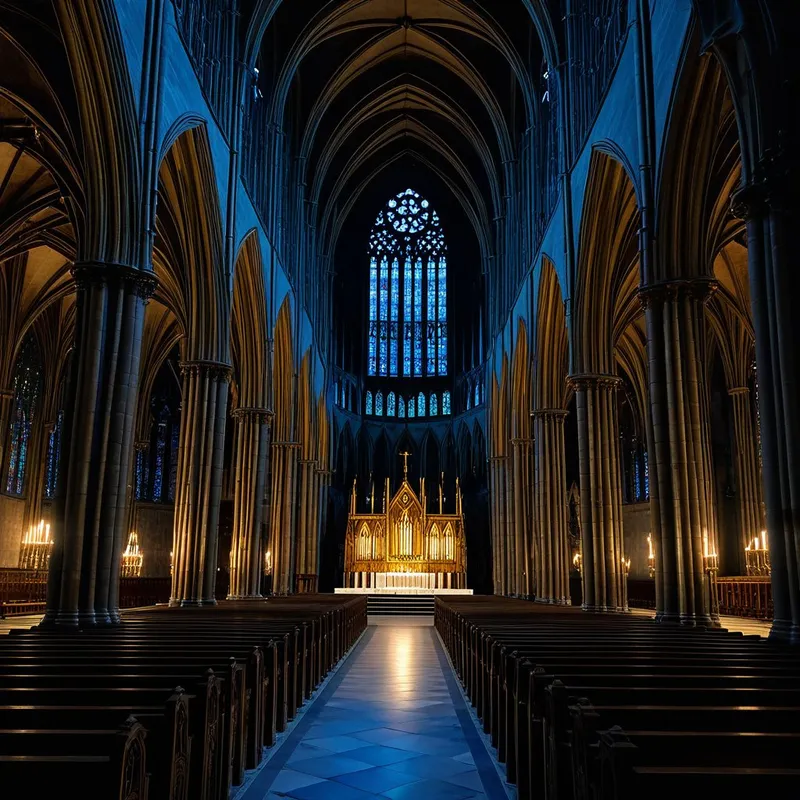
Hear now the tale of the Longest Night, when the world holds its breath beneath a blanket of frost and stars. The sun, the great Helios, has fled to his furthest retreat, and the kingdom of Chaos stretches its cold fingers across the land. In this time of profound silence, when the memory of warmth is but a ghost, the people gather.
They come not to a sun-drenched plaza, but into the belly of a great stone vessel—a cathedral, a chapel, a humble meeting house—a cave carved from the dark itself. They are shepherds from frozen fields, kings from weary journeys, mothers and fathers bearing the year’s quiet burdens. They sit wrapped in shadow, a single community of breath in the vast chill. The story is told then, the old, impossible story: of a promise whispered into the void, of a Logos choosing the fragile vessel of flesh, of a light kindled not in a palace, but in the straw of a forgotten stable.
And then, the moment arrives. All other lights are extinguished. The world is plunged into a darkness so complete it feels ancestral, the dark that existed before the first word was spoken. In that absolute blackness, a single point of fire appears at the front of the gathering. It is a solitary, vulnerable flame, trembling yet adamant. A voice speaks into the void, a proclamation: “The light shines in the darkness, and the darkness has not overcome it.”
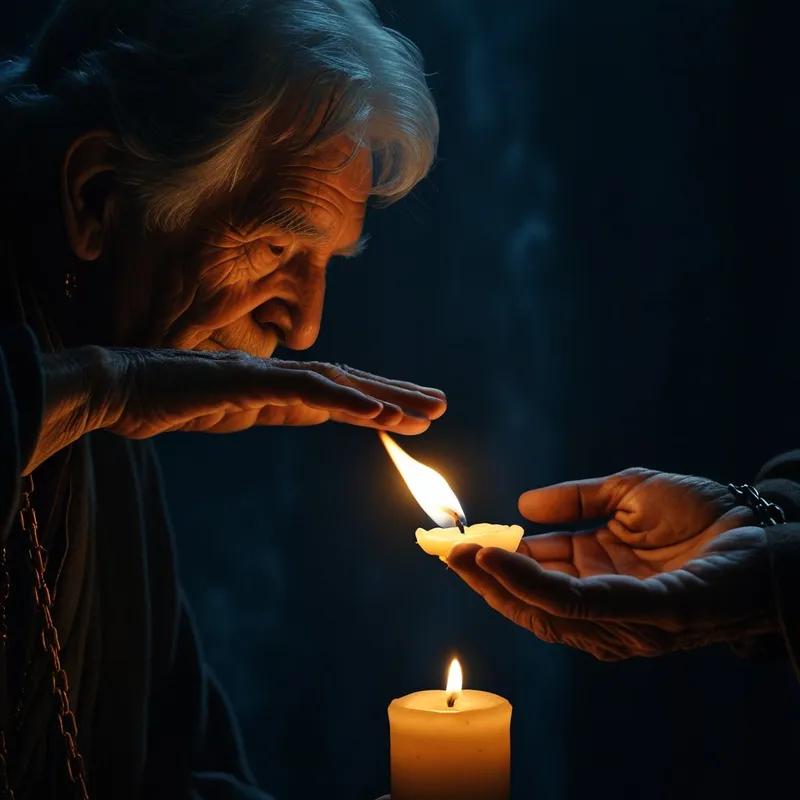
From that one, precarious source, the miracle unfolds. The flame touches the wick of a neighbor’s candle. A second star is born. That new light turns, and its fire is offered to another. One by one, person by person, the gift is passed. A chain of illumination, silent save for the soft shush of wax meeting flame and the shared, awed inhalation of the crowd. The dark, which moments before felt absolute and impenetrable, is now perforated, then fractured, then flooded. What was a void becomes a galaxy. A hundred, a thousand individual points of light—each distinct, each fragile—merge into a single, breathing sea of gold. The faces, once hidden, are revealed: etched with tears, softened by wonder, united in a silent, radiant hymn. The service ends not with a shout, but with the congregation stepping out into the winter night, each carrying their own little sun back into the world, a constellation of hope dispersing into the sleeping streets.
Cultural Origins & Context
This ritual is a relatively modern crystallization of ancient, deep-rooted human practices, woven into the fabric of Christianity. Its direct antecedents are less than two centuries old, popularized in the 19th century, yet it draws from a wellspring of winter solstice traditions far older. It functions as a liturgical drama, a participatory re-enactment of the core Christological narrative. The minister or priest acts as the primary storyteller and ritual initiator, but the true agents of the myth are the congregants themselves.
Societally, its function is multifaceted. It serves as a powerful rite of passage from the old year to the new, conducted in the symbolic womb of communal darkness. It reinforces social bonds through a shared, non-verbal, somatic experience—the collective act of receiving and giving light. In an age of electric glare, it returns participants to a primal relationship with fire, making them not just observers, but essential carriers of the narrative. It is a myth told not only with words, but with the body, the breath, and the most elemental of symbols: light itself.
Symbolic Architecture
At its heart, the myth is a masterclass in the symbolism of consciousness emerging from the unconscious. The service’s structure maps a profound psychic process.
The most profound light is not that which banishes the dark, but that which is born from within it, acknowledging the dark as its necessary womb.
The Darkness is not merely absence; it is the Unconscious, the fertile void, the potential that precedes form. It is the year’s accumulated shadows, personal grief, existential uncertainty. The Single Candle is the Ego, or more accurately, the nascent Self. It is the first spark of individual awareness, terribly fragile and isolated, yet containing the entire pattern. The Sharing of the Light represents the process of relationship and empathy—participation mystique. My light does not diminish when I give it to you; it multiplies. This is the alchemy of community: individual consciousnesses linking to form a greater field of awareness. The resulting Sea of Light symbolizes the achieved Individuation, where the individual is both a distinct point of light and an inseparable part of a luminous whole. The Silence is the non-verbal, intuitive space where this transmission occurs, beyond doctrine, in the realm of direct experience.
The Dreamer's Resonance
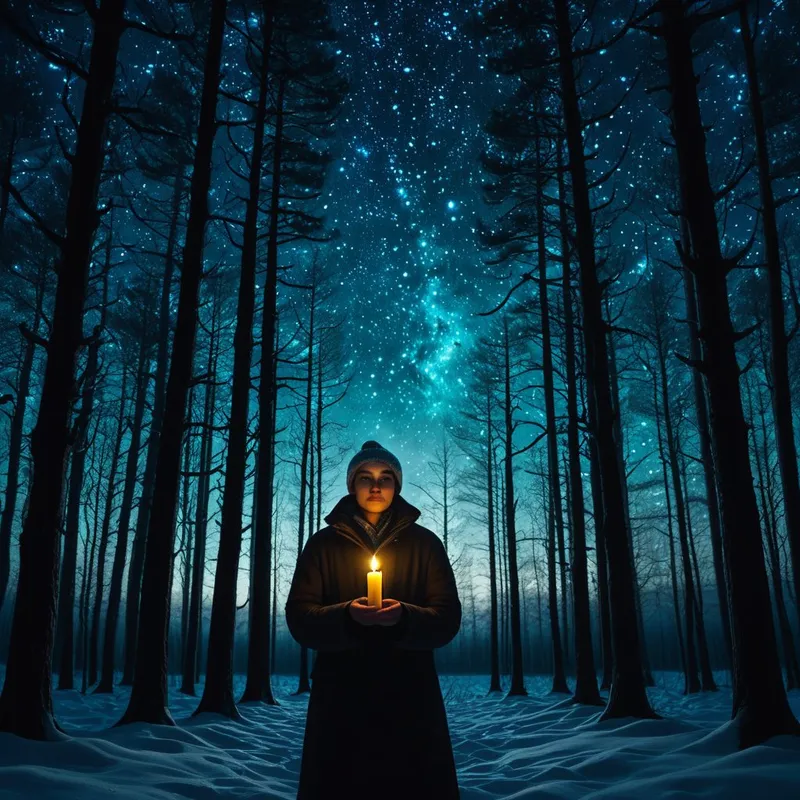
When this mythic pattern surfaces in modern dreams, it seldom appears as a literal church service. Instead, the dreamer may find themselves in a vast, dark space—a warehouse, a cave, an empty theater. The feeling is one of profound solitude and anticipation. The crucial action is the discovery or reception of a small, self-contained source of light: a match, a flashlight with dying batteries, a bioluminescent seed.
The somatic process is one of kindling. The dream-ego, often feeling lost or paralyzed in the expanse of its own inner darkness (depression, confusion, transition), is tasked with tending to this fragile, endogenous spark. The psychological movement is from passive despair to active guardianship. To dream of successfully lighting another’s candle from your own suggests a readiness to share a hard-won insight or compassion. To dream of your candle being extinguished by a gust of wind speaks to a fear that one’s inner light or hope is too vulnerable to sustain. These dreams mark threshold moments where the psyche is attempting to generate its own illumination from within, practicing the act of hope as a somatic, rather than merely intellectual, reality.
Alchemical Translation
The alchemical journey mirrored here is the solve et coagula—dissolve and coagulate—applied to the spirit. First, the solve: the conscious mind, with all its daily certainties and distractions, is dissolved into the communal darkness. The ego’s isolated stance is relinquished. One is returned to the prima materia of the soul, the undifferentiated state of potential that feels like loss but is actually fertile ground.
Then, the coagula, the miraculous coagulation: from this shared dissolution, a new, more resilient form of consciousness is born. The light does not come from outside to rescue; it is elicited from within the community itself, from person to person.
Individuation is not a solitary hero’s journey into the light, but the courage to become a conduit, allowing the light to pass through you, transforming you in the transmission.
For the modern individual, the ritual models a path through existential winter. Our personal “longest nights”—of failure, grief, or meaninglessness—are not anomalies to be avoided, but the necessary dark chapel in which a new kind of light can be kindled. The myth teaches that our first task is not to violently dispel our darkness, but to gather with it, to sit in its silent truth. From that acceptance, a small, authentic flame can be struck—a commitment, a forgiveness, a simple act of kindness. And the ultimate alchemy is understanding that this flame is not for hoarding. Our healing is found in turning to the other—the inner other (our neglected shadow) and the outer other (our community)—and offering our fire. In that offering, our individual, flickering light is integrated into a constellation, finding its meaning and its enduring strength in connection. We leave the service not simply comforted, but commissioned, carrying a piece of the communal sun back into the personal night, now knowing we are both its keeper and its gift.
Associated Symbols
Explore related symbols from the CaleaDream lexicon: