Charon's Ferry Myth Meaning & Symbolism
The myth of the grim ferryman who transports souls across the river Styx, demanding a coin for passage into the realm of Hades.
The Tale of Charon's Ferry
Listen, and hear of the final journey, the one no living foot may walk. When the last breath sighs from the body and the light flees the eyes, the soul does not linger. It is drawn, a wisp of mist, down, ever down, through sunless caverns and echoing passages, to the very edge of the world of the dead.
There flows the Styx, a wide, black, and implacable water. Its currents are not of water as we know it, but of ancient oaths and forgotten grief. On this side, the asphodel meadows stretch, wan and grey, crowded with the murmuring, insubstantial shades of the newly dead—a throng of confusion and whispered regret. They mill at the shore, a silent, desperate host.
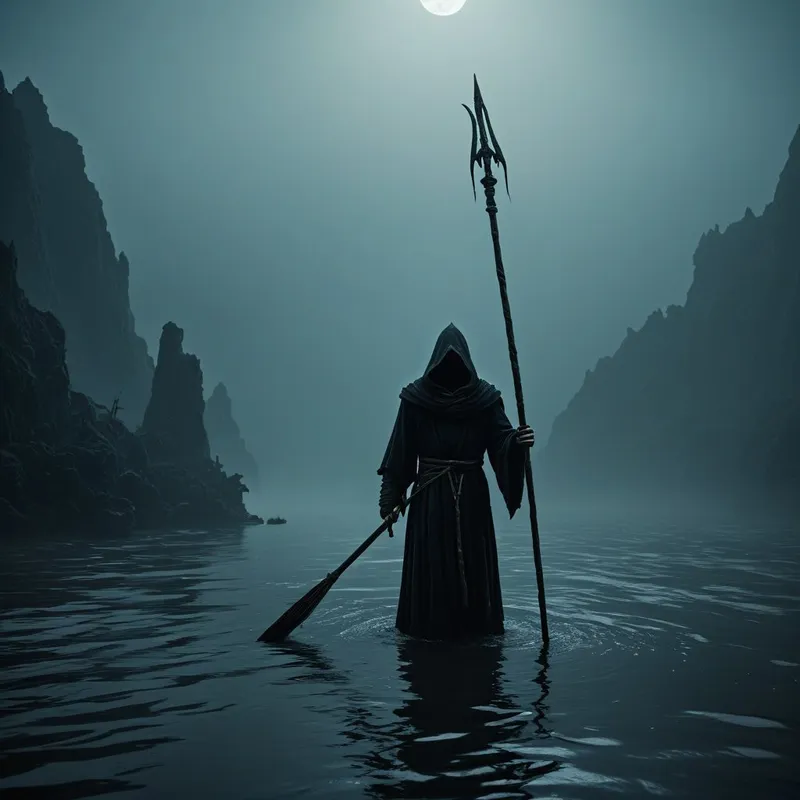
And on the shore waits He. Charon. You will know him by his grim aspect: a figure gaunt and powerful, draped in a mantle of perpetual dusk. His eyes are hollow pits, his beard is matted with the damp of the river. In his gnarled hands rests not an oar, but a long pole, which he uses to push his skiff—a vessel of bleached, ancient wood—through the unmoving waters.
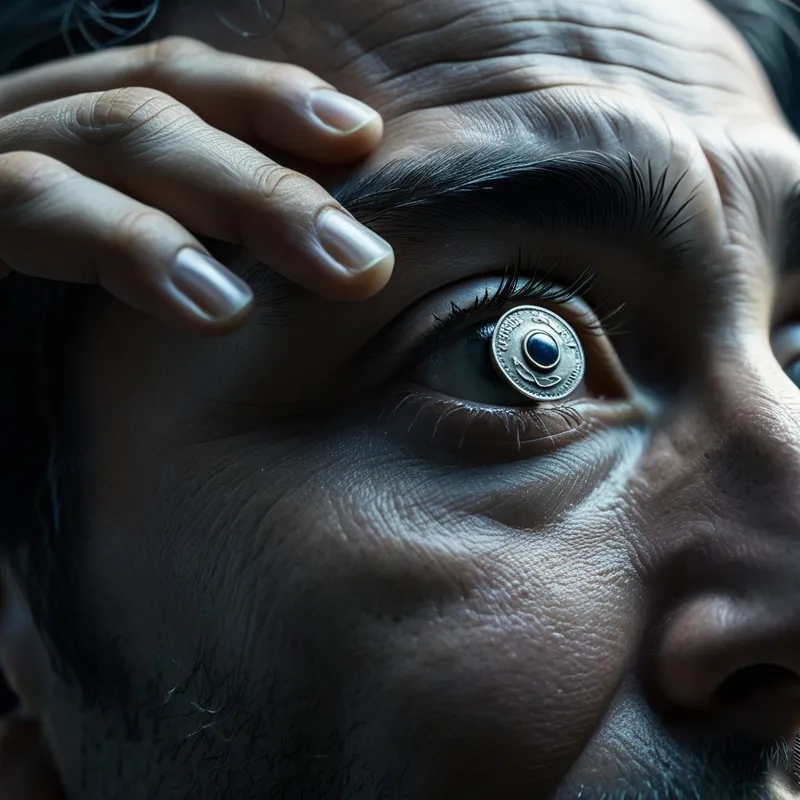
This is his domain, his sacred, somber duty. He speaks to no one, offers no comfort. He only waits. For the coin. Each shade must present the fare: a single obol, placed upon the tongue or over the eyes by the loving hands of those left behind. The coin is a key, a permission, a sacred contract.
Watch as a shade, clearer and more distinct than the wailing masses, approaches the bank. The obol gleams dully in its hand. Charon extends a skeletal palm. The coin is placed. A single, slow nod. The shade is permitted to board the fragile craft. All others—the poor, the unmourned, the unburied—are left behind. They must wander the desolate shore for a hundred years, their whispers becoming part of the river’s lament.
Then, the pole bites into the black mud. The ferry pushes off. The crossing is silent, profound, a lacuna in existence. The waters are thick and still, reflecting nothing. The only sound is the drip from Charon's pole. On the far shore, the true gates of Hades loom, guarded by the monstrous Cerberus. As the skiff grinds against the far bank, the shade disembarks, passing from the realm of transition into the realm of judgment and eternal abode. Charon does not say farewell. He is already poling back, his empty boat cutting through the gloom, forever ferrying, forever waiting, the eternal conductor of the ultimate transition.
Cultural Origins & Context
The myth of Charon’s ferry is not the product of a single poet, but a collective cultural understanding that coalesced over centuries, finding its most enduring form in epic poetry like Homer’s Odyssey and later in Virgil’s Aeneid. It was a folk belief, a practical and spiritual answer to the terrifying question of “what happens next?” This story provided a map for the uncharted territory of death.
The ritual was tangible. Families would carefully place the obol on the corpse, ensuring their loved one could pay the fare. This act was a final act of care, a critical social duty. To be left unburied without the coin was a fate worse than death—eternal limbo. The myth thus enforced social bonds and funeral rites, making the community responsible for the soul’s safe passage. It was told not just by bards, but enacted at every graveside, a myth woven directly into the fabric of societal obligation and love.
Symbolic Architecture
At its heart, Charon’s ferry is a masterful symbol of the liminal—the threshold state. The river Styx is not just a boundary but the embodiment of the transition itself.
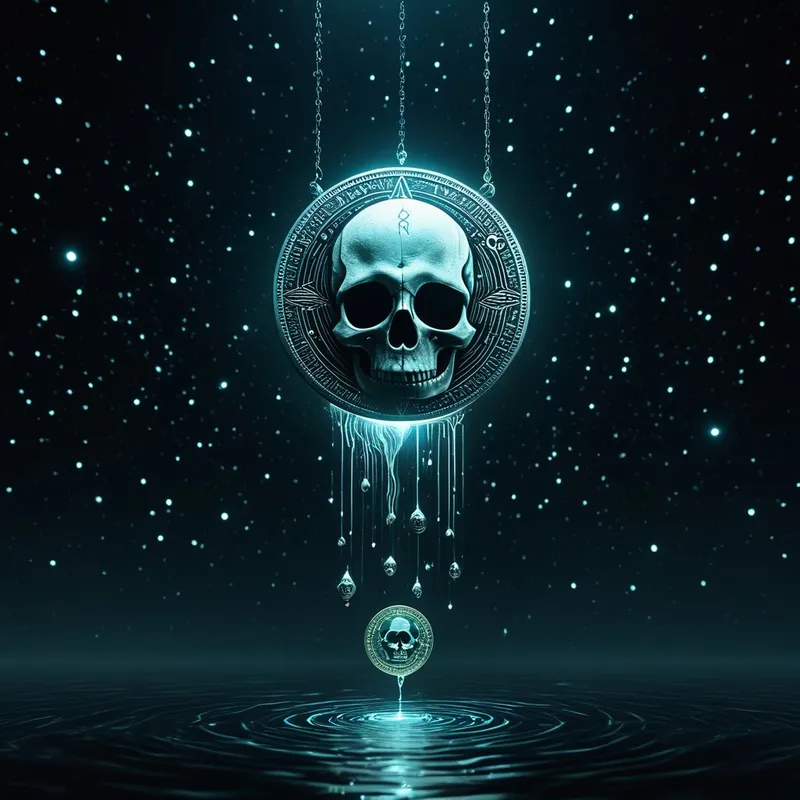
The coin is the weight of a life, rendered into a single, negotiable token. It is the value of one’s passage, paid for by the love and duty of the community, or earned by the completeness of one’s life.
Charon himself is the ultimate psychopomp, but a starkly impersonal one. He is not a guide but a gatekeeper, a function of the cosmos. He represents the inexorable, non-negotiable law of nature: all things must end, and all endings require a price. The ferry ride is the moment of psychic dissolution, where the identity of the living is stripped away during the crossing, preparing the essence for what comes after. The far shore is not just the underworld, but the completely other state of being—the unconscious, the unknown outcome, the transformed self.
The Dreamer's Resonance
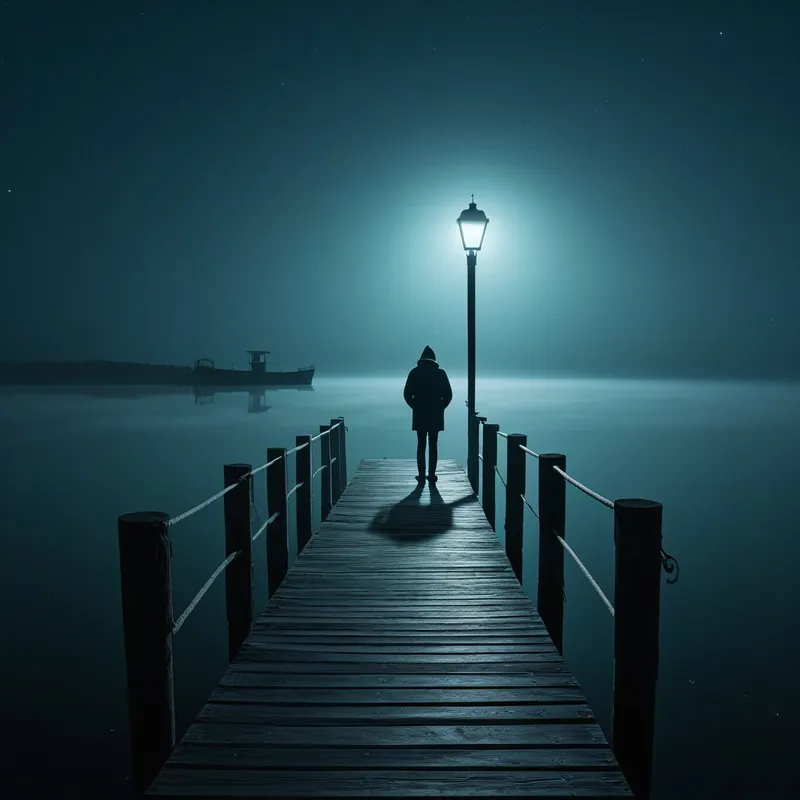
When this myth stirs in the modern dreamer, it rarely appears as a classical tableau. Instead, one dreams of missed ferries, of searching frantically for lost change at a tollbooth on a foggy highway, of standing on a empty pier watching a departure without being able to call out. The somatic feeling is one of anxious paralysis, of a crucial deadline silently passing.
This dream pattern signals a profound psychological process: the ego’s resistance to a necessary ending. The “coin” that is missing represents whatever psychic payment the dreamer is unwilling or unable to make to move forward. It could be the acknowledgment of a grief, the acceptance of a concluded chapter (a job, relationship, or identity), or the surrender of an old way of being. The dream Charon is the uncompromising voice of the Self, insisting that to cross into a new phase of life, something must be left behind, and a price—often of conscious acceptance—must be paid.
Alchemical Translation
The alchemical journey of individuation is a series of deaths and rebirths. Charon’s ferry models the mortificatio stage—the necessary dissolution.
To be ferried is to submit to a process greater than the ego’s will. The conscious mind must relinquish control and be carried by the dark, silent currents of the unconscious toward re-formation.
The modern individual’s “crossing” might be the end of a career, the loss of a foundational belief, or a deep depression. The “obol” is the conscious acknowledgment and payment of attention to this ending. We must “place the coin on our own eyes”—see the truth of the ending clearly and offer up our old identity as payment. Charon, the grim ferryman, is then recognized not as an external monster, but as an inner archetypal function of profound integrity. He ensures no part of us crosses half-formed. The silent journey across the interior Styx is a sacred, if terrifying, incubation. We disembark on the far shore not as we were, but stripped to an essential core, ready to face the guardians of our own deepest psyche and be judged, not for punishment, but for integration into a new, more complete whole.
Associated Symbols
Explore related symbols from the CaleaDream lexicon: