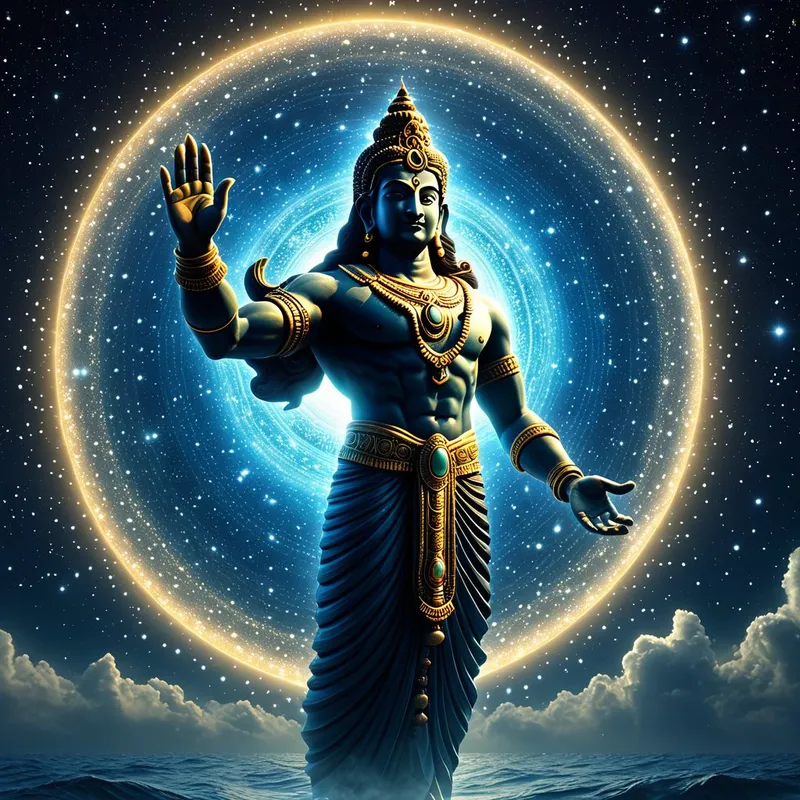
Chakra Myth Meaning & Symbolism
The story of Vishnu's celestial discus, a weapon of cosmic order forged from sacred sacrifice, embodying the soul's journey toward integration.
The Tale of Chakra
In the time before time, when the cosmos was a churning milk of potential, a shadow fell upon the worlds. A darkness, born of imbalance and swollen with pride, threatened to unravel the delicate threads of Dharma. It was a demon, armored in ignorance, whose very breath was chaos. The heavens trembled, and the sages’ fires guttered low. The cry went out, a vibration through the fabric of being, reaching the shores of the boundless causal ocean.
There, upon the coils of the great serpent Ananta Shesha, the Preserver stirred. Vishnu opened his eyes, and in that gaze was the patience of eternity and the resolve of creation itself. The time for preservation had sharpened into the moment for decisive action. But the adversary was no ordinary foe; it was a manifestation of a fundamental rift, requiring a weapon not of mere destruction, but of supreme realignment.
The gods gathered, their radiance dimmed by fear. They knew of no forge in the three worlds hot enough, no material pure enough, to craft what was needed. Then, a memory older than the mountains surfaced—the memory of the Churning of the Ocean. They recalled the great mountain Mandara, used as a churn, and the primordial fires of that effort. From this memory, a resolve was forged.
With a will that moved the constellations, Vishnu reached into the heart of sacred sacrifice. He drew forth the essence of the sun, its blinding, unwavering truth. He gathered the remnants of the cosmic churn, the solidified nectar of immortality. And finally, he took a fragment of his own inviolable consciousness, the core of his duty to Dharma. These three—truth, eternity, and duty—he offered to the celestial forge.
The universe held its breath. There was no sound of hammer on anvil, only the silent, intense concentration of divine intent. From the confluence of these supreme essences, it manifested. Not with a clang, but with a hum—a deep, resonant om that stabilized the trembling heavens. It was a discus, perfect and flawless, thinner than a thought, sharper than discrimination. It glowed with an inner light, its edge a circumference of pure energy, its center a spinning vortex of absolute order. This was the Sudarshana Chakra.
When the demon of chaos rose for its final assault, Vishnu did not hurl the chakra with anger, but with the serene detachment of a surgeon removing a malignancy. The discus sang through the void, a spiraling hymn of law. It did not merely strike; it unmade the form of the imbalance, shearing through illusion and reintegrating the scattered darkness back into the whole. Where it passed, chaos became cosmos, discord became harmony. It returned to its master’s hand, humming softly, a promise etched in light: that wherever order frays, the wheel of truth will turn.

Cultural Origins & Context
The myth of the Sudarshana Chakra is woven deeply into the epic and Puranic literature of Hinduism, most prominently in texts like the Mahabharata, the Vishnu Purana, and the Bhagavata Purana. It was not a tale told merely for wonder, but a theological and philosophical anchor. Passed down by sages (rishis) and storytellers (sutas), its function was multifaceted.
In a culture that visualized the divine in form (murti), the chakra in Vishnu’s hand was a constant, silent sermon. It represented the active, dynamic aspect of preservation—not a passive watching, but an engaged enforcement of cosmic law. Societally, it reinforced the principle of dharma as the essential framework of the universe and human life. The chakra was the divine instrument that cut down (asuras) not just of the outer world, but metaphors for the inner adversaries of greed, ego, and falsehood. Its presence in iconography served as a reminder that the divine principle of order is ever-present, razor-sharp, and ultimately restorative.
Symbolic Architecture
The Sudarshana Chakra is a masterpiece of symbolic condensation. It is a wheel, the primal symbol of cycles, time (kalachakra), and completion. Its spinning motion represents the dynamic, cyclical nature of the universe and consciousness. It has no beginning and no end, symbolizing the eternal, self-sustaining nature of Dharma.
The chakra is the psyche’s own instrument of discernment, the rotating blade that separates the composite from the essential, the egoic fiction from the soul’s truth.
Psychologically, it represents the fully integrated Self. Its six spokes (often depicted) can be seen as the harmonized faculties of the mind—will, intellect, emotion, intuition, consciousness, and the unconscious—united around a central, indivisible axis. It is forged from “truth, eternity, and duty,” the very materials of an authentic life. As a weapon, it is not an agent of blind destruction, but of precise discrimination. It cuts away projections, complexes, and psychic inflation, not to annihilate, but to reveal the true shape of the individual beneath the armor of persona.
The Dreamer's Resonance
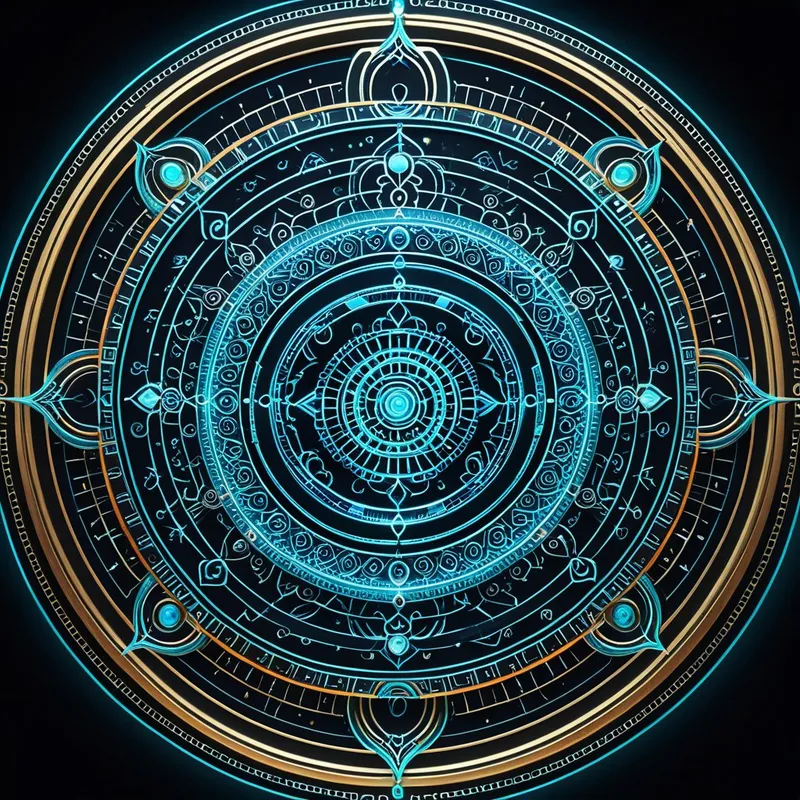
When the symbol of the chakra spins into modern dreams, it often signals a critical phase of psychic reorganization. The dreamer may not see Vishnu, but they might encounter a spinning wheel of light, a floating metallic disc, or feel a profound sensation of a “cutting through” or a “centering.”
Somatically, this can correlate with feelings of tension release, particularly along the spine (the central axis of the body’s subtle energy system, which shares the name “chakra”), or a sudden, clear knowing. Psychologically, it marks the unconscious activating its own integrative function. The dream-ego is often faced with a tangled, chaotic situation—a problem that seems insurmountable. The appearance of the chakra symbol represents the psyche’s innate capacity to bring order. It is the Self intervening, applying the “sword of discrimination” to cut through emotional entanglements, obsessive thoughts, or moral confusions. The dream is reporting that a process of inner purification and alignment is underway, often felt as a difficult but necessary severing of outdated attachments.
Alchemical Translation
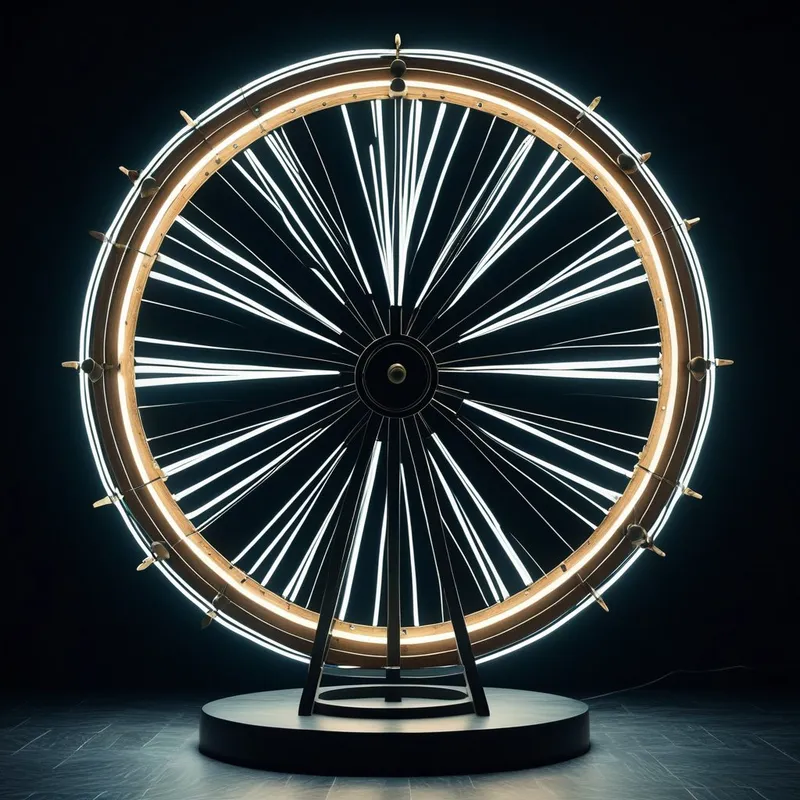
The myth of the chakra models the alchemical process of individuation—the journey toward psychic wholeness—with stunning clarity. The “demon” is the unintegrated shadow, the complex or trauma that disrupts the inner dharma. The plea of the “gods” is the cry of our fragmented conscious faculties, aware of the disturbance but powerless to resolve it.
The alchemical forge is the crucible of conscious engagement—therapy, meditation, creative work, or any deep self-reflection. Here, we must gather our own sacred materials: the essence of the “sun” (our conscious clarity and light of awareness), the “nectar of the churn” (the hard-won wisdom from our life’s struggles), and a fragment of our “divine consciousness” (our highest values and sense of purpose).
The creation of the personal chakra is the act of forging a conscious attitude capable of confronting the unconscious not with repression, but with transformative insight.
The resulting “weapon” is not for outer battle, but for inner surgery. It is the cultivated faculty of discernment, the ability to rotate a situation in the light of consciousness until its true nature is revealed. To “wield the chakra” is to act from this integrated center. It means making a decision that cuts through collective expectations to honor one’s own law, or severing a toxic pattern with precision rather than rage. The chakra returns to the hand, symbolizing that this power is not expended but integrated; each act of truthful discrimination strengthens the central axis of the Self. Thus, the myth translates from cosmic preservation to a personal mandate: to become the artificer of your own wholeness, spinning chaos into cosmos within the sanctuary of your own soul.
Associated Symbols
Explore related symbols from the CaleaDream lexicon: