Cadmus' Sown Teeth Myth Meaning & Symbolism
A hero, following divine guidance, slays a sacred dragon and sows its teeth, which sprout into armed warriors who fight until only five remain.
The Tale of Cadmus’ Sown Teeth
Hear now the tale of [Cadmus](/myths/cadmus “Myth from Greek culture.”/), son of the Phoenician king, a man marked by loss and guided by the whispers of the gods. His sister, the radiant Europa, had been stolen from the seashore by a god in disguise. Sent to find her, [Cadmus](/myths/cadmus “Myth from Greek culture.”/) wandered the wild earth, a quest without end, until the voice of [Apollo](/myths/apollo “Myth from Global/Universal culture.”/) himself echoed from the sanctum of Delphi. “Abandon the search,” the god declared. “Follow a cow with a moon-mark on its flank. Where she lies down from weariness, there you shall found a city.”
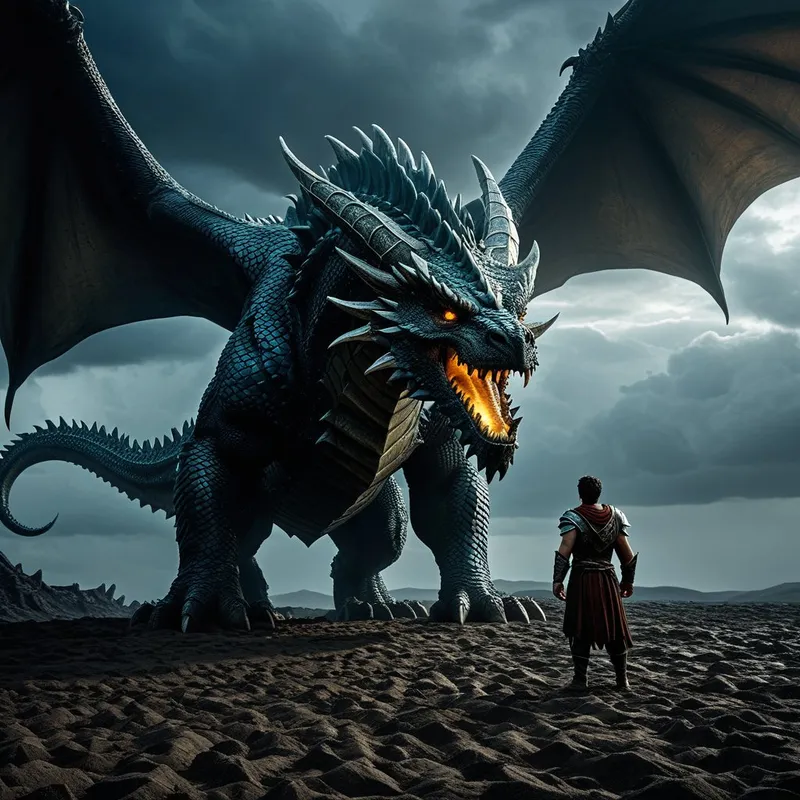
So Cadmus followed the sacred heifer across rugged lands, through valleys and over hills, until in the land of Boeotia, the beast sank to its knees beside a clear spring. Grateful, Cadmus sent his companions to fetch [water](/myths/water “Myth from Chinese culture.”/) for a sacrifice of thanks to [Athena](/myths/athena “Myth from Global/Universal culture.”/). But this was no ordinary spring. It was the sacred pool of Ares, guarded by a serpent-[dragon](/myths/dragon “Myth from Chinese culture.”/), a creature born of the god’s own fury, its scales like dark bronze, its eyes pools of primal fire.
[The dragon](/myths/the-dragon “Myth from Chinese culture.”/) fell upon the men, its venom a dark mist, its coils crushing bone. Returning to find his companions slain, Cadmus was consumed by a grief that hardened into a terrible purpose. This was not mere misfortune; it was a divine challenge laid in his path. Seizing a massive boulder, he hurled it with all his strength against the beast’s armored head. When it reeled, he drove his spear deep into the creature’s side, pinning it to an ancient oak. [The earth](/myths/the-earth “Myth from Hindu culture.”/) shook as the dragon of Ares thrashed and died.
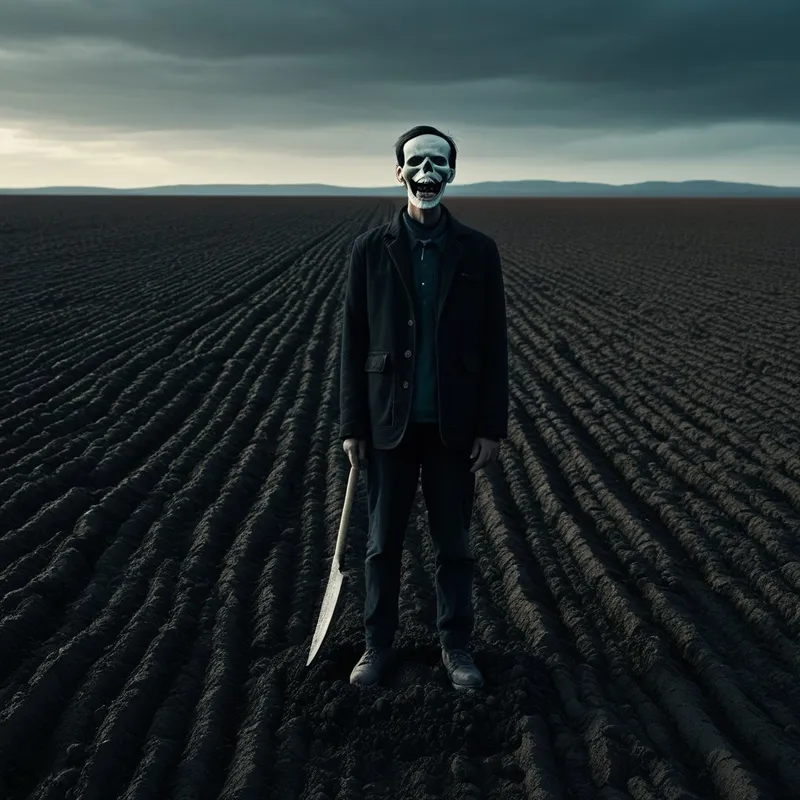
As Cadmus stood panting over the colossal corpse, a voice, perhaps Athena’s, carried on [the wind](/myths/the-wind “Myth from Various culture.”/). “Take the teeth of the vanquished. Sow them in the earth you have consecrated with blood.” With a heavy heart, for he knew this act would bind him to the god of war forever, Cadmus pried the gleaming teeth from the dragon’s jaw. He plowed a furrow in the rich, dark soil, and with a fateful cast, scattered the teeth like seeds.
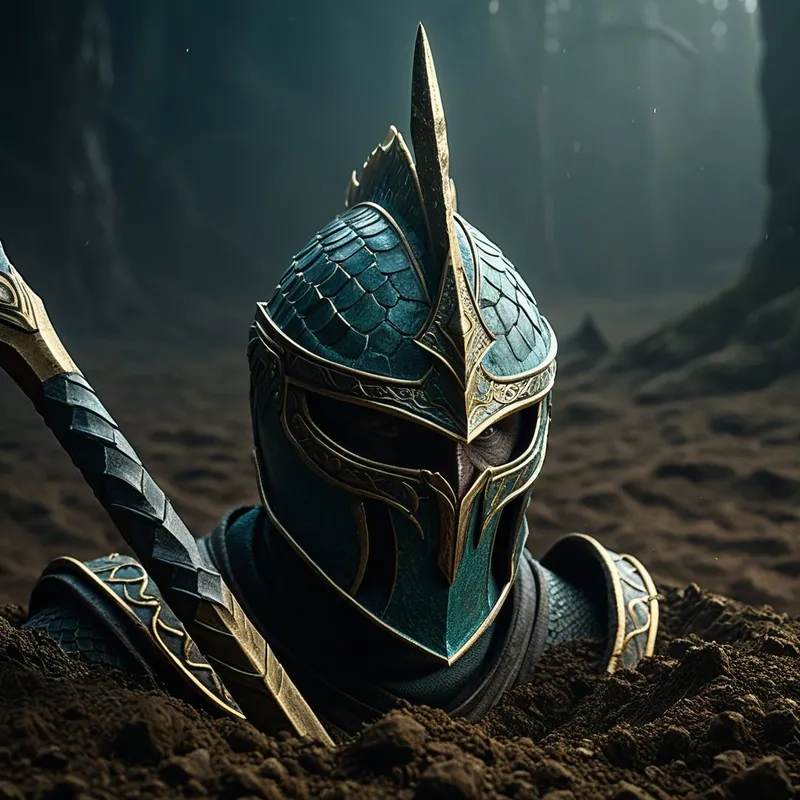
For a moment, silence. Then, the earth began to stir. The soil bulged and cracked. From the ruptured ground, points of spears emerged, then helmets of polished bronze, then the fierce, fully-formed bodies of men—the Spartoi. They clambered from [the womb](/myths/the-womb “Myth from Various culture.”/) of the earth, armed and shouting, their eyes burning with immediate, inexplicable rage. They did not look to Cadmus as their creator, but at each other as mortal enemies.
On a silent signal, they fell upon one another in a storm of clashing bronze and furious cries. The field became a whirlwind of violence, brother killing brother, until the ground was soaked anew. When the dust settled, only five remained, their fury spent, their purpose suddenly unclear. It was then that Cadmus stepped forward. Following another divine instruction, he cast a stone among them. The five warriors turned from their fratricide, their conflict now directed outward, and bowed before the hero. With these five survivors, Cadmus founded the mighty city of Thebes, its first lords and the ancestors of its noble lines, born from sacrifice, conflict, and a dragon’s grim harvest.
Cultural Origins & Context
This foundational myth comes to us primarily from the epic cycles and later sources like Ovid’s [Metamorphoses](/myths/metamorphoses “Myth from Greek culture.”/). It was a tale told to explain the origins of one of Greece’s most powerful city-states, Thebes. For the ancient Greeks, such myths were not mere stories but the sacred history that connected a people to their land and the gods. The myth of Cadmus served a crucial societal function: it provided a divine and heroic charter for Thebes’ existence, explaining its fierce, warlike character (born from the Spartoi of Ares) and its sophisticated culture (guided by Cadmus, who later brought the Phoenician alphabet to Greece).
The tale was likely performed by [bards](/myths/bards “Myth from Celtic culture.”/) and rhapsodes, a dramatic oral history that reinforced cultural values of piety (following Apollo’s oracle), resilience (founding a city from catastrophe), and the grim understanding that civilization is often born from and sustained by controlled violence. Cadmus is not a conqueror who finds empty land; he is a founder who must engage in a sacred, terrifying dialogue with the local numinous power—the dragon—and transmute its essence into the fabric of his new society.
Symbolic Architecture
At its [heart](/symbols/heart “Symbol: The heart symbolizes love, emotion, and the core of one’s existence, representing deep connections with others and self.”/), this is a myth of alchemical [foundation](/symbols/foundation “Symbol: A foundation symbolizes the underlying support systems, values, and beliefs that shape one’s life, serving as the bedrock for growth and development.”/). The [hero](/symbols/hero “Symbol: A hero embodies strength, courage, and the ability to overcome significant challenges.”/) must navigate a [sequence](/symbols/sequence “Symbol: The symbol of ‘sequence’ often signifies the order of events and the progression towards a desired outcome or goal.”/) of impossible tasks that model the process of bringing order from [chaos](/symbols/chaos “Symbol: In Arts & Music, chaos represents raw creative potential, uncontrolled expression, and the breakdown of order to forge new artistic forms.”/). The [dragon](/symbols/dragon “Symbol: Dragons are potent symbols of power, wisdom, and transformation, often embodying the duality of creation and destruction.”/) is the untamed, chthonic [spirit](/symbols/spirit “Symbol: Spirit symbolizes the essence of life, vitality, and the spiritual journey of the individual.”/) of the land—the wild, defensive, and potentially destructive force that guards the [source](/symbols/source “Symbol: The origin point of something, often representing beginnings, nourishment, or the fundamental cause behind phenomena.”/) of [life](/symbols/life “Symbol: The symbol of ‘Life’ represents a journey of growth, interconnectedness, and existential meaning, encompassing both the joys and challenges that define human experience.”/) (the spring). To claim the land for civilization, this force must be confronted, sacrificed, and its raw power transformed.
The dragon is not merely an enemy to be killed, but a potency to be harnessed. Its death is not an end, but a necessary dissolution.
The sowing of the [teeth](/symbols/teeth “Symbol: Teeth in dreams often symbolize personal power, self-image, and the fear of losing control or aging.”/) is the critical act of [transmutation](/symbols/transmutation “Symbol: A profound, alchemical process of fundamental change where one substance or state transforms into another, often representing spiritual evolution or personal metamorphosis.”/). Cadmus takes the hard, mineral essence of the dragon—its [teeth](/symbols/teeth “Symbol: Teeth in dreams often symbolize personal power, self-image, and the fear of losing control or aging.”/), symbols of aggression, [defense](/symbols/defense “Symbol: A protective mechanism or barrier against perceived threats, representing boundaries, security, and resistance to external or internal challenges.”/), and primal bite—and plants them in the receptive [earth](/symbols/earth “Symbol: The symbol of Earth often represents grounding, stability, and the physical realm, embodying a connection to nature and the innate support it provides.”/) (the feminine, generative principle). This is the archetypal [pattern](/symbols/pattern “Symbol: A ‘Pattern’ in dreams often signifies the underlying structure of experiences and thoughts, representing both order and the repetitiveness of life’s situations.”/) of sacrificing a lower form of power to generate a higher one. However, the first harvest is not [harmony](/symbols/harmony “Symbol: A state of balance, agreement, and pleasing combination of elements, often associated with musical consonance and visual or social unity.”/), but fratricidal conflict. The Spartoi represent the undifferentiated, chaotic [energy](/symbols/energy “Symbol: Energy symbolizes vitality, motivation, and the drive that fuels actions and ambitions.”/) of the dragon erupting back into [the world](/myths/the-world “Myth from Tarot culture.”/) in [human](/symbols/human “Symbol: The symbol of a human represents individuality, complexity of emotions, and social relationships.”/) form. They are raw, unintegrated psychic forces—potential that must undergo a coincidentia oppositorum—a clash of opposites—to be refined.
The survival of the five represents the [emergence](/symbols/emergence “Symbol: A process of coming into being, rising from obscurity, or breaking through a barrier, often representing birth, transformation, or revelation.”/) of a stable, usable [structure](/symbols/structure “Symbol: Structure in dreams often symbolizes stability, organization, and the framework of one’s life, reflecting how one perceives their environment and personal life.”/) from [chaos](/myths/chaos “Myth from Greek culture.”/). Five is often a [number](/symbols/number “Symbol: Numbers in dreams often symbolize meaning, balance, and the quest for understanding in the dreamer’s life, reflecting their mental state or concerns.”/) of [integration](/symbols/integration “Symbol: The process of unifying disparate parts of the self or experience into a cohesive whole, often representing psychological wholeness or resolution of internal conflict.”/) (the four directions plus the center, the [pentagram](/myths/pentagram “Myth from Pythagorean culture.”/)). These five become [the cornerstone](/myths/the-cornerstone “Myth from Biblical culture.”/) of the new [city](/symbols/city “Symbol: A city often symbolizes community, social connection, and the complexities of modern life, reflecting the dreamer’s relationships and societal integration.”/), suggesting that a functional society (or a functional [psyche](/myths/psyche “Myth from Greek culture.”/)) is built not from the elimination of conflict, but from its necessary, catalytic [resolution](/symbols/resolution “Symbol: In arts and music, resolution refers to the movement from dissonance to consonance, creating a sense of completion, release, or finality in a composition.”/).
The Dreamer’s Resonance
When this myth stirs in the modern soul, it often manifests in dreams of profound inner conflict and foundational crisis. One may dream of planting something precious (a tooth, a seed, a part of oneself) only to reap a harvest of hostile figures or situations. These are the “sown teeth” of one’s own actions, decisions, or unintegrated shadow material.
The somatic experience is one of deep anxiety and tension—the feeling of having unleashed something one can no longer control. The armed warriors born from the soil represent autonomous complexes, bundles of thought and emotion that have split off from the conscious ego and now wage war internally. They might appear as dream figures of argumentative colleagues, hostile family members, or faceless soldiers, all reflecting aspects of the dreamer’s own psyche in conflict.
This dream pattern signals that the dreamer is in a “Cadmean” phase: they have slain an old “dragon” (ended a job, a relationship, a long-held belief) and are now in the terrifying, fertile period where the seeds of that action are sprouting. The initial result feels like civil war. The dream’s imperative is not to flee, but to witness the conflict through to its necessary conclusion, to see which five foundational principles will survive to build the next “city” of [the self](/myths/the-self “Myth from Jungian culture.”/).
Alchemical Translation
For the individual on the path of individuation, the myth of Cadmus maps the terrifying yet essential process of psychic transmutation. The journey begins with the [nigredo](/myths/nigredo “Myth from Alchemical culture.”/): the loss of Europa (innocence, a previous identity) and the slaughter of companions (the [death](/myths/death “Myth from Tarot culture.”/) of old supports and attitudes). This dark night forces [the ego](/myths/the-ego “Myth from Jungian culture.”/) to consult the inner oracle (the Self, or guiding principle) and follow its strange guidance.
The slaying of the dragon is the confrontation with [the Shadow](/myths/the-shadow “Myth from Jungian culture.”/) in its most potent, terrifying form—the aggressive, possessive, territorial aspects of the unconscious that guard our deepest resources. To integrate this power, one must “slay” its autonomous, monstrous form. But integration requires the [albedo](/myths/albedo “Myth from Alchemical culture.”/), the washing clean. Here, it is the sowing. One takes the hard-won insight (the dragon’s tooth) and plants it into the unconscious (the tilled earth) with intention.
The sown field is the psyche itself, and the armed men are the personified contents that must fight for supremacy until a new, conscious structure can emerge.
The inevitable internal conflict that follows—the warring Spartoi—is not a failure, but the citrinitas, the fiery stage of differentiation and struggle. The ego, like Cadmus, must stand witness to this civil war without prematurely taking sides, allowing the psychic opposites to clash until they exhaust themselves. The outcome is the [rubedo](/myths/rubedo “Myth from Alchemical culture.”/): the emergence of the “five survivors.” These are the core, vital aspects of the personality that have proven strong enough to endure the inner conflict. They become the foundational lords of a new, more conscious and resilient psychic order—the inner Thebes. The city is not built in spite of the dragon, but because of it; the Self is not realized by avoiding the Shadow, but by courageously engaging with its transformative, and terrifying, potential.
Associated Symbols
Explore related symbols from the CaleaDream lexicon: