Cú Chulainn's Chariot Myth Meaning & Symbolism
The myth of the Hound of Ulster's war chariot, a sacred vehicle of divine fury and mortal restraint, steered by a loyal charioteer through epic battle.
The Tale of Cú Chulainn's Chariot
Hear now the clamor that shakes the very roots of the Ulster. The air is thick with the scent of crushed grass and iron, a promise of slaughter borne on the wind from the south. The men of Ulster lie stricken, cursed by the Mórrígan in her wrath, and the armies of Medb march unchecked to steal the great Brown Bull of Cooley. All stands forfeit. All, save one.
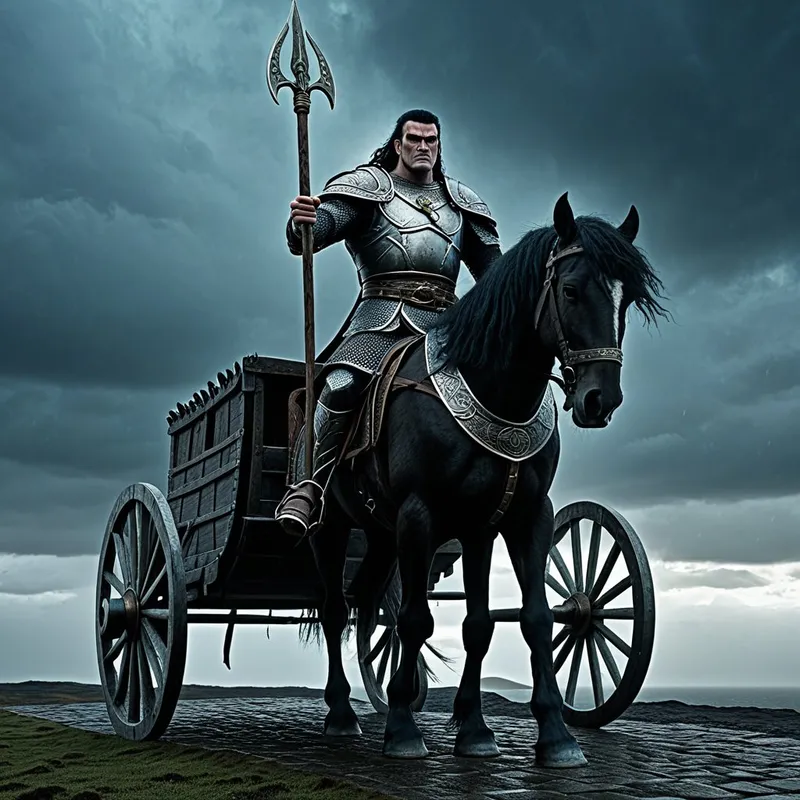
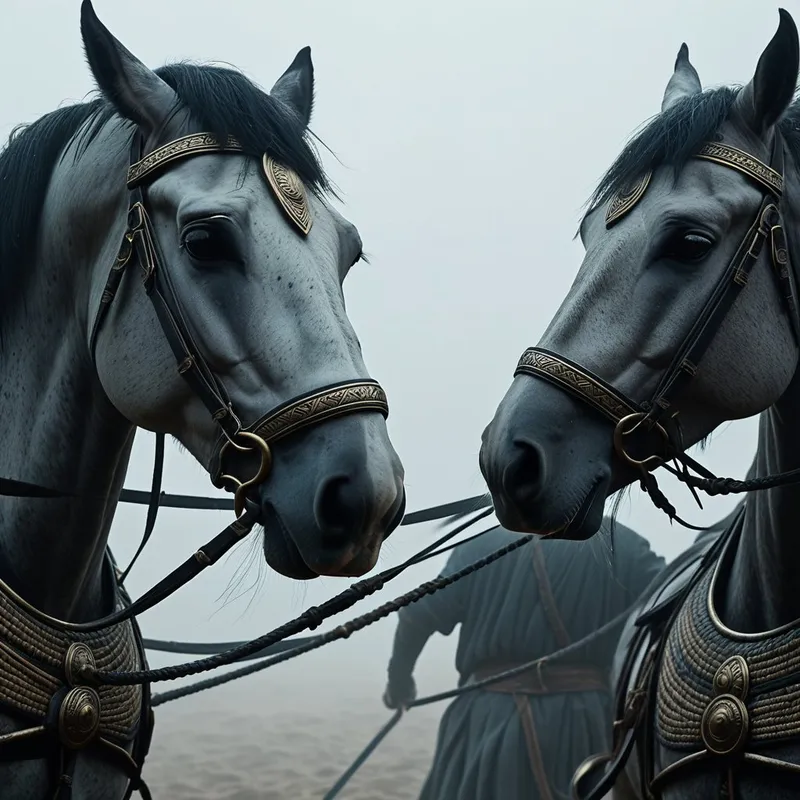
He is Cú Chulainn, the Hound of Ulster, a youth whose spirit is a knot of mortal flesh and divine fire. But a hero is not an island; his fury is a wild river that must be channeled. His vessel is the chariot. Not a mere cart of wood and wicker, but a sacred engine of war, a thunderous extension of his will. Its two horses, the Grey of Macha and the Black Sainglend, are creatures of the Sídhe, gifted or cursed to him, their hooves striking sparks from the very stones.
And at the reins stands Láeg, son of Riangabair. His hands are steady, his eyes see the weave of the battle-tapestry where Cú Chulainn sees only threads of red. The chariot careens across the plain of Muirthemne, a roaring tempest. Láeg does not merely drive; he steers the myth itself. He positions the chariot for the cast of the Gáe Bulg. He wheels it to face the champion Ferdiad at the ford. He is the calm center in the eye of the hero's hurricane.
Then comes the ríastrad. The hero’s body contorts, a terrifying inversion of humanity. One eye recedes, the other bulges; a torrent of dark blood erupts from his crown. He is a living weapon, and the chariot becomes his launching frame. Láeg, unflinching, guides this monstrosity, this sacred horror, into the heart of the enemy. The chariot is no longer transport; it is a mobile altar of fury, a crucible where the man Sétanta is consumed by the demigod Cú Chulainn. The sound is not of wood and horse, but of a goddess shrieking, of bones breaking, of a land’s fate being decided with every turn of the iron-rimmed wheels.
And when the frenzy passes, when the hero slumps, spent and human once more, it is Láeg who catches him. It is the chariot, now still and splattered, that holds him. The sacred vehicle has carried the god to war, and now bears the broken man home.
Cultural Origins & Context
This myth pulses from the heart of the Ulster Cycle, preserved in manuscripts like the Book of Leinster. These stories are not mere fictions but narrative vessels for a warrior aristocracy's code, their cosmology, and their understanding of sacred power. The chariot was not a nostalgic memory but a potent symbol of elite status, mobility, and devastating shock combat in the Iron Age Celtic world.
The tales were the province of the fili, the poet-seers who acted as historians, custodians of law, and intermediaries with the otherworld. To recite the exploits of Cú Chulainn was to invoke the psychic and spiritual template of the ideal warrior. The chariot, in this telling, becomes a central character. Its description—the specific woods, the craftsmanship, the supernatural horses—was a liturgical act, reinforcing the connection between the hero, the sovereignty of Ulster, and the chaotic, divine forces he channeled. The myth served to illustrate the terrifying cost and necessary structures of heroism: boundless power is fatal without the guiding hand of loyalty, skill, and ritual containment.
Symbolic Architecture
The chariot is the myth’s central symbol, a perfect vessel of paradoxical meanings. It represents the vehicle of the Self in its most dynamic, embattled state.
The chariot is the bounded form that makes terrifying speed possible; it is the ritual that contains the ecstasy, the ego-structure that must hold the erupting unconscious.
Cú Chulainn embodies the raw, archetypal force of the Shadow and the Archetype made flesh. His ríastrad is the psyche’s nuclear option, a total identification with a destructive god-form. Láeg, the charioteer, symbolizes the conscious Ego in its highest function: not as the source of power, but as the essential guide and steward. He has no glory of his own, but without his steady hand on the reins, the hero’s power would be a self-annihilating firestorm.
The two horses, often one light and one dark, represent the paired, straining instincts that propel the psyche—aggression and loyalty, fury and sorrow, the pull toward life and the drive toward glorious death. They are yoked together, just as these opposites are yoked within the hero’s soul. The chariot itself is the sacred space where this tension is held, directed, and ultimately expressed in fateful action.
The Dreamer's Resonance
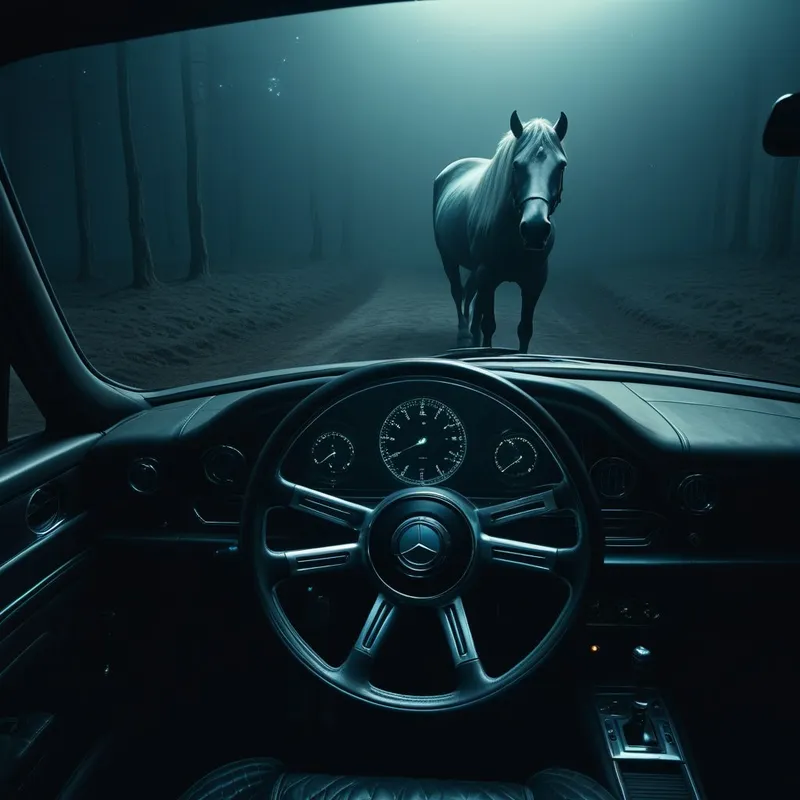
When this myth stirs in the modern unconscious, it rarely appears as a literal chariot. Instead, one dreams of a powerful, often uncontrollable vehicle—a car whose brakes are failing, a speeding train on a single track, a spacecraft hurtling toward an unknown destination. The dreamer may be in the driver’s seat but feel they are not in control, or they may be the terrified passenger.
This is the somatic signal of a ríastrad in the psyche. An archetypal force—a buried rage, a tidal wave of grief, a creative mania, or a demand for radical life change—is activating. The “chariot” of one’s current life structure (career, relationship, identity) is being commandeered by a power far greater than the everyday self. The dream evokes the visceral feeling of being ridden by a destiny or a demon, of moving at a devastating speed toward a necessary, perhaps destructive, confrontation. The psychological process is one of eruption and containment. The dream asks: What immense force is seeking expression in you? And who, or what, is your Láeg—the observing, guiding principle that can steer this force without denying its power?
Alchemical Translation
The myth of Cú Chulainn’s chariot is a precise allegory for the alchemical stage of Nigredo and the fierce journey toward Individuation. The hero’s solitary stand is the ego’s confrontation with the collective shadow (the invading army). His ríastrad is the enantiodromia—the violent emergence of the repressed opposite, where the civilized persona shatters to reveal the chaotic, divine monster within.
Individuation is not about becoming a perfectly balanced statue. It is about learning to drive the chariot of your own nature, with all its monstrous horsepower and divine sparks, toward a destiny that serves the soul, not just the tribe.
The alchemical work is in the relationship between Cú Chulainn and Láeg. It is the forging of a partnership between the boundless, unconscious Self and the focused, conscious Ego. One provides the terrifying power; the other provides the direction, the context, the meaning. To integrate this myth is not to become a berserker, but to become the integrated chariot team. It is to acknowledge the monstrous, glorious power that lives in your depths (your unique, perhaps disruptive, genius or passion) and to develop a loyal, skilled “Láeg” consciousness that can harness it, guide it through the fords of your life, and prevent it from destroying you or everything you love. The triumph is not in the slaughter, but in the return—the ability of the vehicle to carry the exhausted, human self back from the brink, integrated, whole, and forever changed by the journey.
Associated Symbols
Explore related symbols from the CaleaDream lexicon: