
Butterfly Metamorphosis Myth Meaning & Symbolism
A universal allegory of the soul's journey through dissolution, darkness, and radical transformation to emerge in its destined, winged form.
The Tale of Butterfly Metamorphosis
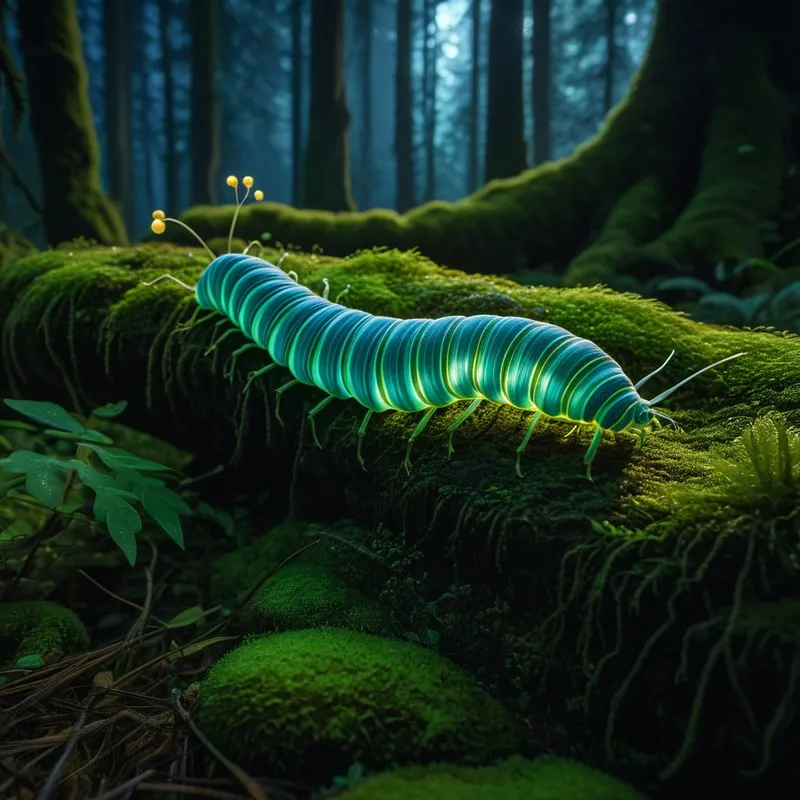
Listen, and I will tell you of the First Metamorphosis, the secret whispered in the rustle of every leaf and the unfurling of every wing. In the time before time, when the world was a garden of pure potential, there existed the Crawling Soul. It was a creature of patient appetite, moving in slow, deliberate waves across the verdant flesh of the earth. It knew only the taste of leaf and stem, the feel of soil, the simple rhythm of consume and grow. It was humble, but within its simple form slept a memory of the sky.
A great restlessness grew within the Crawling Soul. The sun felt distant, a taunting coin of gold. The wind spoke languages it could not comprehend. A deep, instinctual knowing, a Sacred Blueprint, began to ache in its very cells. This knowing was a song of flight, of color, of drinking not from leaves but from the nectar of flowers kissed by light. The conflict was terrible. To follow the blueprint meant to abandon the known world entirely. It meant to cease being what it was.
Driven by this sacred ache, the Crawling Soul sought the oldest wisdom. It consulted the Oak Elder, who said, “You must build your own tomb.” It listened to the Zephyr, who sighed, “You must surrender to the void.” Trembling, but resolute, the soul began its great work. From a secret gland, it spun not a home, but a prison of its own making—a silken Chrysalis. With each silken thread, it bound itself away from the world of leaves and light. The final thread was spun, and darkness absolute descended.
Inside that silent, swaying coffin, the unmaking began. The familiar form of the Crawling Soul did not sleep; it dissolved. It became a soup of potential, a chaos of memory and matter. In that profound darkness, the Imaginal Cells awoke. At first scattered and few, they were attacked by the old, dying system. But they persisted, singing their silent song of wings to one another, linking, building, remembering. This was not a gentle rearrangement, but a violent, creative revolution within the self.
For what felt like an eternity, there was only the struggle in the dark. Then, a new strength was forged. A pressure built against the inner walls of the chrysalis. The world outside had moved through seasons. Finally, a crack appeared. Not a graceful emergence, but a desperate, wet struggle into a forgotten light. The creature pulled itself free, exhausted, its new form crumpled and damp. It clung to the empty shell of its old life as the dawn air breathed over it. Slowly, miraculously, the damp folds expanded. Veins filled with air, and color ignited like a sunrise captured in membrane. The Winged Soul stretched its new instruments to the sky for the first time. With a pulse of impossible strength, it pushed away from the husk of its past and took to the air, not as a creature of earth, but as a living piece of the wind and light, its very existence the resolution of the ancient, aching song.
Cultural Origins & Context
The myth of the butterfly’s metamorphosis is perhaps the most widespread and enduring allegory in human history, appearing not as a singular story from one culture, but as a foundational pattern recognized across continents and epochs. From the ancient Greeks, who named the butterfly psyche, the soul, to Mesoamerican cultures where it symbolized the fallen warrior’s spirit, to Japanese art where it represents the ephemeral beauty of life, the transformation is a universal glyph. It was not passed down by a single bard, but observed anew by every generation with awe. Its societal function was multifaceted: as a natural explanation for the mystery of death and rebirth, as a comfort in times of profound personal or communal change, and as a teaching story about the necessity of surrender to achieve a higher state. It was science, spirituality, and psychology woven into one observable, miraculous fact of nature.
Symbolic Architecture
The myth’s power lies in its tripartite symbolic architecture, mapping a complete cycle of psychic death and rebirth.
The Crawling Soul (Caterpillar) represents the conscious ego in its initial state: grounded, consumptive, and literal. It is the personality focused on material needs, linear growth, and the tangible world. Its dissolution is not a failure, but the necessary precondition for transcendence.
The ego must become a willing architect of its own deconstruction. The chrysalis is not built by the new self, but by the old self obeying a call it does not yet understand.
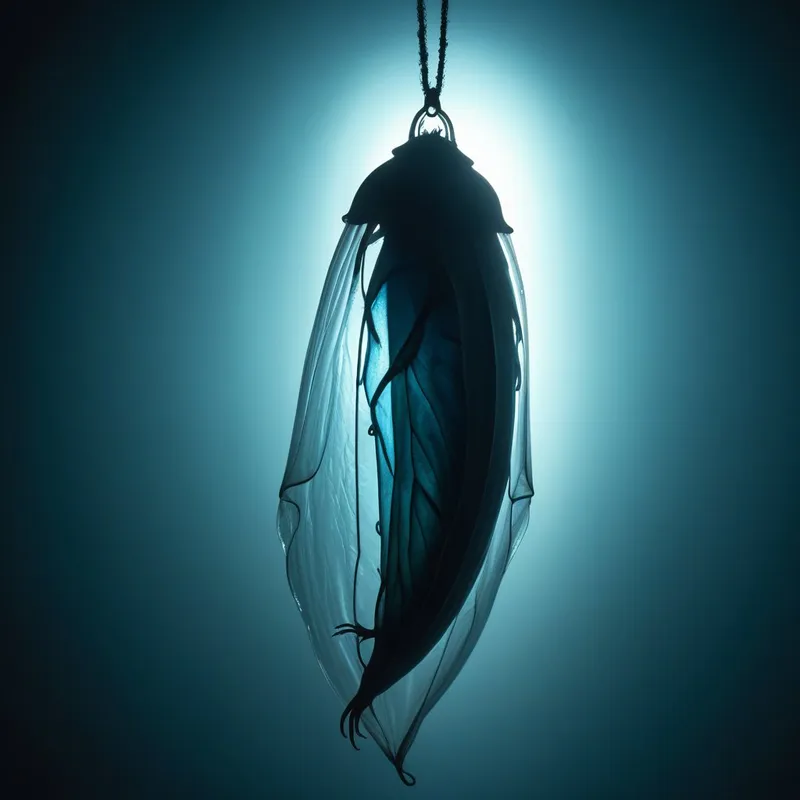
The Chrysalis (Pupa) is the liminal space, the temenos or sacred vessel where transformation occurs. It symbolizes the dark night of the soul, depression, incubation, or any period where old structures break down. This is not passive waiting, but a chaotic, alchemical process where the old form literally digests itself. The Imaginal Cells are the emergent symbols from the unconscious—dreams, insights, and fragments of a new personality—that initially seem alien and are resisted by the psyche’s old defenses.
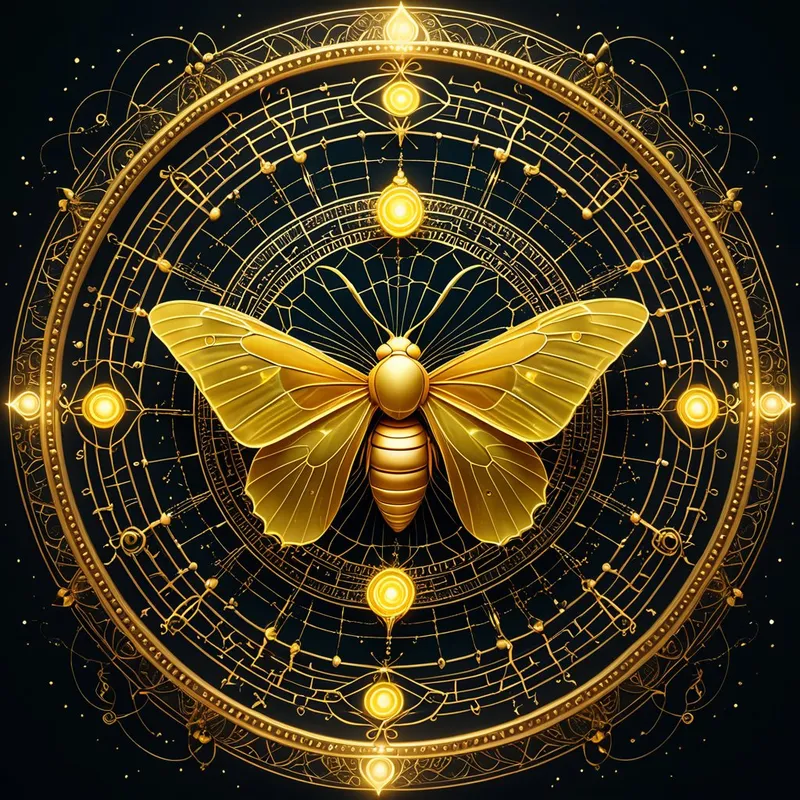
The Winged Soul (Butterfly) is the Self realized. It symbolizes the liberated psyche, beauty born of struggle, and the capacity to navigate from a higher perspective (the air). It represents the synthesis of the earth-bound caterpillar’s substance and the aerial blueprint, achieving a form that can interact with realms (flowers, light, wind) the caterpillar could only yearn for.
The Dreamer's Resonance
When this myth surfaces in modern dreams, it signals a profound somatic and psychological process of metamorphosis at work. Dreaming of being a caterpillar often coincides with a feeling of being stuck in a consumptive, repetitive cycle, yet sensing a deep, restless calling. The dream ego may feel slow, low to the ground, but driven by an insatiable hunger for something more.
Dreams of being inside a chrysalis or cocoon are pivotal. They often accompany life transitions—the end of a relationship, a career change, a spiritual crisis, or a period of depression. The dreamer may experience this as claustrophobic darkness, a sense of being trapped or dissolved. Somatically, this can mirror feelings of heaviness, fatigue, or dissociation, as the psyche’s energy is directed entirely inward to the work of unmaking and remaking. To dream of the struggle to break out of the chrysalis is to dream of the final, often painful, act of birthing the new self into reality, feeling vulnerable and unprepared.
Dreaming of a butterfly, or becoming one, is the psyche’s affirmation of successful transformation. It may appear after a period of intense difficulty as a symbol of hope, lightness, and achieved beauty. It whispers that the dissolution had a purpose, and the new form, however fragile, is capable of navigating a world the dreamer’s old self could not have survived.
Alchemical Translation
For the modern individual, the butterfly’s journey is a perfect model for the alchemical process of individuation—the psychic transmutation of base lead into spiritual gold. The caterpillar’s life is the nigredo, the initial, often unconscious, gathering of experience and substance. The recognition of the Sacred Blueprint is the call to the great work, often felt as a midlife crisis or a spiritual awakening.
Spinning the chrysalis is the conscious act of solutio (dissolution) and coagulatio (coagulation). It requires the individual to willingly enter a period of retreat, reflection, or therapy—to create the vessel for breakdown. Inside, the mortificatio occurs: the death of the old identity, the “dark night” where all seems lost. This is where the imaginal cells—the new insights, values, and aspects of personality—battle the immune response of the old ego.
The psyche’s old order does not surrender gracefully. It fights the future as an infection, until the future becomes the only surviving truth.
The formation of the new body within is the albedo, the whitening, where the new form clarifies. The final struggle to emerge is the rubedo, the reddening or suffering of birth into consciousness. The winged flight is the citrinitas, the yellowing or enlightenment, where the transformed Self operates in the world with new perspective and grace. The myth teaches that true growth is not incremental improvement of the old self, but its radical, terrifying, and beautiful dissolution into something utterly new. The modern seeker is both the caterpillar, the chrysalis, and the butterfly—the patient gatherer, the dark vessel, and the emergent soul, all one continuous, sacred process.
Associated Symbols
Explore related symbols from the CaleaDream lexicon: