Brisingamen Myth Meaning & Symbolism
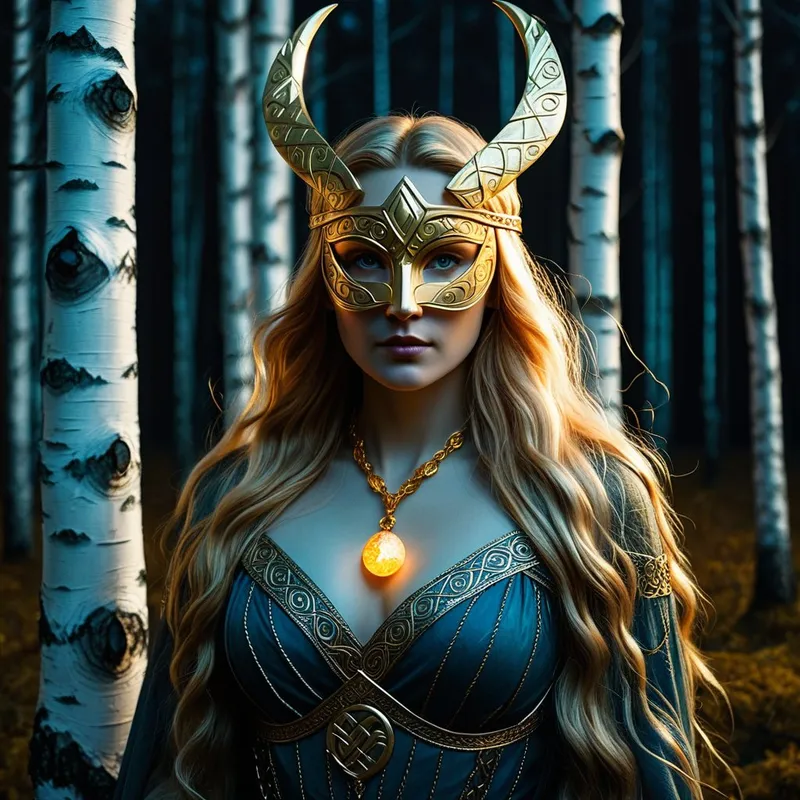
The myth of Freyja's necklace, forged by dwarves and stolen by Loki, speaks to the price of beauty, the cunning of desire, and the soul's luminous core.
The Tale of Brisingamen
Listen, and hear a tale of fire and gold, of a beauty that could shake the nine worlds. It begins not in the sun-drenched fields of Ásgarðr, but in the deep, secret places of the earth, where the mountains hold their breath and the roots of the Yggdrasil delve into darkness.
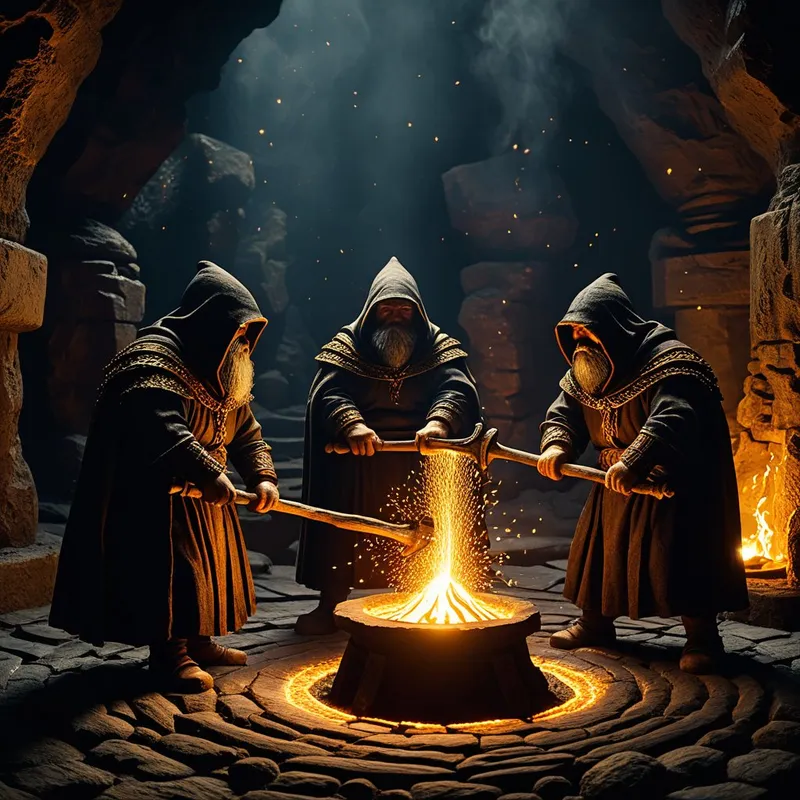
There, in a cavern lit by the forge’s eternal heart, dwelt the four sons of Ivaldi. They were masters of craft, these dwarves, their hands knowing the song of metal and stone. And into their hidden hall came Freyja, not as a goddess demanding tribute, but as a force of nature drawn to creation. She saw them at their work and beheld a wonder: a necklace taking shape on the anvil. It was not mere jewelry. It was a captured sunset, a woven song, a constellation forged in gold and amber. It was Brisingamen, and its beauty was a kind of power.
Her desire for it was a physical ache, a fire in her blood to match the fire in the forge. "Name your price," she said, her voice echoing in the smoky chamber. The dwarven masters ceased their hammering. Their eyes, glinting in the firelight, held not avarice, but a profound, cunning understanding. "A price?" one rumbled. "Gold we have. Stone we command. Our price is you. A night with each of us, in turn, and the necklace is yours."
The air in the cavern grew still. Here was a goddess, a daughter of the Æsir, faced with a bargain from the depths. To possess the sublime, she must give of her sovereign self. The firelight danced on her determined face. Without a word, she laid aside her falcon-feather cloak. She paid the price. Four nights in the earth's heart, and she emerged, the blazing weight of Brisingamen cool against her skin, a secret and a trophy fused into one.
But in Valhalla, the All-Father’s eye missed nothing. Loki, the whisperer, the shape-shifter, saw the new light around Freyja's throat and saw Odin's displeasure. A goddess had bartered herself for a trinket? The order of things was tilted. "Bring it to me," Odin commanded, his voice like distant thunder. Loki, ever eager to prove his cunning, slipped away.
He found Freyja sleeping in her sealed chamber, Brisingamen clasped tight. The walls were stone, the door was barred. But Loki became a tiny fly, a speck of malice buzzing at a chink in the masonry. He found his way in, and hovering over the sleeping goddess, he saw the clasp resting against the nape of her neck. To touch it was to wake her. So, with infinite slowness, he shifted once more. From fly to flea, he landed on her fair cheek, then her throat. She stirred but did not wake. And with a delicate, insectile leg, he unclasped the great necklace. It fell silent as a sigh. He seized it, transformed back, and was gone into the night, the treasure stolen.
Freyja’s awakening was a tempest of grief and fury. The loss was a physical wound. She went to Oðinn, her tears like stars. "Who has done this?" she demanded. Odin, his one eye inscrutable, set the terms for its return. "You must sow discord. Unleash a war between two mighty kings, a war so fierce it will echo through the ages. Use your magic. Make it so. Then, and only then, will your treasure be restored."
Her heart, already heavy with loss, now bore the weight of a destined slaughter. She did as commanded, weaving a fate of bloodshed with her seiðr. And when the first blows of that contrived war were struck, Loki, at Odin's bidding, returned the necklace to her hand. The gold was cool. The amber was dull. She fastened it once more, its brilliance now holding the echo of a scream and the salt of her own tears.
Cultural Origins & Context
The myth of Brisingamen survives in fragments, primarily in the late 13th-century Icelandic text Snorra Edda by Snorri Sturluson, and is alluded to in several older skaldic poems. It is a myth that would have been told not as a simple fable, but as a deeply resonant narrative layer within the complex tapestry of Norse cosmology. Freyja was no minor deity; she was among the most powerful and revered, a goddess of fertility, love, death in battle (choosing half the slain for her hall, Fólkvangr), and, crucially, of seiðr—a form of magic that could bend fate itself.
The story functioned on multiple levels. On one hand, it explained the divine origin of a magnificent artifact, a common motif in myth. On another, it explored the tensions within the Norse pantheon: between the Æsir and the cunning, earthy dwarves; between sovereign power and personal desire; between order (Odin) and chaotic, transformative cunning (Loki). For a medieval Icelandic audience, it would have underscored the Norse worldview where everything of value—a sword, a kingdom, wisdom—carries a profound and often difficult price. The myth also subtly critiques and humanizes the gods, showing that even the mighty Freyja is subject to overwhelming desire and devastating loss, making her relatable in a world where fortune was always precarious.
Symbolic Architecture
At its heart, Brisingamen is not merely an ornament; it is a symbol of the integrated, luminous Self. Its forging by four dwarves in the earth's womb connects it to wholeness (the number four representing completeness) and to the raw, chthonic powers of the unconscious from which conscious identity is fashioned.
The treasure we most desire is always forged in the dark, by forces we do not fully understand, and its price is a piece of our own sovereignty.
Freyja’s transaction is the pivotal alchemical moment. She does not conquer or steal the necklace; she earns it through a sacred exchange. Her "nights" with the dwarves represent a necessary descent, a conscious engagement with the deep, creative, and often "un-godly" (earthly, instinctual) aspects of existence. The necklace becomes hers only after she has fully mingled her being with its source. Loki’s theft represents the fragility of this hard-won integration. The integrated Self is always vulnerable to fragmentation, to the "trickster" aspects of our own psyche—self-sabotage, doubt, or the demands of external authority (Odin). The theft plunges Freyja into a state of lack, a recognition that a part of her very soul is missing.
Odin’s condition for its return—to instigate a war—is the most psychologically brutal and profound layer. It signifies that the recovery of one's wholeness often requires confronting and engaging with the shadow, with conflict, both internal and external. One cannot simply reclaim a lost ideal; one must work through the chaos and destruction that its absence (or its theft) has caused in the psyche. The returned necklace is thus transformed; it is no longer a naive object of beauty but a symbol of a Self that has consciously integrated the reality of loss, conflict, and the cost of its own existence.
The Dreamer's Resonance
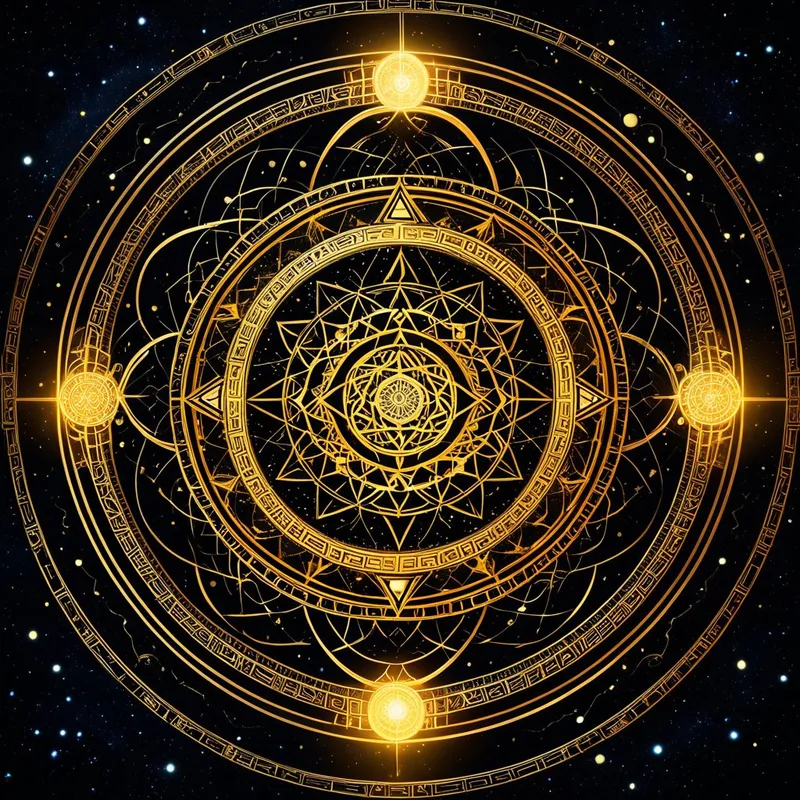
When the pattern of the Brisingamen myth stirs in the modern dreamer, it signals a profound process underway. To dream of a coveted, brilliantly beautiful object—a jewel, a ring, a piece of art—that is stolen, especially after great effort to obtain it, speaks directly to this archetypal narrative.
The somatic experience is often one of acute, grieving emptiness upon waking, a literal feeling of a "hole in the chest" or a weight around the neck that is now absent. Psychologically, the dreamer is navigating the territory of individuation-in-crisis. They have likely identified or begun to cultivate a core aspect of their authentic Self—a creative gift, a hard-won confidence, a deep sense of personal value. The "theft" in the dream represents the perceived or actual assault on that nascent Self. This could be an external criticism, a life setback, or, more commonly, an internal "Loki": the self-deprecating voice, the fear of hubris, or the old conditioning (the "Odin" of parental or societal expectations) that demands a costly proof of worth before allowing the Self to shine.
The dream is a map of the wound. The focus is not yet on recovery, but on the raw, Freyja-like rage and grief of the loss itself. It is the psyche insisting, "See what has been taken! Feel this violation!" This painful acknowledgment is the necessary first step toward the difficult work of reclamation.
Alchemical Translation
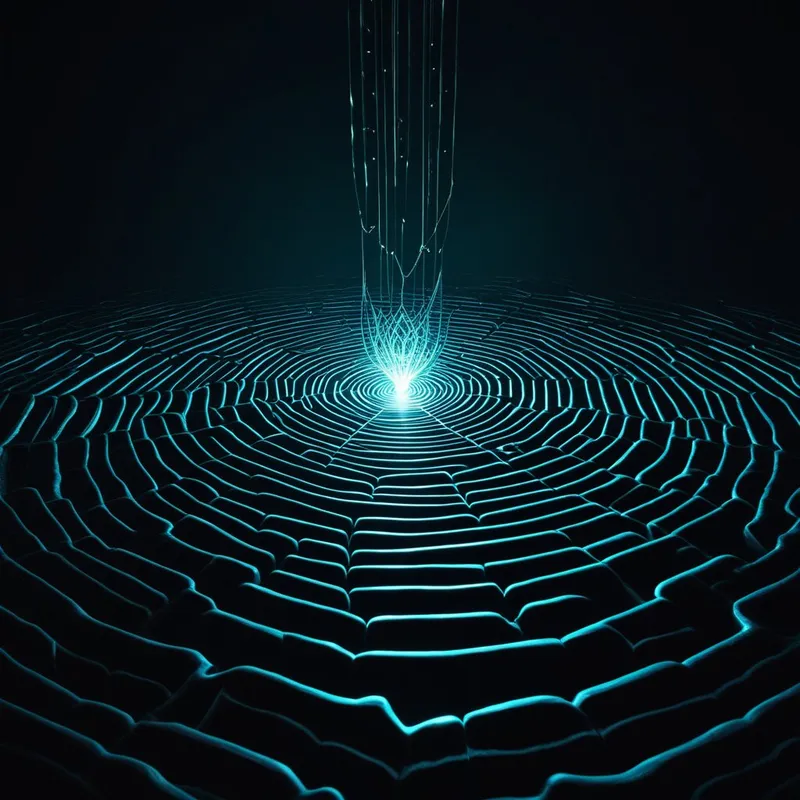
The alchemical journey of Brisingamen is a masterful model for psychic transmutation. It begins with the Nigredo, the blackening: Freyja's descent into the dark forge, her conscious engagement with the dwarves. This is the confrontation with the base matter of the psyche, the shadowy, instinctual realms where true value is created, not found.
The crucible of the soul is forged in the moment of choice, when desire meets its shadow and is transformed from want into will.
The necklace itself represents the Albedo, the whitening: the emergence of a coherent, beautiful, and conscious sense of Self, purified by the ordeal of its making. But this white stage is naive. Loki’s theft plunges the process into the Citrinitas, the yellowing, a stage of frustration, trial, and exposure. The integrated Self is tested by the realities of a world (both outer and inner) that contains trickery, authority, and chaos.
Odin’s cruel task is the final, fiery stage of Rubedo, the reddening. Here, the psyche must actively engage with its own destructive and warlike capacities. To recover the Self, one must sometimes wage an inner war—against complacency, against internalized oppression, against the parts of us that would keep us small. The instigated war is the conscious, often painful, application of will and energy (Freyja’s seiðr) to clear the psychic field of the obstacles to wholeness.
The necklace, when finally returned, is the Philosopher's Stone of this inner work. It is the same, yet utterly transformed. It is a Self that knows its own cost, has faced its own capacity for destruction, and has reclaimed its brilliance not as a naive possession, but as a hard-won truth. The modern individual walking this path moves from craving an external source of value (the finished necklace), through the agony of its loss, to the realization that the true alchemy was never in the object, but in the transformative fire of the journey to reclaim it. One does not simply wear Brisingamen; one becomes it, a being of forged and reclaimed luminosity.
Associated Symbols
Explore related symbols from the CaleaDream lexicon: