Brigid's Eternal Flame Myth Meaning & Symbolism
A tale of a sacred flame, guarded by nineteen priestesses, representing the undying hearth of creativity, healing, and transformation in the Celtic world.
The Tale of Brigid’s Eternal Flame
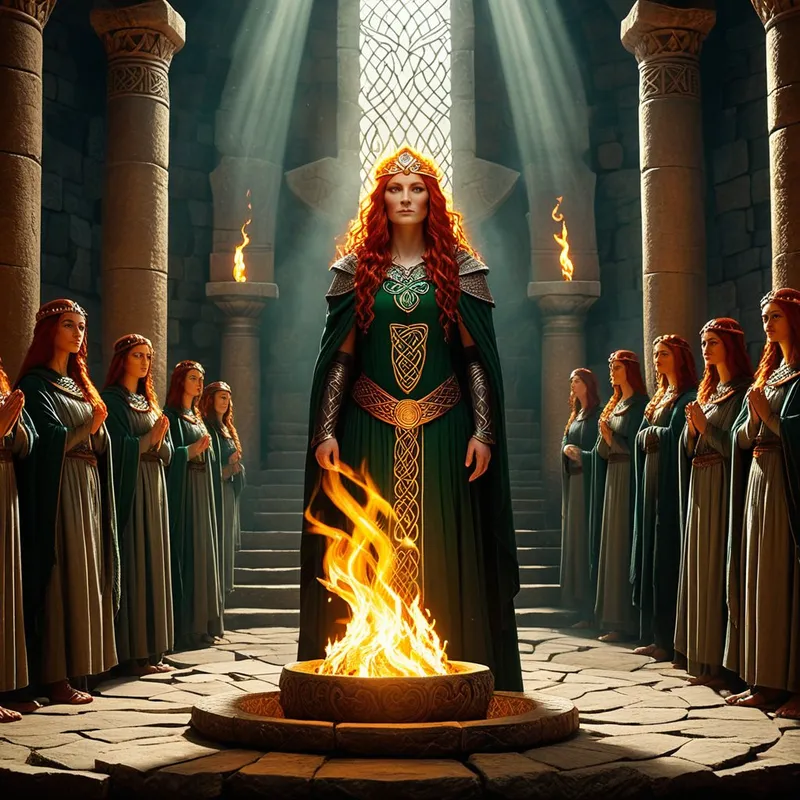
In the time before memory, when [the world](/myths/the-world “Myth from Tarot culture.”/) was a tapestry of green shadow and silver mist, the land lay locked in the iron grip of winter. The sun was a pale coin, the rivers were teeth of ice, and the breath of every creature hung white in the still air. In the heart of this frozen world, at a sacred place called Cill Dara, a different kind of cold was feared—not of [the earth](/myths/the-earth “Myth from Hindu culture.”/), but of the soul. For here, the great hearth-fire of the goddess [Brigid](/myths/brigid “Myth from Celtic culture.”/) had flickered since the dawn of days.
She was not a distant deity, but a presence felt in the first weak warmth of a lamb’s breath, in the spark struck from flint, in the fever that breaks and heals. Her flame was the promise that life was not a memory, but a seed waiting beneath the frost. To tend it was the highest calling. Nineteen women of the Cailleach took this vow. For nineteen nights, each in her turn, they would watch over the flame in the stone sanctuary. They would feed it with sacred oak, whisper to it the old songs, and guard its light with their very breath. On the twentieth night, the flame was left to Brigid herself. And every dawn, without fail, it burned on, undimmed.
But sovereignty is a fragile [thing](/myths/thing “Myth from Norse culture.”/), and the old ways are a cloak that can be torn. A new wind blew across the land, carrying the sound of different bells and the scent of foreign incense. Men in robes of coarse wool came, speaking of a single God and a fire that was not of this earth. They saw the sanctuary at Kildare and the devotion of the women, and in their zeal, they sought not to extinguish, but to convert. They built a monastery around [the sacred oak](/myths/the-sacred-oak “Myth from Celtic culture.”/), and the priestesses were told their vigil was now for a saint, not a goddess. The flame, they said, could stay—but only if it bowed to a new name.
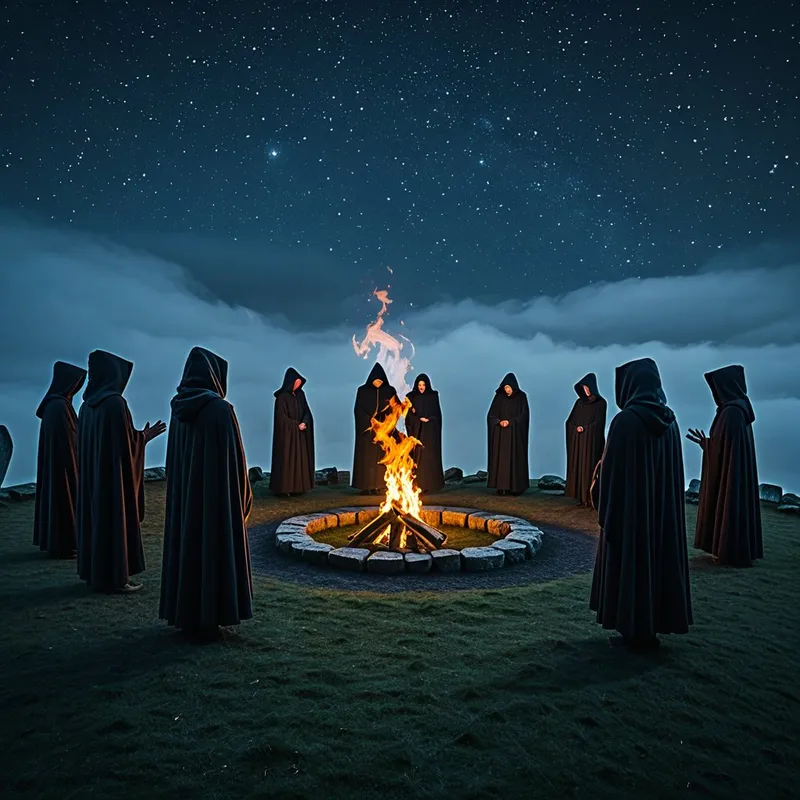
The women stood in a circle around their fire, their faces lit by its ancient, dancing light. The air was thick with the scent of oak smoke and impending loss. The new priests demanded the flame be banked, contained within their new stone church. A great conflict smoldered, not of swords, but of souls. Would [the eternal flame](/myths/the-eternal-flame “Myth from Universal culture.”/) become a candle on an [altar](/myths/altar “Myth from Christian culture.”/), its wild heart tamed? Or would it be quenched entirely, leaving the world to a colder, more absolute dark?
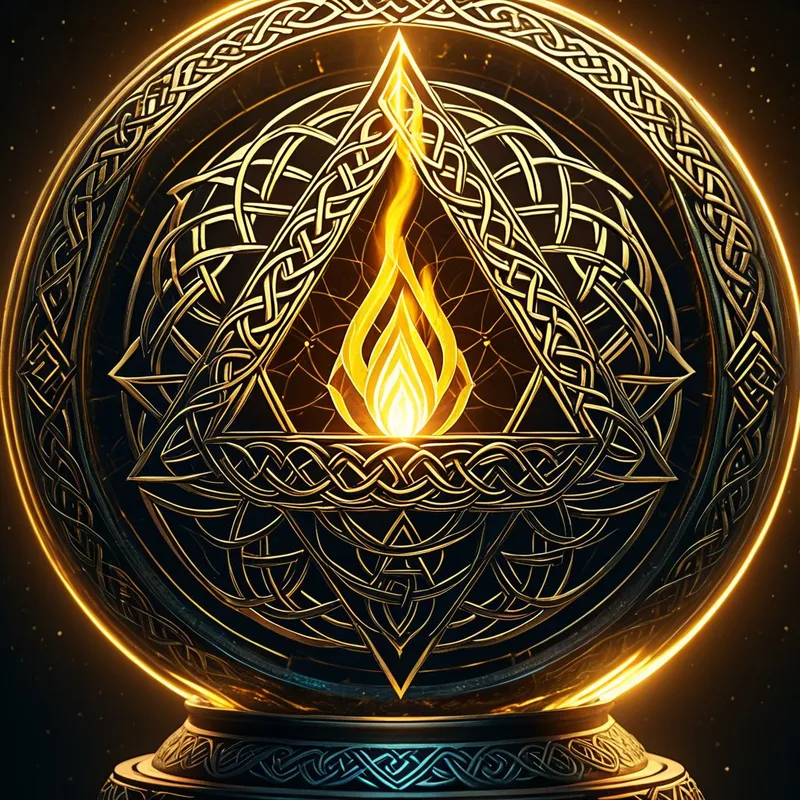
The resolution was not a battle, but a breath. The twentieth night came, the night belonging to Brigid. The new guardians, uneasy, approached the sanctuary at dawn. They found the flame not extinguished, but transformed. It burned as brightly as ever, but around it was woven a Brat Bríde, an intricate, impossible screen of pure light. No hand could pass through it; no breath could disturb the fire within. The goddess had drawn a circle of her own sovereignty. The message was clear: the flame was not theirs to give, nor to take. It was a trust, a [covenant](/myths/covenant “Myth from Christian culture.”/) with the land itself. The keepers, old and new, understood. The vigil continued, now a strange, layered tapestry of faiths—nineteen nights of human tending, one night of divine mystery. The [Eternal Flame](/myths/eternal-flame “Myth from Christian culture.”/) burned on, a bridge between worlds, a heart that would not freeze.
Cultural Origins & Context
The myth of the Eternal Flame is rooted in the rich, oral tapestry of the Insular Celtic peoples, particularly in Ireland. It is a narrative that straddles the profound shift from indigenous pagan belief to the early Christian era, making it a unique cultural palimpsest. The figure of Brigid is central, a goddess of such immense popularity and resonance that she was seamlessly syncretized into the Christian tradition as Saint Brigid of Kildare. This was not an erasure, but a remarkable act of cultural preservation.
The story was not written in a single text but was carried in the living practice of the Cailleach at Kildare. Historical accounts, like those of Giraldus Cambrensis, note the perpetual fire tended by nineteen nuns, with the twentieth night left miraculously to the saint (and thus, the goddess). Its societal function was multifaceted: it was a ritual of sovereignty, connecting the community to the generative powers of the land; a calendar marker for Imbolc; and a powerful symbol of continuity. The flame represented the unbroken life of the tribe, its wisdom, and its resilience against all forms of extinction—seasonal, political, or spiritual.
Symbolic Architecture
At its core, the myth is a profound [meditation](/symbols/meditation “Symbol: Meditation represents introspection, mental clarity, and the pursuit of inner peace, often providing a pathway for deeper self-awareness and spiritual growth.”/) on the [nature](/symbols/nature “Symbol: Nature symbolizes growth, connectivity, and the primal forces of existence.”/) of sacred, self-sustaining [energy](/symbols/energy “Symbol: Energy symbolizes vitality, motivation, and the drive that fuels actions and ambitions.”/). The Eternal Flame is not merely a fire; it is the spark of [life](/symbols/life “Symbol: The symbol of ‘Life’ represents a journey of growth, interconnectedness, and existential meaning, encompassing both the joys and challenges that define human experience.”/), the creative [impulse](/symbols/impulse “Symbol: A sudden, powerful urge or drive that arises without conscious deliberation, often linked to primal instincts or emotional surges.”/), the healing warmth of [compassion](/symbols/compassion “Symbol: A deep feeling of empathy and concern for others’ suffering, often involving a desire to help or alleviate their pain.”/), and the forging fire of the will.
The flame that is tended, but not owned, is the psyche’s own sovereign core. It accepts service but never surrenders its essential mystery.
The nineteen priestesses represent the cyclical, communal, and disciplined [effort](/symbols/effort “Symbol: Effort signifies the physical, mental, and emotional energy invested toward achieving goals and personal growth.”/) required to maintain any sacred inner [truth](/symbols/truth “Symbol: Truth represents authenticity, honesty, and the quest for knowledge beyond mere appearances.”/). They are the aspects of [the self](/myths/the-self “Myth from Jungian culture.”/)—habits, virtues, attentions—that must take turns in conscious vigilance. The twentieth [night](/symbols/night “Symbol: Night often symbolizes the unconscious, mystery, and the unknown, representing the realm of dreams and intuition.”/), belonging to Brigid alone, symbolizes the autonomous, numinous [source](/symbols/source “Symbol: The origin point of something, often representing beginnings, nourishment, or the fundamental cause behind phenomena.”/) of that energy. It is the part of the [psyche](/myths/psyche “Myth from Greek culture.”/) that operates beyond egoic control, the wellspring of inspiration and renewal that must be trusted and left to its own devices. The encroachment of the new [faith](/symbols/faith “Symbol: A profound trust or belief in something beyond empirical proof, often tied to spiritual conviction or deep-seated confidence in people, ideas, or outcomes.”/) symbolizes any external ideology, dogma, or overwhelming life force that threatens to co-opt or rationalize our inner, instinctual wisdom. The final circle of light is the ultimate [symbol](/symbols/symbol “Symbol: A symbol can represent an idea, concept, or belief, serving as a powerful tool for communication and understanding.”/) of psychic integrity—the establishment of an inviolable [boundary](/symbols/boundary “Symbol: A conceptual or physical limit defining separation, protection, or identity between entities, spaces, or states of being.”/) around the authentic self.
The Dreamer’s Resonance
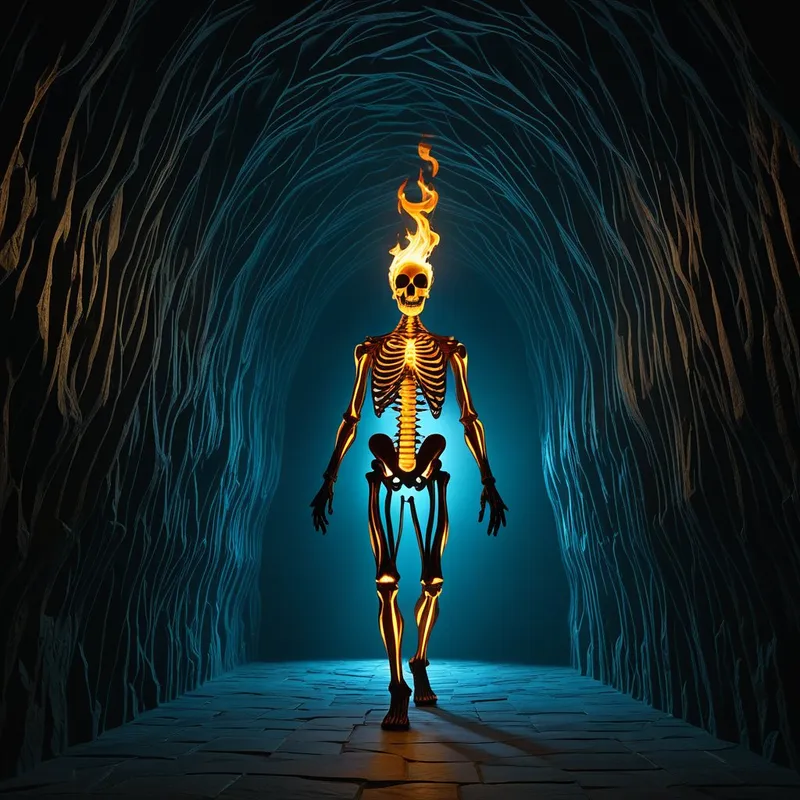
When this myth stirs in the modern dreamscape, it often signals a critical phase of inner guardianship. To dream of a solitary, precious flame in a vast darkness suggests a fragile but vital creative spark or a core identity that feels isolated and in need of protection. Dreaming of nineteen figures (or any repetitive, ritualistic group) tending a light may reflect the dreamer’s conscious efforts to maintain a relationship, a project, or a personal practice through routine and duty, yet feeling the burden of the vigil.
The somatic sensation is often a warmth in the chest or a chill of anxiety—the body registering the state of the inner hearth.
Dreams where the flame is threatened by uniformed or authoritarian figures point directly to a conflict between societal expectations and personal truth. The psyche is dramatizing the pressure to conform, to let an external system define one’s inner fire. The triumphant dream image of a protective barrier of light emerging around the flame marks a psychological breakthrough: the unconscious affirming the establishment of healthy, empowered boundaries and the reclaiming of psychic sovereignty.
Alchemical Translation
The myth models the complete alchemical process of individuation. It begins with the [prima materia](/myths/prima-materia “Myth from Alchemical culture.”/): the raw, undifferentiated creative and spiritual potential (the latent flame). The nineteen-day vigil is the long, arduous stage of [separatio](/myths/separatio “Myth from Alchemical culture.”/) and [coniunctio](/myths/coniunctio “Myth from Alchemical culture.”/)—separating the essential from the trivial through disciplined practice (feeding the fire with sacred wood) and integrating disparate parts of the self into a common purpose (the sisterhood).
The conflict with the new order represents the crucial [nigredo](/myths/nigredo “Myth from Alchemical culture.”/), [the dark night of the soul](/myths/the-dark-night-of-the-soul “Myth from Christian Mysticism culture.”/). This is when the emerging Self confronts the overpowering complexes of the [persona](/myths/persona “Myth from Greek culture.”/) or the collective norms (the new religion). It feels like a threat of annihilation, a choice between betrayal of the self or exile from the world.
The alchemical gold is not the flame itself, but the unassailable circle drawn around it. It is the realization that one’s core being is not subject to vote or valuation.
The resolution—Brigid’s sovereign act—is the [rubedo](/myths/rubedo “Myth from Alchemical culture.”/) and the creation of the [lapis philosophorum](/myths/lapis-philosophorum “Myth from Alchemical culture.”/). The individual does not destroy the opposing force nor flee from it. Instead, they achieve a transcendent integration. They perform the ultimate alchemy: transmuting the conflict into a boundary. The flame (the Self) remains engaged with the world (the monastery is built around it) but is now protected by a principle of inviolability. The modern individual completes this process when they can tend their gifts with discipline, face external pressure without fracturing, and ultimately declare, from a place of unshakable inner authority, “This is my nature. It is not for you to kindle or to quench. It is for me to tend, and for the world to receive its warmth.” The Eternal Flame, then, is the psyche achieved, a sovereign hearth in a changing world.
Associated Symbols
Explore related symbols from the CaleaDream lexicon: