
Bear Totem Myth Meaning & Symbolism
A myth of a great hunter who follows a wounded bear into the earth, learns the secrets of healing, and returns to his people transformed.
The Tale of Bear Totem
Listen. In the time when the mountains were young and the rivers sang their names to the sky, there was a hunter. He was the greatest among his people, his arrows true, his heart strong with the pride of the hunt. But a shadow grew in his strength—a forgetting. He took from the forest without listening, without giving thanks. The deer grew wary, the berries scarce.
One autumn, when the world bled gold and crimson, he tracked a great bear, a creature of such power it seemed a piece of the mountain itself had broken loose. His arrow found its mark, a deep wound in the bear’s shoulder. But the beast did not fall. Instead, it turned a gaze upon him—ancient, knowing, and heavy with a purpose—before lumbering away, not in flight, but in solemn procession.
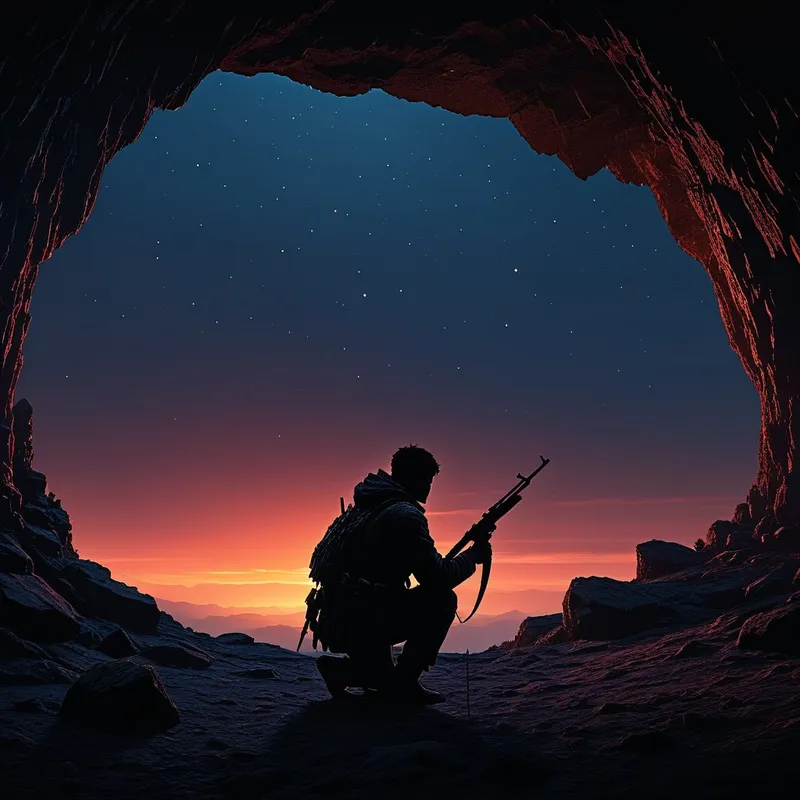
The hunter followed the trail of dark blood. It led not through familiar woods, but up a treacherous slope to a place of silent stone. There, in the face of a cliff, was a cave mouth, dark as a pupil. The bear’s blood-tracks vanished into that darkness. A cold wind breathed from within, smelling of damp earth and something older: the scent of roots dreaming.
His pride said to turn back. But a deeper voice, one he had long ignored, whispered of a debt unpaid. He left his bow at the threshold, an offering to the light, and stepped into the belly of the earth.
The world of sun and wind was swallowed. In the absolute dark, he was blind. He crawled, guided only by the scent of the wounded bear and the feel of cool, wet stone. Time lost its meaning. He felt the weight of the mountain above him, a pressure that was not crushing, but holding. He descended for what felt like seasons.
Then, a glow. Not firelight, but a soft, fungal luminescence from the walls of a vast cavern. And there, in the center, lay the great bear upon a bed of soft moss and herbs. Its wound was grievous, but it breathed steadily. Around it moved other shapes—bears of shadow and substance, who moved with a slow, deliberate grace. They ignored the hunter, tending to their fallen kin. They gathered lichen from the walls, chewed roots, and placed the poultice upon the wound with a tenderness that shook the hunter’s soul.
He watched, humbled to his core. He saw the bear heal, not through magic, but through the quiet, profound knowledge of the earth itself—which plants stanched bleeding, which reduced fever, which strengthened the spirit. The great bear slept, and in its sleep, it dreamed, and the hunter, in his exhaustion, began to dream with it. He dreamed of the long sleep of winter, of the secret life that pulses beneath the frozen ground, of the patient, mighty strength of renewal that asks for nothing but time and darkness.
When he awoke, the cavern was empty but for him. Where the bear had lain, a bundle of the healing herbs was neatly tied with a strip of bark. The path back to the surface was clear, illuminated. He emerged, squinting in the sun, a different man. He carried no meat, but he carried a medicine more vital. He returned to his people not as the proud hunter, but as the one who had gone into the earth and returned, bearing its secrets of healing, dreaming, and the sacred cycle of going inward to be made whole again.
Cultural Origins & Context
The story of the Bear Totem, or the Bear as teacher of medicine, is a powerful narrative thread found across many Native American cultures, from the Algonquian peoples to various Coastal and Plains nations. It was not a singular, fixed tale but a living teaching, adapted by storytellers, elders, and medicine people to impart essential wisdom.
Its primary function was pedagogical. It served as an etiological myth for the origins of herbal medicine and the sacred role of the healer. More profoundly, it encoded a core cultural value: that true knowledge and power come not from dominance, but from relationship, humility, and a willingness to be transformed. The story was told in the long winter nights or during initiatory rites, its slow, descending rhythm mirroring the journey it described. It taught respect for the bear, not just as game, but as a potent totem—a kin and a guide to the deepest mysteries of life, death, and regenerative healing.
Symbolic Architecture
The myth’s power lies in its stark symbolic architecture, a map of a profound psychological process.
The Hunter represents the conscious ego in its initial state: skilled, active, and effective in the outer world, but ultimately disconnected from the inner, instinctual source of its power. His pride is a symptom of this one-sidedness.
The Wounded Bear is the incarnate symbol of the injured instinctual self, or the Anima in its guiding, transformative aspect. The wound is the call. It is the suffering of the deeper psyche that finally demands attention, pulling the ego away from its superficial pursuits.
The call to healing is always a summons into darkness, where the very thing we wounded becomes our only guide.
The Descent into the Cave is the quintessential journey into the unconscious. It is the voluntary relinquishment of solar consciousness (the bow left at the entrance) for a lunar, receptive state. The darkness is not evil, but the necessary condition for inner vision. The cave is the Earth Womb, the crucible where the old identity is dissolved.
The Healing in the Cavern symbolizes the self-regulating, curative wisdom of the unconscious psyche itself. The bear heals itself, aided by its own kind—the autonomous, instinctual forces of the psyche know what is needed. The hunter’s role is not to do, but to witness, to learn, and to integrate. The herbs are the concrete, usable knowledge and vitality that emerge from this introspective process.
The Dreamer's Resonance
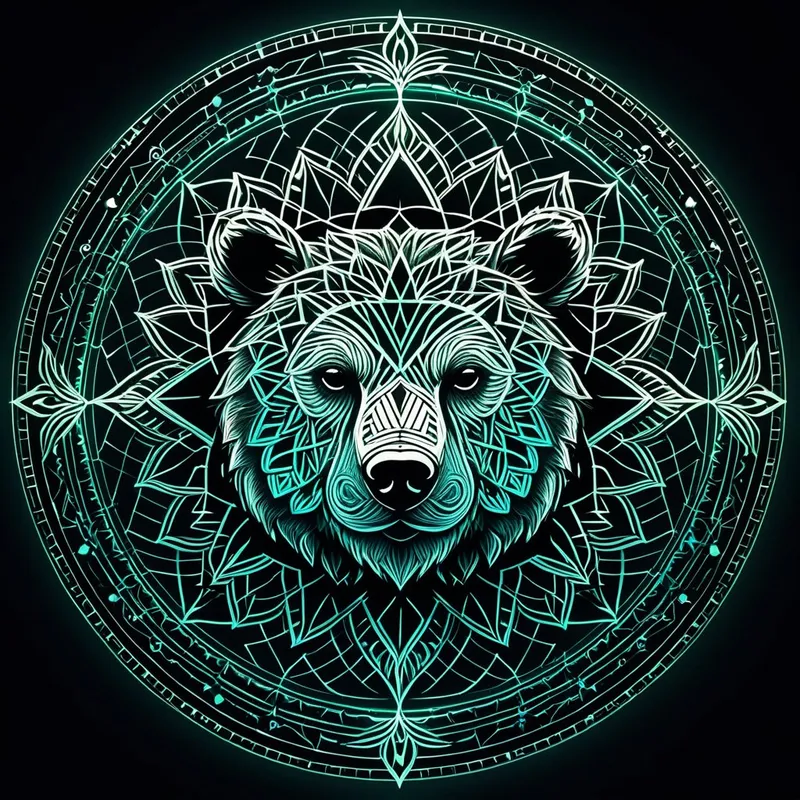
When this myth pattern activates in the modern dreamer, it signals a critical phase of individuation. Dreaming of following an animal into a hole, a basement, or a tunnel echoes the hunter’s choice. It suggests the conscious mind is being compelled to investigate a neglected, instinctual part of the self that holds a wound.
Somatically, this process can feel like a profound fatigue, a “hibernation” impulse—a need to withdraw from social demands and external achievements. There may be a sense of being led, of a fateful pull towards introspection, often precipitated by an illness, a failure, or a depression (the “wound”). The dreamer might feel they are losing their old identity (the proud hunter) and fear they are becoming passive or lost. In truth, they are entering the cavern. Dreams during this time may be rich with earthy, organic imagery—caves, roots, bones, dark soil—and encounters with large, powerful, often quiet animals, especially bears, who represent the immense, patient strength of the somatic and instinctual psyche.
Alchemical Translation
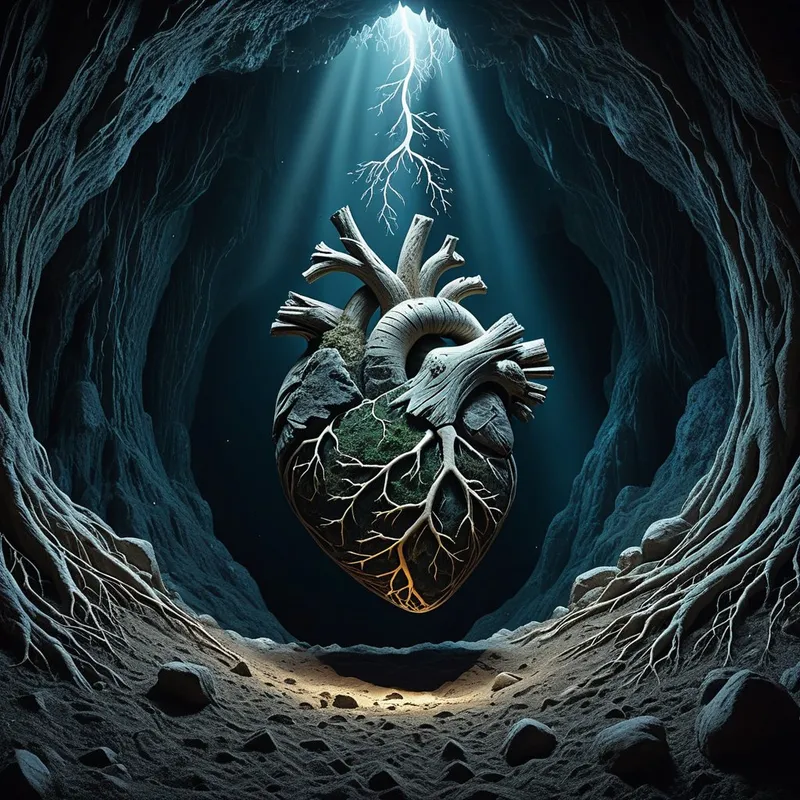
The alchemy modeled here is the nigredo, the blackening, the descent into the prima materia of the soul, for the specific purpose of healing.
The hunter’s journey is the ego’s necessary humiliation and dark night. His active, shooting consciousness (the arrow) must become passive, receiving consciousness. In the cave, the opposites are held: the hunter and the hunted, the wounder and the healer, human and animal, light and dark. This containment allows for the albedo, the washing clean. The healing knowledge (the herbs) is the new, integrated substance that forms from this union.
The totem is not an external spirit to worship, but an internal structure of the psyche to embody. To "have" the Bear Totem is to integrate its law: the courage to enter solitude, the wisdom to heal in darkness, and the strength to return renewed.
For the modern individual, this translates to the courage to step away from the persona of constant productivity and confront the wounded, instinctual self within. It is the process of therapy, of creative incubation, of convalescence, of any deep, introspective work where we stop “hunting” externally and allow ourselves to be led by our own deepest wounds into the places where true, organic healing knowledge resides. The triumph is not a victory over an enemy, but a return to the community bearing the medicine—the integrated wisdom that heals not only the self but becomes one’s gift to the world. One does not conquer the bear; one learns from it, and in doing so, becomes whole.
Associated Symbols
Explore related symbols from the CaleaDream lexicon: