Bannik Myth Meaning & Symbolism
A spirit of the steamy bathhouse, Bannik presides over a sacred, liminal space where physical cleansing becomes a ritual of psychic and spiritual purification.
The Tale of Bannik
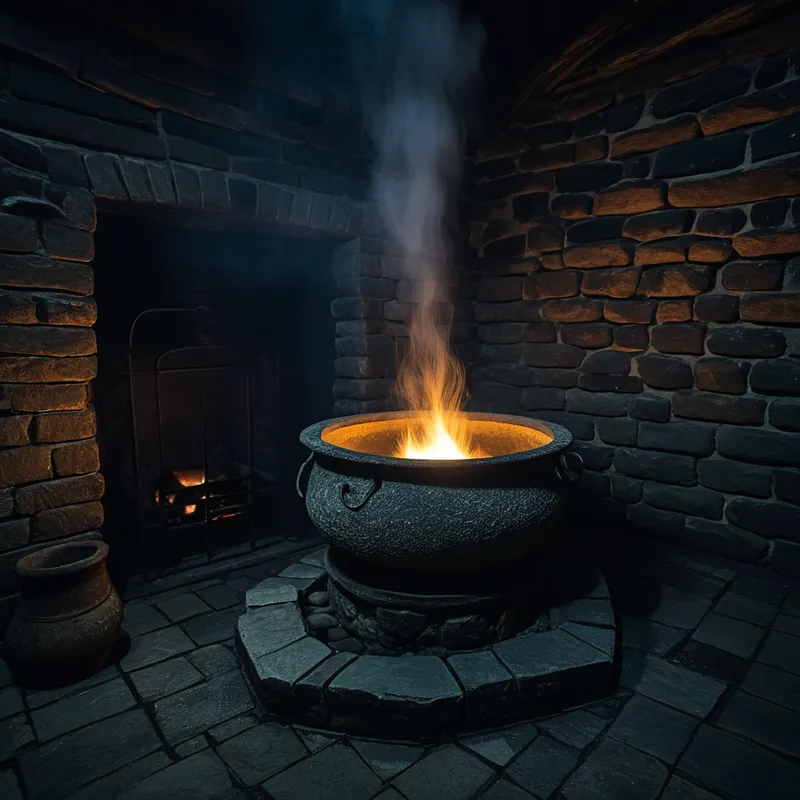
Listen, and feel the heat on your skin. In the deep, dark woods, where the pines whisper old secrets, stands a low, log-built hut. Smoke curls from its chimney, not of a home, but of a different hearth. This is the banya. By day, it is a place of laughter and sore muscles eased. But when the fourth fire is lit, when honest folk have gone home to their beds, the space belongs to Another.
He is Bannik. He dwells in the space behind the hottest stove, under the lowest bench, in the steam that lingers after midnight. His form is of the place itself: skin like wet, worn wood, hair and beard of clinging moss, eyes that gleam like hot stones in the dark. He is the soul of the bathhouse, its guardian and its peril.
The rules are ancient, passed from grandmother to grandchild in a hushed voice. Never enter the banya after the third shift. Always leave a bucket of clean water, a piece of soap, and a whisk of birch leaves for Him. Speak respectfully, if you must speak at all. And never, ever disturb Him on His day—often said to be a Thursday.
But let us follow one who forgot, or who dared. A proud young man, perhaps, who scoffed at the old ways. The village sleeps. The moon is high. He enters the banya alone for a fourth time, seeking solace for a guilt that clings to him like grime. The air is thick, a palpable fog that burns the lungs. The silence is not empty; it is watchful.
He pours water on the stones. A hiss, and the steam erupts—not in a cloud, but in a shape that coils and thickens. The heat becomes oppressive, a living weight. From the corner, a low chuckle rumbles, felt in the bones more than heard. The wooden walls seem to lean in. The young man turns, and there He is. Not fully seen, but known—a presence of immense age and elemental power.
“You did not leave the offering,” the steam seems to whisper. “You come at My hour.”
Terror, colder than the snow outside, grips the youth’s heart. He stammers an apology, but words are ash in the sacred heat. Bannik advances, not with steps, but as the steam advances. The birch whisk, left by a wiser soul, lifts from the bench of its own accord. What follows is not mere punishment, but a forced, terrifying rite. The whisk strikes, not with the gentle touch of a bath, but with the sting of truth, scalding water follows, and the man is driven from the hut, not by hands, but by the very air, cast naked into the freezing night.
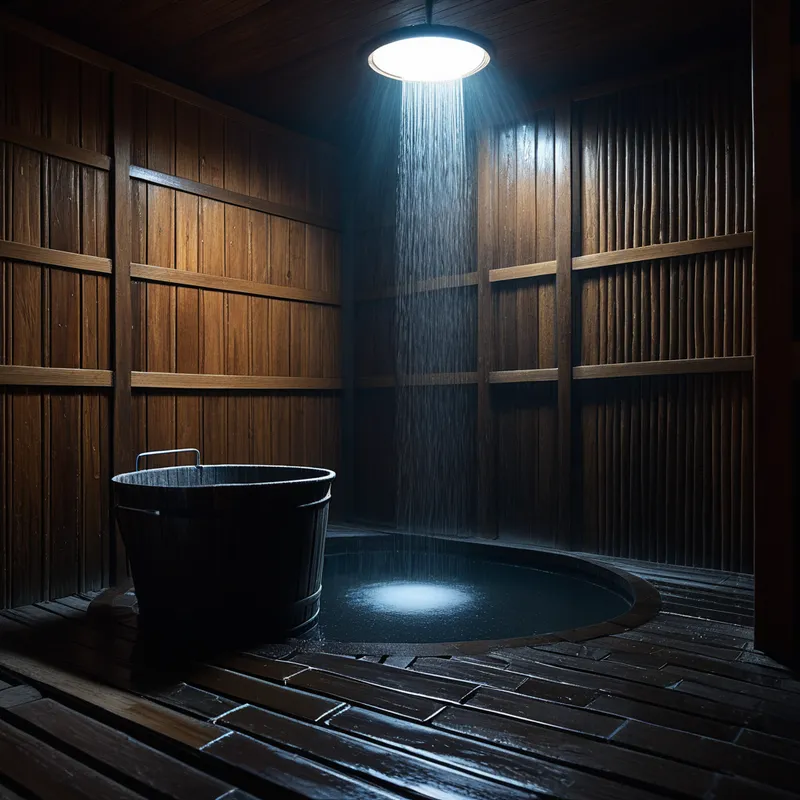
Yet, if the rules are kept? If respect is given? Then Bannik is the greatest of allies. His heat drives out the deepest chill of winter and of spirit. His steam opens the pores of the body and the soul. Under His watch, in that intense, purgatorial heat, followed by the shocking plunge into icy water, a transformation occurs. The physical filth is washed away, and with it, a layer of psychic malaise. One emerges not just clean, but renewed. For Bannik does not simply wash; He scours. He presides over the threshold where dirt becomes purity, weakness becomes strength, and the profane self touches, for a moment, the sacred.
Cultural Origins & Context
The myth of Bannik is not a tale of distant gods on mountain tops, but a folklore born from the daily and weekly rhythms of Slavic peasant life. The banya was far more than a bathroom; it was a crucial, communal institution. It was where one was born, where women often gave birth in the comparative sterility of heat. It was where the sick were treated with steam and herbs. And most commonly, it was where the entire village would cleanse themselves, often weekly, in a social ritual.
This made the bathhouse a profoundly liminal space—a place between states. It was neither fully home nor wilderness, a place where one entered soiled and exited clean, where one was vulnerable, naked, and exposed. In the worldview of animistic Slavic paganism, such a powerful, in-between place naturally possessed its own spirit, a genius loci. Bannik was that spirit.
The stories were passed down orally, not by professional bards, but within the family and community, often as cautionary tales to children. “Do not misbehave in the banya, or Bannik will get you.” This served a direct societal function: it enforced respect for a vital communal resource and codified hygiene and ritual practice into memorable myth. The offerings of water, soap, and birch were practical acts of maintenance and respect, mythologized into a pact with the spirit of the place. Bannik folklore represents a deep, pre-Christian understanding of the sacred embedded in the practical, where every action in a potent space carried spiritual weight.
Symbolic Architecture
Bannik is the archetypal guardian of the liminal. The bathhouse itself is a temple of transformation, and He is its capricious priest. He symbolizes the raw, untamed, and often uncomfortable force of purification itself. True cleansing is not always gentle; it can be scalding, shocking, and require the stripping away of not just dirt, but ego and pretense.
The spirit in the steam does not distinguish between the grime of the earth and the grime of the soul; its purpose is the relentless pursuit of the pure state beneath.
Psychologically, Bannik represents the aspect of the shadow that is tasked with hygiene. He is the critical, scouring inner voice that insists we confront what we wish to ignore. He is the discomfort of introspection, the “heat” of shame or guilt that, when faced and endured, can lead to genuine catharsis. His trickster nature—benign if respected, punitive if provoked—mirrors the psyche’s own mechanisms: ignore your inner truths, and they will ambush you; approach them with respect, and they can heal you.
The ritual of the bath—heat, beating with the birch whisk (venik), cold plunge—is a perfect metaphor for psychic integration. The heat softens and opens (making the unconscious accessible), the whisk stimulates and exfoliates (conscious engagement with difficult material), and the cold shock seals and revitalizes (the reintegration of the self after a difficult process).
The Dreamer's Resonance
To dream of a Bannik-like presence—a hidden watcher in a steamy bathroom, a feeling of being scrubbed raw in a dream sauna, or a sense of sacred rules violated in a cleansing space—signals a profound somatic and psychological process. The dreaming psyche is engaging in a deep purge.
Somatically, this may correlate with the body attempting to process toxicity, literal or metaphorical, often through fever, intense sweating, or a felt need for detoxification. Psychologically, it indicates that the dreamer is in a liminal phase of life—a transition, a recovery, a period of confronting something “dirty” or shameful from their past. The steamy, obscured environment of the dream reflects the unclear, emotional state of this processing. The figure of Bannik himself may appear as a frightening authority figure, a silent observer, or even as the dreamer’s own hands performing an obsessive cleansing.
Such dreams point to the necessity of ritual. The psyche is demanding that the dreamer create a dedicated, respectful space (a temenos) to engage with their shadow material. It warns against rushing the process (entering the bath at the wrong time) or trying to cleanse without acknowledging the power of the process itself (forgetting the offering). The dream is an invitation to submit to a necessary, if difficult, ordeal of self-confrontation.

Alchemical Translation
The myth of Bannik models the alchemical stage of nigredo and the washing (ablutio) that follows. The modern individual’s journey of individuation requires entering the personal banya—the heated container of therapy, deep reflection, or creative struggle.
First, one must enter the sacred heat: willingly step into the discomfort of self-examination. This is the firing of the alembic. Then, one must respect the spirit of the place: acknowledge that the process has its own intelligence and power beyond the ego’s control. To offer the “water, soap, and birch” is to bring the tools of honest self-assessment, compassion, and disciplined effort.
The transmutation occurs not in avoiding the scald, but in understanding that the spirit of the steam and the purity of the water are two aspects of the same cleansing force.
The “beating” by Bannik translates to the ego’s necessary humiliation, the breaking down of defensive pride. The subsequent casting out into the cold is the shocking re-entry into the world after an inner ordeal, where one feels raw, exposed, but fundamentally renewed. The ultimate goal is not to defeat Bannik, but to learn his rules so thoroughly that one can utilize the transformative power of his domain for one’s own wholeness. The individual becomes, in a sense, their own respectful bather and diligent guardian of their inner sanctum, capable of undergoing necessary purifications without catastrophe, emerging each time with a soul a little cleaner, a little closer to its essential state.
Associated Symbols
Explore related symbols from the CaleaDream lexicon:
- Water — The essential element of Bannik's domain, representing both the scalding steam for purification and the clean offering of respect, symbolizing the fluidity of the psyche and emotional cleansing.
- Fire — The heat of the bathhouse stones, representing the transformative, painful, but necessary energy required to burn away impurity and catalyze change.
- Ritual — The strict codes of behavior in the banya mirror the need for structured, respectful processes when engaging with deep psychological or spiritual transformation.
- Shadow — Bannik himself is a classic shadow archetype, dwelling in the unseen corner, embodying the disowned power and truth that must be integrated for wholeness.
- Threshold — The bathhouse door is a potent threshold between the dirty profane world and the clean sacred self, guarded by a spirit who governs transitions.
- Purification — The core action presided over by Bannik, a physical metaphor for the psychic process of releasing guilt, shame, and accumulated psychic debris.
- Fear — The initial response to Bannik's presence, representing the natural terror of confronting the unknown or repressed aspects of the self.
- Rebirth — The state achieved after surviving Bannik's rite; emerging from the bathhouse clean and renewed is a symbolic rebirth of the self.
- Spirit — Bannik is a genius loci, a spirit of place, reminding us that profound psychological work often requires acknowledging and engaging with the specific "spirit" or energy of our inner landscapes.
- Stone — The heated stones of the bathhouse stove are the inert, ancient foundation that, when activated, produce the transformative steam, symbolizing latent potential within the self.