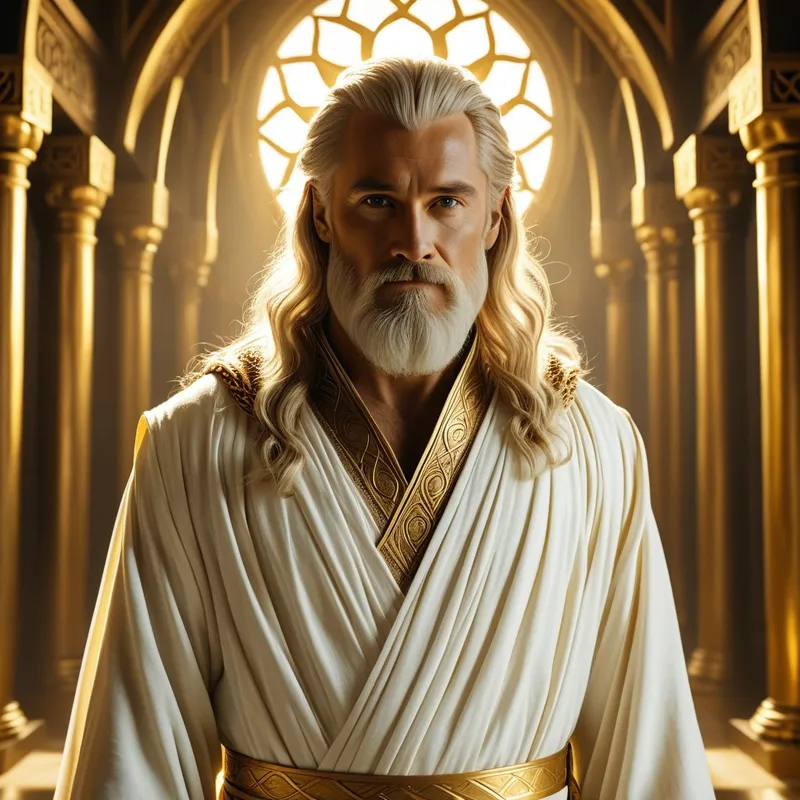
Balder Myth Meaning & Symbolism
The beloved god Balder is slain by a mistletoe dart, a tragedy born of prophecy and Loki's malice, plunging the Norse cosmos into grief and foreshadowing its end.
The Tale of Balder
The air in Asgard grew heavy with a dread that even the mead of Valhalla could not sweeten. For Odin, the All-Father, had ridden his eight-legged steed Sleipnir down the roots of the Yggdrasil to the realm of the dead. There, from a seeress raised from her ancient barrow, he heard a prophecy that chilled his one good eye: his own son, Balder the Beautiful, was fated to die.
Balder, whose presence was like sunlight on a winter fjord, whose laughter was the sound of spring thaw, had begun to dream of his own end. His dreams were dark portents that stole the color from his cheeks. In the great hall of Gladsheim, the gods gathered, their faces grim. Frigg, Balder’s mother, could not bear the shadow upon her brightest child. She walked the nine worlds, from the deepest roots to the highest branches, and extracted an oath from every substance: from iron and stone, fire and water, earth and wood, from every beast and bird and creeping thing—a promise that they would not harm her son.
Returning to Asgard, she declared her work done. In relief, the gods turned it into a game. They would gather in the courtyard and take turns hurling spears, casting stones, and striking at Balder. And it was true! Every missile turned aside. The axe-blade splintered on his breast. The thrown rock fell harmless at his feet. Balder stood, radiant and laughing, a testament to his mother’s love, and Asgard echoed with joyous, relieved laughter.
All laughed but one. Loki watched from the shadows, his smile a thin, cold line. He could not abide this perfect, untouchable joy. Disguised as an old woman, he went to Frigg and, with honeyed words, asked if she had truly secured an oath from all things. Weary and proud, the goddess confessed one small oversight: in the west, at the gate of Valhalla, grew a young plant called mistletoe. It seemed too young, too tender, to swear an oath or do any harm.
Loki’s heart leapt. He went to the spot, carved a dart from the pale green wood, and returned to the game. The gods were still taking their turns. Hod, Balder’s own brother, stood apart, unable to join the sport due to his darkness. Loki approached him. “Why do you not honor your brother?” he whispered. “Here, let me guide your hand.” He placed the mistletoe dart in Hod’s palm, aimed his arm, and let fly.
The whisper-thin dart shot across the courtyard. It did not turn. It did not splinter. It struck Balder in the heart. The laughter died in the throats of the gods. The beautiful god staggered, his light flickering like a guttering candle, and fell dead upon the grass. The most terrible silence that the nine worlds had ever known descended upon Asgard.
What followed was a grief so profound it shook the Yggdrasil to its roots. The gods were frozen, stricken. When they found voice, it was only for weeping. Frigg’s anguish was a sound to break stone. Odin, who knew the prophecy was now fulfilled, felt the weight of all wisdom as a curse. They built a great funeral ship for Balder, placed his body upon it with treasures and the body of his wife Nanna who had died of heartbreak, and set it aflame. The ship, a floating pyre of unbearable light, drifted out to sea, and Asgard was cloaked in perpetual twilight.
Cultural Origins & Context
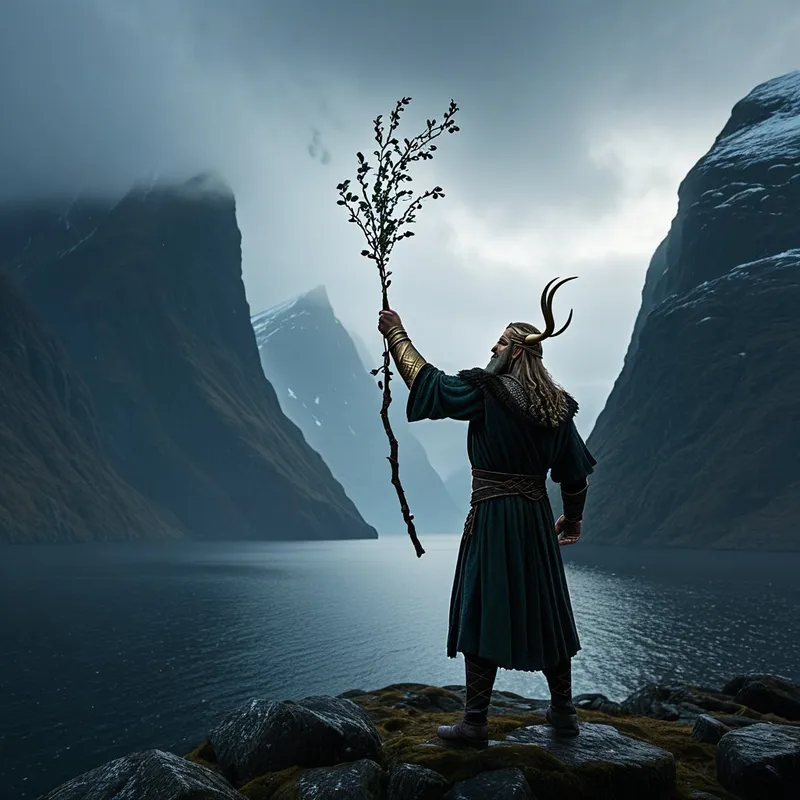
The myth of Balder’s death is preserved primarily in the Prose Edda of Snorri Sturluson and referenced in older Poetic Edda verses. It was not a simple fireside tale but a core cosmological narrative for the pre-Christian Norse. This story was likely told and retold by skalds (poets) and within familial settings, serving a function far beyond entertainment.
In a worldview defined by wyrd and an inevitable, catastrophic end in Ragnarök, Balder’s death is the pivotal, point-of-no-return event. It is the moment the Fimbulwinter truly begins in the psychological and moral landscape of the gods. The myth served to explain the presence of profound, inexplicable tragedy in a world governed by oaths and order. It asked: what happens when the best of us, the most protected and beloved, falls to the smallest, most overlooked malice? It reinforced the Norse understanding that fate is inexorable, that even the efforts of the All-Father and the All-Mother cannot avert a destined doom, and that joy is inherently fragile. The death of the "good god" was the necessary precondition for the final cleansing of Ragnarök, making it a story about the sacrificial loss required for any potential renewal, however distant.
Symbolic Architecture
Balder represents consciousness in its most pristine state: the innocent, luminous ego that believes itself invulnerable. He is the principle of pure, unshadowed light—goodness, beauty, and peace. His mother Frigg’s exhaustive efforts symbolize the psyche’s attempt to create a perfect, defended conscious world, a citadel of the ego where nothing painful can enter.
The tragedy is not that the shadow exists, but that consciousness believes it can be fully exiled.
Loki, the shape-shifting trickster, is the archetypal shadow—the repressed, envious, and chaotic element of the psyche that is denied a seat at the table of the conscious self. He is not an external monster, but an aspect of the divine family itself. The blind god Hod is the instrument of the shadow, representing the unconscious, unseeing part of the self that is easily manipulated by repressed contents. The mistletoe is the perfect symbol of the fatal flaw: it is the overlooked, the "too small to matter," the tender weakness within the system of defenses. It signifies that the point of vulnerability is never the obvious threat (sword, fire), but the thing deemed innocent and harmless by the conscious mind.
The myth thus maps the catastrophic collapse that occurs when the conscious self, in its inflation of innocence, refuses to acknowledge its own complicity with darkness and vulnerability. The death of Balder is the shattering of naive consciousness, a necessary, if devastating, step toward a more complete, albeit sorrowful, awareness.

The Dreamer's Resonance
When this mythic pattern stirs in the modern dreamer, it often manifests as dreams of a sudden, shocking loss of something precious and protected. One might dream of a radiant child who falls ill, a pristine white room that is suddenly stained, or a trusted person or object turning inexplicably lethal. The somatic experience is one of a cold, piercing shock—a gasp, a clutch at the heart—followed by a profound, immobilizing grief.
Psychologically, this signals the end of a state of psychic innocence or inflation. The dreamer is undergoing the painful realization that a cherished self-image, a long-held belief in one’s own fundamental goodness or safety, or a protected life situation, is vulnerable and mortal. The "Loki" figure in the dream might appear as a sly colleague, a forgotten memory, or even a seemingly benign comment that carries a hidden barb—the mistletoe dart. This dream pattern is the psyche’s brutal, efficient method of initiating a confrontation with personal shadow material and the reality of fate (one’s own inherent limitations and mortality). It is the unconscious enforcing a necessary humiliation of the ego, piercing its illusion of invulnerability.
Alchemical Translation
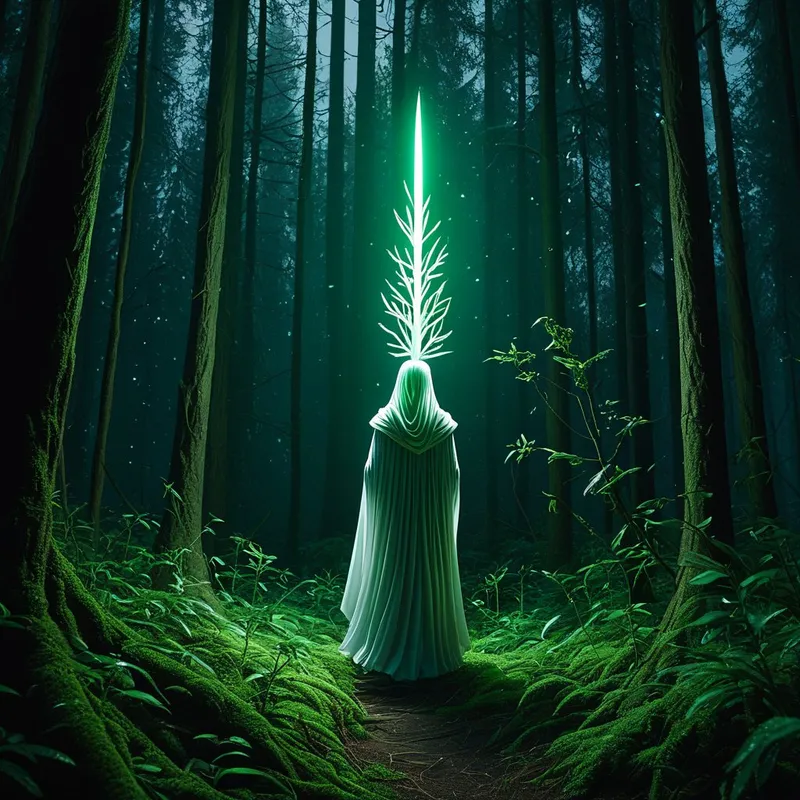
The alchemical process mirrored in Balder’s myth is the nigredo—the blackening, the putrefaction, the descent into utter despair that is the first, non-negotiable stage of psychic transformation. Before the gold of the integrated self can be found, the lead of the naive ego must be dissolved.
The death of the innocent is the birth of the individual.
For the modern soul, the "Balder work" involves courageously examining where we have, like Frigg, secured oaths from everything we recognize as a threat, while ignoring the tender, overlooked mistletoe in our own psychological garden. This is often a subtle resentment, a denied envy, a hidden dependency, or a fragility we refuse to name. The "Loki" within must be acknowledged, not as an external enemy, but as a disowned part of our own creative-destructive potential. The blinding of "Hod"—our unconscious complicity—must be brought to light.
The goal is not to resurrect the old, naive Balder. He cannot return to the old games. The myth tells us he remains in Hel. His return is prophesied after Ragnarök, in a new world. Psychologically, this translates to the emergence of a new conscious attitude after the ego has passed through its catastrophic dissolution and confrontation with the shadow. This new consciousness is wiser, sadder, grounded in the reality of loss and complexity, and capable of holding both light and darkness. It is the consciousness that has survived its own death and been remade, not in pristine innocence, but in hard-won integrity. We do not avoid the dart; we learn, forever after, to see the mistletoe.
Associated Symbols
Explore related symbols from the CaleaDream lexicon: