Baku in Anime/Manga Myth Meaning & Symbolism
The benevolent Baku, a chimera from Japanese folklore, consumes nightmares in modern anime, offering a symbolic path to digest psychic darkness.
The Tale of Baku in Anime/Manga
In the deep, velvet hours where the world of waking dissolves, another kingdom stirs. This is the realm of Yume no Kuni, a sea of shadows and shimmering light. Here, the children of mind are born—creatures of joy spun from sunbeams, and beasts of terror forged in forgotten corners of the heart. Among these, the most fearsome are the Akumu, serpents of dread that coil around the dreamer’s throat, wolves of anxiety that gnaw at the edges of the soul’s sanctuary.
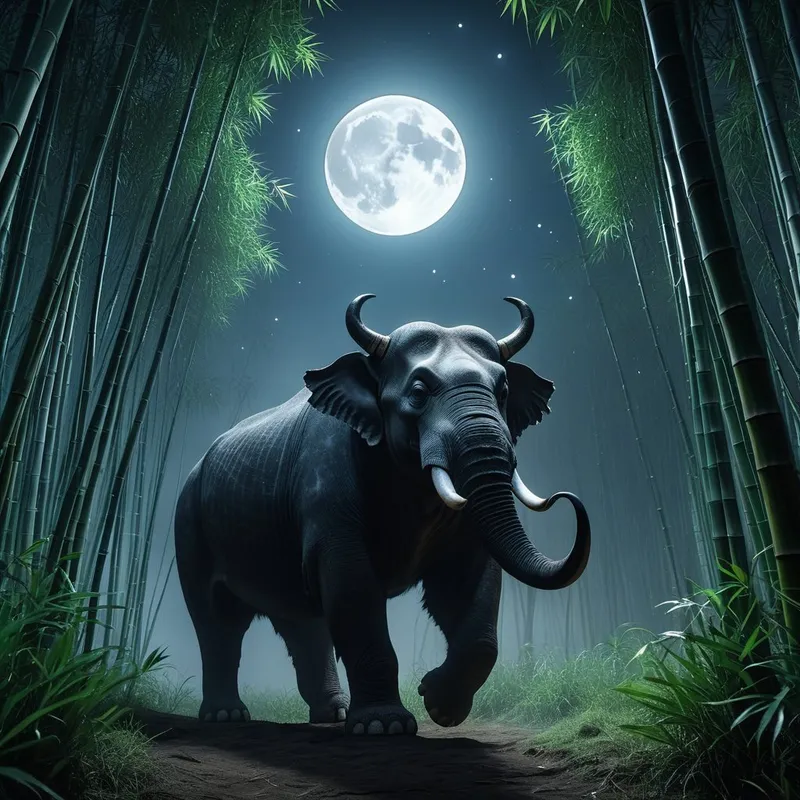
But watch now, from the borderlands between worlds. A shape moves through the groves of sleeping thought. It is not a creature of this realm, yet it is its sworn guardian. It is the Baku. Hear the soft, heavy tread of its bear-like paws. See the wise, gentle curve of its elephant’s trunk, a instrument not for battle, but for delicate consumption. Its rhinoceros eyes see not flesh, but the very fabric of fear; its oxen tail sweeps away the psychic residue left behind.
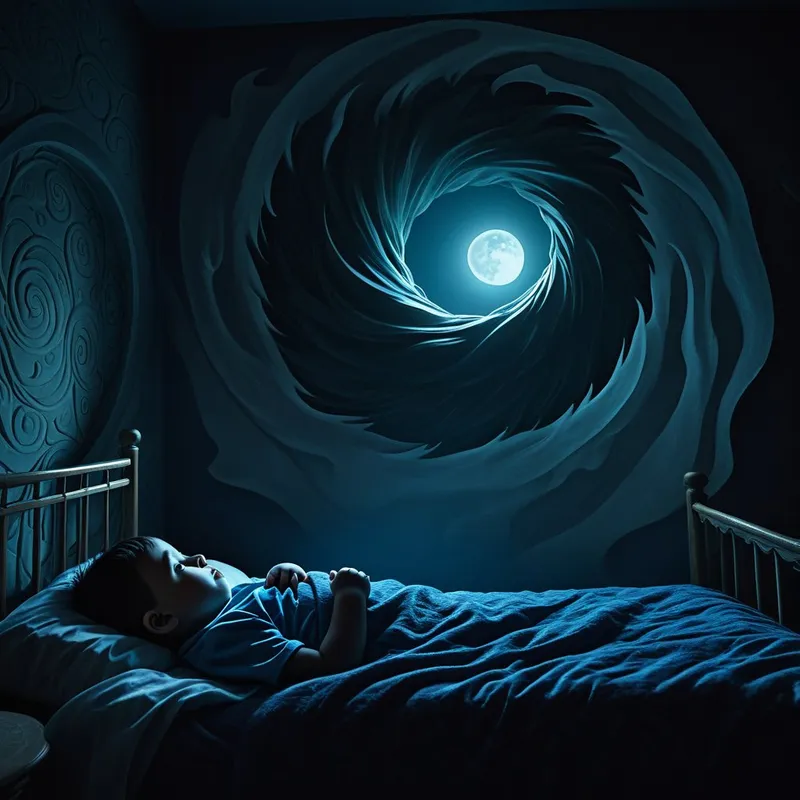
A dreamer tosses, trapped in a labyrinth of their own making, pursued by a formless horror. The Baku approaches, a silent mountain of peace. It does not roar; it breathes in. With a sound like a distant wind through ancient pines, it draws the nightmare forth. The dark tendrils, the sharp-toothed shadows, all are pulled from the dreamer’s brow, swirling into the Baku’s waiting maw. The monster is consumed, not destroyed, but taken in. The dreamer’s face smoothes, their breathing deepens, and the dreamscape shifts from stormy grey to the soft blue of pre-dawn.
Having fed, the Baku withdraws, its duty fulfilled. It returns to the threshold, a vigilant watcher in the night, leaving behind not a victory, but a profound silence—the fertile void where peaceful sleep, and perhaps courage, can begin to grow anew.
Cultural Origins & Context
The Baku is no invention of the modern animator’s pen; it is a traveler, a mythic immigrant with ancient papers. Its origins lie in the classical Chinese texts, a chimera mentioned alongside dragons and phoenixes. It crossed the sea to Japan centuries ago, where it was adopted and adapted into Kaidan and folk belief. Traditionally, it was considered a powerful but potentially dangerous spirit. To call upon a Baku to eat a nightmare was effective, but risky—if still hungry, it might devour one’s hopes and good fortunes as well.
Its passage into Global Pop Culture is a fascinating act of psychic sanitation and creative transformation. In the mid-20th century, through the works of manga and anime pioneers, the Baku was gentled. Its edges were smoothed, its danger mitigated. It evolved from a fearsome, last-resort talisman (where children would keep a picture of a Baku by their bed) into a benevolent, recurring character. This shift mirrors the medium’s own journey and its core audience’s concerns. Anime and manga, often exploring adolescent anxiety, alienation, and inner turmoil, found the perfect symbolic guardian in the Baku. It became a narrative device that externalizes the process of coping with psychic pain, offering a fantastical solution to the universal, nightly ordeal of fear.
Symbolic Architecture
At its core, the Baku is not a warrior who slays demons, but a digestor who metabolizes them. This is its first and most profound symbolic function: it represents the psychic capacity for containment.
The true antidote to chaos is not order, but a vessel large enough to hold it without breaking.
The Baku is that vessel. Its chimera nature—part bear, elephant, rhinoceros, ox—symbolizes the integration of diverse strengths: the bear’s protective solitude, the elephant’s mindful memory and dexterity, the rhinoceros’s thick-skinned perseverance, and the ox’s diligent, plodding labor. It is a totality, a model of the Self that can accommodate the fragmented and frightening parts of the psyche (the shadow).
Its action of eating is crucial. It does not reflect the nightmare back at the dreamer, nor does it simply shield them. It takes the toxic material inside itself. This symbolizes the alchemical first step of nigredo—the descent into, and acknowledgment of, the dark material. The Baku performs this service for the dreamer, modeling the terrifying but necessary act of “swallowing” one’s own fears to begin the process of transmutation.

The Dreamer's Resonance
When the image or essence of the Baku surfaces in a modern dream, it is seldom as a literal creature. More often, it manifests as a process or an atmosphere. One might dream of a silent, powerful vacuum cleaning a room of black smoke; of a vast, gentle machine humming as it processes screaming data into static; or of simply feeling a heavy, peaceful presence at the bedside that draws the anxiety out of one’s chest like poison from a wound.
Somatically, this dream signals a psyche that is overloaded with undigested fear or anxiety—the “nightmares” of waking life: unresolved trauma, repressed anger, or pervasive dread. The Baku’s appearance marks the unconscious activation of a self-care protocol. It is the psyche attempting to generate its own container, to initiate an internal process of detoxification. The dreamer is not being rescued by an external force, but is witnessing (or experiencing) the innate, archetypal function of the Self beginning its work of integration. The feeling upon waking is not of victory, but of relief and a peculiar, hollow calm—the clean, empty space after a storm has passed through.
Alchemical Translation
The Baku’s myth provides a serene, non-violent map for the individuation process. Its journey models psychic transmutation in three stages.
First, Invocation (The Conscious Call): The dreamer, in distress, consciously or unconsciously “calls” for help. In psychological terms, this is the ego, overwhelmed by shadow content, reaching a point of suffering sufficient to seek a deeper solution. It is the admission of powerlessness over one’s inner demons.
Second, Ingestion (The Shadow’s Embrace): The Baku consumes the nightmare. This is the critical, courageous phase where the conscious self must “take in” what it has been rejecting. It is not analysis, but raw acceptance. The frightening content is brought into the vessel of the larger Self.
Transmutation begins not when we fight our darkness, but when we consent to make room for it at the table.
Finally, Integration (Metabolic Silence): The Baku walks away, sated. The nightmare is gone from the dreamer, but not annihilated. It has been incorporated into the Baku’s own substance. Psychologically, this is the slow, invisible work of the unconscious. The toxic fear, once held safely within the totality of the Self, is gradually broken down and reconfigured. Its energy is neutralized, or even repurposed, becoming part of the individual’s psychic resilience and depth. The triumph is not in the battle, but in the capacity to digest experience, transforming poison into—if not nourishment—then at least into harmless matter. The modern individual, through this myth, learns that healing is not about eradicating fear, but about developing the spiritual stomach to process it.
Associated Symbols
Explore related symbols from the CaleaDream lexicon: