Bain-Marie Myth Meaning & Symbolism
The myth of the gentle vessel that cradles volatile essences, teaching that the most profound transformations occur not through force, but through patient, mediated warmth.
The Tale of Bain-Marie
Before the roar of the furnace, before the shattering of the vessel, there was the gentle hum. In the silent, smoke-stained halls where the Adept walked, a different kind of power was revered. It was not the power of the hammer or the all-consuming fire, but the power of the womb, the power of the bath.
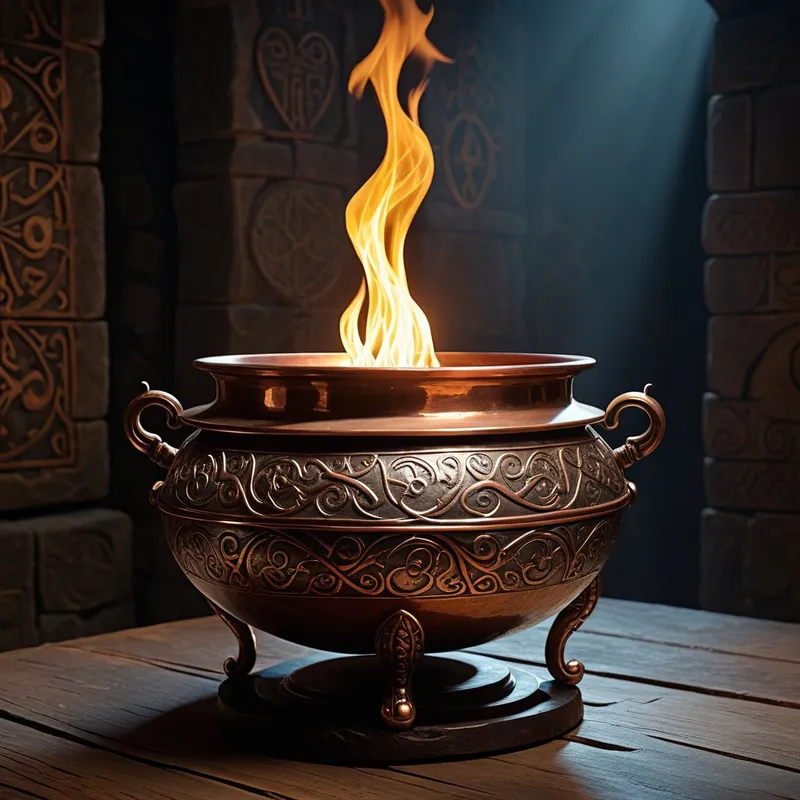
They called her Bain-Marie, "Mary's Bath," and her story is not one of conquest, but of cradling. She was not a goddess of sharp edges, but a spirit of the liminal space between the flame and the fragile. Her body was the vessel-within-a-vessel, the great basin of steadfast water that never boiled of its own accord, but which received the fire's fury and translated it into a pervasive, patient warmth.
In the tale, the Prima Materia is a thing of terror and beauty—a volatile spirit, a essence so pure it would shatter if touched by direct flame, so precious it would evaporate if left exposed to the harsh air. The Adept, in his fervor, had tried the ways of force. He had applied the Athanor's kiss directly, only to witness precious oils blacken and delicate tinctures scream into smoke. Despair, thick as the soot on the ceiling, settled in his heart.
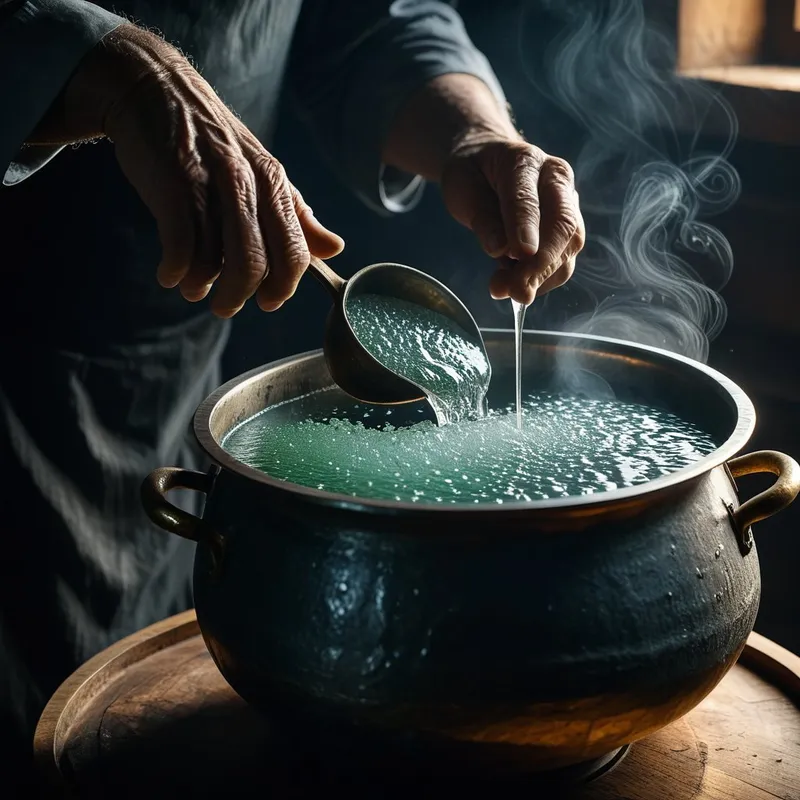
Then, in a dream of soft light, the principle came to him. He did not forge a new tool, but prepared a sanctuary. He filled a great, copper basin with clear water—the universal solvent, the passive feminine. Within it, he suspended a smaller, glass vessel containing the trembling Prima Materia. He then stoked not a raging inferno beneath the glass, but a low, persistent flame beneath the water.
The conflict was not of clashing swords, but of resisting impatience. The rising action was the slow, almost imperceptible rise of steam from the water's surface, the gentle convection that began to stir the liquid gold within the inner vial. There was no dramatic explosion, only a gradual surrender. The volatile spirit, feeling no assault, no direct threat, ceased its frantic struggle. Wrapped in the consistent, all-encompassing warmth of the mediated heat, it began to change. It digested. It married. It transmuted.
The resolution was silent. When the Adept finally lifted the inner vessel, the substance within had not been destroyed by fire, but perfected by warmth. It had become something new, stable, and potent, not through violent confrontation, but through sustained, gentle incubation. The Bain-Marie had not done the work; she had made the work possible. She was the sacred space where transformation could occur without annihilation.
Cultural Origins & Context
The mytho-poetic figure of Bain-Marie emerges from the practical heart of Western alchemical tradition, dating to the early medieval period. Its name is often attributed to Maria Hebraea, a foundational and likely mythical proto-chemist, thus rooting the practice in a lineage of sacred, intuitive science. This was not a story told in grand epics, but passed down in laboratory notebooks, in the whispered instructions from master to apprentice.
Its societal function was profoundly pedagogical. In a discipline obsessed with the violent processes of calcination, dissolution, and separation, the Bain-Marie myth served as a crucial corrective—a reminder of the opus contra naturam (work against nature) that must sometimes be a opus cum natura (work with nature). It encoded the wisdom of indirect method, a core principle for handling the "spiritual" aspects of matter: the essences, the volatile soul of things, the Quintessence. It taught that not all wisdom is extracted by force; some must be coaxed, incubated, and protected.
Symbolic Architecture
At its core, the Bain-Marie is the archetype of the mediated container. It is a symbol of the necessary psychic structures that allow raw, volatile content—be it emotion, trauma, or creative impulse—to be processed without destruction.
The true vessel is not what holds the thing itself, but what holds the space in which the thing can safely become.
The outer basin of water represents the stabilizing, containing function of the psyche—the ego, or perhaps the therapeutic container itself. It is receptive, fluid, and adaptive. It absorbs and distributes energy evenly. The inner vessel is the fragile, precious content of the unconscious: a nascent self, a raw memory, a half-formed idea. The persistent, low flame is the steady, attentive consciousness—not an interrogating spotlight, but a sustaining warmth of awareness.
The myth teaches that direct confrontation with certain psychic material can be catastrophic. To apply the fire of analysis or judgment directly to a nascent feeling or a deep wound may cause it to "shatter" (fragmentation) or "evaporate" (repression). The Bain-Marie principle advocates for creating a buffer of compassionate awareness, a "water bath" of non-judgmental presence, within which the volatile material can slowly, safely, transform itself.
The Dreamer's Resonance
When this mythic pattern stirs in the modern dreamscape, it often manifests in images of gentle incubation, protected spaces, and indirect processes. A dreamer might find themselves:
- Placing a precious, fragile object (a jewel, a child, a small animal) into a warm, softly lit pool or compartment for safekeeping.
- Observing a process of slow cooking, melting, or softening where heat is applied to a surrounding medium, not the object of change itself.
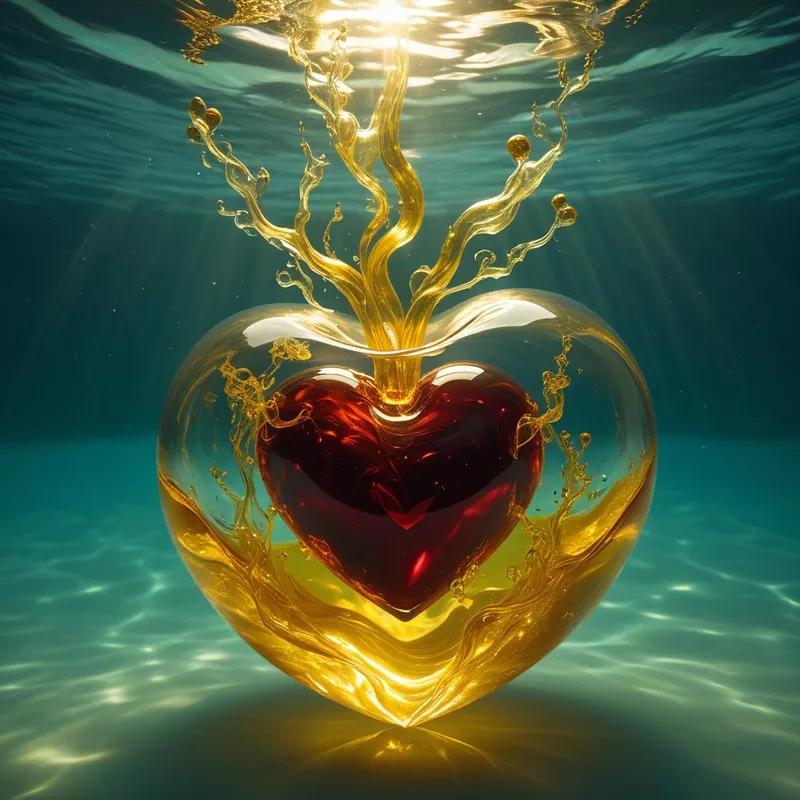
- Feeling themselves floating in a warm, buoyant liquid, feeling held and supported while a diffuse light shines from above.
Somatically, this points to a psychological process of integration through holding. The dreamer is likely grappling with material that feels too tender, too reactive, or too precious to approach directly. The psyche is instinctively constructing a Bain-Marie—a therapeutic, self-containing function. It signals a move away from heroic "fixing" and toward patient, somatic abiding. The process is one of "digestion" rather than "combat."
Alchemical Translation
For the modern individual on the path of individuation, the Bain-Marie myth models a critical stage of psychic transmutation: the albedo or whitening stage, following the initial blackening (nigredo). After the chaos and breakdown of confronting the shadow, one does not rush to the golden culmination. One must create a womb.
Individuation is not an assault on the self, but a midwifery of the soul. The flame of consciousness must learn to warm the waters of the heart, not boil its contents.
This translates to practical inner work as the cultivation of psychic indirectness. In therapy, it is the creation of the safe, holding environment. In creative work, it is the practice of "composting" ideas, letting them simmer in the back of the mind. In emotional processing, it is the skill of "sitting with" a feeling—not analyzing it to death, but allowing the consistent, gentle warmth of mindful attention to surround it, until it gradually reveals its nature and transforms of its own accord.
The triumph of the myth is not a hero slaying a beast, but a vessel successfully cradling a process to completion. It teaches that our role in our own transformation is often not that of the fiery hero, but of the attentive guardian who prepares the bath, tends the low flame, and trusts the wisdom of the process unfolding within the sacred, mediated space we have provided. The true Philosopher's Stone may not be forged in fury, but born in the gentle, persistent warmth of the Bain-Marie.
Associated Symbols
Explore related symbols from the CaleaDream lexicon: