Bacchanalia Myth Meaning & Symbolism
A myth of forbidden nocturnal rites to the wine god Bacchus, where ecstatic frenzy collides with state order, revealing the soul's untamed core.
The Tale of Bacchanalia
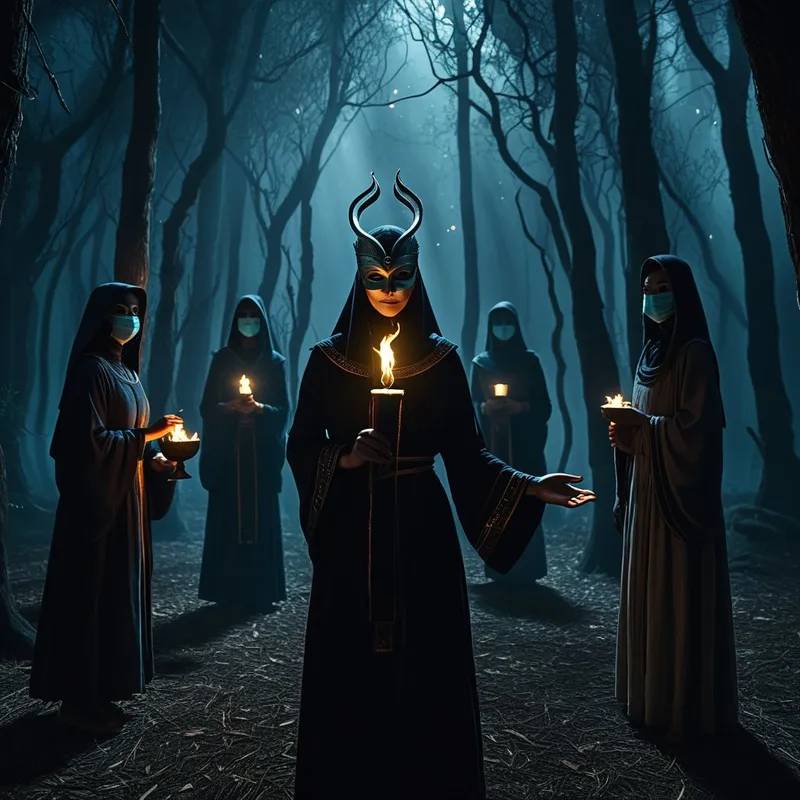
Hear now of the whispers that slithered through the cobbled streets of Rome, not in the honest light of the sun, but under the secret, silver gaze of the moon. This is not a tale for the Forum, but for the hidden grove, for the ear that strains to hear the distant, maddening beat of the tympanum.
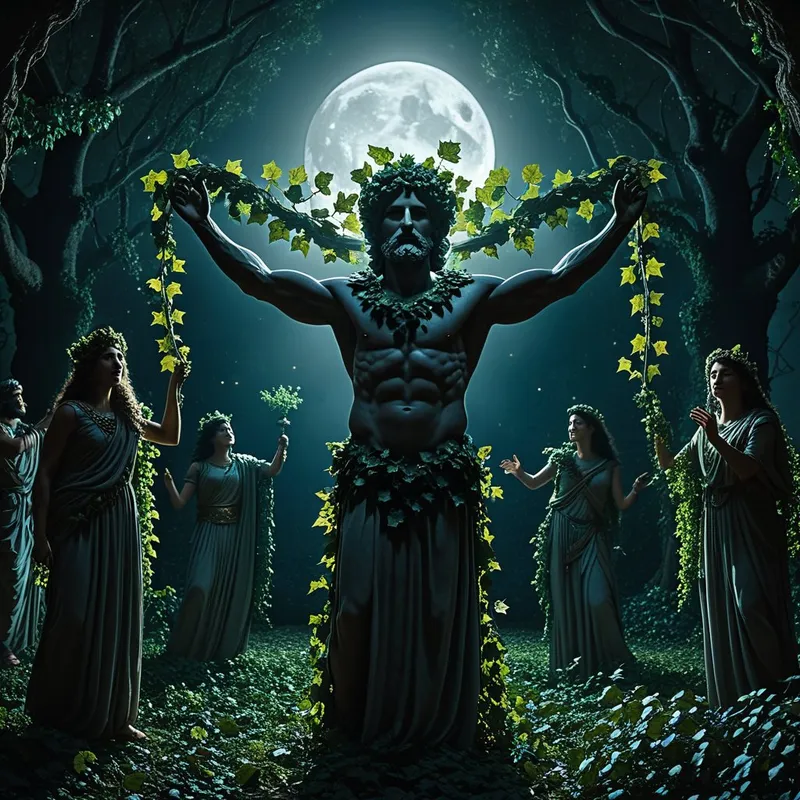
In the deep heart of night, when the ordered world of paterfamilias and Senate slept, another world awoke. They came singly, shadows among shadows, to a place outside the walls. The air was thick with the smell of damp earth, crushed ivy, and something else—a sharp, sweet promise of the vine. Here, the god was not the stern Jupiter, but Bacchus, the Liberator. He was the beautiful, long-haired youth with eyes that held both laughter and a divine madness, crowned with ivy, clutching the thyrsus—a wand that was both a weapon and a key.
The rites began with a sacred silence, broken only by the pouring of wine, the blood of the grape. Then, the first sip. It was not mere drink; it was the god entering the vessel of the body. The beat started, low and primal, from skin drums. The Maenads, his devoted ones, would lead, their hair unbound, their feet bare on the cool grass. They danced, not the measured steps of a festival, but a whirling, surrendering motion that broke the chains of the self. The music swelled—flutes wailing, cymbals crashing—a sound to shatter reason.
Men and women, citizen and slave, young and old, all distinctions melted in the sweating, ecstatic throng. They were no longer Romans bound by mos maiorum; they were beasts of the god, filled with his enthousiasmos—the god within. Stories whispered of miracles: milk and honey springing from the earth, of feats of impossible strength, of a communion so profound with the wild that the very animals drew near. This was the sparagmos, the rending—not just of sacrificial beasts in some tales, but of the rigid persona, the social mask. It was a return to a primal, undifferentiated state, a blissful and terrifying unity with the life force itself.
But such freedom casts a long, dark shadow. To the Senate, hearing reports of these nocturnal assemblies, this was not piety; it was a conspiracy. It was the very fabric of society—hierarchy, modesty, control—unraveling in the woods. The whispers grew into a roar of scandal. In 186 BCE, the Consuls moved. The Senatus Consultum was issued: the Bacchanalia were forbidden. The groves were purged, the leaders arrested. The wild god was driven back underground, his rites sanitized, his frenzy tamed into official festival. The night’s ecstasy was broken by the dawn’s decree, and the great, shuddering sigh of the repressed settled over the land once more.
Cultural Origins & Context
The mythos of the Bacchanalia is a palimpsest, a Greek spirit (Dionysus) writing itself onto the Roman soul. It entered Italy through the Greek colonies of the south, a foreign cult initially practiced by women. By the early 2nd century BCE, it had transformed, spreading like a vine through all levels of Roman society, including men and the lower classes. This was its revolutionary threat.
Its primary tellers were not poets like Ovid (who would later aestheticize it), but the state itself in its legal decrees, and the horrified historians like Livy. Livy’s account is our most detailed, but it is a prosecutor’s brief, painting the rites as a cesspool of debauchery, conspiracy, and murder. The myth, therefore, exists in the tension between the ecstatic experience of its initiates and the paranoid narrative of the state that suppressed it. Its societal function was dual: for its followers, it was a vital, periodic release valve, a direct experience of the numen (divine spirit) that bypassed the cold formalism of state religion. For the Roman authorities, it became the ultimate "other"—the internal enemy against which the rigid, militaristic, and patriarchal ideals of Rome could define and reinforce themselves. The crackdown was less about morality and more about sovereignty: who controls the access to the divine, and thus, to the human spirit?
Symbolic Architecture
At its core, the Bacchanalia is not merely a story about a party; it is a profound symbolic drama of the conflict between the structured ego-consciousness and the chaotic, creative, and destructive power of the unconscious—the Dionysian force.
The thyrsus is both scepter and spear: the ecstatic power that crowns the soul is the same force that can pierce the heart of its own illusions.
The god Bacchus represents the untamed libido, the life force in its raw, amoral, and transformative aspect. He is the spirit of the vine, which must be crushed to yield its transcendent gift. The wine symbolizes the intoxicating dissolution of boundaries—between self and other, human and animal, civilized and wild. The frenzied dance is the somatic expression of a psyche in the throes of an archetypal possession, where the individual ego is temporarily overwhelmed by a greater psychic energy.
The Roman state, with its laws and mos maiorum, symbolizes the persona—the adapted, socialized mask that ensures survival and order. The secret, nocturnal setting of the rites represents the unconscious itself, the realm where what is repressed by the conscious mind gathers its strength. The Senate's violent suppression is the ego's panic, its attempt to reassert control by banishing the threatening content back into the shadows. The myth thus maps the eternal psychic cycle: repression, eruption, and the often-traumatic negotiation between the two.
The Dreamer's Resonance
When the pattern of the Bacchanalia stirs in modern dreams, it signals a profound somatic and psychological uprising. The dreamer is not recalling a historical event, but experiencing the live archetype.
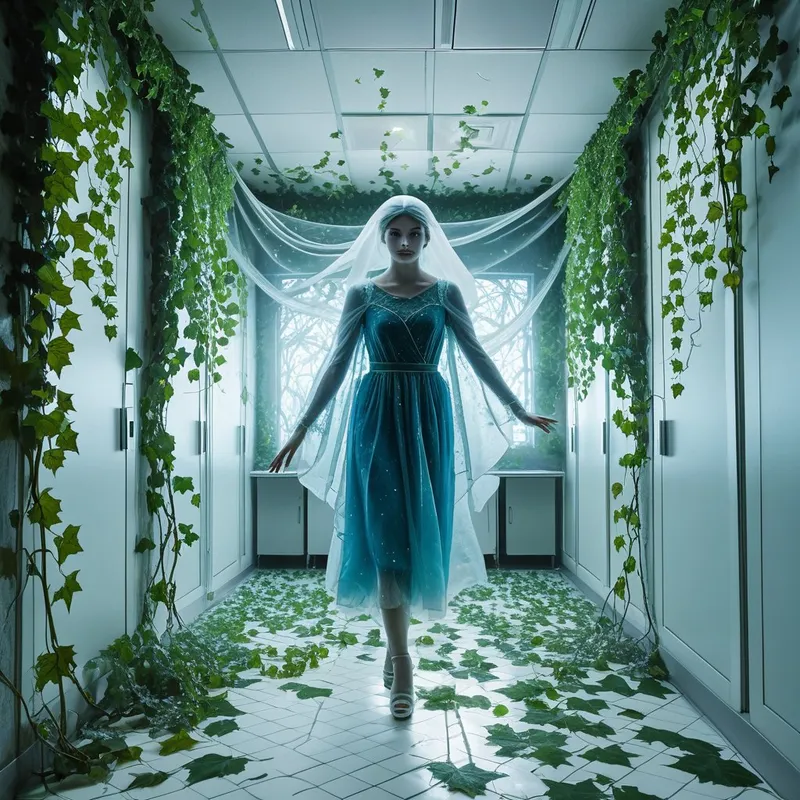
You may dream of being in a sterile, overly controlled environment—a blank office, a silent house—when suddenly, wild, organic life bursts through: vines cracking plaster, the sound of distant, compelling music, or a crowd of strangely joyful, anonymous people beckoning from a door you never noticed. This is the unconscious libido, the Bacchic force, demanding recognition. The somatic process is one of pressure and release. The body in the dream may feel first rigid, then electric, pulled between a fear of losing control and a deep, magnetic longing to join the dance.
Alternatively, you might dream of being a terrified observer or a participant in a chaotic, frightening orgy. This reflects the ego's perspective when confronted with its own shadow material—the repressed instincts, passions, and creative drives that feel alien and overwhelming. The psychological process is one of enfrentamiento—a confrontation. The dream is the psyche's attempt to initiate a necessary, if terrifying, dialogue between the ruling consciousness and the exiled, ecstatic self.
Alchemical Translation
The alchemical journey mirrored in the Bacchanalia is the nigredo—the blackening, the dissolution of the old, rigid form. For the modern individual seeking individuation (the process of becoming whole), this myth models the crucial, non-negotiable first step: the sacred surrender.
The grape does not argue with the press; it yields its essence to become the wine. So too must the conscious personality submit to be broken open by the contents of the soul it has denied.
Our modern "Rome" is the carefully constructed identity—the career, the persona, the list of shoulds and oughts. The "Senatorial decree" is our inner critic, our superego, that forbids irrational passion, unproductive joy, or messy emotion. The path to wholeness begins not with building higher walls, but by secretly venturing into our own "grove" at night—into the realm of meditation, active imagination, art, or deep therapy—and allowing the inner Bacchus to speak.
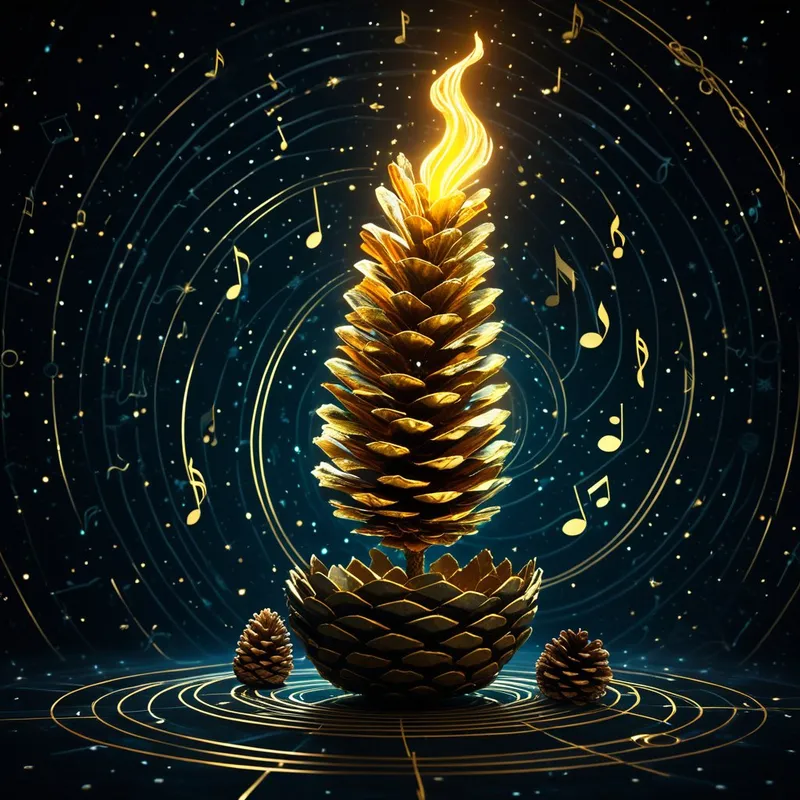
The ecstatic frenzy is not the goal, but the catalyst. It represents the violent, joyful, terrifying death of the outworn self-image. The goal is the transmutation that follows. The wine, the spirit, is the new consciousness that can hold both the ecstasy and the order, the wildness and the form. It is the development of an ego strong enough not to repress the Dionysian, but to relate to it, to channel its boundless creativity without being annihilated by it. The integrated individual is not a perpetually raving Maenad, nor a stern Senator, but one who has tasted the wine and returned to the city, carrying within them the liberating memory of the grove, transforming their world from the inside out. They become the living thyrsus—firm in structure, yet crowned with the fertile, chaotic pine cone of infinite possibility.
Associated Symbols
Explore related symbols from the CaleaDream lexicon: