Aurvandil's Toe Myth Meaning & Symbolism
The god Thor rescues the hero Aurvandil from the frozen river Élivágar, but a toe, frozen and snapped off, is cast into the heavens as a new star.
The Tale of Aurvandil's Toe
Listen, and hear the tale of the ice that became fire, of the fragment that became a constellation. The air is iron-cold, the kind that steals breath and hope. This is the realm of the Jötnar, where the river Élivágar grinds mountains to dust with its freight of ancient ice.
Here, in this desolation, a hero was lost. Aurvandil the Bold had ventured too far, had challenged the grinding cold, and the cold had won. It took him, seizing his limbs, slowing his heart, turning his blood to slurry in his veins. He was not slain, but suspended, a prisoner in a glassy tomb, his consciousness a fading ember in the endless white.
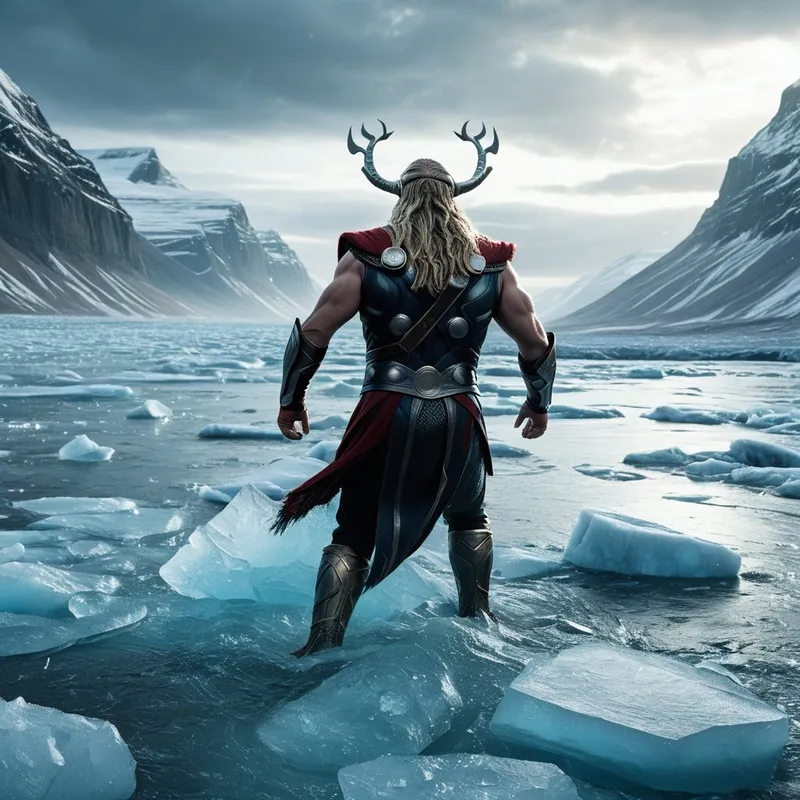
But a storm was coming—a storm of purpose and thunder. The Thunderer, Þórr, had heard. Perhaps it was the plea of Aurvandil’s wife, the seeress Gróa, that called him. Or perhaps it was the offense to courage itself that drew his wrath. He came not with stealth, but with a roar that shook the glaciers. He waded into the Élivágar, its waters boiling around his divine heat, its ice shrieking as it shattered against his legs.
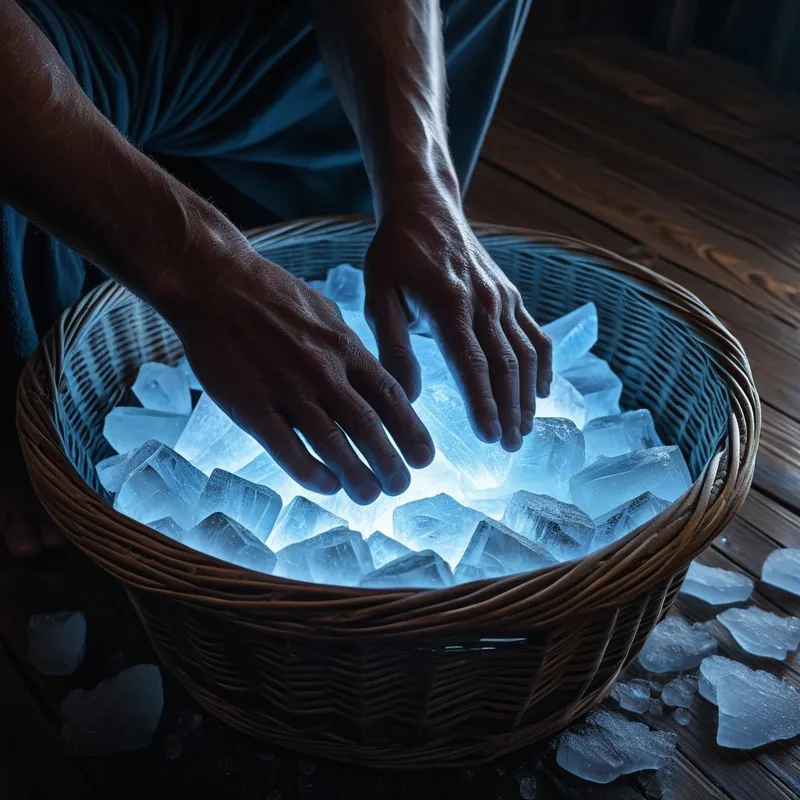
He found Aurvandil, a pale statue in the flow. With a tenderness belying his strength, Thor lifted the frozen man. He placed him in a great basket and bore him homeward, away from the land of death-in-life. As he journeyed, the warmth of the god began its work. The ice wept from Aurvandil’s body. Life, agonizing and slow, returned.
And then, a sound—a small, sharp snap. A single toe, so thoroughly claimed by the frost that it had become brittle as glass, broke clean off. Thor, pragmatic and swift, did not discard it. He placed the frozen digit in the basket with the rest of the man.
Later, in the warmth and safety of the hall, with Gróa singing her spells of healing over her husband, Thor sought to comfort her. He spoke of the journey. “Your husband is brave,” he rumbled. “And he will live. But the cold took its tribute. One of his toes broke from the frost. I threw it up into the sky.”
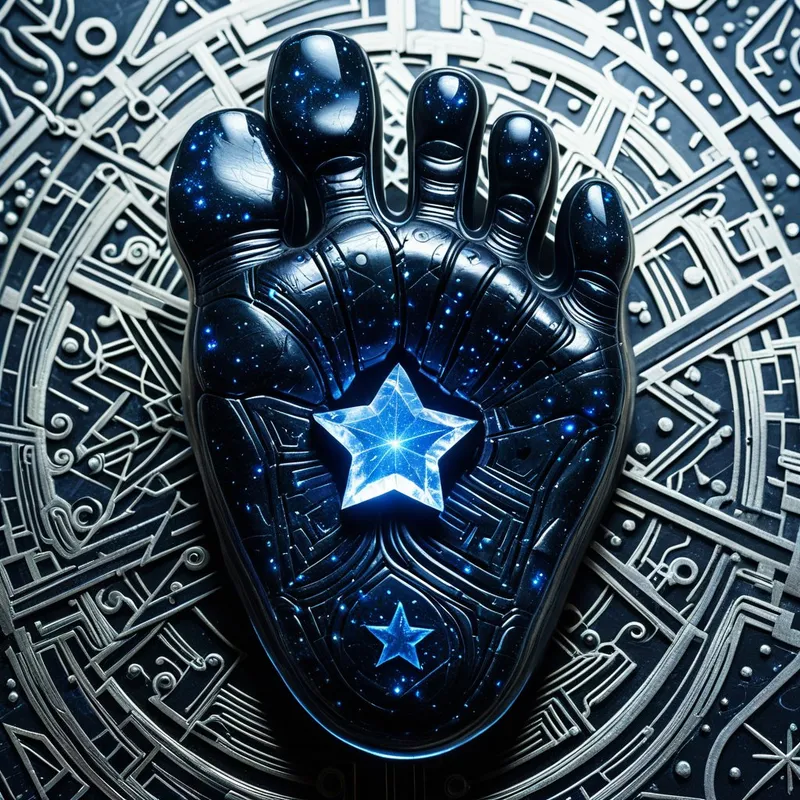
He pointed heavenward. “See there? That new, bright star? That is Aurvandils tá. The ice is gone from it now. It burns. It will burn long after we are all dust.” And in that moment, the fragment of trauma, the price of the journey, was transfigured. The hero was saved, but part of him was forever changed, made eternal, and set to guide in the darkness.
Cultural Origins & Context
The myth of Aurvandil’s Toe reaches us through a single, vital source: the Skáldskaparmál of the Prose Edda, penned by Snorri Sturluson in the 13th century. Snorri was a Christian scholar attempting to preserve the skeleton of a dying pagan poetic tradition. His work is thus a reconstruction, a retelling for an age that was forgetting the old gods, making the survival of this peculiar, intimate story all the more precious.
It was not a tale for the grand public myth-cycle, but rather a kenning—an allusive poetic metaphor—explained in a scholarly context. The myth served to explain why a star might be called “Aurvandil’s Toe.” This tells us the story existed in the oral tradition of the skalds, the poet-historians. It was a piece of mythological “grammar,” a narrative fragment used to encode meaning in verse. Its societal function was twofold: to preserve a strand of heroic lore (the rescue of a human champion by a god), and to provide a cosmic, etiological explanation for a celestial phenomenon, anchoring the human and the heroic directly into the architecture of the night sky.
Symbolic Architecture
At its core, this is a myth of salvage and alchemical loss. The hero, Aurvandil, represents the human ego or conscious spirit that ventures too far into the frozen wastes of the unconscious, the realm of the Jötnar. He is overcome, frozen in stasis—a psychological trauma, a depression, a catatonic shock. He is not dead, but he is utterly unable to save himself.
The rescue does not come from within the frozen self, but from a transcendent, archetypal force of will and action.
Thor embodies this force. He is the dynamic, healing energy of the psyche that can wade into the frozen trauma and physically extract it. He is the courage to confront the numb, cold places within. The basket is the vessel of containment, the therapeutic process that holds the shattered self during the painful thaw back into life.
The toe is the critical symbol. It is the part of the self that cannot be reintegrated. It is the cost of the experience, the psychic tissue so fundamentally altered by the trauma that it must be severed to save the whole. Yet, in the hands of the divine, this fragment is not wasted.
The wound, when consciously acknowledged and released to a higher order, becomes a guide. The trauma, transformed, becomes a star.
Throwing the toe into the sky is an act of sacred deposition. It moves the wound from a personal, painful memory to a transpersonal, symbolic fact. It becomes Aurvandils tá—a permanent fixture in the inner cosmos, a reminder that what was lost in the descent was not destroyed, but transmuted into a source of light and navigation.
The Dreamer's Resonance
When this myth stirs in the modern dreamer, it speaks of a process of thawing. To dream of being frozen in ice, or of carrying something frozen, points to a part of the psyche in suspended animation. It is often a feeling, a memory, or a capacity that has been “put on ice” for survival.
Dreams of a powerful, helpful figure (not necessarily a god) carrying one to safety indicate the emergence of inner resources, the Self organizing a rescue mission for the beleaguered ego. The somatic sensation is often one of painful prickling, the return of circulation to a numb limb—the agony of feeling returning after a period of dissociation.
The most potent resonance, however, may be the dream of losing a body part—a tooth, a finger, a toe—and finding it transformed into something luminous, precious, or technological. This is the psyche working on the myth’s final stage: recognizing that the part of you that was sacrificed to the ordeal, the part that “didn’t make it back,” has not been rendered meaningless. It is being prepared for a different purpose. The dreamer is in the basket, thawing, while the archetypal process is already casting their fragment toward the heavens.

Alchemical Translation
The journey of Aurvandil models the individuation process with stark, northern clarity. The first stage is the nigredo: the hero’s entrapment in the frozen river, the blackening, the confrontation with the cold, inert shadow.
Thor’s intervention is the albedo, the washing. It is the forceful, often painful, extraction from the morass by a greater psychic authority (the Self). The thawing is the whitening, the purification through suffering as the frozen defenses melt and life returns.
The snapping of the toe is the crucial moment of separatio. Individuation is not about becoming whole in the sense of having all original parts intact. It is about becoming complete through a conscious sacrifice. One must differentiate from, and sacrifice, an old identity, a frozen complex, a way of being that cannot survive the journey to consciousness.
The true alchemy is not in keeping the toe, but in giving it up to the sky.
The final act, the casting into the heavens, is the rubedo, the reddening, and the creation of the lapis philosophorum, the philosopher’s stone. The personal suffering (the frozen toe) is transmuted into a transpersonal, guiding function (the star). The individual’s trauma, once integrated and released from purely personal identification, becomes a point of inner orientation. It becomes a fixed light in the soul’s night sky—no longer a wound to be lamented, but a celestial fact to be navigated by. The myth concludes not with a healed hero who is exactly as he was, but with a transformed man and a new, eternal light born from his frostbite. The process is complete: leaden despair has become golden guidance.
Associated Symbols
Explore related symbols from the CaleaDream lexicon: