Aurora Myth Meaning & Symbolism
The goddess of dawn, Aurora, eternally renews the world with light while mourning her mortal lover, Tithonus, a myth of cyclical hope and tragic love.
The Tale of Aurora
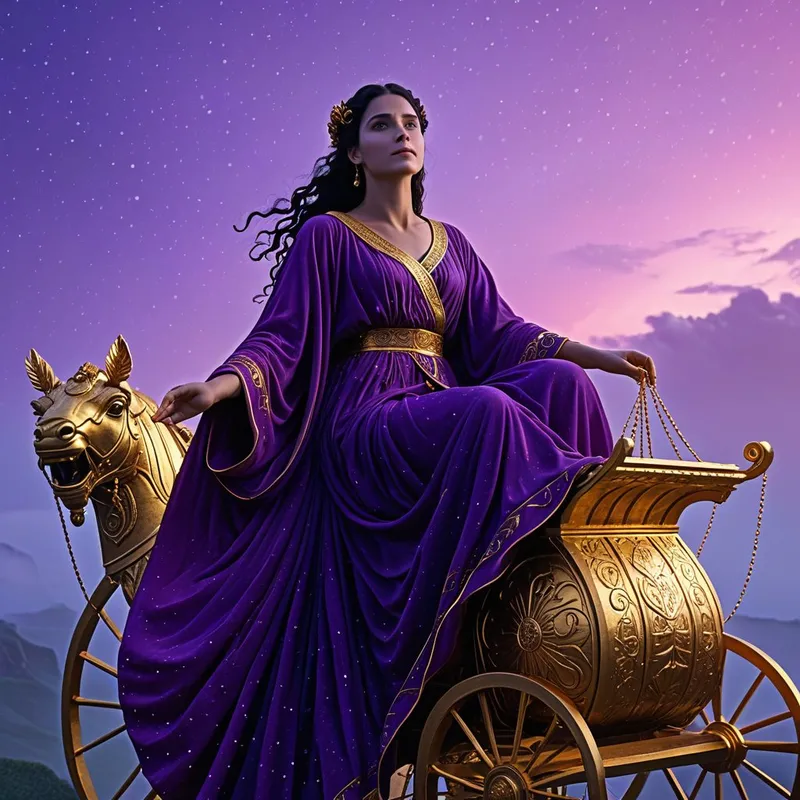
Before the sun, there is the sigh. A soft exhalation that parts the cloak of night, a breath tinged with rose and the faintest gold. This is her arrival. She is Aurora, and her chariot is not drawn by thunder, but by the gentle, winged horses of anticipation. Each morning, she opens the gates of heaven, her fingers painting the eastern sky with the promise of day. The world stirs, not to command, but to her tender, inevitable summons.
Yet, within this daily miracle lived a private, piercing sorrow. For Aurora was a goddess who loved a mortal man, Tithonus. Captivated by his beauty, she stole him away to the edges of the world, to her palace where dawn is born. Fearing the ravages of time that claim all mortal things, she went to Jupiter and, with all the passion of a lover, begged a gift: eternal life for her beloved. The great god nodded. Her wish was granted.
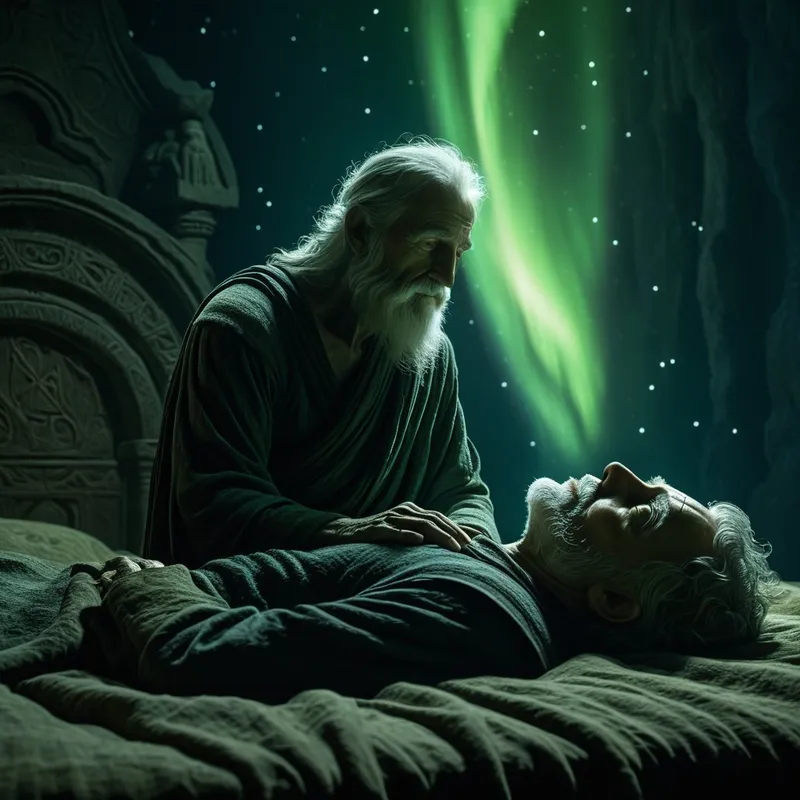
But in her desperate love, Aurora had forgotten the precise word. She asked for aevum, life without end. She did not ask for iuventas, eternal youth. And so, the cruel gift unfolded. Tithonus lived. As years became decades, and decades centuries, he began to wither. The strong limbs grew frail, the vibrant voice a thin whisper. The immortal life force trapped within a body bound by time’s natural law. He shriveled and faded, yet could not die.
Aurora’s dawns became a ritual of heartbreak. Each time she returned from her celestial journey, she would find him a little more diminished, a little further lost. Some poets say she kept him in a chamber, a living monument to her flawed prayer. Others whisper that in a final, merciful act, she transformed his endless, unbearable aging into something else—the ceaseless, dry chirping of the cicada, a creature that sheds its skin but whose song is a memory of life. And so, each morning, as she paints the sky with hope, the memory of her error lingers in the first, faint sounds of the waking world—a bittersweet chorus beneath her radiant path.
Cultural Origins & Context
The myth of Aurora is a Roman adoption and adaptation of the Greek Eos, seamlessly woven into the fabric of Roman cosmological understanding. It was not a central state myth used for political legitimization, but a poetic and philosophical one, carried primarily by the great literary voices like Ovid in his Metamorphoses and Virgil. These poets were the primary "myth-keepers," refining and retelling the stories for a sophisticated, often urban audience.
Its societal function was multifaceted. On a practical, ritual level, dawn was a crucial time for prayer and sacrifice; Aurora represented the reliable, divine order of the cosmos, the daily victory of light over chaos. On a deeper, cultural-psychological level, her story served as a profound meditation on the human condition. It explored the tension between divine desire and mortal limitation, the unintended consequences of prayers answered too literally, and the nature of time itself. In a culture deeply concerned with legacy, memory, and the mos maiorum (the way of the ancestors), the tragedy of Tithonus was a chilling reminder of the proper boundaries between the mortal and immortal realms, and the sacred, natural necessity of an end.
Symbolic Architecture
Aurora is not merely a personification of dawn; she is the archetypal principle of renewal, hope, and cyclical beginning. Her daily return symbolizes the psyche’s innate capacity for recovery, for starting anew after the "night" of despair, unconsciousness, or failure. She is the first light of insight after a period of confusion.
The dawn does not judge the night that preceded it; it simply offers the possibility of seeing anew.
Tithonus represents the mortal element—the ego, the body, the specific, time-bound identity—that is granted a divine aspiration (immortality) without the corresponding divine substance (eternal youth). His fate is the symbol of stagnation, of being trapped in a state that has outlived its natural purpose. It is the horror of endless repetition without growth, consciousness without transformation. The forgotten word—iuventas—is the critical missing piece in any human endeavor: not just longevity, but vitality; not just existence, but essence.
Their union, and its tragic outcome, encapsulates the core dilemma of existence: the longing of the eternal (the soul, the Self) for the beautiful, specific, and transient (the mortal experience, the ego), and the inevitable suffering that arises when one tries to make the transient permanent on its own terms.

The Dreamer's Resonance
When the pattern of Aurora and Tithonus stirs in the modern dreamer, it often signals a profound somatic and psychological process related to time, longing, and renewal. To dream of a beautiful, recurring light that brings both joy and deep sadness may point to a cyclical pattern in the dreamer’s life—a relationship, a career, a habit—that offers a familiar promise of hope (the dawn) but is secretly draining vitality, leaving a feeling of being aged, trapped, or withered inside it (the Tithonus state).
Somatically, this might manifest as chronic fatigue that lifts briefly with new plans (the dawn) only to return, or a feeling of being "stuck in a rut" where days blend together without growth. Psychologically, it is the process of confronting a "gift" that has become a curse: an obligation, an identity, or a security that once gave life but now only sustains a hollow existence. The dream asks: What in your life has been granted immortality without eternal youth? What are you, or what is a part of you, endlessly maintaining at the cost of its own vibrancy?
Alchemical Translation
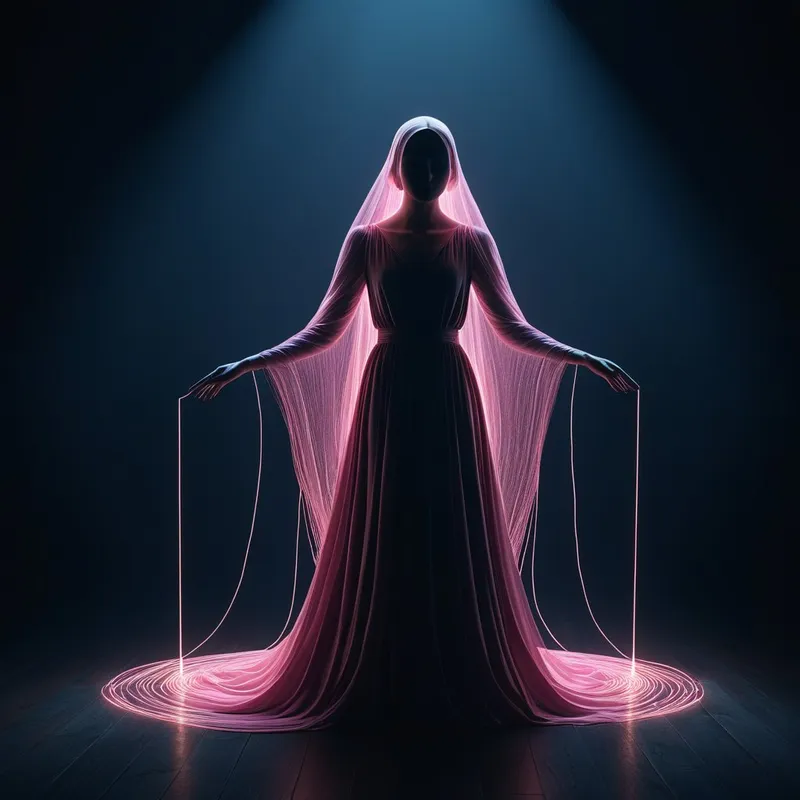
The alchemical process modeled here is not one of fiery conquest, but of heartbreaking, necessary dissolution and precise prayer. The prima materia is the initial, passionate union of desire (Aurora) and its beautiful object (Tithonus). The nigredo, the blackening, is the slow, agonizing realization of the flaw in the wish—the witnessing of the beloved ideal aging into a prison.
The transmutation occurs in the recognition of the missing word. For the modern individual on the path of individuation, this is the move from seeking mere extension of the ego (immortality of my current status, my possessions, my self-image) to seeking alignment with the Self’s timeless vitality (eternal youth, or iuventas). It requires sacrificing the literal form for the living spirit.
The alchemy of dawn is the courage to let the specific form of your longing wither, so that its essential song may be liberated.
Aurora’s final, mythic act—transforming Tithonus into the cicada—is the rubedo, the reddening or completion. It is the psychological act of finding the symbolic, eternal value within the failed literal endeavor. The cicada’s song is the enduring essence extracted from the decaying process. For us, this translates to: What core truth, what essential "song" or purpose, can be salvaged and given new form when we finally release our grip on a situation, identity, or relationship that is no longer growing, only enduring? The process asks for a prayer refined by wisdom: not for the endless perpetuation of the current state, but for the eternal renewal of the vital spark within. We must learn, like the dawn, to consistently release the old night while carrying forward only its lessons, painted in the new light of a conscious beginning.
Associated Symbols
Explore related symbols from the CaleaDream lexicon: