Atrahasis Myth Meaning & Symbolism
A Babylonian epic where humanity's clamor disturbs the gods, leading to a great flood and the salvation of life by the wise hero Atrahasis.
The Tale of Atrahasis
In the time before time, when the world was young and the gods were weary, the great labor of existence fell upon the shoulders of the lesser deities, the Igigi. For forty long years, they dug the channels of the Tigris and Euphrates, they piled high the mountains, they bore the baskets of earth until their backs broke and their spirits shattered. Their clamor rose to the heavens, a thunder of discontent that shook the very foundations of the divine abode.
The Great Gods heard this din and convened. Enki, the cunning lord of the sweet waters and deep intelligence, proposed a solution both brilliant and terrible. Let a new creature be fashioned from clay, mixed with the flesh and blood of a slain god, to bear the burden of the world. And so it was done. The womb-goddesses pinched the clay, and humanity was born—a breathing, thinking workforce to free the gods from toil.
For six hundred years, humanity multiplied. The land was filled with their cities, their fields, their industry. And with them grew a noise—not of labor, but of life itself. A ceaseless, buzzing clamor that rose like a swarm of locusts to the ears of the high god, Enlil. He could not sleep. The divine council, disturbed and irritable, met again. To silence the racket, they sent plague. Then famine. Then drought. Each time, the people suffered and their noise diminished, only to swell again as they recovered, guided in secret by the compassionate Enki, who whispered solutions through the reed walls of their shrines.
Enlil’s patience shattered. The gods swore a binding oath. This time, the solution would be final: a great flood to wipe the slate of earth clean, to return the world to a silent, watery void. All the gods agreed, even Enki, bound by his vow. But in his heart, the god of wisdom rebelled. He went to the reed hut of his most devoted servant, Atrahasis.
"Wall, listen! Reed wall, pay heed!" Enki’s voice was a whisper through the reeds. "Dismantle your house, build a boat. Renounce your possessions, save your life. Build it round, like the Apsu, so it may spin but not sink. Roof it over against the coming waters. Bring aboard the seed of all living creatures."
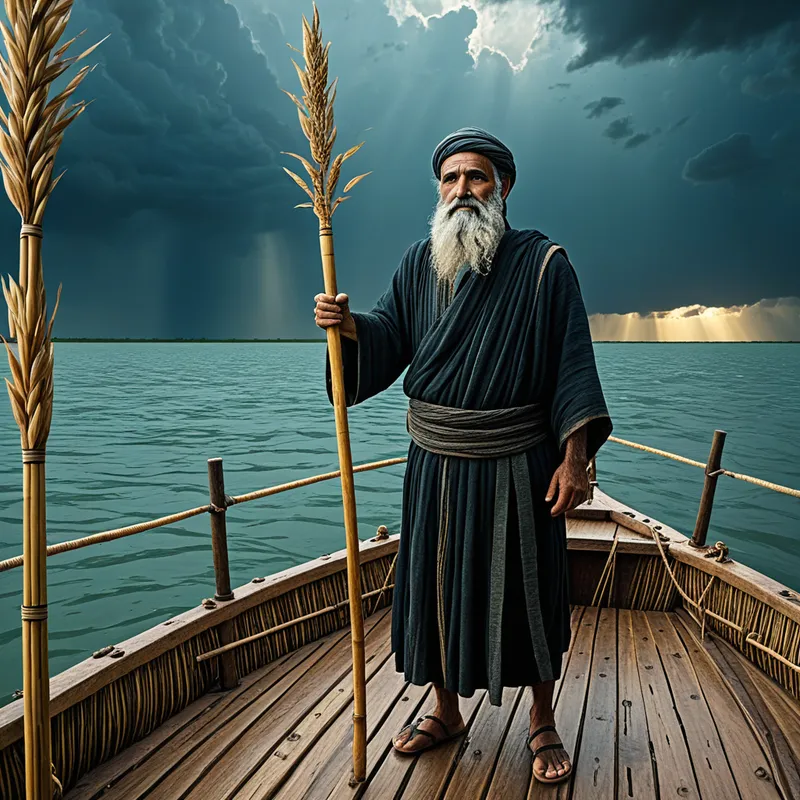
Atrahasis did not hesitate. He gathered the elders and told them he was building a boat to leave Enlil’s domain, for Enki’s favor had turned to wrath. He worked day and night. He sealed the vessel with bitumen, and on the appointed day, he loaded his family, the craftsmen, and animals, two by two. Then the storm came. It was a fury beyond description. The Pazuzu winds ripped the land. The very bolts of heaven were torn loose. For seven days and seven nights, the flood raged, until all of humanity was returned to clay.
Upon the vast, featureless sea, the boat of Atrahasis spun, a lone, sealed womb in the abyss. Inside, there was only the sound of weeping and the stench of fear. When the waters finally receded, the boat grounded on Mount Nisir. Atrahasis sent out a dove, then a swallow, then a raven. The raven did not return. He knew the earth had emerged.
He made an offering upon the mountain—a fragrant sacrifice of reeds, cedar, and myrtle. The gods, who had grown desperately hungry without humanity to feed them, swarmed around the smell like flies. When Enlil saw the boat and the survivors, his rage was immense. But Enki stood forth. "How could you, in your wisdom, bring such a flood? Punish the sinner for his sin, the wrongdoer for his wrongdoing, but do not cut off all of humanity, lest you starve!" A compromise was struck. Henceforth, humanity would be made less noisy, less immortal. Nintu instituted barrenness, infant mortality, and sacred women who would not bear children. Order was imposed on life, and the great noise was stilled. Atrahasis, the exceedingly wise, was taken to dwell at the source of the rivers, far from the new, quieter world he had helped preserve.
Cultural Origins & Context
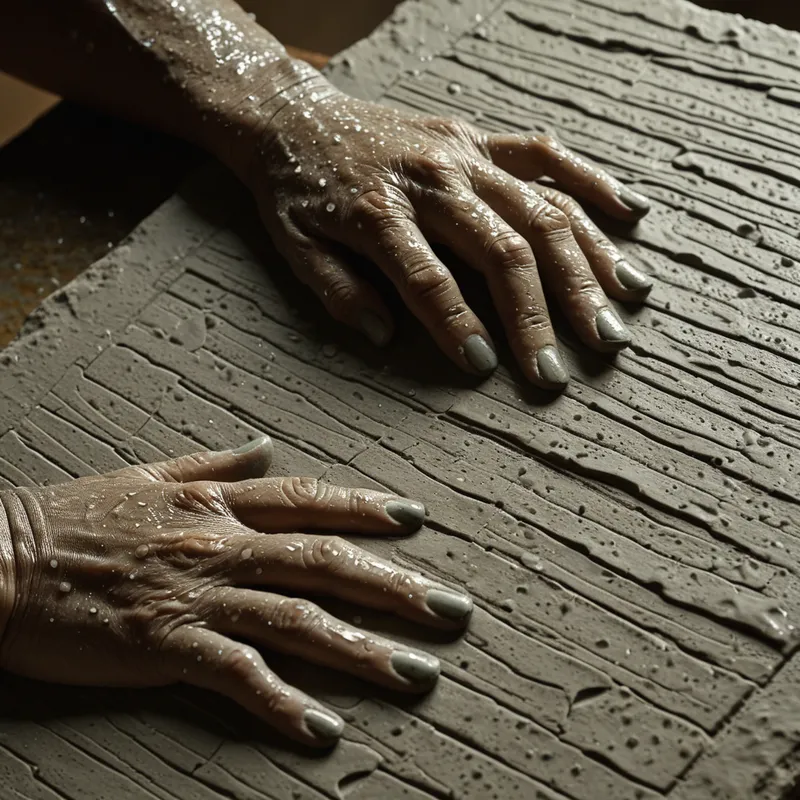
The Atrahasis epic is one of the foundational texts of Mesopotamian thought, dating to the Old Babylonian period (circa 1800-1600 BCE). It was not mere entertainment, but a sacred narrative performed by priestly scribes and likely recited during important rituals. Written on cuneiform tablets, it functioned as a cosmological manual, explaining humanity's fraught relationship with the divine, the origins of social institutions, and the reasons for human suffering. It served to justify the hierarchical structure of society (humanity exists to serve the gods, who are themselves in a constant state of political tension) and to explain the existential conditions of mortality, labor, and divine caprice. The story was a living document, copied and adapted for centuries, its themes echoing in the later Enuma Elish and the Hebrew book of Genesis, demonstrating its profound resonance across the ancient Near East.
Symbolic Architecture
At its core, the myth of Atrahasis is a story about the unbearable sound of being. Humanity's "noise" is not merely sound; it is the symbolic totality of consciousness, desire, proliferation, and existential unrest. It is the psychic energy of a species that has become too aware, too present.
The first sin is not disobedience, but existence itself—the clamorous, creative, and destructive act of being alive.
The gods represent different aspects of the psyche. Enlil is the archetype of rigid Order, the part of us that demands silence, control, and the suppression of chaotic life-force for the sake of peace. His solution is annihilation—the ego's desire to eradicate the troubling contents of the unconscious. Enki, god of the sweet waters beneath the earth, is the deep, intuitive Unconscious itself. He is the trickster-savior who works through dreams (the whisper through the reed wall) and lateral thinking to preserve life. The flood is the archetypal Cataclysm, the overwhelming emotional or psychological crisis that seems to erase one's entire world. Atrahasis is the nascent Self, the part of the individual capable of listening to the inner voice (Enki) and constructing a vessel of meaning (the ark of consciousness) to survive the deluge.
The Dreamer's Resonance
When this myth stirs in the modern psyche, it often manifests in dreams of overwhelming noise—deafening crowds, incessant alarms, or a psychic static that prevents rest. This is the somatic signal of an inner Enlil being driven to distraction by the unintegrated contents of one's life: unresolved emotions, unmet ambitions, or the sheer pressure of responsibility. The dreamer may feel they are laboring like the Igigi under an impossible burden.
The pivotal dream moment is the encounter with the "voice through the wall"—a cryptic message, a sudden intuitive knowing, or a mentor figure offering paradoxical instructions ("dismantle your house to save your life"). This is the Enki function activating. The subsequent building of the "boat" in the dream represents the conscious, often frantic, effort to consolidate one's resources, values, and core identity before an impending psychological crisis. Surviving the flood in the dream marks the passage through a profound depression, a burnout, or a life-altering loss, after which the world feels stark, new, and strangely quiet.

Alchemical Translation
The individuation process modeled by Atrahasis is not one of heroic conquest, but of wise endurance and containment. The first alchemical stage is Recognizing the Divine Strike. We must acknowledge when our inner "gods"—our driving values, complexes, and ideals—are in conflict, and when our own "noise" (anxiety, distraction, compulsive doing) is a symptom of this civil war.
The second stage is Heeding the Whisper. This is the cultivation of inner attention. It requires listening not to the loudest voice (Enlil's demand for order through suppression) but to the subtle, subversive voice of deep wisdom (Enki) that often advises a paradoxical path: to dismantle the familiar structure (the house) to build the salvific vessel.
The ark is not built from new timber, but from the dismantled pieces of the old life, reassembled into a new, containing form.
The final, crucial stage is The Negotiated Peace. Emerging from the flood does not mean returning to the old, noisy way of being. It means accepting the new "divine decrees"—the limitations, the mortality, the necessary boundaries (barrenness, chosen celibacy, focused creativity) that make a concentrated life possible. Atrahasis does not become a king in the new world; he is removed to the source. The integrated Self finds its home not in the bustling city of the ego, but at the quiet, nourishing source of the psychic rivers, from which meaning flows.
Associated Symbols
Explore related symbols from the CaleaDream lexicon:
- Water — The primordial substance of chaos and creation, representing both the annihilating flood and the life-giving wisdom of Enki, the god of the sweet waters.
- Sacrifice — The slain god whose blood gives life to humanity, and Atrahasis's offering after the flood, representing the necessary cost of existence and the pact that sustains life.
- Rebirth — The entire arc of the myth, from humanity's creation from clay to its survival through the flood, symbolizing the cyclical death and renewal of the psyche.
- Noise — The central grievance of the gods, symbolizing the overwhelming, unintegrated contents of the unconscious and the existential clamor of conscious life.
- Boat — The round, sealed vessel built by Atrahasis, representing the contained, resilient psyche or the conscious ego-structure that survives the flood of unconscious material.
- Clay — The substance of humanity's creation, symbolizing our fundamental connection to the earth, our malleable nature, and our return to elemental form in death.
- Dream — The medium through which Enki communicates with Atrahasis, representing intuitive, non-rational guidance from the deep unconscious that precedes salvation.
- God — Represented by the conflicted pantheon, symbolizing the supreme, often warring, values, complexes, and archetypal forces within the human psyche.
- Order — The principle embodied by Enlil, representing the psyche's need for structure, silence, and control, which can become tyrannical if unbalanced.
- Rain — The agent of the flood, symbolizing divine judgment, overwhelming emotion, and the dissolving tears that precede a great cleansing.
- Stone — The tablet upon which the epic was written and the mountain upon which the boat rested, representing enduring testimony, foundation, and the solid ground that emerges after crisis.
- Circle — The shape of Atrahasis's boat, symbolizing wholeness, containment, the cyclical nature of existence, and the archetypal vessel of the Self.