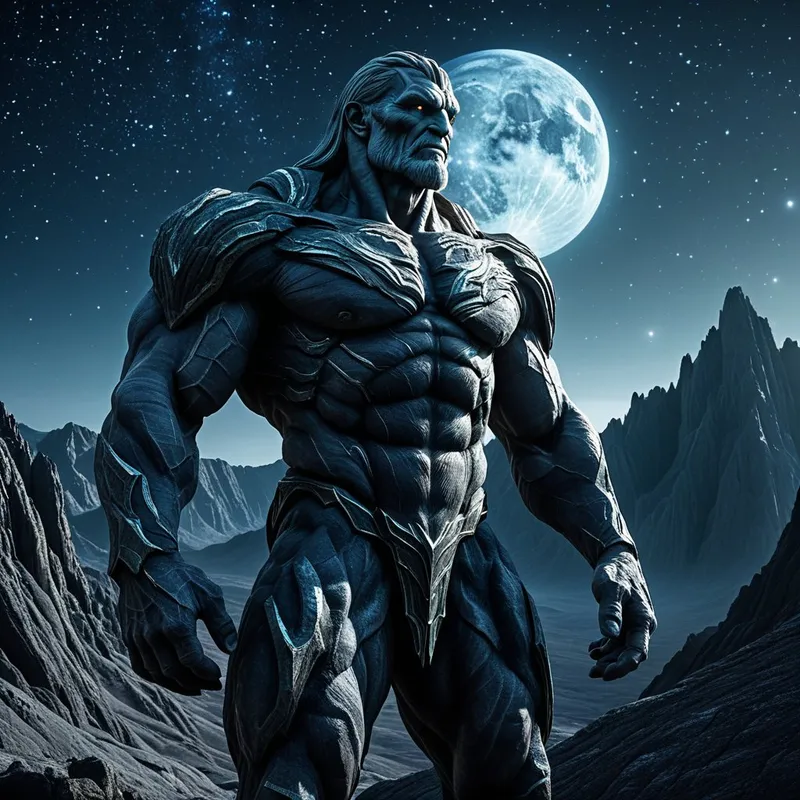
Atlas- The Titan who Myth Meaning & Symbolism
The Titan Atlas, condemned to bear the celestial sphere for eternity, embodies the archetypal weight of cosmic order, responsibility, and the burden of consciousness.
The Tale of Atlas- The Titan who
Before the age of gods, in the raw, churning dawn of the world, there was a war that shook the pillars of creation. It was the Titanomachy, a clash of titanic wills, where the old order of the Titans fought the new, thunder-wielding dynasty of Zeus. Among the mightiest of the elder brood was Atlas, son of Iapetus and the sea nymph Clymene. His name meant “the Endurer,” and his strength was the bedrock of the world.
For ten years, the cosmos was a battlefield. Lightning scorched the earth, and mountains were hurled like pebbles. Atlas stood with his kin, a pillar of defiance against the usurping Olympians. But the cunning of Zeus and the forged weapons of the Cyclopes turned the tide. The Titans were broken, cast down into the chasm of Tartarus, a darkness so profound it was a weight in itself.
But for Atlas, Zeus decreed a different fate. A punishment not of darkness, but of eternal witness. A sentence not of oblivion, but of unbearable clarity.
“Let the mighty Atlas, who dared to lift his hand against heaven,” Zeus’s voice echoed, shaking the very air, “now bear heaven itself. Forever.”
And so, at the western edge of the world, where the sky meets the earth in a bruised and twilight realm, Atlas was set. The unimaginable weight of the celestial sphere—the dome of stars, the wheel of the sun, the path of the moon—was lowered onto his shoulders. His feet sank into the soil, becoming one with the roots of the mountains. His back, once straight and proud, bowed under the cosmic load. His hands, which once wielded power, now became mere props, pressed flat against the cold, singing curvature of the firmament.
There he stands. He feels the slow, grinding turn of the constellations against his skin. He hears the silent music of the spheres as a constant, pressing hum in his bones. The sun rises and sets across his burden, painting him in fire and shadow. He is the axis. He is the support. He is the condemned. His is a solitude so vast it encompasses all that is. He does not sleep. He does not rest. He endures. And in his endless vigil, he holds apart the two realms his family once sought to rule: the sky from the earth, order from chaos, the divine from the mortal. His punishment became the architecture of the world.
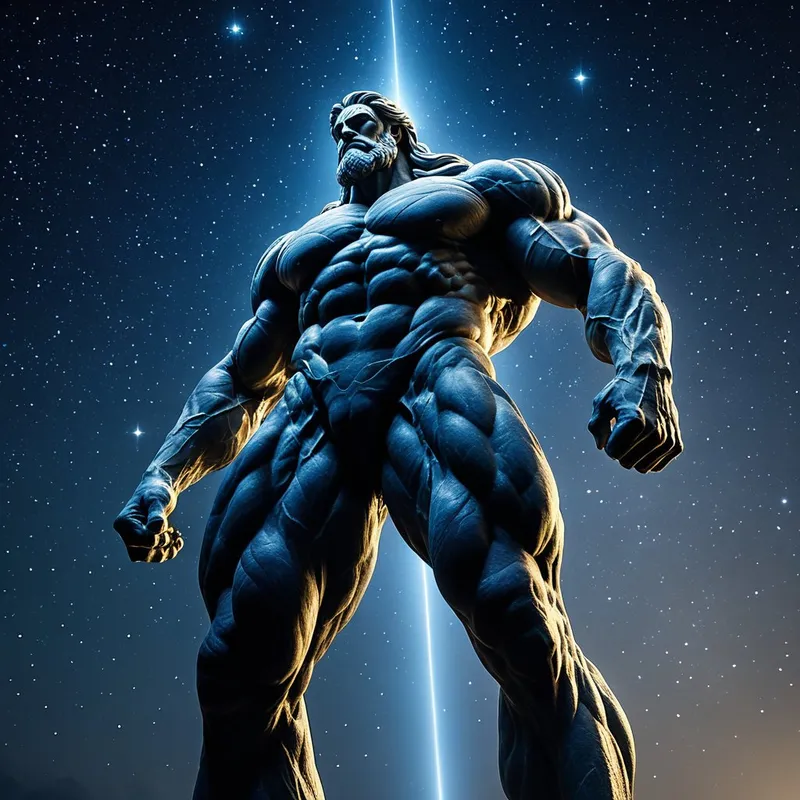
Cultural Origins & Context
The myth of Atlas originates from the rich tapestry of ancient Greek mythology, primarily codified in the epic poetry of Hesiod’s Theogony and later elaborated by Roman poets like Ovid. This was not a bedtime story for comfort, but a foundational narrative explaining the very structure of the cosmos. It was told by bards and poets to answer profound questions: Why does the sky not fall? What exists at the edge of the known world? What is the price of defiance against the ultimate order?
Atlas’s story functioned as an etiological myth, giving a divine reason for the existence of the Atlas Mountains in North Africa, which the ancient Greeks saw as the physical pillars holding up the sky at the western frontier. His role evolved; later traditions, like those surrounding the hero Heracles, portrayed him not just as a static pillar but as a knowledgeable keeper of cosmic secrets, a figure who could be bargained with, albeit perilously. This transition from pure antagonist to a source of ancient wisdom reflects the Greek tendency to complexify their mythological figures, embedding them deeper into the human understanding of a universe built on both brutal necessity and hard-won knowledge.
Symbolic Architecture
Atlas is the archetype of the cosmic burden-bearer. He is not holding up a physical globe of the earth, as Renaissance art later misinterpreted, but the celestial sphere—the dome of heaven, the realm of gods, ideals, laws, and cosmic order.
The weight on Atlas’s shoulders is the weight of the world as it is known—the unbearable heaviness of structure, responsibility, and consciousness itself.
Psychologically, Atlas represents the part of the psyche tasked with carrying the “sky” of our personal cosmos: our values, our duties, our inherited traumas, our sense of overarching responsibility. He is the internalized parent, the superego, the one who says “you must.” His punishment is a state of eternal tension, where one feels solely responsible for maintaining order, preventing collapse, and bearing the weight of expectations—both external and, more crucially, internal. He symbolizes the profound isolation that comes with such a role, where the burden separates the bearer from the rest of lived experience, trapping them in a static, heroic yet tragic stance.
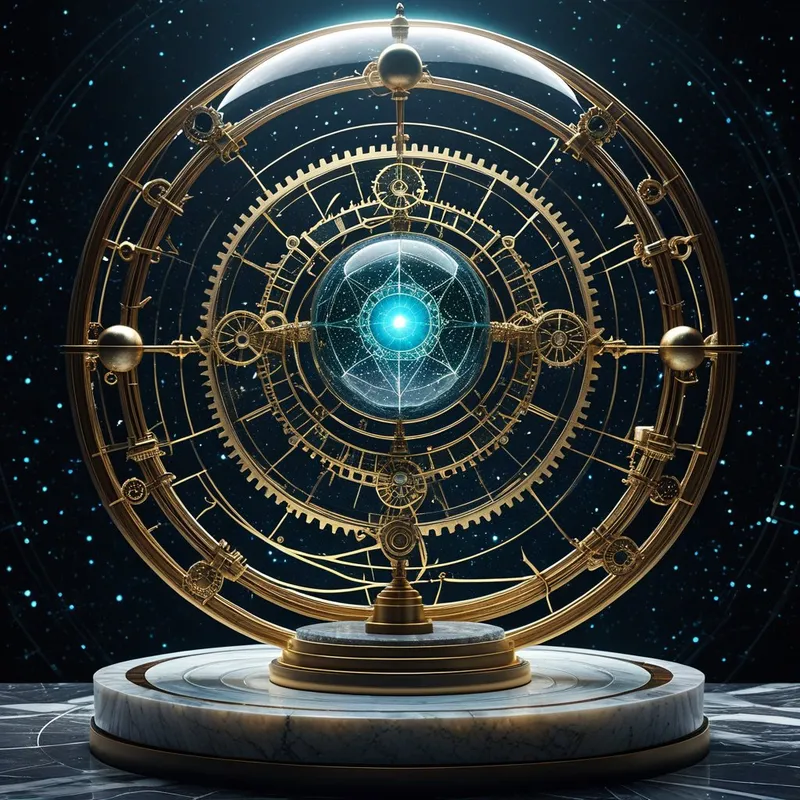
The Dreamer’s Resonance
When the figure of Atlas emerges in modern dreams, it seldom appears as a classical Titan. Instead, the dreamer becomes Atlas, or finds themselves in an Atlas-like predicament. The somatic experience is key: a crushing pressure on the shoulders and neck, a spine feeling ready to splinter, a profound fatigue that is structural rather than merely tired. One might dream of holding up a collapsing ceiling for their family, or of their arms transmuting into the pillars of a bridge everyone else is crossing.
This dream pattern signals that the psyche is laboring under a burden it was not meant to carry alone. It is the embodiment of burnout, of inflated responsibility, or of a “savior complex” where the individual’s identity has become fused with a role of holding everything together. The dream is a cry from the body and the deep unconscious, illustrating the literal, physical cost of a psychological posture. It asks the dreamer: What is the celestial sphere you have been sentenced to hold? Whose sky is it, truly?
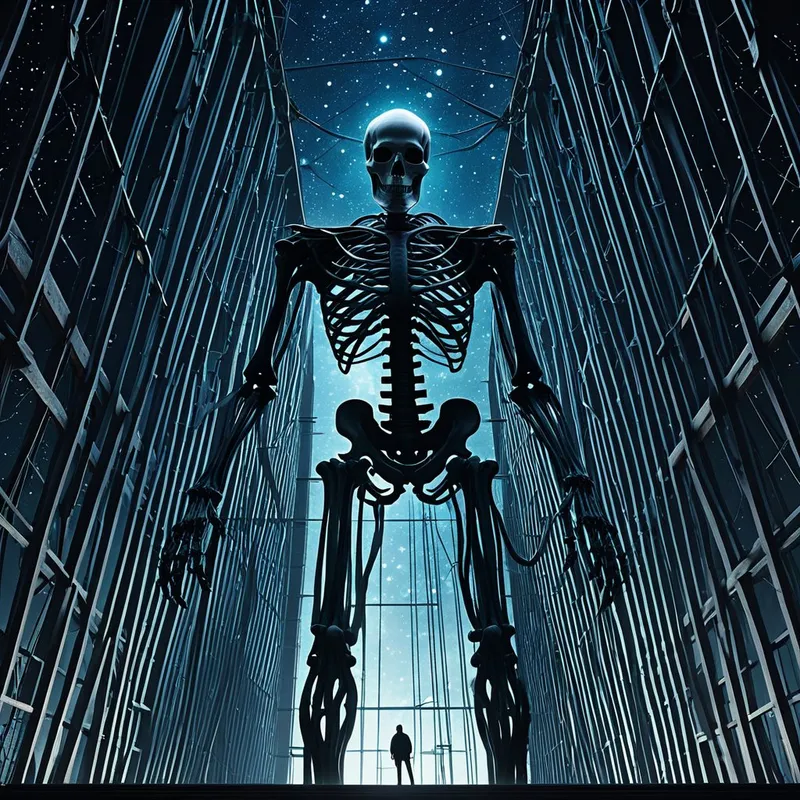
Alchemical Translation
The individuation process modeled by Atlas is not one of escaping the burden, but of transforming one’s relationship to it. The myth’s alchemy lies in the later encounter with Heracles. To complete his eleventh labour, Heracles needs Atlas to retrieve the golden apples of the Hesperides. Heracles offers to hold the sky temporarily if Atlas will fetch them. Atlas agrees, glad for a moment of respite. Upon returning, Atlas, having tasted freedom, proposes to deliver the apples himself and leave Heracles with the eternal weight.
The pivotal moment of transmutation is not in taking the weight, but in the conscious choice to take it back, now with a trick of awareness.
Heracles, using cunning (a higher form of strength), agrees but asks Atlas to take the sky back for just a moment so he can adjust his cloak. The naive Atlas complies, and Heracles, the weight transferred, picks up the apples and leaves. This is the alchemical key: Atlas is tricked, yes, but the deeper truth is that the burden is his. The integration comes from realizing one cannot simply offload one’s foundational, archetypal task onto another—even a hero. The psychic transmutation occurs when we stop seeing our “sky” purely as a punishment and begin to recognize it as our portion, our station, our part in the cosmic order. We must, like Heracles, use wisdom and guile to create temporary relief, to ask for help, to adjust our posture. But the ultimate task is to bear our own unique consciousness with a sovereignty that turns a sentence into a purpose. We are not meant to be crushed by the sky, but to become the conscious pillar that allows the sky to be.
Associated Symbols
Explore related symbols from the CaleaDream lexicon: