
Atlas of Greek mythology Myth Meaning & Symbolism
The Titan Atlas, condemned to bear the celestial sphere for eternity, embodies the ultimate burden and the silent architecture of the cosmos.
The Tale of Atlas of Greek mythology
Hear now of the foundation of [the world](/myths/the-world “Myth from Tarot culture.”/), of the pillar between [the earth](/myths/the-earth “Myth from Hindu culture.”/) and [the sky](/myths/the-sky “Myth from Persian culture.”/). Before the reign of Zeus, the cosmos was ruled by the elder gods, the Titans. Among them was [Atlas](/myths/atlas “Myth from Global/Universal culture.”/), whose strength was as vast as the lands he would come to embody.
When the great war, the Titanomachy, shook the very fabric of creation, the heavens trembled. The Olympians, with thunder and cunning, waged war against their progenitors. The clash was cataclysmic, a symphony of breaking mountains and boiling seas. Atlas, a general of the old order, fought with the fury of a falling star. But the new order, forged in the lightning bolt of Zeus, was destined to prevail.
[The Titans](/myths/the-titans “Myth from Greek culture.”/) were cast down, defeated. But for Atlas, son of Iapetus, a fate was devised not of dark [Tartarus](/myths/tartarus “Myth from Greek culture.”/), but of eternal, visible torment. Zeus pronounced the sentence: for his rebellion, for his defiance of the new cosmic law, Atlas would bear a burden no other could conceive. He was sent to the western edge of the world, to a place where the earth meets [the void](/myths/the-void “Myth from Buddhist culture.”/). There, with his own immeasurable strength, he was compelled to take the weight of the celestial dome upon his shoulders.
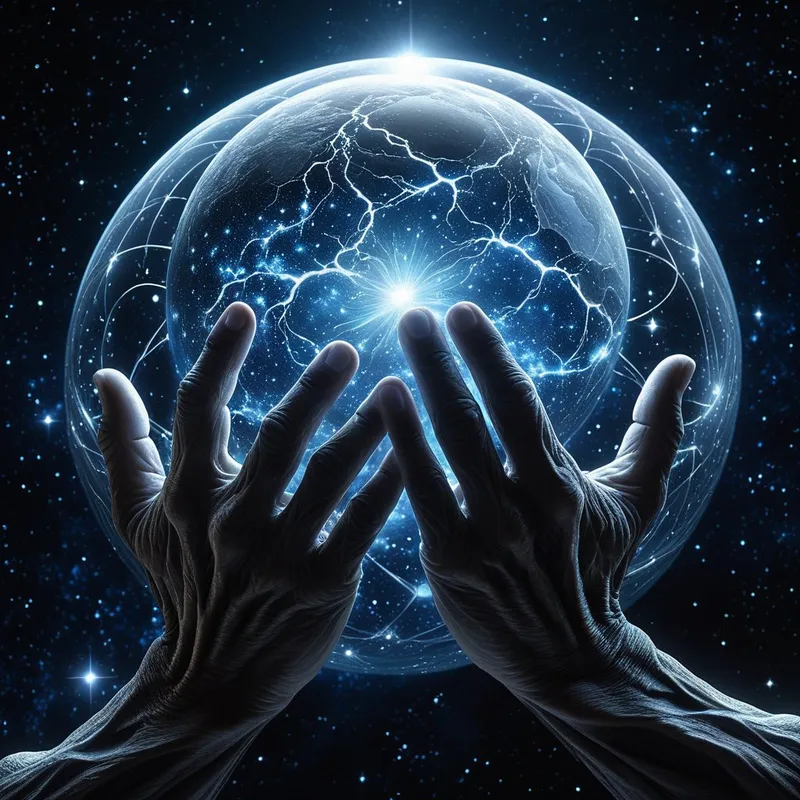
Feel the moment. The cool, unyielding curve of the sky settles onto his back. The pressure is not of stone, but of concept—the weight of infinity, of the ordered paths of the sun, moon, and stars. His feet plant into the bedrock of the world, his legs become columns, his spine [the axis mundi](/myths/the-axis-mundi “Myth from Chinese culture.”/). He does not hold the earth, but the very heavens aloft, preventing them from crashing down into the realm of mortals and gods. He becomes the silent, suffering linchpin of the cosmos, forever straining at the limit of the known, a perpetual monument to the cost of order. His labors are not deeds, but a state of being: an eternal act of holding. The winds of the world’s edge whip around him, the only sound to accompany the silent scream of his tendons.
Cultural Origins & Context
The myth of Atlas is a foundational pillar of Greek cosmology, recorded most authoritatively in the Theogony of the poet Hesiod. It emerged from a worldview that visualized the cosmos in concrete, physical layers: the earth (Gaia), [the underworld](/myths/the-underworld “Myth from Greek culture.”/), and the dome of the sky ([Ouranos](/myths/ouranos “Myth from Global/Universal culture.”/)). Something had to keep them apart. Atlas provided that essential, terrifying function.
His story was not merely a punishment narrative but an etiological myth explaining the stability of the world. He was the answer to a primal question: why does the sky not fall? His eternal vigil at the boundary of the known (often associated with the Atlas Mountains in North Africa) also made him a figure of geographical and celestial knowledge. Later, in the Odyssey, he is described as the father of the [Hesperides](/myths/hesperides “Myth from Greek culture.”/), and the keeper of the pillars that hold heaven and earth apart. His myth was passed down by [bards](/myths/bards “Myth from Celtic culture.”/) and poets as a crucial piece of the cosmic map, a reminder of the titanic forces that underpin reality, and the severe [justice](/myths/justice “Myth from Tarot culture.”/) of the Olympian regime.
Symbolic Architecture
Atlas is the [archetype](/symbols/archetype “Symbol: A universal, primordial pattern or prototype in the collective unconscious that shapes human experience, behavior, and creative expression.”/) of the Ultimate Burden. He is not a [hero](/symbols/hero “Symbol: A hero embodies strength, courage, and the ability to overcome significant challenges.”/) on a [quest](/symbols/quest “Symbol: A quest symbolizes a journey or search for purpose, fulfillment, or knowledge, often representing life’s challenges and adventures.”/), but a [condition](/symbols/condition “Symbol: Condition reflects the state of being, often focusing on physical, emotional, or situational aspects of life.”/)—the embodiment of a [responsibility](/symbols/responsibility “Symbol: Responsibility in dreams often signifies the weight of duties and the expectations placed upon the dreamer.”/) so total it becomes one’s [identity](/symbols/identity “Symbol: Identity represents the sense of self, encompassing personal beliefs, cultural background, and social roles.”/). His [punishment](/symbols/punishment “Symbol: A dream symbol representing consequences for actions, often tied to guilt, societal rules, or internal moral conflicts.”/) is to become infrastructure.
To carry the heavens is to internalize the cosmos; the burden is the world, and the self is the scaffold.
Psychologically, Atlas represents the part of the [psyche](/myths/psyche “Myth from Greek culture.”/) that holds everything together under immense strain. He is the [weight](/symbols/weight “Symbol: Weight symbolizes burdens, responsibilities, and emotional loads one carries in life.”/) of duty, of familial expectation, of a [career](/symbols/career “Symbol: The dream symbol of ‘career’ often represents one’s ambitions, goals, and personal identity in a professional context.”/), of a [role](/symbols/role “Symbol: The concept of ‘role’ in dreams often reflects one’s identity or how individuals perceive their place within various social structures.”/) that feels cosmic in its demands. He symbolizes the crushing pressure of maintaining order, of being the “strong one” upon whom all else depends. His [location](/symbols/location “Symbol: The symbol of ‘Location’ signifies a sense of place, context, and the environment in which experiences unfold.”/) “at the edge” speaks to the [isolation](/symbols/isolation “Symbol: A state of physical or emotional separation from others, often representing a need for introspection or signaling distress.”/) such a burden creates; the bearer is separated, marooned at the extremity of experience.
Crucially, he holds up the sky, not the [earth](/symbols/earth “Symbol: The symbol of Earth often represents grounding, stability, and the physical realm, embodying a connection to nature and the innate support it provides.”/). This is a profound distinction. The earth is [chaos](/symbols/chaos “Symbol: In Arts & Music, chaos represents raw creative potential, uncontrolled expression, and the breakdown of order to forge new artistic forms.”/), [life](/symbols/life “Symbol: The symbol of ‘Life’ represents a journey of growth, interconnectedness, and existential meaning, encompassing both the joys and challenges that define human experience.”/), fecundity. The sky represents order, law, [destiny](/symbols/destiny “Symbol: A predetermined course of events or ultimate purpose, often linked to spiritual forces or cosmic order, representing life’s inherent direction.”/), the [realm](/symbols/realm “Symbol: The symbol of ‘Realm’ often signifies the boundaries of one’s consciousness, experiences, or emotional states, suggesting aspects of reality that are either explored or ignored.”/) of the gods (the superego, in psychological terms). Atlas’s burden is the weight of [structure](/symbols/structure “Symbol: Structure in dreams often symbolizes stability, organization, and the framework of one’s life, reflecting how one perceives their environment and personal life.”/) itself—the rules, the shoulds, the lofty ideals and rigid systems that, if they collapsed, would cause psychic [chaos](/symbols/chaos “Symbol: In Arts & Music, chaos represents raw creative potential, uncontrolled expression, and the breakdown of order to forge new artistic forms.”/). He is [the ego](/myths/the-ego “Myth from Jungian culture.”/) tasked with an impossible superego demand.

The Dreamer’s Resonance
When the figure of Atlas emerges in modern dreams, it rarely appears as a literal Titan. The dreamer may find themselves in a vast, empty space, their body contorted under an invisible pressure that warps the dreamscape around them. They might be trying to hold up a collapsing ceiling in their childhood home, or feel their shoulders permanently fused to the granite foundations of an office building.
Somatically, this dream pattern is a direct expression of the body keeping score of a psychological burden. The dreamer is likely experiencing a period of extreme responsibility, burnout, or a role that feels inescapable and identity-consuming. The dream is not just showing the burden, but the architecture of it—how the individual’s very psyche has been reconfigured into a support structure. The feeling upon waking is often one of profound fatigue, stiffness, or a sense of being trapped. It is the unconscious making visible the often-invisible load of holding a world together, signaling that the psychic system is under critical strain and the cost of this endurance is becoming untenable.

Alchemical Translation
The individuation process modeled by Atlas is not one of slaying monsters or finding treasure, but of the conscious relationship to one’s burdens. The first, and most critical, alchemical step is recognition: seeing the sky upon your own back. Many live as Atlas without knowing it, mistaking the crushing weight for the ground they walk on.
The myth’s pivotal moment of transmutation comes in a later, famous interaction: when the hero [Heracles](/myths/heracles “Myth from Greek culture.”/) temporarily takes the heavens so Atlas can retrieve [the golden apples of the Hesperides](/myths/the-golden-apples-of-the-hesperides “Myth from Greek culture.”/). This is the symbolic key.
The burden can only be shifted, never truly set down, but in that momentary exchange, consciousness is born.
For the modern individual, the “Heracles” figure is an aspect of [the self](/myths/the-self “Myth from Jungian culture.”/)—the part capable of cunning, of seeking aid, of renegotiating a contract with the impossible. The alchemical work involves finding a way to temporarily redistribute the load, to create a space—however brief—where one is not defined solely by what one carries. This might mean delegating, setting boundaries, or simply acknowledging the burden’s existence to another. It is in that space that the “golden apples”—the fruits of vitality, joy, or a forgotten aspect of the self—can be retrieved.
The ultimate translation is not freedom from the burden, but a transformation of one’s stance towards it. The goal is to move from being an unconscious, condemned pillar to becoming the conscious axis of one’s own world. To bear the weight not as a punishment from an external god, but as a chosen, sacred office that gives structure and meaning to one’s cosmos. One becomes not a prisoner of the sky, but its steadfast guardian.
Associated Symbols
Explore related symbols from the CaleaDream lexicon: