Atlas holding the celestial sp Myth Meaning & Symbolism
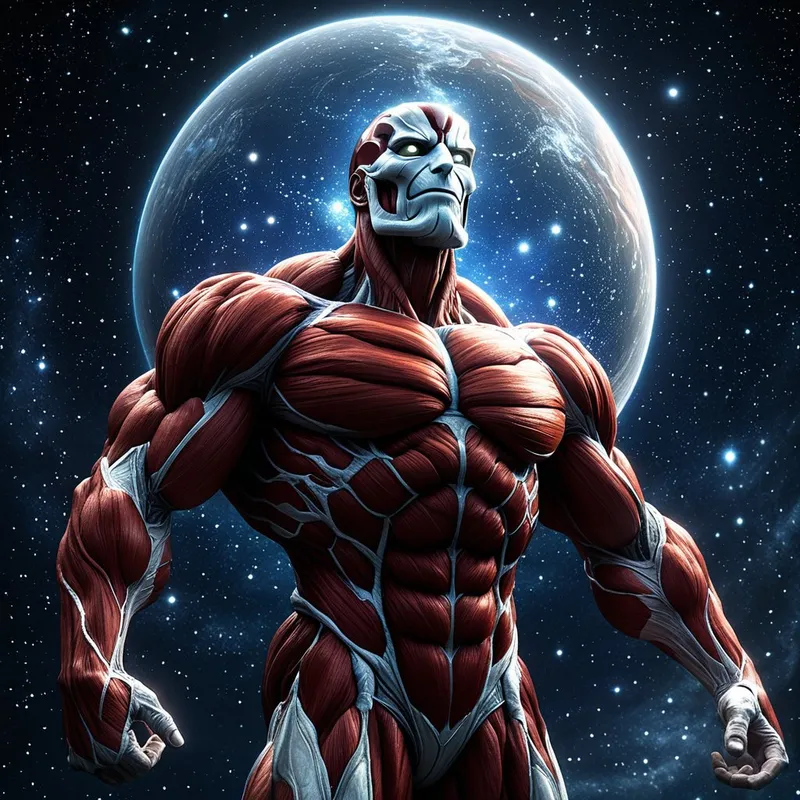
The Titan condemned to bear the heavens, embodying the eternal weight of cosmic order and the profound burden of ultimate responsibility.
The Tale of Atlas holding the celestial sp
Listen, and hear the groan of the foundations of [the world](/myths/the-world “Myth from Tarot culture.”/).
Before the reign of the bright Olympians, the cosmos was a raw and titanic [thing](/myths/thing “Myth from Norse culture.”/), ruled by the elder powers, the Titans. Among them stood [Atlas](/myths/atlas “Myth from Global/Universal culture.”/), whose name means “the Endurer,” whose strength was the bedrock of the mountains. He fought in the great war, the Titanomachy, a conflict that shook the pillars of [the earth](/myths/the-earth “Myth from Hindu culture.”/) and scarred the face of [the sky](/myths/the-sky “Myth from Persian culture.”/) with celestial fire. [The Titans](/myths/the-titans “Myth from Greek culture.”/), with [Atlas](/myths/atlas “Myth from Global/Universal culture.”/) in their vanguard, sought to hold the old order, a world of primordial force and unchained potential.
But the new gods, cunning and united, prevailed. Their thunderbolts carved canyons; their tridents flooded the plains. And for his part in the rebellion, the victors pronounced a punishment for Atlas that was not mere imprisonment in the gloomy [Tartarus](/myths/tartarus “Myth from Greek culture.”/), but something far more profound, far more poetic in its cruelty. He was sentenced to an eternal station at the western edge of the world, where the sky meets the earth.
There, at [the threshold](/myths/the-threshold “Myth from Folklore culture.”/) of all things known, the weight of the celestial sphere—the very dome of the heavens, studded with the fixed stars and the wheeling paths of the planets—was placed upon his shoulders. Not the globe of the earth, but the vault of the sky itself. Feel the moment: the cool, impossibly smooth curve of the firmament settling onto his back, a pressure that was not of stone, but of concept, of order. His feet rooted into the bedrock of the world, his knees did not buckle, but his breath was stolen for an age. The groan that escaped him was not just of muscle and bone, but of spirit, a sound that vibrates at the frequency of cosmic law.
And so he stands. The sun each day rolls across the burden he upholds and sinks behind him. [The moon](/myths/the-moon “Myth from Tarot culture.”/) glides along its silver track on the surface he supports. The [constellations](/myths/constellations “Myth from Various culture.”/) turn their slow, millennial dance upon his back. He is both pillar and prisoner, [the axis mundi](/myths/the-axis-mundi “Myth from Chinese culture.”/) and its eternal slave. His is a solitude beyond that of any desert hermit, for his companions are the silent, burning lights of eternity. He holds the world apart from [the void](/myths/the-void “Myth from Buddhist culture.”/), and in doing so, becomes the living boundary between [chaos](/myths/chaos “Myth from Greek culture.”/) and cosmos. His struggle is the silent, sustaining tension upon which all navigation, all myth, and all orderly life depends.
Cultural Origins & Context
The figure of Atlas is a foundational pillar of Greek mythology, with his story meticulously woven into the epic poetry of Hesiod’s Theogony and later echoed in the works of poets and playwrights. This was not a bedtime story for children, but a cosmological explanation and a moral lesson for a culture deeply concerned with order (cosmos) versus chaos, and the consequences of overreaching pride (hubris). The myth was passed down by [bards](/myths/bards “Myth from Celtic culture.”/) and poets, those who held the memory of the world’s shaping in their verses.
Its societal function was multifaceted. Primarily, it provided an etiological explanation for the stability of the heavens—why the sky does not crash down upon the earth. Atlas was the literal support. Secondly, it served as a potent political and theological allegory for the victorious Olympian order, justifying their reign by showcasing the eternal punishment of the rebellious old gods. Finally, on a human level, it presented an image of ultimate, tragic responsibility. He was a warning and an object of awe, a symbol of a burden so absolute it defined an existence.
Symbolic Architecture
Atlas is the [archetype](/symbols/archetype “Symbol: A universal, primordial pattern or prototype in the collective unconscious that shapes human experience, behavior, and creative expression.”/) of the cosmic burden-bearer. His [punishment](/symbols/punishment “Symbol: A dream symbol representing consequences for actions, often tied to guilt, societal rules, or internal moral conflicts.”/) is the ultimate internalization of external [structure](/symbols/structure “Symbol: Structure in dreams often symbolizes stability, organization, and the framework of one’s life, reflecting how one perceives their environment and personal life.”/). The [celestial sphere](/symbols/celestial-sphere “Symbol: The celestial sphere symbolizes the universe and the interconnectedness of all existence, reflecting on cosmic order and human place within it.”/) he holds is not merely the sky; it is the symbolic [weight](/symbols/weight “Symbol: Weight symbolizes burdens, responsibilities, and emotional loads one carries in life.”/) of the world’s order, its laws, its [karma](/myths/karma “Myth from Hindu culture.”/), and its unyielding necessity.
The weight one carries is not the world itself, but one’s agreement to be the point where the world is sustained.
Psychologically, Atlas represents the part of the [psyche](/myths/psyche “Myth from Greek culture.”/) that takes on the unbearable load—the superego’s demands, the [family](/symbols/family “Symbol: The symbol of ‘family’ represents foundational relationships and emotional connections that shape an individual’s identity and personal development.”/)’s expectations, the cultural or professional obligations that feel foundational and inescapable. He is the embodiment of the individuation struggle where one must first consciously bear the weight of their own inner [cosmos](/symbols/cosmos “Symbol: The entire universe as an ordered, harmonious system, often representing the totality of existence, spiritual connection, and the unknown.”/) (their complete [psyche](/myths/psyche “Myth from Greek culture.”/), with all its contradictions and histories) before any transformation is possible. His immobility speaks to the [paralysis](/symbols/paralysis “Symbol: A state of being unable to move or act, often representing feelings of powerlessness, fear, or being trapped in waking life.”/) of overwhelming [responsibility](/symbols/responsibility “Symbol: Responsibility in dreams often signifies the weight of duties and the expectations placed upon the dreamer.”/), where [action](/symbols/action “Symbol: Action in dreams represents the drive for agency, motivation, and the ability to take control of situations in waking life.”/) is impossible because all [energy](/symbols/energy “Symbol: Energy symbolizes vitality, motivation, and the drive that fuels actions and ambitions.”/) is devoted to mere endurance. He is the ultimate archetype of the [caregiver](/symbols/caregiver “Symbol: A spiritual or mythical figure representing nurturing, protection, and unconditional support, often embodying divine or archetypal parental energy.”/) pushed to its absolute, cosmic limit—nurturing not a [child](/symbols/child “Symbol: The child symbolizes innocence, vulnerability, and potential growth, often representing the dreamer’s inner child or unresolved issues from childhood.”/), but the very structure of [reality](/symbols/reality “Symbol: Reality signifies the state of existence and perception, often reflecting one’s understanding of truth and life experiences.”/), at the cost of his own freedom and [identity](/symbols/identity “Symbol: Identity represents the sense of self, encompassing personal beliefs, cultural background, and social roles.”/).
The Dreamer’s Resonance
When this myth stirs in the modern dreamer, it rarely appears as a literal Titan. Instead, it manifests somatically as a profound, often crushing pressure on the shoulders, neck, and spine—the feeling of being pressed into the ground by an invisible, yet palpable, weight. The dream landscape might be one’s own home or workplace, but the ceiling is too low, the walls are closing in, or the air itself feels thick and heavy with obligation.
Psychologically, this dream pattern signals a moment where the individual is carrying a burden that has become systemic, a load so integrated into their identity that they no longer question its necessity, only their ability to endure it. It is the entrepreneur feeling personally responsible for every employee’s livelihood, the parent feeling the entire emotional weather of the family on their shoulders, or the individual holding the “sky” of a family secret or a silent grief. The dream is the psyche’s dramatic, somatic report: the structure you are upholding is costing you your life force. The immobility of Atlas in the dream reflects a felt paralysis in waking life—an inability to move forward because all energy is dedicated to holding a stagnant position.

Alchemical Translation
The alchemical process modeled by Atlas is not one of escape, but of profound transmutation of the burden itself. The first, crucial step is the conscious assumption of the weight. In the myth, Atlas is forced. In individuation, we must choose to acknowledge the load we are already carrying—to feel its full, crushing reality without denial. This is the [nigredo](/myths/nigredo “Myth from Alchemical culture.”/), the blackening, the experience of the unbearable pressure.
The transformation begins with a simple, revolutionary question: What if the sky does not need to be held up, but integrated?
The alchemist does not seek to put down the celestial sphere, but to discover they are made of the same substance as the stars they bear.
The psychic transmutation involves a shift from being a pillar to becoming a vessel. The weight of the world—of one’s duties, history, and complexes—must be brought down from the shoulders and into the center, the heart of the being. This is an internalization so complete that the boundary between bearer and burden dissolves. The responsibility for one’s family transforms into compassionate, boundaried love. The professional obligation becomes authentic vocation. The held-up “sky” of one’s rigid worldview is allowed to settle and become the very ground of one’s being, a stable inner landscape from which to act, not just endure.
In the myth, [Heracles](/myths/heracles “Myth from Greek culture.”/) temporarily relieves Atlas, a fleeting moment of respite that ultimately reinforces the eternal sentence. The modern alchemical journey offers a more permanent resolution: not a hero to take the weight, but a realization that one’s true task is not to separate sky from earth within oneself, but to become the living space where both can coexist. The [triumph](/myths/triumph “Myth from Roman culture.”/) is not in putting the burden down, but in becoming so vast, so integrated, that you are no longer under it, but are the world that contains it. The Endurer becomes the Container, and in that silent, psychic alchemy, the prison becomes a cosmos.
Associated Symbols
Explore related symbols from the CaleaDream lexicon: