Athena's Workshop Myth Meaning & Symbolism
A mortal weaver challenges the goddess Athena to a contest, weaving a tapestry of divine secrets and suffering a fateful transformation for her pride.
The Tale of Athena's Workshop
Listen, and hear the story not of a place, but of a confrontation. It begins not in the marble halls of Olympus, but in the dusty, sun-drenched hills of Lydia, where the scent of wool and olive oil hung thick in the air. There lived a maiden named Arachne. Her fingers did not merely ply thread; they commanded it. On her loom, flowers bloomed with dew that seemed to tremble, animals breathed with woven life, and the very gods, it was whispered, leaned down from the clouds to admire her craft. The praise of mortals became her nectar, and from it grew a fatal seed: pride. “My skill is my own,” she declared to any who would listen. “Not even Athena, patron of weavers, could best me.”
The words, ripe with hubris, spiraled upward on the wind, through the realms of air, and into the clear, rational mind of the goddess. Athena, whose wisdom was born from the skull of Zeus, felt not hot anger, but a cold, instructive displeasure. Disguising her divinity as an aged crone, spine bent with years and wisdom, she descended to Arachne’s humble home. “Child,” the old woman rasped, “acknowledge the source of your gift. Give thanks to Athena, lest your pride invite a fall.”
Arachne, scarcely looking up from her shimmering warp, scoffed. “Let her come herself. Let us have a contest. Then all will see whose skill is supreme.” At this, the disguise fell away like a shed skin. There stood the Grey-Eyed One in her terrible majesty, armor gleaming with the light of no sun. “She has come,” Athena said, her voice the sound of a city planning its defense. “You shall have your contest.”
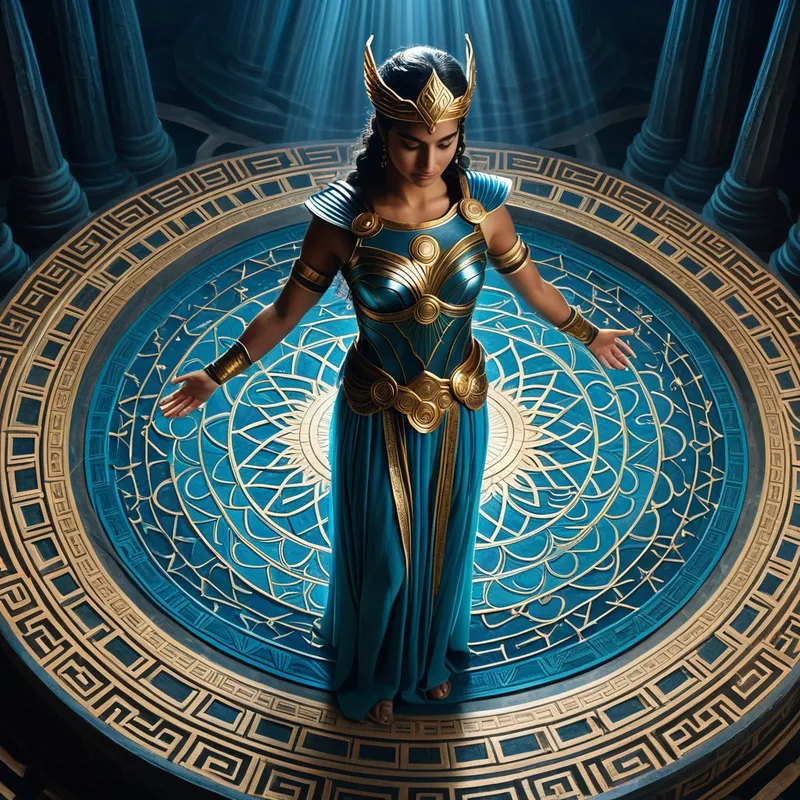
Two looms were erected. The air grew still, charged with the concentration of two creators at the peak of their art. Athena’s shuttle flew, and onto her tapestry bloomed the majestic, terrible pageant of divine authority: the twelve Olympians in their full glory, and at the center, her own triumph over Poseidon for the city of Athens, the olive tree—gift of peace and civilization—springing from the struck earth. In the four corners, smaller scenes warned mortals of the fate of those who dared defy the gods: transformed into mountains, into birds, into nothing. It was a masterpiece of order, power, and consequence.
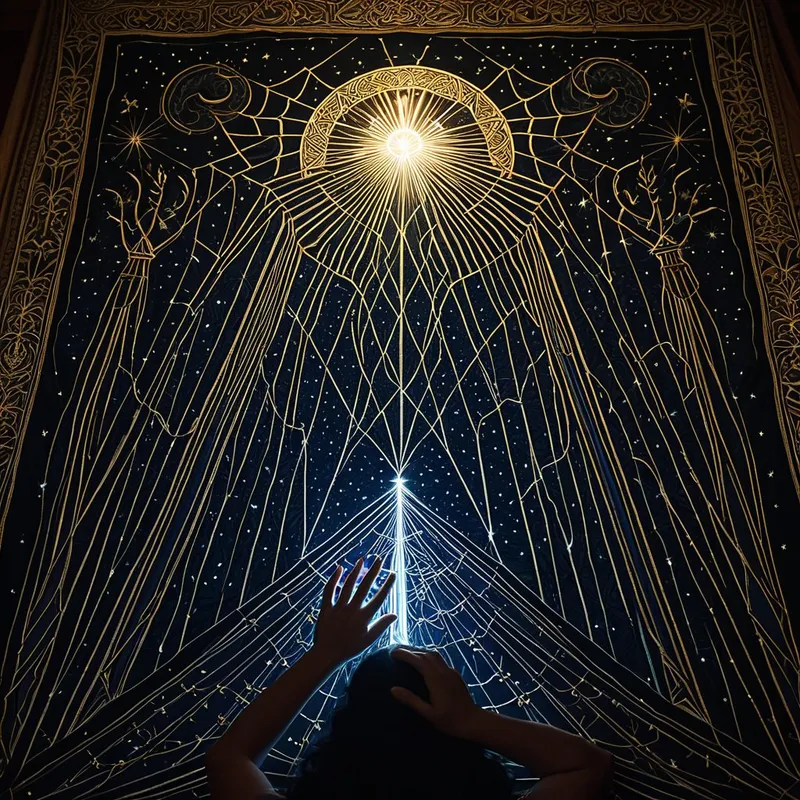
But Arachne’s loom sang a different, darker hymn. Her fingers, fueled by a fearless, reckless artistry, wove the secret scandals of the gods. There was Zeus in a shower of gold, a white bull, a swan. There was Poseidon in equine form. Each scene was a masterpiece of satire and impeccable craft, depicting not divine glory, but divine desire and deception. The tapestry was flawless, breathtaking, and utterly without reverence.
The final thread was tied. The weavings were complete. Even Athena, in the silent core of her being, could find no technical flaw in Arachne’s work. But the content was an unforgivable blasphemy, a unraveling of the sacred order. The goddess’s wrath, cold and precise, finally ignited. She tore the offensive tapestry to shreds and, with her shuttle of boxwood, struck Arachne once upon the brow.
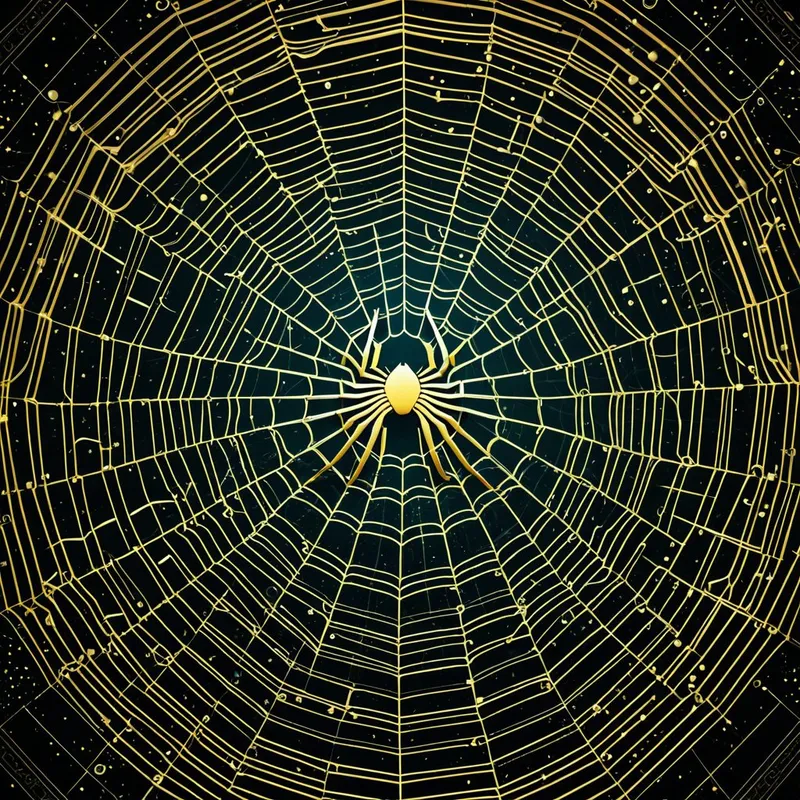
The blow did not kill; it transformed. A profound dizziness seized the maiden. Her body shrank, darkened. Her hair fell away as her limbs elongated, multiplied, becoming eight slender, jointed legs. She was condemned to weave for all time, but now from her own belly, suspended in the endless, fragile webs of her new existence. Arachne, the peerless weaver, had become the first spider, forever spinning the intricate, beautiful, and ignored traps of her craft.
Cultural Origins & Context
This myth, most famously preserved in Ovid’s Metamorphoses, is a deeply Hellenic paradox. It is a story about the supreme value of technē (craft, skill) and the mortal danger of the hybris (excessive pride) that supreme skill can breed. In a culture that venerated Athena as the civilizing bringer of weaving, pottery, and shipbuilding, the tale served as a potent cultural narrative. It was likely told not just as entertainment, but as a didactic tool, reinforcing the hierarchical boundaries between mortal and immortal, and the necessity of sophrosyne (moderation, self-control) even in one’s greatest talents.
The storyteller—a bard, a philosopher, or a parent—used it to illustrate a core Greek anxiety: that human excellence, pushed beyond its proper limit, becomes a challenge to the cosmic order (the kosmos). Arachne’s fate is not merely a punishment, but a re-integration. She is not destroyed but re-purposed, her skill eternally preserved in a new, “fitting” form that reminds all who see a spider’s web of the price of overstepping.
Symbolic Architecture
The workshop here is not a physical forge but the liminal space where raw material (wool, a life, an idea) meets shaping intelligence. Athena represents the archetype of divine, structured wisdom—creation in service of order, civilization, and respect for the source. Her tapestry is the official story, the sanctioned myth that upholds society and the self.
Arachne embodies the raw, daemonic genius of the individual psyche, the creative impulse that owes no allegiance to tradition and seeks to tell the shadow-story, the hidden, unvarnished truth.
Her loom weaves the anima mundi—the world’s soul—in its chaotic, desirous, and often scandalous reality. The contest, therefore, is the eternal psychic conflict between the Superego (Athena’s imposing order) and the rebellious, truth-telling Id (Arachne’s exposé). The transformation into a spider is the ultimate symbolic act: the brilliant but inflated ego, having challenged the foundational structures of the Self (the gods), is not annihilated but reduced and re-located. It becomes an autonomous complex, spinning endlessly in the dark corners of the psyche, a permanent reminder of creative potential and its peril.
The Dreamer's Resonance
To dream of this workshop is to dream of being at the loom of your own identity. If you are Athena in the dream, you may be attempting to forcefully impose order, wisdom, or a “correct” narrative on a chaotic creative process or a messy personal truth. You are weaving your resume, your perfect persona, but it may feel rigid, joyless.
If you are Arachne, you are in a state of profound, perhaps defiant, self-excavation. You are weaving the tapestry of your own shadow—your desires, family secrets, personal shames, or untamed talents—into a coherent form. This is vital, dangerous psychological work. The somatic sensation is often one of intense, feverish focus in the hands and eyes, coupled with a deep anxiety in the gut—the fear of being “struck” for what you are revealing, even to yourself. The dream may culminate in a feeling of being trapped, suspended, or fundamentally transformed, signaling that this inner confrontation is altering your very sense of self.

Alchemical Translation
The alchemical process modeled here is the coniunctio oppositorum—the sacred marriage—that fails, resulting in a mortificatio (a death-and-transformation) of one element. For individuation, the goal is not for Arachne to win or Athena to be merciful, but for the two weavers to recognize they are part of a single psychic organism.
The modern individual’s task is to build a temenos, a sacred inner workshop, where the Athena-principle (conscious discipline, respect for tradition and structure) can provide the safe loom, while the Arachne-principle (the unconscious, intuitive, shadow-driven creativity) is allowed to spin its necessary, truthful, and often disturbing patterns.
The “spider” fate is the fate of any brilliant but unintegrated complex: it becomes an autonomous, compulsive pattern. The alchemical triumph is to suffer the blow of self-awareness—the shock of seeing one’ own hubris or one’s own repressed truth—and, instead of being cursed to automatic spinning, to consciously choose to weave. To take the spider-silk of one’s unique genius and the golden thread of earned wisdom and craft a tapestry that honors both the divine source of our gifts and the profoundly human, flawed, and beautiful stories we have to tell. In that conscious weaving lies not a curse, but the signature of a soul becoming whole.
Associated Symbols
Explore related symbols from the CaleaDream lexicon: